

Executive Overview
For over a century, European legacy manufacturers have held an undisputed iron grip on the heavy-duty commercial vehicle market. Brands steeped in industrial heritage have long defined what it means to haul freight across the continent, dictating the standards of internal combustion engineering, supply chain logistics, and heavy transport infrastructure. However, a seismic shift is underway. The rapid transition toward zero-emission logistics has opened the floodgates to an aggressive wave of new market entrants—both domestic and international—determined to rewrite the rules of heavy goods transport.
Companies like Tesla, BYD, and SuperPanther are no longer distant threats on the horizon; they have firmly set their sights on Europe’s lucrative electric truck market. Armed with advanced high-performance specifications, disruptive pricing models, and aggressive sales ambitions, these new players are presenting a profound challenge to established European giants. According to recent analyses from clean transport campaigns and market trackers, the arrival of these competitors underscores a critical reality: traditional European truckmakers are no longer racing against each other, but against a global vanguard of electric vehicle (EV) innovators capable of undercutting them on cost while matching or exceeding them on capability.
To maintain their global market leadership and ward off market erosion, European truckmakers must drastically accelerate their electrification roadmaps. Industry watchdogs argue that defending robust truck CO₂ emissions standards—and vehemently resisting any regulatory watering-down—is the only way to force legacy manufacturers to innovate at the speed required for survival. This report explores the shifting tides of European freight, examining the challengers, the economic stakes, and the policy battles shaping the future of heavy transport.
Detailed Chronology: The Evolution of Europe’s Heavy Transport Market
To understand the gravity of the current disruption, one must look at how the European heavy-duty vehicle landscape has evolved over the past decades and how the electrification timeline has forced an unprecedented convergence of tech and trucking.
The Era of Diesel Dominance (Pre-2015)
For generations, the heavy commercial vehicle sector in Europe was characterized by high barriers to entry. Developing internal combustion engines (ICE) that could meet stringent Euro emissions standards required billions of euros in capital expenditure, decades of specialized metallurgy expertise, and tightly controlled supply chains. Legacy giants operated in a relatively stable ecosystem where incremental efficiency gains were the standard currency of competition. Electric trucks were largely viewed as niche campus vehicles or short-range urban delivery prototypes with little commercial viability for long-haul logistics.
The Regulatory Awakening (2015–2020)
The discourse shifted dramatically following global climate commitments and tightening urban air quality regulations. The European Union began introducing increasingly stringent CO₂ emission performance standards for new heavy-duty vehicles. Initially met with skepticism by legacy manufacturers who cited prohibitive battery weights and inadequate charging infrastructure, the writing was on the wall: the phase-out of the internal combustion engine had an official legislative timeline. During this incubation period, traditional truckmakers focused the bulk of their R&D budgets on improving diesel efficiency while dabbling cautiously in pilot electric programs.
The Influx of Global Challengers (2020–2024)
While European incumbents moved methodically, unencumbered tech giants and vertically integrated battery manufacturers from abroad saw an opening. Tesla began refining its Class 8 Semi, promising paradigm-shifting efficiency and megawatt-charging speeds. Simultaneously, Chinese giants like BYD—bolstered by unmatched mastery of battery chemistry and supply chain control—expanded their commercial electric vehicle footprints globally. Other specialized players, such as SuperPanther, emerged with modular platforms explicitly designed for commercial logistics operations from the ground up. These new entrants bypassed legacy manufacturing paradigms, treating heavy trucks not merely as mechanical chassis, but as rolling, connected energy ecosystems.
The Convergence and Competitive Clash (2025–Present)
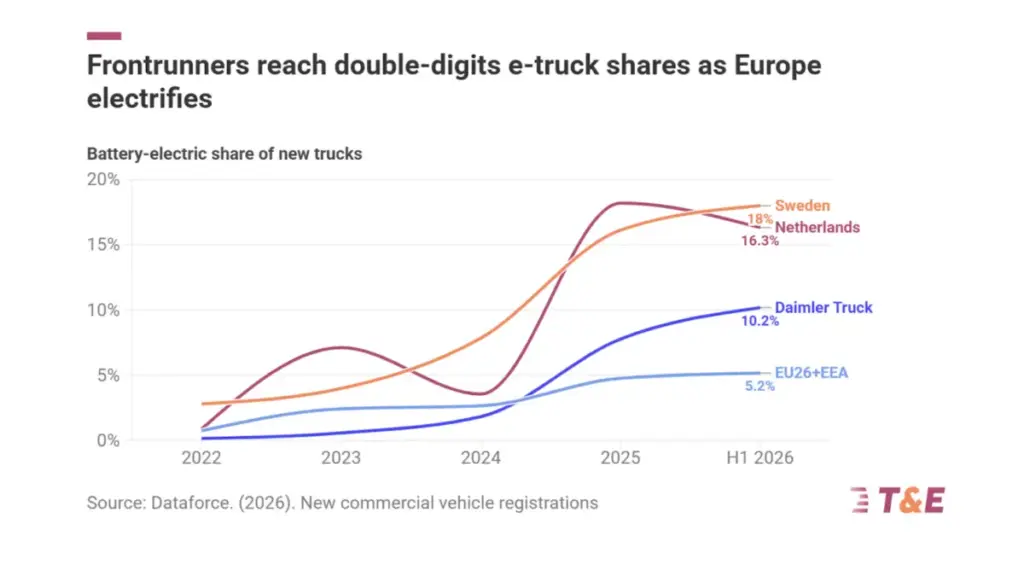
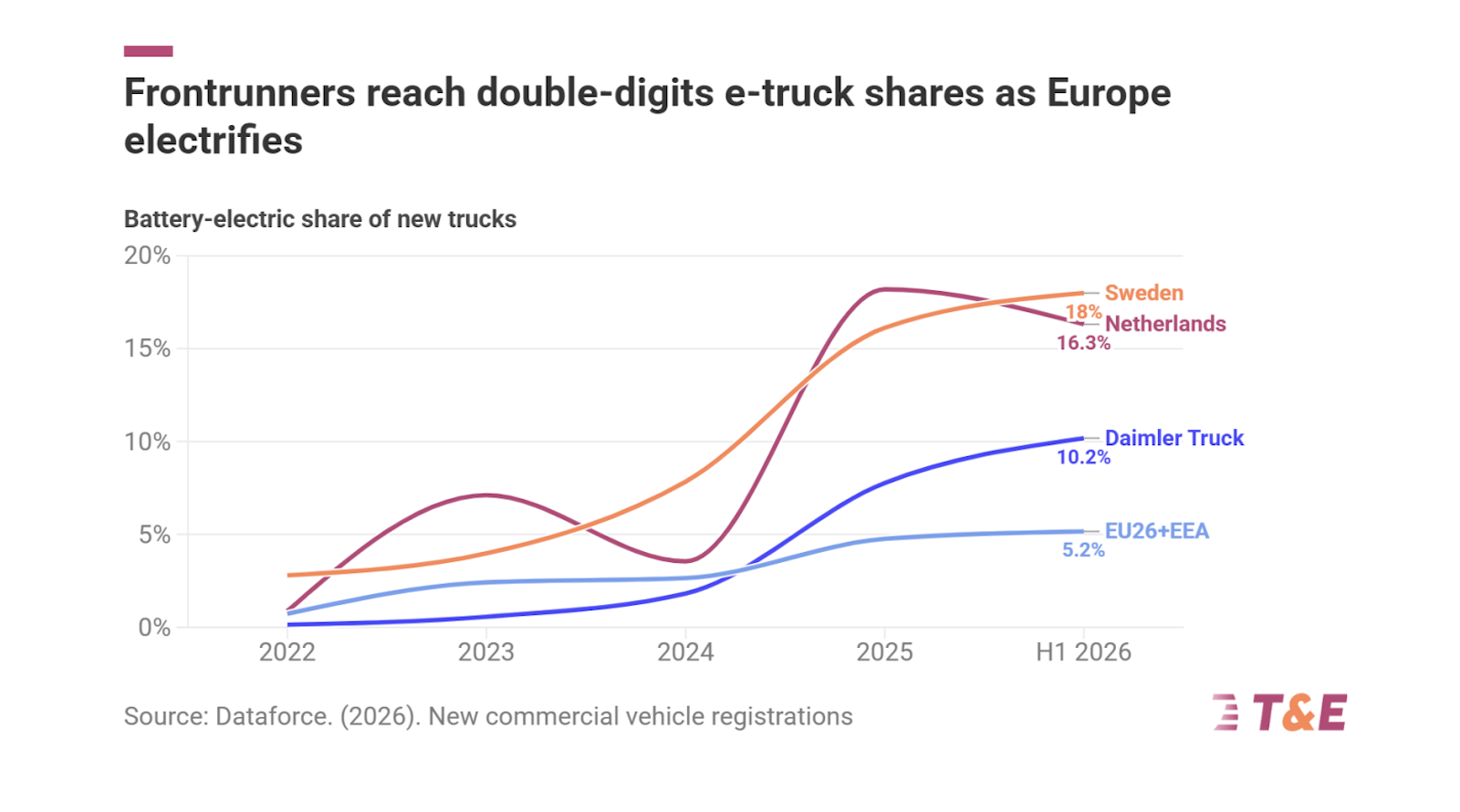
Today, the European heavy electric truck market has transformed into a high-stakes battlefield. New entrants are offering performant products at significantly lower price points than their European counterparts. Legacy truckmakers are finding themselves in an uncomfortable position: defending century-old brand loyalty against agile competitors who are proving that electric heavy-duty transport can be cheaper to buy, cheaper to operate, and faster to deploy. The timeline has compressed, and the window for European manufacturers to catch up is closing rapidly.
Supporting Context & Metrics: TCO, Pricing, and Performance
The primary weapon wielded by new market entrants isn’t just flashy software or marketing hype—it is cold, hard economics. Fleet operators are bound by strict operating margins, making the Total Cost of Ownership (TCO) the ultimate decider in equipment procurement.
Dismantling the Cost Barrier
Historically, electric trucks carried a staggering upfront cost premium over their diesel counterparts, driven largely by the massive battery capacities required to move 40-tonne articulated lorries. However, new entrants have leveraged massive economies of scale, vertical integration, and aggressive pricing strategies to narrow—and in some cases eliminate—this price gap.
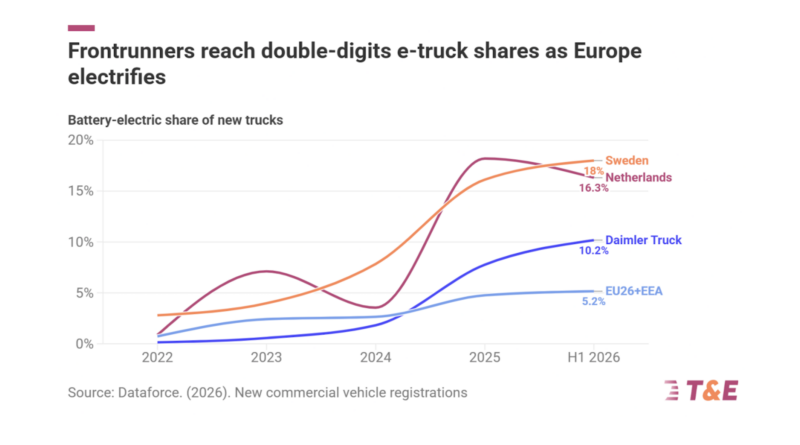
By manufacturing their own battery cells, power electronics, and proprietary software stacks, companies like BYD and Tesla have bypassed traditional tier-one supplier markups. Consequently, their heavy electric truck models are hitting the market with price tags that underbid comparable European offerings, altering the financial calculus for logistics firms.
Total Cost of Ownership (TCO) Savings
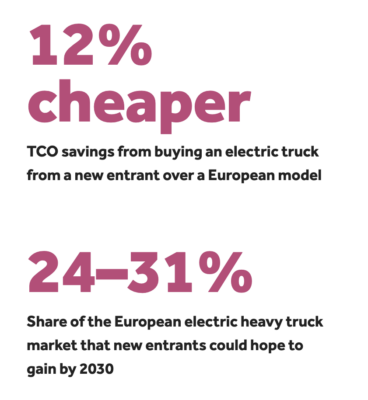
When evaluating TCO, electric vehicles inherently hold an advantage due to lower maintenance costs and cheaper “fuel” (electricity versus diesel). However, the new generation of electric trucks amplifies these savings. Because new entrants have designed their platforms specifically for electric propulsion—rather than retrofitting electric drivetrains onto legacy diesel chassis—their vehicles feature superior aerodynamic profiles, lighter tare weights, and more efficient thermal management systems.
Key metrics from recent transport analyses reveal striking insights:
- Energy Efficiency: New market entrants frequently report higher kilowatt-hour-per-kilometer efficiencies, directly reducing daily operational expenditures for fleet managers.
- Upfront Capital Outlay: Purchase price disparities are shrinking, with non-European models offering competitive acquisition costs that dramatically shorten the payback period for fleet operators.
- Maintenance Reductions: With fewer moving parts, regenerative braking, and advanced predictive maintenance software baked into the operating system, downtime is slashed, further enhancing the TCO advantage.
Official Statements and Industry Perspectives
The competitive pressure cooker has sparked intense debate among industry stakeholders, environmental groups, and regulatory bodies.
Representatives from Transport & Environment (T&E) have been vocal about the existential threat facing European manufacturing supremacy. In recent briefings, policy experts have underscored that European truckmakers can no longer rely on geopolitical protectionism or brand heritage to sustain their market share.
"After 100 years of dominating the European truck market, major manufacturers face unprecedented competition from overseas," note policy analysts from T&E. "To avoid losing ground and remain global market leaders, European truckmakers must accelerate electrification. This is best done by safeguarding the truck CO₂ standards and avoiding further weakening."
Conversely, legacy truck manufacturers have often argued that the transition is hampered by external bottlenecks—chiefly, the painfully slow rollout of public megawatt-charging infrastructure across European freight corridors and high grid interconnection costs. While industry executives acknowledge the growing threat from international competitors, many have historically lobbied for relaxed or delayed regulatory targets to give their engineering teams breathing room.
However, market analysts argue that relaxing regulations would achieve the exact opposite of what is needed. Weakening CO₂ standards would remove the urgency required for legacy makers to retool factories, secure critical mineral supply chains, and scale battery production, inadvertently handing the European market over to foreign competitors who are already mass-producing cost-effective electric trucks.
Future Outlook: The Road Ahead for European Freight
As the heavy-duty sector barrels toward a zero-emission future, the next decade will determine whether Europe’s legacy industrial champions can successfully reinvent themselves or if they will be relegated to secondary players in their own backyard.
Infrastructure as the Ultimate Catalyst
The success of both European incumbents and new entrants will heavily depend on how quickly infrastructure catches up with ambition. The deployment of ultra-fast megawatt charging stations along key trans-European transport networks (TEN-T) is non-negotiable. Fleet operators cannot afford to have 40-tonne trucks sitting idle for hours waiting for a charge. Whichever truckmaker—legacy or newcomer—can offer a seamless ecosystem of vehicle reliability, charging access, and software optimization will capture the lion’s share of the market.

Regulatory Resilience
The political battle over European environmental standards will serve as the ultimate crucible. If policymakers stand firm on ambitious truck CO₂ reduction targets, they will force legacy manufacturers to innovate at a breakneck pace, bridging the price and performance gap with international rivals. If, however, lobbying efforts succeed in diluting these standards, European truckmakers risk falling into a technological complacency trap, vulnerable to being completely outmaneuvered by agile global competitors.
Conclusion
The narrative of heavy transport is undergoing its most radical rewrite since the invention of the internal combustion engine. The arrival of Tesla, BYD, SuperPanther, and other forward-thinking competitors serves as a stark wake-up call to Europe’s industrial titans. The era of guarded monopolies is over. To survive and thrive in the electric age, European truckmakers must embrace hyper-innovation, competitive pricing, and uncompromising electrification—ensuring that Europe remains not just a historic hub of trucking excellence, but a pioneer of its sustainable future.



