Executive Overview
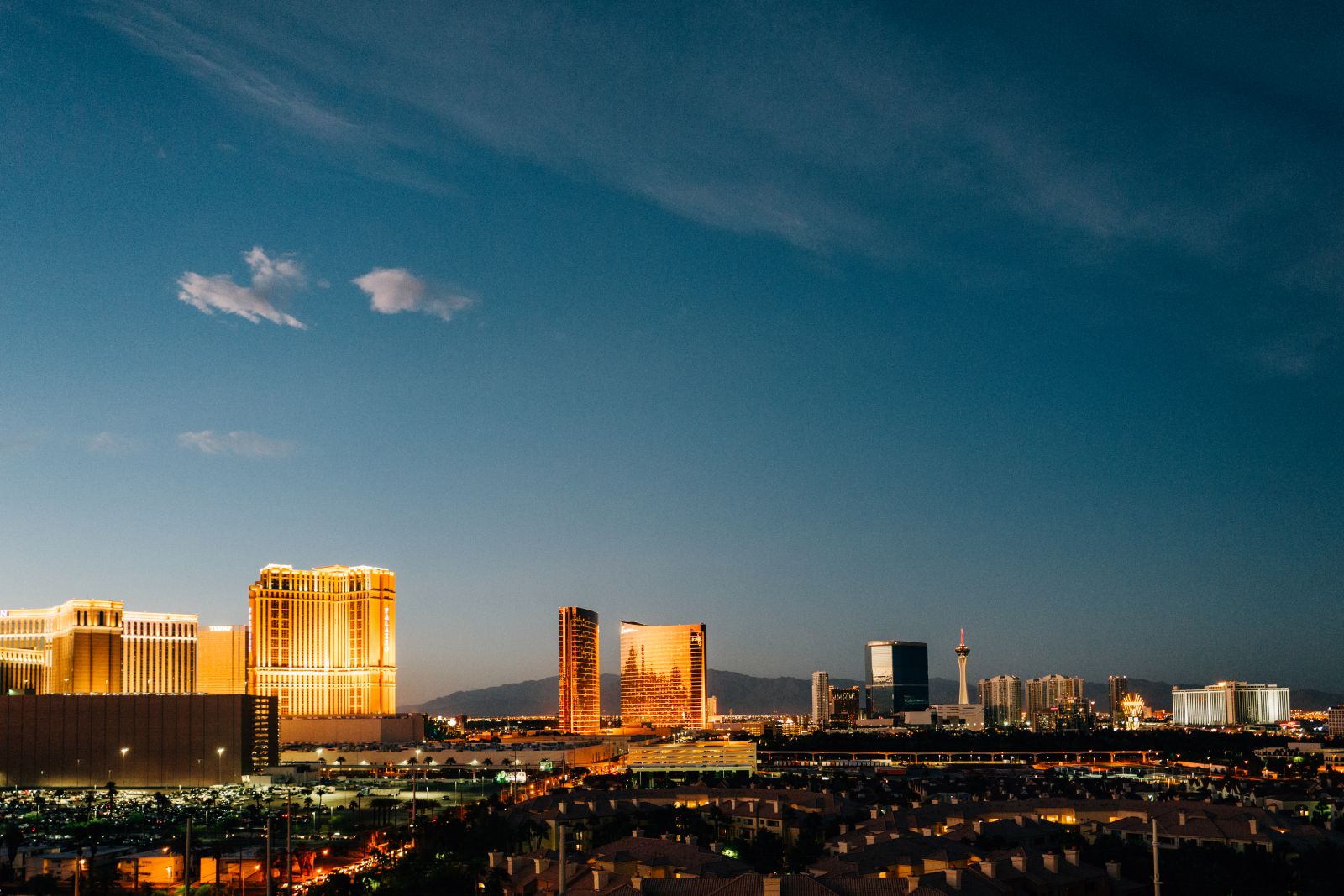
For decades, the state of Nevada has cast itself as the diplomatic linchpin of the Colorado River basin—a pragmatic voice advocating for compromise, conservation, and regional cooperation. Home to two-thirds of the state’s population and the economic engine of Las Vegas, southern Nevada has also established itself as a global benchmark for municipal water efficiency. Driven by decades of severe drought and structural overuse worsened by climate change, local planners executed sweeping restrictions on turf and ornamental fountains, deployed cutting-edge water reuse facilities, and slashed per capita water consumption by an astonishing 58 percent over a 20-year span.
In high-stakes interstate negotiations, Nevada representatives routinely positioned themselves as bridge-builders, serving as the self-described "middle basin" bridging the widening ideological and geographic chasm between the river’s fiercely divided Upper and Lower Basin states.
That carefully cultivated posture of conciliation was abruptly punctured this week when Nevada became the first state to formally sue the federal government over its newly unveiled management framework for the Colorado River. The legal action caught water policy experts and neighboring states entirely off guard. While industry analysts widely anticipated that Arizona—which faces the most immediate and substantial water cuts under the plan—would launch the opening legal salvo, Nevada’s pre-emptive strike has introduced a volatile new dynamic into an already precarious regional crisis.
Nevada’s lawsuit targets the U.S. Department of the Interior’s newly minted operational guidelines, arguing that the federal framework forces the Silver State to shoulder a disproportionate and legally flawed share of the burden. At stake is nothing less than the water security of Las Vegas. Under a worst-case scenario outlined in the state’s legal challenge, the federal plan could theoretically subject the metropolitan area to a catastrophic 71 percent reduction in its water supply.
Water experts and legal scholars agree that while Nevada’s lawsuit may not be the catastrophic, all-out legal "cannonball" long feared by basin stakeholders, it nevertheless casts a long shadow of uncertainty over near-term river management, threatens delicate tri-state compacts, and redefines the limits of federal authority under landmark environmental laws.
Detailed Chronology: From Stalled Negotiations to the Courthouse Steps
The journey to the courthouse has been defined by years of tense, high-stakes diplomacy that ultimately collapsed under the weight of climate reality and competing economic interests.
The Breakdown of Consensus
For more than two years, representatives from the seven Colorado River basin states—Colorado, New Mexico, Utah, Wyoming, Arizona, Nevada, and California—sat alongside federal officials in an exhausting marathon of negotiations. The core objective was to craft a sustainable, long-term operational framework to drastically reduce regional water consumption before the river’s existing management guidelines expired in October.
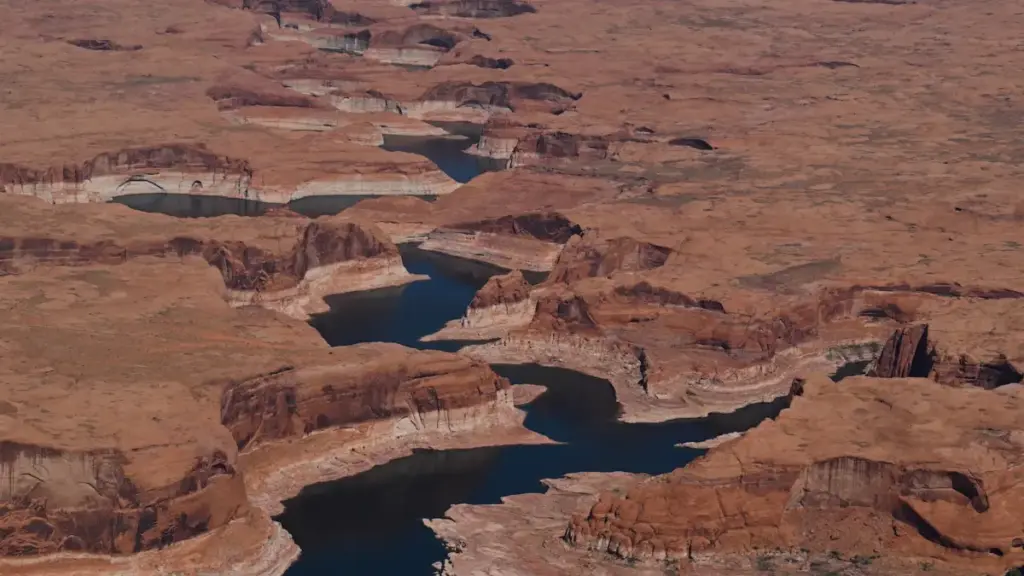
Despite incremental progress and endless rounds of modeling, the states ultimately failed to forge a unified, long-term consensus. With the expiration date looming and vital reservoir storage hovering near historic lows, the Department of the Interior stepped into the vacuum, exercising its authority to impose a federal management plan. Designed primarily to stabilize the dangerously dwindling water levels in Lake Mead and Lake Powell—the river’s two largest reservoirs—the federal blueprint relies heavily on mandatory water delivery cuts among the Lower Basin states (Arizona, California, and Nevada). Without aggressive intervention, federal officials warned, reservoir levels would soon drop past critical thresholds, threatening hydropower generation and dam operations within months.
The Surprise Filing
When the Interior Department released its final blueprint earlier this month, conventional wisdom held that Arizona would initiate litigation. Arizona stands to absorb the largest immediate volume cuts under historical priority doctrines.
Instead, it was Nevada that fired the first legal shot, filing a complaint in federal court that challenges the legality of the Department of the Interior’s decision-making process and its distribution of cuts.
"I expected that there would be litigation, but it was surprising to me that Nevada fired the first shot," noted Anne Castle, former chair of the Upper Colorado River Commission and a veteran observer of Colorado River politics.
The lawsuit challenges the core mechanics of the federal plan, asserting that the government misread statutory mandates and neglected to evaluate viable, less destructive alternatives. At the center of Nevada’s legal grievance is the argument that the plan exposes its primary population and economic center to an existential threat by disproportionately shifting shortage penalties onto urban infrastructure.
Supporting Context & Metrics: The Anatomy of a Crisis
To understand why Nevada took the extraordinary step of litigation, one must examine the unique structural vulnerabilities of the state’s water portfolio and the harsh mathematics governing the shrinking Colorado River.
The Urban Vulnerability
Unlike many of its regional neighbors, Nevada’s allocations from the Colorado River are channeled almost entirely into urban and municipal centers rather than vast agricultural irrigation networks. While Lower Basin agricultural giants like California’s Imperial Irrigation District or Arizona’s sprawling farming districts can theoretically cushion the blow of water shortages by fallowing fields, switching crops, or utilizing groundwater reserves, Las Vegas has no such cushion.
The Las Vegas Valley Water District relies on Lake Mead for roughly 90 percent of its drinking water. Consequently, any federally mandated cuts to Nevada’s apportionment translate immediately to household taps, commercial businesses, and the hospitality sector that anchors the state’s economy.
The 71 Percent Threat
In its legal filings, Nevada highlights a worst-case scenario embedded within the federal framework. If reservoir levels continue their downward trajectory and Nevada is unable to successfully negotiate supplementary shortage-sharing agreements with its Lower Basin partners—Arizona and California—the federal plan could theoretically allow for a staggering 71 percent reduction in the Las Vegas area’s water supply.
This worst-case mechanism is tied to the expiration of existing tri-state agreements currently incorporated into the federal plan through 2028. After that date, if the states fail to reach a new consensus, the federal government is legally bound to implement cuts based strictly on pre-existing, rigid water rights priorities. Under those strict priority doctrines, Arizona absorbs the initial impact, but as shortages deepen, the burden shifts aggressively toward Nevada and California.
John Fleck, a prominent water expert and author-in-residence at the University of New Mexico’s Utton Center, underscored the absurdity of the federal modeling in a recent commentary. "There is an absurdity to a plan that would require Las Vegas to cut 71 percent," Fleck wrote. "That’s existential. Of course Nevada sued."
Legal Grounds: NEPA and the Bounds of Federal Review
Nevada’s legal strategy centers heavily on the National Environmental Policy Act (NEPA). The state argues that the federal decision-making process—which required exhaustive public input and environmental impact statements—was fatally flawed. Specifically, Nevada contends that the Interior Department failed to adequately analyze the profound socioeconomic consequences of a 71 percent supply reduction on a major metropolitan area.
Furthermore, the state claims federal regulators refused to consider creative, systemic alternatives to massive water cuts, such as operational modifications at Glen Canyon Dam to improve water conservation and transit efficiency.
However, pressing a NEPA claim in the current judicial landscape is an uphill battle. Legal experts note that a string of recent U.S. Supreme Court rulings has substantially reshaped and restricted the federal government’s obligations under NEPA, particularly when executive agencies evaluate sprawling, multifaceted infrastructure systems like the Colorado River basin. How a federal judge interprets these precedents will dictate whether Nevada’s procedural challenge gains traction.
Official Statements and Stakeholder Reactions
The legal challenge has elicited a complex array of reactions from tribal leaders, state negotiators, and environmental advocates across the basin, reflecting deep anxieties over the fragility of regional cooperation.
The Disappointed Diplomats
For state negotiators like John Entsminger, Nevada’s chief representative on the Colorado River, the lawsuit represents a painful pivot from preferred strategy. Just a week prior to filing the suit, Entsminger addressed a Las Vegas water conference, passionately reaffirming that negotiation and cooperation remained the state’s "first, second, and third choice."
Yet, Nevada has long maintained a dual-track strategy: vigorously championing consensus while quietly keeping a legal shield polished in reserve.
Tribal nations, whose vast senior water rights are increasingly impacted by basin management decisions but who historically lacked formal seats at the interstate negotiating tables, have also expressed deep concern over the disruption. Jay Weiner, legal counsel for the Fort Yuma Quechan Indian Tribe—a senior water rights holder spanning the borders of Arizona and California—voiced immediate misgivings about the lawsuit’s potential fallout.
"We are disappointed to see Nevada filing suit here, and are concerned about what the ramifications will be for the operations plans in 2027 and potentially 2028," Weiner stated.
The Dual Nature of Water Politics
Despite the friction, seasoned basin observers emphasize that litigation and negotiation are not mutually exclusive paradigms in the arid American West. Navigating water scarcity has historically required stakeholders to litigate fiercely in the courtroom while simultaneously breaking bread at the negotiating table.
This sentiment was famously captured by Navajo Nation Chief Counsel Bidtah Becker at the 2024 Colorado River Water Users Association conference in Las Vegas. Reminding attendees of the gritty reality of tribal water advocacy, Becker observed: "You can get along and argue at the same time, and you develop long-term relationships through that."
Future Outlook: What Lies Ahead for the Colorado River?
As the legal dust settles on Nevada’s initial complaint, water managers and legal scholars are looking ahead to determine what this litigation means for the immediate future of the basin.
Immediate Disruptions vs. The "Big Risk"
Importantly, Nevada has not yet requested an emergency temporary restraining order or a preliminary injunction to halt the implementation of the federal plan outright. This strategic restraint suggests that the state’s primary objective may be to force the federal government back to the table or to carve out protective legal precedents before the 2028 operational window closes, rather than instantly upending ongoing water deliveries.
Nevertheless, if a federal court eventually rules against the Interior Department’s plan, it could throw a massive wrench into the initial two-year bridge arrangement designed to keep Lower Basin states afloat.
Furthermore, water experts are quick to point out that Nevada’s lawsuit is relatively narrow compared to the apocalyptic "cannonball" litigation that policy analysts have dreaded for years. That hypothetical legal battle—which could still materialize if Arizona decides to sue the Upper Basin states (Colorado, New Mexico, Utah, and Wyoming) over whether they are meeting their delivery obligations under the historic 1922 Colorado River Compact—remains the ultimate existential threat. Such a case would force federal judges to adjudicate foundational, decades-old questions about who bears ultimate responsibility for the river’s systemic decline, potentially stripping the states of self-determination for years to come. Anne Castle describes that particular scenario as the arena holding the "really big risks."
A Resilient Framework for Collaboration
For now, basin-wide cooperation appears bruised but unbroken. Lower Basin states are fully expected to continue hammering out regular, pragmatic shortage-sharing agreements even as the legal proceedings wind their way through the federal court system. The door for a comprehensive, seven-state consensus remains open, provided federal agencies and regional partners can find a way to reconcile the existential water needs of urban centers like Las Vegas with the stark, sobering realities of a vanishing river.