
Executive Overview
Across the globe, the march toward sustainable, resilient food systems has ground to a critical and alarming deceleration. According to a landmark report published in Nature Food by the Food Systems Countdown Initiative (FSCI), international efforts to transform how humanity grows, distributes, and consumes its food are lagging far behind internationally agreed-upon deadlines.
The findings strike at the heart of the United Nations’ Sustainable Development Goals (SDGs)—a collection of sweeping targets established a decade ago by global member states to eradicate extreme poverty, eliminate hunger, and overhaul environmental stewardship by 2030. Concurrently, the study evaluates progress toward the net-zero emissions mandates codified by the landmark Paris Climate Agreement.
The consensus among the researchers is sobering: for the vast majority of these critical targets, reaching the 2030 finish line is now virtually impossible.
To illustrate the sheer scale of the shortfall, consider the trajectory of greenhouse gas emissions generated by agri-food systems. According to the United Nations Food and Agriculture Organization (FAO), agriculture and its associated supply chains are responsible for roughly one-third of all anthropogenic (man-made) greenhouse gas emissions. To achieve net-zero agri-food emissions by 2030, the new report calculates that every geographic region on Earth would need to accelerate its current rate of decarbonization by an astronomical 70 percent every single year over the next four years.
"That kind of movement is absolutely not going to happen," says Bianca Carducci, an independent nutrition scientist and lead author of the Nature Food study. "Most countries probably shift about 5 percent per year on some indicators."
Yet, rather than serving as a counsel of despair, experts argue that this stark reality check exposes fundamental flaws in how the global community conceptualizes milestones, monitors systemic change, and designs long-term environmental policy. Far from a binary outcome of absolute success or total failure, the transformation of global food systems requires a paradigm shift away from arbitrary deadlines and toward deeply interconnected, highly adaptable pathways of sustainable reform.
Detailed Chronology: A Decade of Ambition Meets Structural Realities
To understand how the global community arrived at this precarious juncture, it is necessary to examine the timeline of modern international commitments to sustainability, food security, and climate action.
2015: The Dawn of the SDG Era
In September 2015, the United Nations General Assembly formally adopted the 2030 Agenda for Sustainable Development. At its core were 17 Sustainable Development Goals, designed as an urgent blueprint for peace and prosperity for people and the planet. Among them, SDG 2 ("Zero Hunger") explicitly pledged to end hunger, achieve food security, improve nutrition, and promote sustainable agriculture by 2030. Simultaneously, the 2015 Paris Climate Conference (COP21) yielded the first legally binding international treaty on climate change, compelling nations to peak greenhouse gas emissions as soon as possible and achieve a climate-neutral world by mid-century.
2020–2023: The Pandemic and Polycrises
As the midpoint of the SDG timeline approached, the global food system was rocked by a cascade of unprecedented shocks. The COVID-19 pandemic exposed severe vulnerabilities in international supply chains, triggering spikes in food insecurity. This was quickly followed by geopolitical conflict—most notably the war in Ukraine—which disrupted global grain and fertilizer markets, pushing fertilizer prices to historic highs and driving inflation across consumer food sectors. During this period, sustainability initiatives were frequently sidelined as governments scrambled to secure immediate, short-term food supplies for their populations.
Mid-2020s: The Shift Toward Granular Measurement
Recognizing that high-level political declarations were failing to translate into operational metrics on the ground, scientific consortia began mobilizing to track granular indicators. Established to bridge the data gap, the Food Systems Countdown Initiative set out to monitor the health, environmental, social, and economic dimensions of food systems worldwide.
Present Day: The Nature Food Awakening
In April 2026, the FSCI published its most comprehensive assessment to date in Nature Food, accompanied by the launch of an interactive public dashboard. Moving beyond previous macro-level estimates, this new body of work evaluates nearly every country across roughly 50 distinct metrics. The results confirm what many field scientists and economists had long suspected: the world is drastically falling behind on its 2030 promises, forcing a painful reckoning about the structural limitations of international goal-setting.
Supporting Context & Metrics: Inside the Data Dashboard
The newly launched interactive dashboard developed by the FSCI provides an unprecedented look at the granular realities of global food systems. By tracking approximately 50 distinct metrics, the tool offers a diagnostic window into why the 2030 targets are slipping out of reach.
The Metrics of Failure and Stagnation
The dashboard evaluates a vast array of indicators, breaking them down into categories that include:
- Economic Accessibility: The shifting cost of a healthy, nutrient-dense diet relative to local median incomes.
- Nutritional Security: The availability, affordability, and physical access to fresh fruits, vegetables, and micronutrient-rich staples.
- Agricultural Productivity: Crop yields per hectare, efficiency of agricultural water withdrawals, and the health of inland and marine fisheries.
- Socio-Economic Factors: Civil society participation, land tenure rights for smallholder farmers, and labor standards within agri-food supply chains.
- Environmental Impact: Gross greenhouse gas emissions from agricultural production, rates of deforestation driven by commodity expansion, and synthetic fertilizer run-off.
For environmental and climate-related metrics, the findings are particularly stark. The research team calculated gross emissions from agri-food systems as a percentage of each nation’s historical emissions baseline. Across nearly every continent, the trajectory is moving in an undesirable direction: upward.
Agriculture-related methane—released heavily by livestock digestion and flooded rice paddies—alongside nitrous oxide from synthetic fertilizers, presents a stubborn hurdle. Because these emissions are biologically driven rather than purely industrial, curtailing them without undermining food production capacity is an immensely complex engineering and agronomic challenge.
The Regional vs. Country-Level Paradox
A critical nuance highlighted by lead author Bianca Carducci is the distinction between regional aggregations and individual country performances.
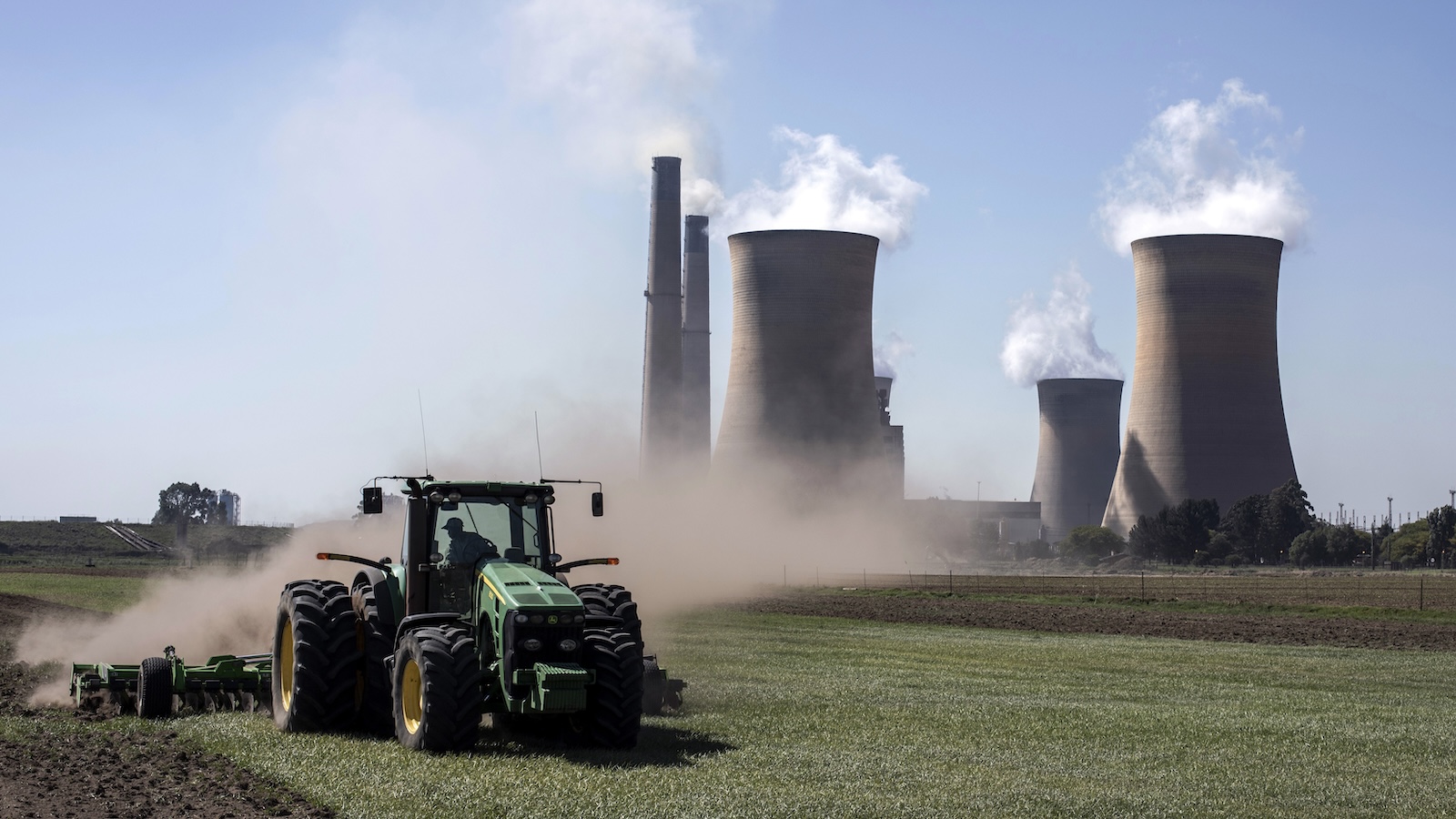
When the report cites the requirement for a 70 percent annual increase in regional decarbonization progress, it speaks to macro-regions like the Americas, Europe, Africa, Asia, and Oceania. However, viewing the data solely through a macro-lens can mask localized success stories. Within those massive regions, certain individual nations are actively bending their agricultural emission curves downward through regenerative farming practices, precision agriculture, and improved livestock management.
Furthermore, progress cannot be viewed in a vacuum. A country might achieve a commendable score on reducing water withdrawals while simultaneously experiencing severe stagnation or regression in the affordability of healthy diets for its urban poor. Food systems are deeply poly-dimensional; fixing one gear in the machine often requires adjusting three others.
Official Statements and Expert Perspectives
The publication of the FSCI report has ignited a broader academic and policy debate regarding how governments, scientists, and international bodies should respond when major global milestones are missed.
Bianca Carducci: Navigating the 2030 Reality Check
Addressing the staggering 70 percent annual acceleration required to hit 2030 climate goals, Bianca Carducci is unequivocal about the unlikelihood of such a pivot occurring within the current political and economic framework. Yet, she is equally passionate that this realization should not induce apathy among policymakers.
"Most countries probably shift about 5 percent per year on some indicators," Carducci notes, contextualizing the immense inertia inherent in global agricultural systems.
Crucially, she warns against a defeatist mindset that writes off the next few years simply because the 2030 finish line appears unattainable. "Regional and global leaders shouldn’t just throw in the towel and say, ‘OK, we’re not going to make it [by 2030] so we don’t really need to do anything for the next four years,’" Carducci emphasizes.
Michael Puma: The Danger of Arbitrary Deadlines
Weighing in on the structural implications of the study, Michael Puma, a professor at Columbia University’s Climate School who was not involved in the research, points out that the challenges identified by the FSCI reveal deeper philosophical flaws in how humanity attempts to govern global transformations.
"It’s not a binary," Puma argues, noting that the health of a planetary food system cannot be neatly categorized into absolute success or total failure come January 1, 2031.
According to Puma, rigid, highly publicized deadlines can inadvertently distort policy incentives. When authorities are shackled to a hard cutoff date like 2030, there is a dangerous temptation to prioritize superficial, short-term fixes—quick wins that look good on a political report card but fail to build long-term, systemic resilience.
"It’s really about designing realistic pathways," Puma explains, stressing the absolute necessity of embedding robust accountability measures into every level of agricultural planning. The focus, he contends, must shift away from when a goal is nominally scheduled to be completed and toward how sustainable transitions are methodically engineered into everyday farming, trade, and consumption patterns.
Future Outlook: Beyond 2030 and the Interconnected Web of Change
As the international community confronts the reality of missing its 2030 targets, attention is increasingly turning toward what lies beyond the decade—and how systemic analysis can unlock new avenues for intervention.
Looking Toward 2050
Interestingly, when the FSCI researchers adjusted their analytical lenses to examine 2050 as an alternate horizon for achieving core SDGs and climate targets, the outlook shifted dramatically. Across multiple regions, the data indicates that humanity is far more structurally aligned to meet a majority of its long-term nutrition and environmental goals over a 25-year horizon than a 10-year sprint.
This temporal shift demonstrates that the primary bottleneck is not a lack of technological capability or agronomic knowledge, but rather the sheer friction of executing deep systemic transformations within compressed, politically expedient timeframes.
Leveraging the Web of Interactions
One of the most powerful contributions of the new FSCI report is its mapping of a complex web of interactions linking all surveyed metrics. Transformations in greenhouse gas emissions do not occur in isolation; they are dynamically coupled with:
- Changes in land-use and cropland expansion
- Innovations in agricultural water management and irrigation efficiency
- The health and sustainability of wild-caught and aquaculture fisheries
- Levels of civic engagement, education, and civil society participation in local governance
By treating these interconnected metrics as leverage points rather than isolated silos, policymakers can identify high-impact entry points. For instance, investing in smallholder farmer education regarding soil health can simultaneously boost crop yields, reduce synthetic fertilizer runoff, enhance local dietary diversity, and lower net agricultural emissions.
The Road Ahead
The revelation that global food systems are falling short of their 2030 deadlines should not be treated as a terminal diagnosis, but rather as an urgent call for strategic calibration. As the world moves past the halfway point of this critical decade, the imperative is clear: discard the illusion of quick fixes, embrace the complex realities revealed by granular data dashboarding, and commit to designing enduring, equitable pathways that ensure a nourished and resilient planet for generations to come.