

Executive Overview
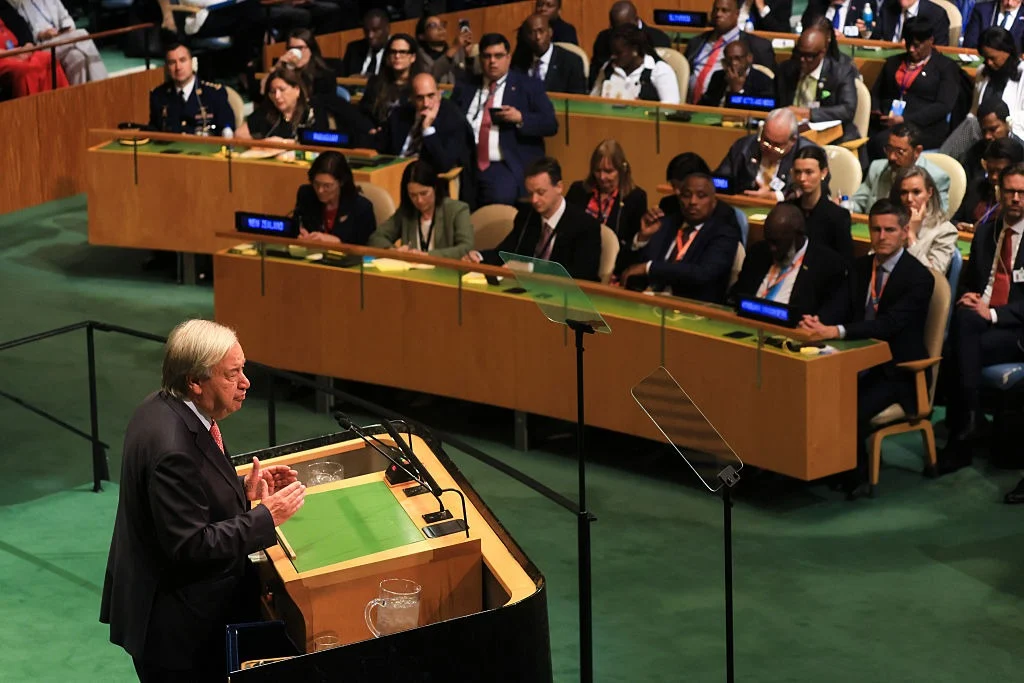
In a decisive move presented on the international stage during the United Nations General Assembly in New York, the German federal government announced its comprehensive transition roadmap designed to completely eliminate fossil fuels from its national energy system by 2045 at the latest. This strategy establishes a definitive operational manual for Europe’s largest economy, formalizing its pivot away from hydrocarbons and outlining an aggressive transformation across power generation, industrial production, residential heating, and transportation.
At the core of the strategy lies an unprecedented acceleration of zero-carbon infrastructure. The roadmap establishes that renewable energy—which generated roughly 55% of the nation’s domestic electricity supply over the past year—must scale rapidly to account for at least 80% of total generation by 2030. Simultaneously, the blueprint addresses the future of fossil baseload power, specifically targeting coal generation. While coal-fired plants continue to supply roughly a quarter of Germany’s electricity, the government is exploring measures to move up the statutory phase-out deadline from 2038 to 2035.
By tying industrial competitiveness to rapid decarbonization, Berlin aims to demonstrate that a high-tech, export-driven industrial power can transition entirely to green energy without compromising security of supply or macroeconomic stability.
+-----------------------------------------------------------------------------------+
|                        GERMANY'S DECARBONIZATION TIMELINE                         |
+-----------------------------------------------------------------------------------+
|  2023 Baseline       |  2030 Milestone       |  2035 Accelerated   |  2045 Final  |
|                      |                       |  Target (Proposed)  |  Deadline    |
+----------------------+-----------------------+---------------------+--------------+
| • 55% Renewable      | • 80% Renewable       | • Target Coal       | • 100% Fossil|
|   Electricity        |   Electricity Share   |   Phase-Out         |   Fuel Exit  |
| • ~25% Coal Power    | • Sector Coupling     | • Green Hydrogen    | • Net-Zero   |
|   Generation         |   Ramp-Up             |   Integration       |   Energy Grid|
+-----------------------------------------------------------------------------------+
Detailed Chronology
The publication of the 2045 roadmap marks the culmination of decades of shifting energy policy, structural realignments, and geopolitical disruptions that have repeatedly reshaped Germany’s energy landscape (Energiewende).
[2000s: Renewable Energy Sources Act (EEG)]
       │
       ▼
[2011: Accelerated Nuclear Phase-Out Decision]
       │
       ▼
[2020: Coal Exit Act Enacted (Target: 2038)]
       │
       ▼
[2022: European Energy Crisis & Supply Disruption]
       │
       ▼
[2023: Renewables Exceed 55% of Grid Generation]
       │
       ▼
[UNGA Announcement: UN-Aligned Roadmap for 2045 Fossil Exit]
The Origins of the Energiewende and Nuclear Exit (2000–2011)
Germany’s systemic transformation traces its origins to the early 2000s with the introduction of the Renewable Energy Sources Act (Erneuerbare-Energien-Gesetz or EEG), which introduced feed-in tariffs to spur wind and solar deployment. The structural policy underwent a major shift in 2011 following the Fukushima Daiichi disaster, when the government mandated a complete, phased exit from nuclear energy. This accelerated nuclear phase-out heightened the country’s reliance on natural gas imports as a bridging technology, alongside domestic lignite and imported hard coal.
The Coal Exit Act and Geopolitical Shockwaves (2020–2022)
In July 2020, Germany codified its intent to abandon coal power through the Coal Exit Act (Kohleausstiegsgesetz), setting a legal phase-out deadline of 2038 with financial compensation schemes for plant operators and affected coal-mining regions. However, the energy market shock of 2022 completely disrupted this paradigm. The sudden loss of pipeline gas forced Berlin to implement emergency measures—including temporary reactivation of reserved coal units—while simultaneously accelerating long-term plans to eliminate gas dependency altogether through green alternatives.
The UNGA Roadmap and Accelerated Targets
Presented on the sidelines of the UN General Assembly in New York, the newly unveiled roadmap builds directly on lessons learned from the energy crisis. The plan aligns Germany’s national statutory goals with international climate agreements, laying out clear implementation steps leading up to key milestones:
- 2030 Goal: Achieve an 80% renewable share in total electricity generation and reduce broad greenhouse gas emissions by 65% compared to 1990 levels.
- 2035 Goal: Achieve complete decarbonization of the electricity sector, aided by an accelerated coal phase-out if socio-economic conditions permit.
- 2045 Goal: Eliminate fossil fuels entirely across electricity, heating, transport, and heavy industry, achieving full carbon neutrality across all energy vectors.
Supporting Context & Metrics
Power Sector Generation Mix
Transitioning Europe’s industrial heavyweight to a net-zero energy paradigm requires re-engineering a power grid that has historically relied on heavy fossil baseloads. While renewable assets have expanded rapidly over the past decade, fossil fuels remain deeply entrenched in the national baseline.
              CURRENT GERMAN ELECTRICITY GENERATION MIX
  +----------------------------------------------------------------+
  | Renewables (Wind, Solar, Biomass, Hydro) | 55%                 |
  +------------------------------------------+---------------------+
  | Coal (Lignite & Hard Coal)               | ~25%                |
  +------------------------------------------+---------------------+
  | Natural Gas & Other Fossil Sources       | ~20%                |
  +----------------------------------------------------------------+
To meet the 80% threshold by 2030, wind and solar capacity expansion must maintain an unprecedented yearly trajectory:
- Onshore Wind: Needs an expansion pace of roughly 10 gigawatts (GW) per year to reach target capacities of 115 GW by 2030.
- Offshore Wind: Planned deployment targets reach at least 30 GW by 2030 and 70 GW by 2045, requiring deep-sea grid connections across the North and Baltic Seas.
- Solar Photovoltaics (PV): Target capacities call for 215 GW by 2030, requiring massive installation rates across both residential rooftops and utility-scale open spaces.
Deep Electrification across Economy Sectors
The strategy goes beyond power generation to focus on "sector coupling"—the direct electrification of non-electric energy demand across transport, heating, and industrial operations.
+-----------------------------------------------------------------------------------+
|                        SECTOR COUPLING ELECTRIFICATION STRATEGY                   |
+-----------------------------------------------------------------------------------+
| Sector                | Primary Transition Vector        | Key Metrics & Targets  |
+-----------------------+----------------------------------+------------------------+
| Transport             | Battery Electric Vehicles (BEVs) | 15 million EVs on      |
|                       | and fast-charging networks       | roads by 2030          |
+-----------------------+----------------------------------+------------------------+
| Residential Heating   | Heat Pumps & Municipal           | 500,000 new heat pumps |
|                       | District Heating Networks        | installed annually     |
+-----------------------+----------------------------------+------------------------+
| Heavy Industry        | Direct Electrification &         | 10 GW domestic green   |
| (Steel/Chemicals)     | Green Hydrogen Derivatives       | electrolyzers by 2030  |
+-----------------------------------------------------------------------------------+
Transmission Grid Infrastructure Bottlenecks
A major operational challenge for Germany’s energy transition is the geographic divide between power generation and energy consumption. The majority of large-scale renewable generation—specifically onshore and offshore wind—is located in northern coastal regions. Conversely, major industrial hubs, including manufacturing plants and chemical complexes, are clustered in the south and west.
To bridge this physical gap, transmission system operators (TSOs) such as TenneT, 50Hertz, Amprion, and TransnetBW are deploying massive High-Voltage Direct Current (HVDC) corridor projects, such as SüdLink and SüdOstLink. Expanding the grid is crucial to prevent system curtailment—where wind farms are shut down to prevent local grid overload—and to eliminate multi-billion-euro congestion management costs currently passed down to end-consumers.
   [ NORTH GERMANY ]
   Offshore & Onshore Wind Surplus
          │
          │ High-Voltage Direct Current (HVDC) Corridors
          │ (SüdLink / SüdOstLink Infrastructure)
          ▼
   [ SOUTH GERMANY ]
   Industrial Demand Centers (Manufacturing, Automotive, Chemicals)
Official Statements
The strategy release in New York sparked strong reactions from policymakers, industrial leaders, and climate analysts.
A senior official from the Federal Ministry for Economic Affairs and Climate Action, speaking on the sidelines of the UN General Assembly, framed the blueprint as both a policy mandate and an industrial strategy:
"Decarbonization is no longer simply an environmental objective; it is the cornerstone of economic resilience and national security in the 21st century. By establishing a explicit, legally binding trajectory toward a complete fossil-fuel exit by 2045, Germany offers regulatory certainty to investors, manufacturers, and international partners. Replacing volatile hydrocarbons with reliable, locally generated renewables secures our long-term industrial sovereignty."
However, representatives from Germany’s energy-intensive manufacturing sectors expressed cautious views regarding energy security and price competitiveness during the interim transition period. A spokesperson for the Federation of German Industries (BDI) noted:
"The ambitions outlined in the government’s 2045 roadmap reflect a clear commitment to climate leadership, but execution is what matters for industry. German enterprise requires uninterrupted power at internationally competitive costs. Until renewable capacity, storage solutions, and hydrogen distribution networks are fully operational nationwide, thermal backup plants must remain accessible to prevent industrial flight and protect supply chains."
Environmental institutions welcomed the explicit focus on accelerating the coal phase-out, though they emphasized the need for strict policy enforcement. A policy director at a major European climate think tank stated:
"Bringing the coal phase-out forward from 2038 to 2035 is a essential step for aligning Germany with European climate commitments. However, paper roadmaps must be matched by faster regional planning approvals, reduced administrative bureaucracy for grid construction, and an immediate end to fossil-fuel subsidies across the automotive and heating sectors."
Future Outlook
System Balancing and the Hydrogen Backbone
As Germany scales back fossil baseload power, maintaining grid stability during periods of low wind and solar output (Dunkelflaute) remains a central engineering challenge.
To address this, the government’s roadmap outlines a dual-track policy that combines battery storage systems with flexible, hydrogen-ready gas power plants. Under the proposed Power Plant Strategy (Kraftwerksstrategie), the government plans to auction state-backed tender capacities for dispatchable gas plants that are built to switch quickly from natural gas to 100% green hydrogen as the fuel becomes available at scale.
                         GRID STABILITY ARCHITECTURE
                                      │
         ┌────────────────────────────┴────────────────────────────┐
         ▼                                                         ▼
[ Battery Storage Networks ]                             [ Hydrogen-Ready Gas Plants ]
(Short-term, rapid response frequency control)          (Long-term dispatchable capacity during Dunkelflaute)
Simultaneously, the country is initiating the rollout of a core national hydrogen grid (Wasserstoff-Kernnetz). Spanning thousands of kilometers, this network will connect import terminals, domestic electrolyzer plants, storage caverns, and heavy industrial sites to replace natural gas in hard-to-abate sectors like steelmaking and chemical refining.
Political Realities and Socio-Economic Trade-Offs
Achieving the goals set out in the UNGA presentation will require managing complex domestic political dynamics. Accelerating the coal phase-out to 2035 poses significant economic challenges for structural mining regions in eastern Germany (Lausitz), where coal mining remains a source of local employment and regional identity. Transition plans require structural funding packages to build new industries, research hubs, and infrastructure in these areas to preserve social cohesion.
Furthermore, public debate around heating mandates—such as the controversial Building Energy Act (Gebäudeenergiegesetz), which targets fossil-fueled boilers—shows that consumer-facing policies require careful financial support to maintain public endorsement.
Global Implications of the German Model
As the world’s fourth-largest economy, Germany’s transition strategy will serve as a practical test case for industrial nations aiming to move past fossil energy reliance. If Germany can successfully modernize its grid, preserve its manufacturing base, and eliminate fossil fuels by 2045, it will establish a viable playbook for green technology export markets, grid management systems, and sector-coupling policies globally.
If successful, the roadmap presented in New York will mark the transition point where European energy strategy shifted from managing climate risks to building a sustainable, carbon-neutral economy.



