Originally published by The Guardian and reproduced here as part of the Climate Desk collaboration.
Executive Overview
As catastrophic wildfires tear across the American landscape, consuming millions of acres and threatening communities from the Pacific Northwest to the interior West, a profound institutional crisis is unfolding behind the scenes. According to internal data, confidential whistleblower accounts from frontline personnel, and recent government assessments, the United States Forest Service (USFS) is buckling under a critical, systemic shortage of firefighters and specialized operational leadership.
While federal agency leadership continues to project an image of robust strength and operational readiness to lawmakers and the public, whistleblowers paint a harrowing portrait of an overextended, skeleton workforce pushed past the breaking point. With climate change supercharging extreme weather conditions, persistent drought, and explosive fire behavior, the USFS finds itself caught in a compounding cycle of talent drain, low morale, and dangerously thin deployments.
The consequences of this shortfall extend far beyond delayed fire suppression. They manifest in canceled preventative land treatments, unfulfilled emergency resource requests during peak crisis windows, and an unsustainable reliance on exhausted crews logging over 1,000 hours of overtime per season. As the nation sits at its highest state of emergency preparedness, the widening chasm between official rhetoric and on-the-ground reality has ignited a profound crisis of confidence among the very personnel tasked with protecting American lives and property.
Detailed Chronology: A Season on the Brink
The unfolding crisis of 2026 is not an isolated event, but rather the culmination of years of institutional neglect, political turbulence, and accelerating climate pressures. The timeline of this systemic breakdown reveals how vulnerable the nation’s wildland fire apparatus has become:
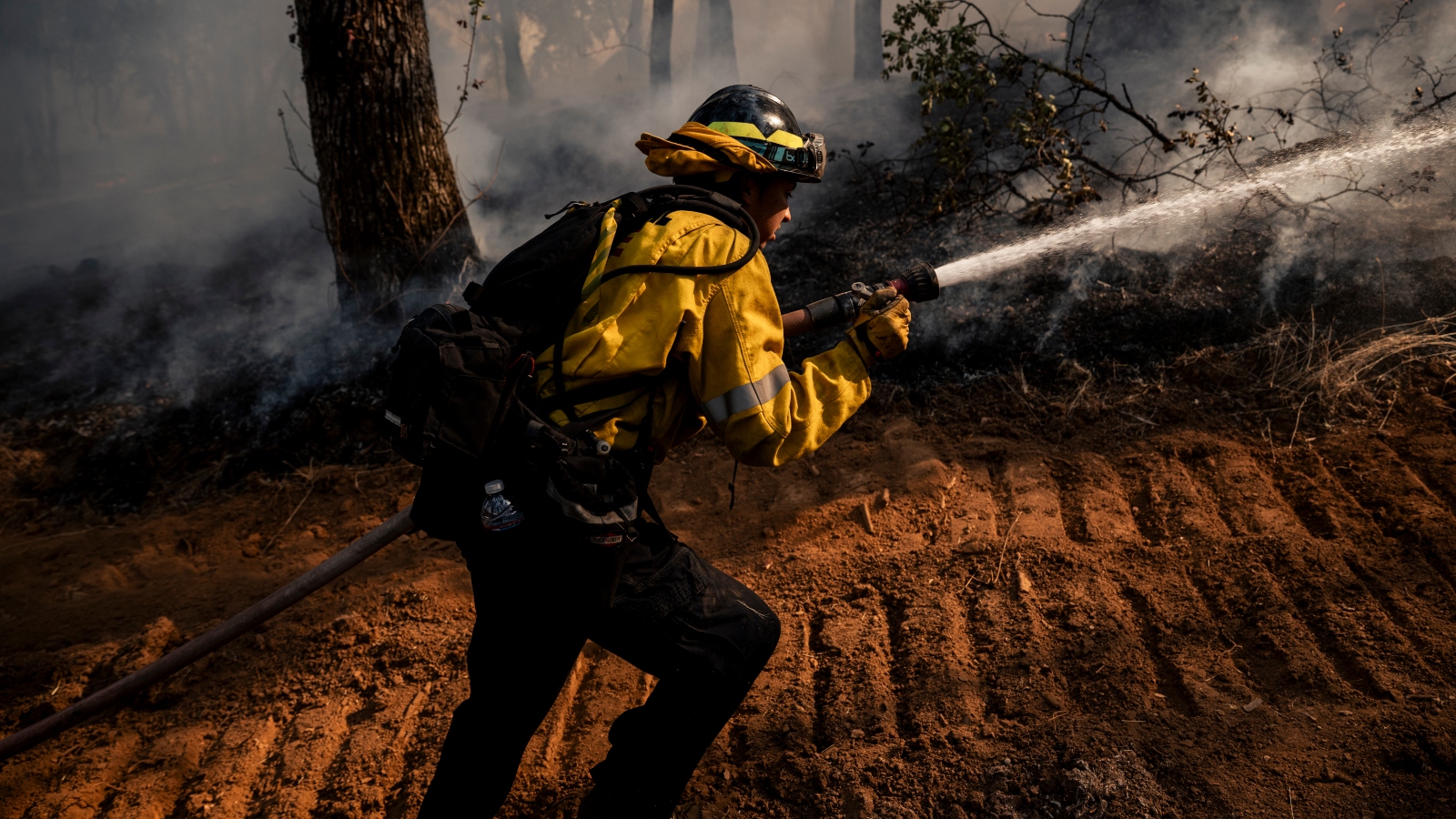
- 2021–2024: Years of escalating job hazards, sub-living wages, and chronic underinvestment trigger a mass exodus from the USFS. During this three-year window alone, the agency hemorrhages nearly half of its permanent employee workforce, stripping away decades of institutional memory and frontline expertise.
- 2025: Amid a broader wave of federal policy shifts and mass-firing sprees under the Trump administration, the USFS loses roughly 20 percent of its total workforce. Although these cuts are not explicitly targeted at firefighters, they devastate vital logistical, administrative, and mid-level support roles, further fracturing the agency’s operational scaffolding. Later in the year, an overdue pay bump is finalized, but for many demoralized veterans of the service, the intervention arrives too late to stem the bleeding.
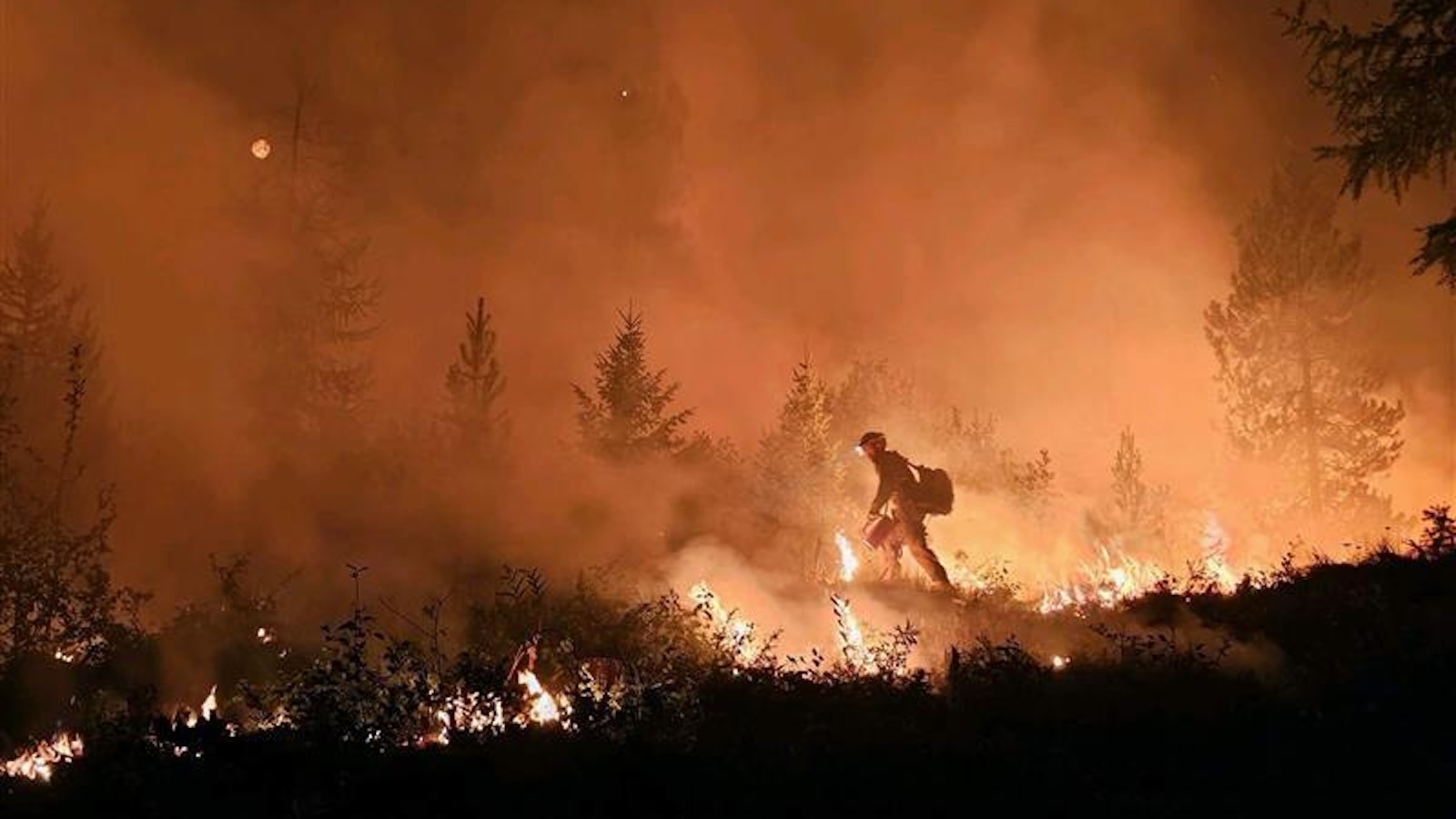
- July 18, 2026: Fueled by a relentless four-year drought, high winds, and tinder-dry conditions, national wildland fire activity escalates to "Preparedness Level 5"—the highest tier of resource deployment. Officials signal that incoming requests for emergency assistance will routinely go unanswered as supplies and personnel are stretched to absolute capacity.
- July 22, 2026: Testifying before a congressional subcommittee, USFS Chief Tom Schultz offers sweeping assurances, declaring that the agency’s firefighting workforce is "stronger than at any point in recent years" and "fully staffed and equipped to respond aggressively to every unplanned ignition."
- August 2026: Catastrophic blazes devastate neighborhoods in Spokane, Washington—the state’s second-largest city—while fires sweep aggressively across Oregon. Internal datasets reveal that hundreds of urgent requests for aircraft, crews, and supervisors go completely unfilled during critical operational windows, validating the warnings of anonymous whistleblowers who describe a response system pushed past its structural limits.
Supporting Context & Metrics: The Anatomy of a Mismatch
To understand the severity of the USFS staffing crisis, one must examine the stark contrast between official personnel metrics and the realities of modern fire suppression.
The USFS—housed within the Department of Agriculture—manages more than 193 million acres of public land nationwide and employs the vast majority of the federal government’s wildland fire workforce. For years, the agency has relied on a static hiring benchmark of 11,300 operational positions, a number that has remained flat despite exponential increases in the frequency, scale, and intensity of wildfires driven by global climate change.
[Total Managed Land: 193+ Million Acres]
       vs.
[Static Hiring Benchmark: 11,300 Positions]
       =
[Severe Operational Deficit & Unsustainable Overtime]
Frontline firefighters frequently analogize this shortfall to a soccer team operating without substitutes. As one federal fire captain in the Pacific Northwest noted, showing up to a high-stakes match with a fraction of the necessary roster—and playing an entire season without a single day off—is not just unsustainable; it is an occupational hazard that threatens fundamental safety.
The quantitative data underscores this vulnerability:
- Overtime Burdens: During the previous fire season, numerous federal firefighters logged upwards of 1,000 hours of overtime—the statistical equivalent of working an extra five months of grueling labor on top of a standard season.
- Unfulfilled Requests: An internal dataset from mid-August 2026 revealed that over a 72-hour period in the Pacific Northwest, more than 600 emergency requests for help went unanswered. This included 265 instances where aircraft, heavy equipment, and frontline crews could not be deployed because no units were available.
- Preventative Deficits: According to an analysis by the Center for Western Priorities, the USFS treated 35 percent fewer acres for hazardous fuels in 2025 compared to the previous year. In Oregon, fuel reduction treatments plummeted by 47 percent. A joint survey conducted in March by Grassroots Wildland Firefighters and the National Federation of Federal Employees found that over half of responding federal firefighters had their prescribed burning units canceled outright due to staffing constraints.
- Workforce Sentiment: In the same survey, only 25 percent of federal firefighters reported that their units were fully staffed. Alarmingly, 20 percent noted that vacant positions were being filled by unqualified personnel, raising severe cross-jurisdictional safety concerns. Furthermore, the number of inter-agency complex-incident management teams dropped from 46 in 2023 to just 38, severely limiting the agency’s capacity to command large-scale disasters.
Official Statements and Institutional Rhetoric
The institutional rift between agency executives and frontline operators has widened into an open chasm of trust.
During his July congressional testimony, USFS Chief Tom Schultz maintained an optimistic stance, assuring lawmakers:
"Our firefighting workforce is stronger than at any point in recent years. We are fully staffed and equipped to respond aggressively to every unplanned ignition."
This sentiment was reinforced by USFS spokesperson John Winn, who declined to answer specific inquiries regarding internal staffing shortfalls. In an email statement defending the agency’s posture, Winn wrote that the service was "fully staffed at the level we are funded for, and our posture allows us to respond effectively—just as we have for decades."
Frontline personnel, however, view these public declarations as a dangerous public relations exercise that masks a crumbling foundation. Because federal employees are strictly barred from speaking publicly without authorization, nine firefighters agreed to share their insights with The Guardian on the condition of anonymity.
One fire captain expressed deep moral outrage over the official narrative, stating:

"Having more firefighters means I have a higher probability of coming home. How are we supposed to feel when our leaders—the same people who get up and speak to the mourning families when firefighters die—are lying about our capacity?"
Another veteran firefighter questioned the very ethos of the institution, asking:
"What’s the purpose of the fire service? That’s the hard question we’re starting to ask ourselves. Is it actually to manage fire and to do what we’re telling the public we’re intended to do? Or is it simply to sell the public a belief so that they can sleep at night?"
Leadership Gaps and the Mid-Management Crisis
While the shortage of boots-on-the-ground firefighters garners significant public attention, veteran fire managers argue that the most perilous vulnerability lies in the erosion of mid-management and upper-level supervisory roles.
Positions such as taskforce leaders, division supervisors, heavy equipment bosses, and incident commanders require years—often decades—of specialized training, field experience, and certification. When these leaders depart, they cannot be easily replaced by seasonal hires or expedited training programs.

Seth McKinney, a fire management officer with the Boulder County Sheriff’s Office who spent 12 years with the USFS before returning this summer to assist an understaffed forest, emphasized that the current crisis is the direct result of systemic underinvestment:
"It shouldn’t really surprise anybody that we’re in the situation that we are in, because we haven’t invested in our federal firefighters… Without experienced middle management, you don’t have anything resembling effective coordination."
The absence of qualified managers creates cascading operational failures. For instance, during recent fires in Oregon, private wildfire suppression contractors sat completely idle simply because there were not enough qualified government managers available to supervise their deployment, a failure confirmed by state lawmakers and local forestry officials alike.
Future Outlook: Structural Reform and an Uncertain Horizon
As the United States navigates the peak of a destructive and punishing wildfire season—with over 49,200 fires burning more than 7.2 million acres nationwide—attention is increasingly turning toward the long-term structural viability of federal land management.
In response to mounting pressure, federal authorities are pushing forward with a major consolidation of the federal firefighting workforce under a newly established agency: the Wildland Fire Service, housed within the Department of the Interior. Proponents argue that this centralized approach will streamline administrative costs, optimize resource allocation, and foster better inter-agency coordination.
Yet, skepticism among frontline personnel remains high. While many career firefighters welcome structural modernization, widespread anxiety persists regarding whether political leadership will follow through on substantive promises to improve mental health support, provide competitive, living wages, and rebuild the foundational middle management necessary to keep crews safe.
With climate projections pointing toward longer, more volatile fire seasons that stretch deep into autumn and winter, the status quo is no longer tenable. Without a radical influx of genuine investment, realistic staffing benchmarks, and an honest reckoning with institutional capacity, the American wildland fire service risks asking an overburdened, under-resourced corps of professionals to bear an impossible weight—until the system finally snaps.