For two decades, the Biodiversity Heritage Library (BHL) has served as the digital ark of the natural world, preserving millions of pages of scientific literature, field notes, and institutional archives. Yet, as a recent collaborative digitization project between the Academy of Natural Sciences of Drexel University and the BHL demonstrates, the most transformative aspect of this work goes far beyond raw preservation. Digitization acts as an archivist’s magnifying glass, illuminating the hidden figures—particularly women—who shaped the early landscape of natural history but were subsequently swallowed by historical obscurity.
At the center of this archival rescue mission is Carrie Baily Aaron, a brilliant late-19th and early-20th-century entomologist whose handwritten notebooks, award-winning essays, and decades-long correspondence have recently been brought to light. Through the meticulous efforts of the Academy’s library staff, student interns, and the integration of modern linked-data architectures like Wikidata, Aaron has transitioned from an ambiguous archival placeholder—historically cataloged as simply "Mrs. Aaron"—into a fully recognized historical creator.
This article explores the profound impact of digitizing historical manuscripts, tracing Carrie Aaron’s journey from a mosquito-eradication essayist and a frustrated early member of the American Entomological Society to a rediscovered pioneer of ecological observation. It also highlights how contemporary librarianship is dismantling systemic gender erasure in science history, one metadata record at a time.
Detailed Chronology
The 19th-Century Mosquito Crisis and the Lamborn Essay Competition
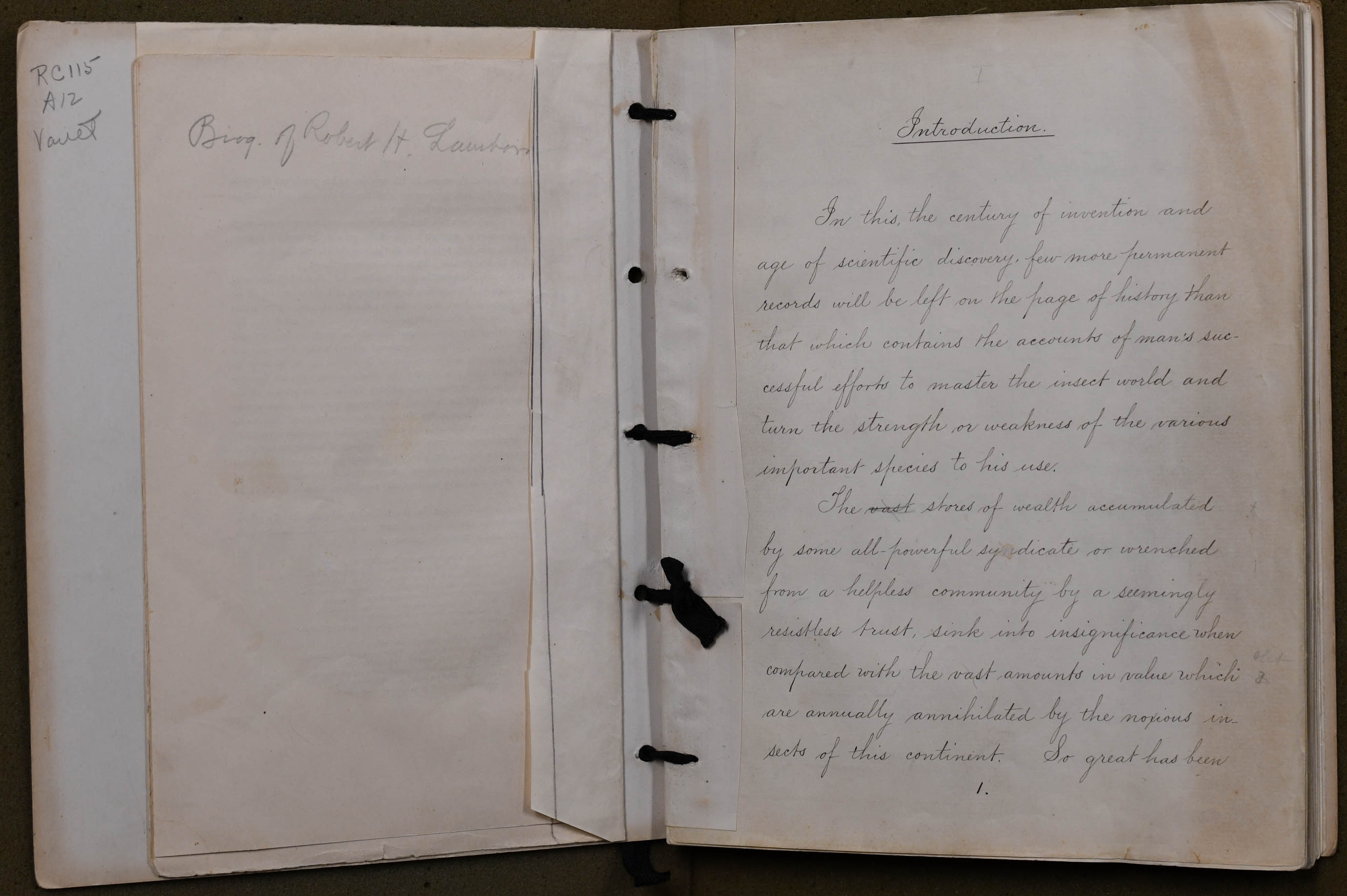
The narrative of Carrie Aaron’s entry into the annals of entomology begins with an infrastructural annoyance that morphed into a scientific crusade. In the late 19th century, Dr. Robert Henry Lamborn was deeply engaged in the monumental task of overseeing the construction of the Lake Superior Railroad. Throughout the grueling project, Lamborn and his workforce were relentlessly tormented by swarms of mosquitoes.
Driven to distraction—and visionary action—Lamborn resolved to find a practical solution to what he viewed as a major vector of human misery and economic hindrance. Upon the completion of the railroad, Lamborn established a public prize competition, offering financial rewards for the three best essays outlining effective, actionable methods to eradicate or mitigate the mosquito pestilence.
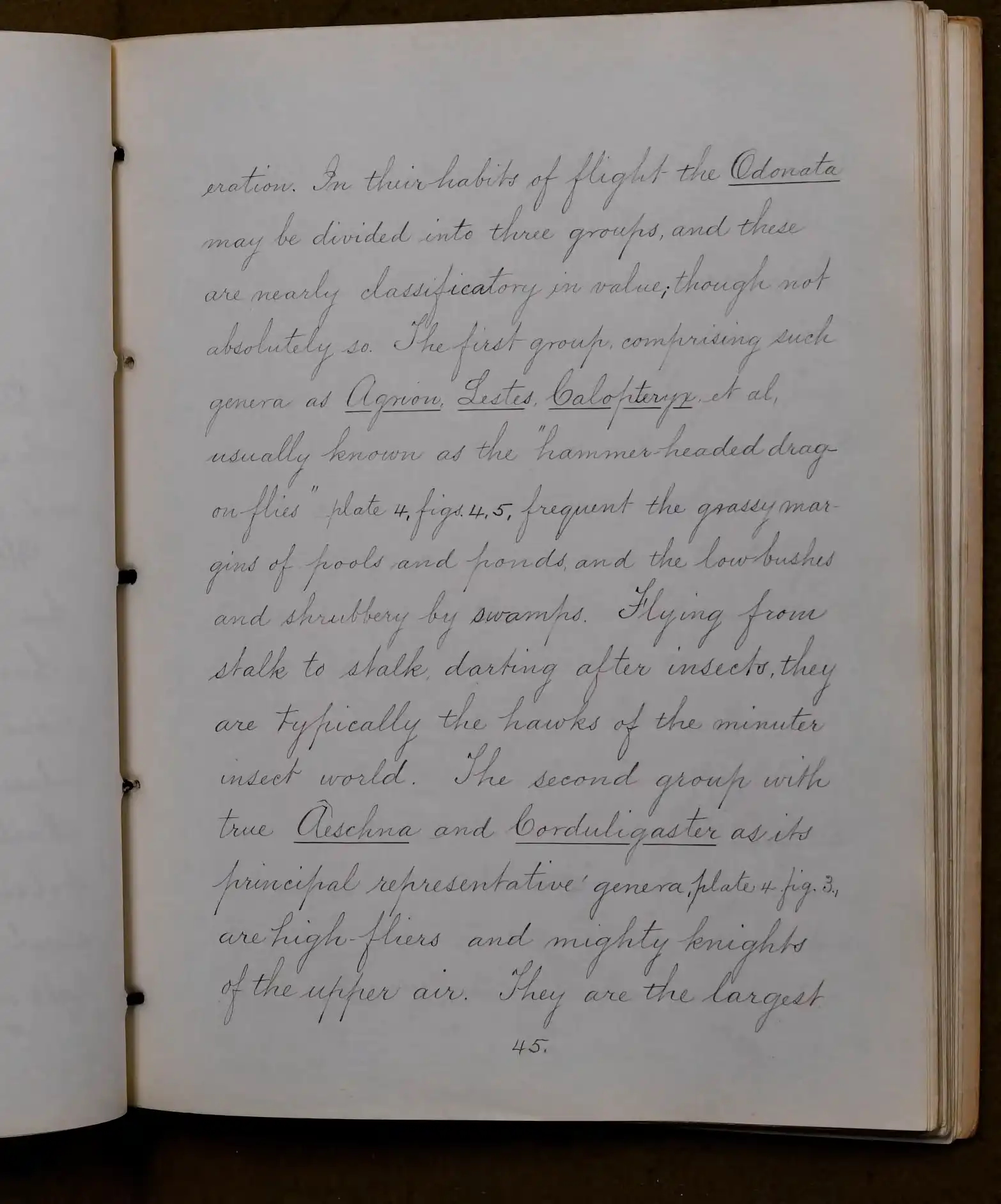
Sensing an opportunity to apply her sharp observational skills, Carrie Aaron entered the fray. Her submission was a masterclass in early ecological thinking. Far from relying solely on chemical deterrents, Aaron analyzed the complex trophic webs of aquatic and terrestrial ecosystems. She famously championed the dragonfly—which she poetically dubbed “the hawks of the minuter insect world”—as a supreme natural predator capable of keeping mosquito populations in check.
So rigorous and imaginative was her research that Aaron and her contemporaries even attempted to self-inoculate using what were then believed to be the poisonous droplets of mosquitoes. The experiment, she later noted with characteristic scientific detachment, proved unsuccessful, “owing probably to the inferiority of the needle as an injector, compared with the delicate hypopharynx.”
Aaron’s essay was ultimately selected and published alongside other notable submissions in the landmark volume Dragon Flies vs. Mosquitoes: Can the Mosquito Pest be Mitigated? under the apt title "The Dipterous Enemies of Man." Her triumph earned her the immediate respect of the Philadelphia scientific establishment, cemented by a congratulatory letter from renowned entomologist Henry Skinner, who assured her that her reputation in the field was now “well established.”
Frustration and Fellowship: The American Entomological Society (1900)
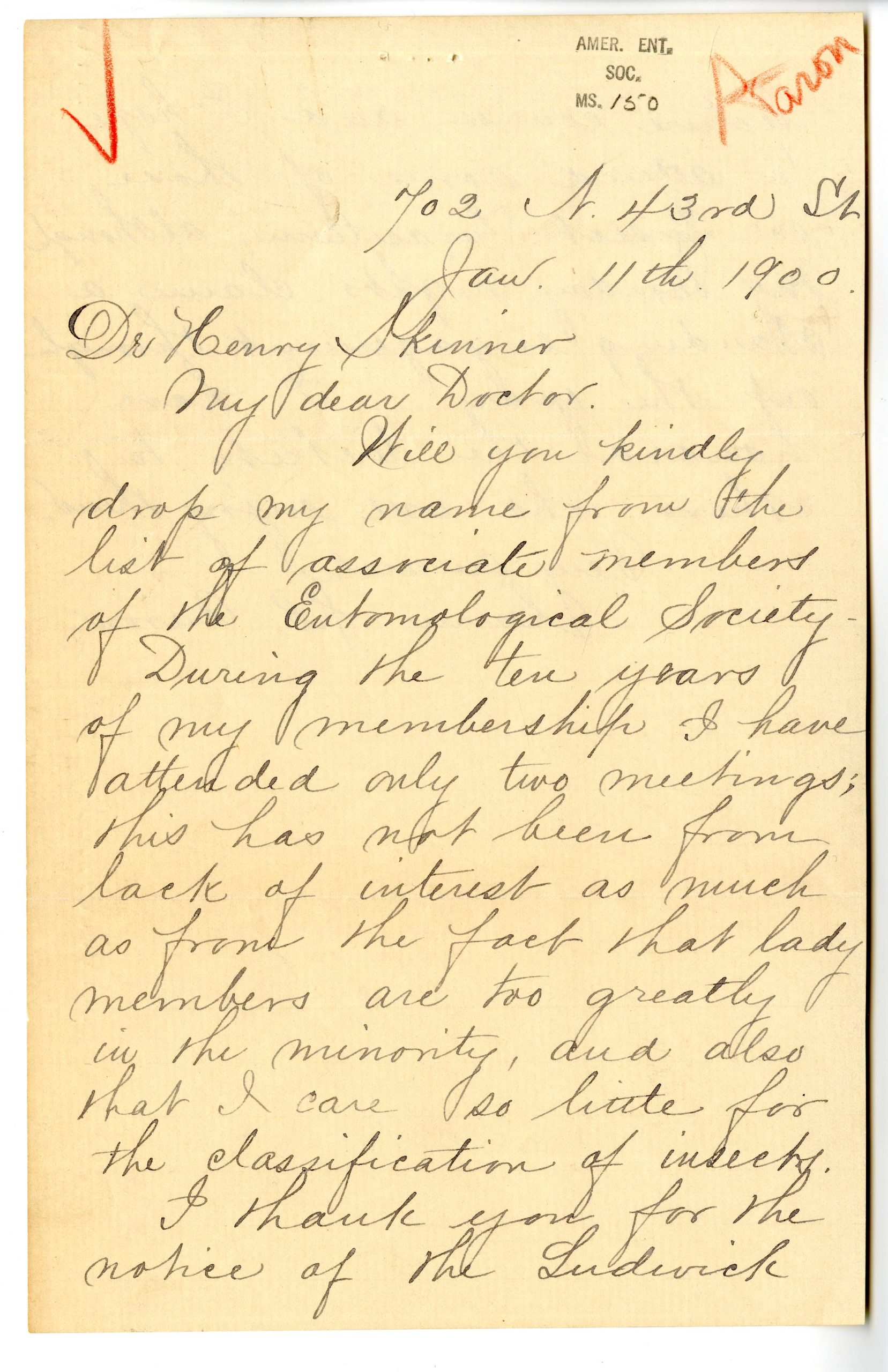
Despite her early acclaim, Aaron’s relationship with institutional science was fraught with the structural barriers of her era. On January 11, 1900, exactly ten years after receiving Skinner’s glowing letter of validation, Aaron penned a candid, poignant missive to the American Entomological Society (AES).
In the letter, she formally requested that her name be stricken from the roster of associate members:
"During the ten years of my membership I have attended only two meetings; this has not been from lack of interest as much as from the fact that lady members are too greatly in the minority, and also that I care so little for the classification of insects."
Aaron’s resignation was not an indictment of science itself, nor did it sever her personal ties to the community. Her withdrawal highlighted a systemic alienation felt by women in late-Victorian scientific societies—where they were frequently marginalized, vastly outnumbered, and sidelined from active governance—while also pointing to a personal preference for field observation and broader ecological concepts over rigid taxonomic cataloging.
Crucially, Aaron’s departure from formal membership did not end her relationship with Henry Skinner. The two maintained a warm, intellectually sympathetic correspondence that spanned over three decades, culminating in a final surviving thank-you letter written in 1923.
Western Travels and the Search for Forgotten Curators (1926)
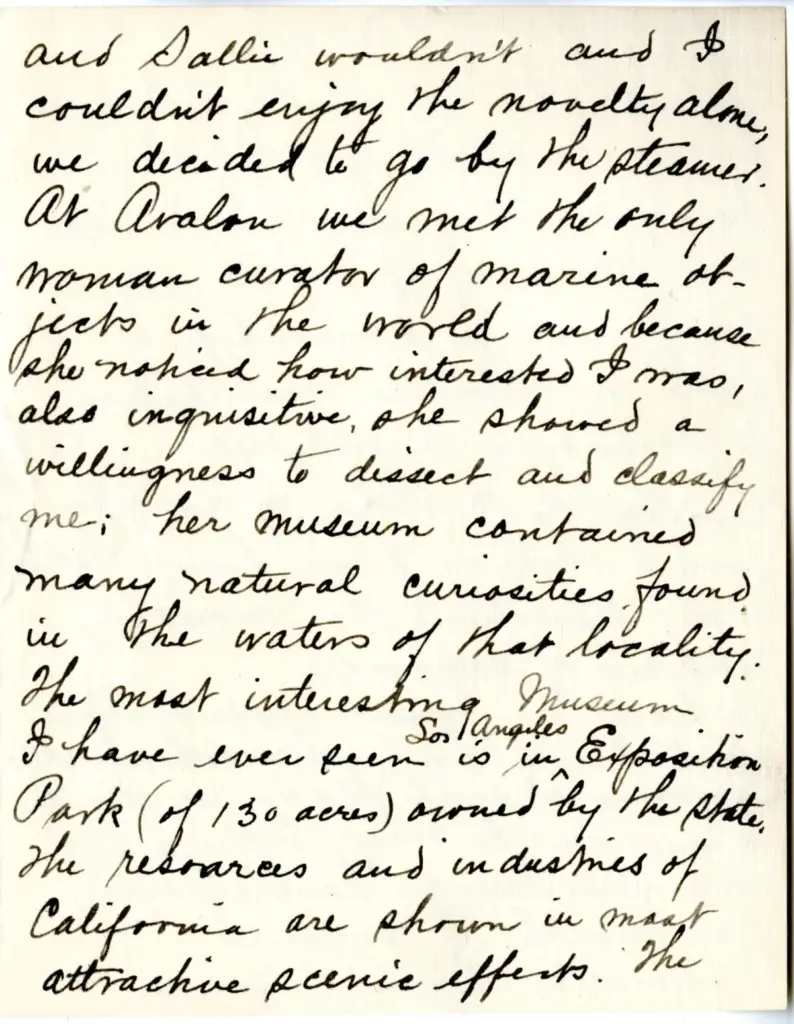
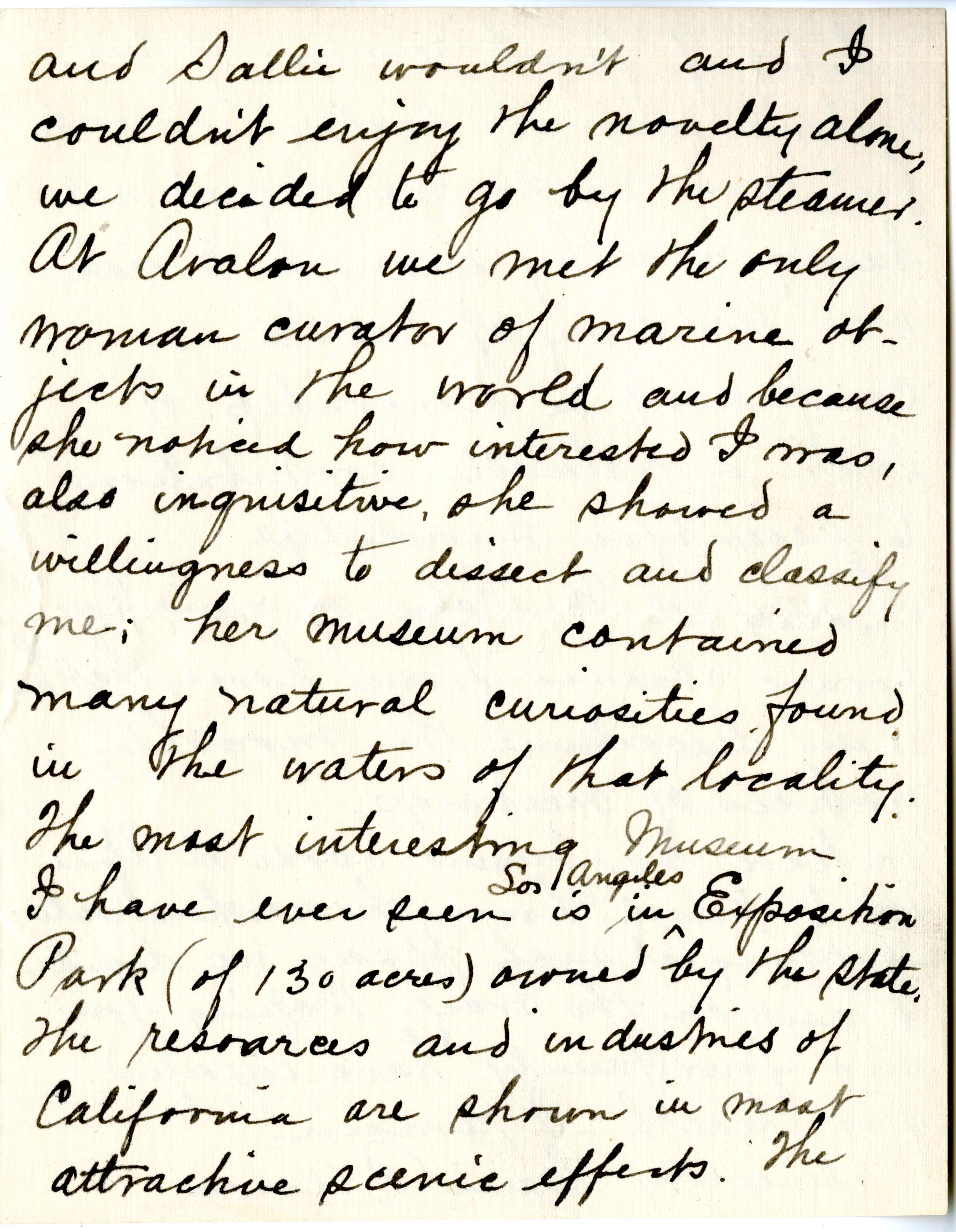
Decades after her formal retreat from institutional societies, Aaron’s inquisitive spirit remained entirely undimmed. In March 1926, writing from Santa Monica, California—which she lovingly characterized as “the land of perpetual bloom and uninterrupted sounds of birds and insects”—Aaron shared her museum-going adventures with Skinner.
In her correspondence, she detailed a fascinating encounter at Avalon:
"At Avalon we met the only woman curator of marine objects in the world and because she noticed how interested I was, also inquisitive, she shared a willingness to dissect and classify me; her museum contained many natural curiosities found in the waters of that locality."
Later in the same letter, she expressed awe at the newly established Exposition Park museum in Los Angeles, marveling at its exhibits of prehistoric fossils. She noted with characteristic humility how poor health prevented her from helping the Academy of Natural Sciences acquire similar treasures. Today, Aaron’s vivid field observations serve as a double-layered historical gift: not only do they provide a window into her lively intellect, but they have also ignited a modern detective hunt among archivists trying to identify the enigmatic "only woman curator of marine objects in the world" whom she met in Avalon.
Supporting Context & Metrics
The Mechanics of Erasure and Metadata Rectification
The rediscovery of Carrie Aaron sheds light on a pervasive challenge in digital humanities and library science: the archival erasure of women. Prior to the intervention of the Academy of Natural Sciences’ archival team, Aaron’s primary finding aid record was frustratingly sparse. She was listed simply as "Mrs. Aaron"—a patriarchal designation that stripped her of her individual identity, rendered her invisible to algorithmic search tools, and severed her from her intellectual output.
This anonymization is a structural artifact of historical record-keeping, where married women were frequently subsumed under their husbands’ names in institutional ledgers. In the realm of digital libraries, where discovery depends entirely on clean, structured metadata, such omissions effectively banish researchers from finding historical female scientists.
The Anatomy of the Digitization Pipeline
The transformation of Carrie Aaron’s records from dusty manuscripts to globally accessible digital assets was made possible through a multi-tiered institutional effort:
Project Scope: 83 handwritten notebooks and field journals from the Academy of Natural Sciences were targeted for digitization and transcription under the BHL field journal initiative.
Collaborative Intervention: Academy Archivist Jessica Lydon identified the metadata deficiency in the "Mrs. Aaron" finding aid, supplying Cataloging and Digital Resources Librarian Briana Giasullo with the biographical data necessary to establish a verified BHL Creator ID.
Linked Data Integration: Giasullo bridged the library record with the global semantic web by linking Aaron’s BHL Creator ID directly to a newly minted Wikidata identifier (Q125503946), ensuring permanent, unambiguous attribution across platforms.
AES Correspondence Project: Funded by Dr. William Day and the American Entomological Society, student intern Will Le undertook the painstaking digitization of the entire American Entomological Society correspondence collection, uploading thousands of pages to PA Photos and Documents and making intimate letters—such as Aaron’s 1900 resignation and her 1926 travelogues—available on standard laptops worldwide.
Official Statements & Perspectives
The intersection of archival labor, technological innovation, and historical recovery has profoundly shifted how modern librarians view their roles. Speaking on the unexpected joys of uncovering primary sources, Briana Giasullo, Cataloging and Digital Resources Librarian at the Academy of Natural Sciences, reflected on the emotional and intellectual pull of the project:
"I don’t consider myself a historian, but it’s difficult to resist historical research when presented with easily accessible primary sources and when given the tools to link subjects across different platforms. I hope to continue this energizing work at the Academy of Natural Sciences in collaboration with BHL for years to come."
Giasullo’s perspective underscores a broader ethos within the Biodiversity Heritage Library community: that cataloging is not a passive, administrative chore, but an active form of historical excavation. By treating metadata as a dynamic tool for social justice and historical equity, modern librarians are actively repairing the omissions of their 19th-century predecessors.
Future Outlook
As the Biodiversity Heritage Library celebrates its 20th anniversary, the story of Carrie Aaron stands as a shining paradigm of what the next era of digital archiving must prioritize. The mass digitization of historical literature is no longer merely about preserving deteriorating paper; it is about surfacing marginalized voices, connecting disparate archives through linked data, and empowering researchers to ask entirely new questions.
For the Academy of Natural Sciences and Drexel University, the work is far from finished. Student interns and staff continue to process thousands of manuscript pages, while librarians like Giasullo pursue open research threads—such as identifying the mysterious female marine curator in Avalon.
Ultimately, Carrie Aaron’s journey from an anonymous "Mrs. Aaron" to an internationally linked historical creator proves that archives are living ecosystems. When illuminated by open access, collaborative digitization, and dedicated human curiosity, the written remnants of the past do not merely record history—they invite us to rewrite it more justly.