East Tennessee is undergoing a high-stakes industrial revival, riding a wave of national momentum toward a domestic "nuclear renaissance." Driven by federal ambitions to quadruple the nation’s nuclear energy output and secure a robust nuclear weapons supply chain, billions of dollars are flowing back into the historic cradle of the Manhattan Project. State leaders and private contractors are championing this influx as a transformative economic boon—a promise of thousands of high-paying jobs, technological innovation, and a renaissance built on the region’s unmatched expertise in nuclear engineering.
Yet, this optimistic vision is shadowed by deep-seated local anxiety. For generations, communities across the Volunteer State have lived in the shadow of atomic research, weapons production, and toxic legacy waste. From the historic displacement of Appalachian farmers to decades-old controversies surrounding chronic illnesses, radiation leaks, and industrial disasters like the Kingston coal ash spill, the region’s history is scarred by environmental degradation.
Today, as national nuclear suppliers expand operations and Tennessee vies to become the centerpiece of the Department of Energy’s (DOE) new "nuclear lifecycle innovation campus," that friction has reached a boiling point. Grassroots resistance—exemplified by fierce local battles over zoning and plant expansions in Jonesborough and Claiborne County—highlights a profound democratic tug-of-war. Residents are being asked to weigh the undeniable economic necessity of modern, well-paying employment against opaque risks, deregulated safety standards, and a haunting legacy of contamination.
Detailed Chronology: From the Manhattan Project to Modern Expansion
The roots of East Tennessee’s nuclear identity stretch back more than eight decades, anchoring a timeline defined by wartime urgency, Cold War secrecy, and a modern struggle for environmental accountability.
1942–1945 (The Manhattan Project Era): The federal government selects a remote, mountainous region of East Tennessee—Oak Ridge—to house secret facilities for the development of the atomic bomb. Over 3,000 local farming families are abruptly displaced to make way for massive industrial and research complexes.
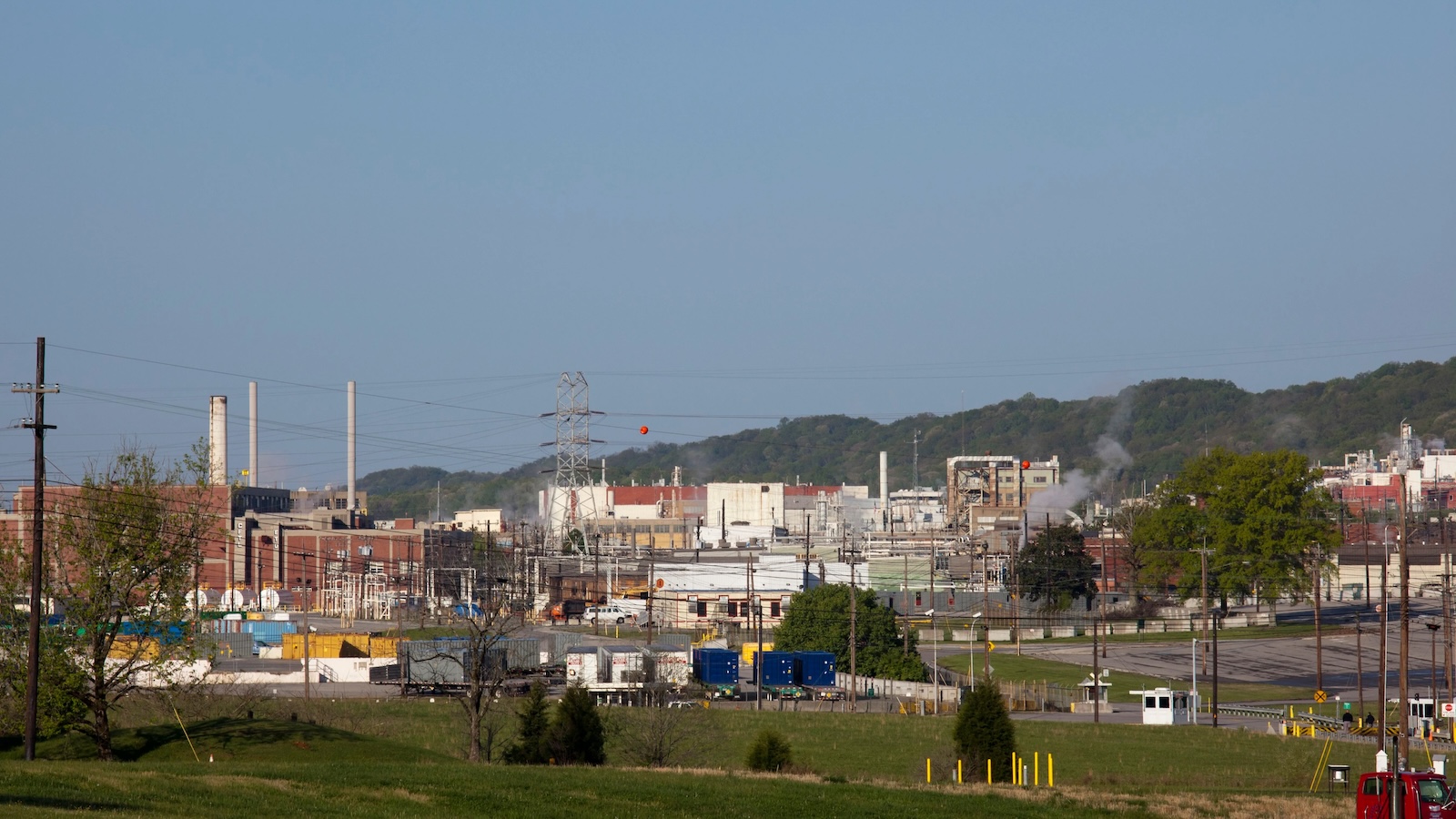
1943–1985 (Operation of the K-25 Plant): Uranium enrichment operations begin at Oak Ridge’s K-25 plant. Decades later, former workers and epidemiological studies tie chronic exposure at the facility to high rates of neurological conditions, fatal respiratory ailments, and various cancers.
1950s–Present (Industrial Footprint in Eastern Tennessee): Facilities like Nuclear Fuel Services in Erwin—a subsidiary of BWX Technologies (BWXT)—begin processing uranium, compiling a documented history of chemical leaks, airborne toxic dust, and groundwater contamination concerns.
December 2008 (The Kingston Fossil Plant Disaster): A catastrophic structural failure at the Tennessee Valley Authority’s Kingston Fossil Plant (originally constructed to power the Oak Ridge war complex) releases 1.1 billion gallons of toxic coal ash. Subsequent cleanup operations expose unprotected workers to hazardous waste, leading to a wave of debilitating and fatal illnesses.
2024–2025 (The BWXT Expansion in Jonesborough): BWX Technologies purchases a facility in Jonesborough, Tennessee, announcing a 10-year, $1.6-billion contract to convert Department of Energy depleted uranium oxide into high-purity depleted uranium for the Y-12 National Security Complex. Local residents launch intense resistance campaigns against the required zoning changes.
Early 2026 (Broad Regional Pushback and Federal Siting):
January 2026: The federal government implements streamlined regulatory changes to radioactive waste storage and facility siting, drawing sharp critiques from environmental health and nuclear safety experts.
March 2026: Hundreds of residents in Claiborne County pack a town hall, successfully halting a proposed nuclear graphite facility. Concurrently, despite fierce local mobilization and opposition led by community advocates, Washington County commissioners approve the zoning changes necessary to clear the path for the BWXT Jonesborough plant.
July 2026: The Department of Energy selects Tennessee—alongside Utah, Oklahoma, Louisiana, and Idaho—as one of five finalists for a multi-billion-dollar "nuclear lifecycle innovation campus."
Supporting Context & Metrics: The Scale of the Nuclear Dilemma
To understand the urgency driving federal and state initiatives, one must look closely at the logistical crisis facing the United States’ nuclear infrastructure. For decades, the nation has struggled with a fundamental question: What to do with the radioactive remnants of splitting atoms?
The Storage Crisis
Spent nuclear fuel remains lethally radioactive for millennia. Because the federal government has repeatedly failed to establish a permanent underground repository—most notably due to decades of political and public paralysis surrounding the Yucca Mountain project in Nevada—the nation relies on interim storage.
The Footprint: There are currently 85 interim storage sites scattered across the United States.
Volume: These sites hold more than 86,000 tons of radioactive waste.
Physical Scale: Combined, this mass of spent fuel is roughly equivalent to a volume that could fill a football field nearly 10 yards deep.
The Federal Innovation Campus Framework
Faced with this mounting logistical and public relations nightmare, the DOE shifted strategy. Rather than forcing unwanted repositories onto resistant communities, the federal government invited states to volunteer as potential hosts for "nuclear lifecycle innovation campuses."
These integrated industrial hubs are designed to handle the entire cradle-to-grave spectrum of the nuclear fuel cycle:
Uranium Enrichment and Fuel Fabrication: Preparing fresh fuel for advanced reactors.
Energy Generation: Providing localized, carbon-free baseload power.
Reprocessing and Recycling: Extracting usable materials from spent nuclear fuel to minimize long-term waste volume.
Waste Management: Serving as the central anchor for advanced storage and lifecycle solutions.
In July, Tennessee’s ongoing bid cleared a major hurdle when the DOE named it one of five finalist states. For East Tennessee, this builds upon a decade of aggressive economic recruitment that has secured roughly $10 billion in investment and generated nearly 3,000 specialized jobs via companies like BWXT, Orano, and Centrus. State officials project that a fully realized nuclear innovation campus could inject tens of thousands of auxiliary jobs into the local economy, ranging from heavy construction and manufacturing to advanced engineering and nuclear research.
Official Statements & Perspectives
The debate over East Tennessee’s nuclear future reveals a stark ideological and lived divide between institutional architects, corporate leaders, and local residents.
Proponents of the Renaissance
State and industrial leaders emphasize that East Tennessee possesses a unique, irreplaceable ecosystem of nuclear know-how. They argue that leaning into this legacy is both an economic necessity and a matter of national security.
"Appalachia was key to the U.S. developing a defense power in a time frame like no other because of the industrious nature of the people of Appalachia," noted Ronald Daily, President of Operations at BWXT.
From a scientific standpoint, the infrastructure already exists to manage complex atomic processes safely, according to researchers embedded in the region.
"Part of Oak Ridge’s role is that we have expertise in all parts of that fuel cycle," explained Joe Hoagland, physical chemist and associate laboratory director for Fusion and Fission Energy and Science at the Oak Ridge National Laboratory. "We know how to enrich it. We know how to use it. We know how to store it. We know how to transport it, and we understand the chemistries around how to recycle it." Hoagland adds that the modern landscape has shifted from legacy utility giants to an agile, startup-driven culture fueled by exploding electricity demands.
State economic development officials echo these sentiments, emphasizing long-term workforce development.
"The second graders of today are going to be the ones that actually are coming in to work at these facilities," said Braden Stover, nuclear advisor for the Tennessee Department of Economic and Community Development. "We need to get to them and just let them know, Hey, here is what is coming."
Critics, Regulators, and Local Residents
Conversely, independent experts and local residents point out that deregulation, combined with a history of corporate opacity, threatens public trust and environmental health.
Valerie Thomas, a researcher studying nuclear engineering and environmental impacts at the Georgia Institute of Technology, warns that federal efforts to streamline and accelerate facility siting and waste rules under the Trump administration are counterproductive:
"There are two reasons we want nuclear regulations to be very strong. One is, no, you don’t want to have errors. The second is if people think the regulations aren’t very strong, they’re not going to want nuclear power and nuclear facilities."
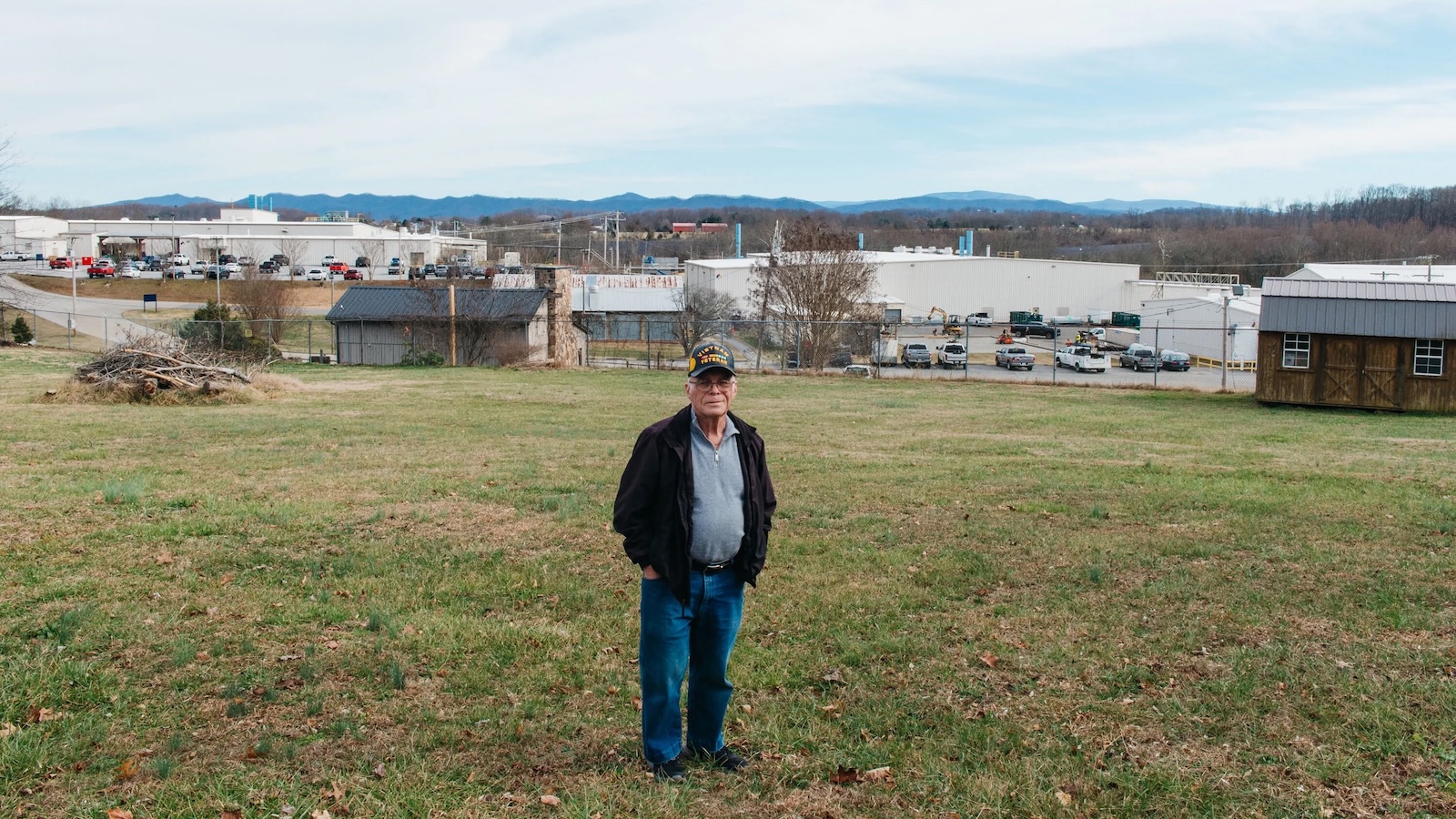
On the ground in East Tennessee, residents feel the human cost of industrial development far more acutely than the abstract metrics of economic growth. Luther “Sunny” Miller, a lifelong resident nearing 80 whose personal history brushes up against the Aerojet plant and whose family has battled severe health issues, captures the local skepticism:
"They’re going to turn over the most beautiful parts of Tennessee into a nuclear waste area."
Yet Miller’s frustration is not purely anti-industrial; it is rooted in a plea for transparency and bodily autonomy.
"You can’t live on car washes and chicken places alone, that’s a real feeling," Miller acknowledged, pointing to the economic desperation of many rural Appalachians. "But let me make this decision based on facts."
That sentiment was mirrored by Will Manning, a 42-year-old knifemaker and father from Jonesborough who spent months organizing his neighbors against the BWXT zoning changes. Following the County Commission’s ultimate approval of the facility, Manning expressed profound disillusionment with the public engagement process:
"I honestly don’t know what was more disgusting, disappointing, depressing: the outcome of the vote or the dog-and-pony show they put on and blatant disregard for the strong voice of this community."
Future Outlook
As Tennessee moves deeper into the DOE’s evaluation process for the nuclear lifecycle innovation campus, the state stands at a critical historical crossroads.
Federal officials have indicated that any final siting decisions will theoretically require extensive, multi-year environmental impact assessments to screen out geological vulnerabilities, aquifers, and vital river systems. Furthermore, project applications suggest that substantial federal funding could be funneled into local infrastructure modernization.
However, the path forward is unlikely to be smooth. The fierce opposition that successfully derailed the Claiborne County nuclear graphite facility and mobilized hundreds of residents in Washington County demonstrates that East Tennesseans are no longer willing to accept industrial expansion blindly. Grassroots networks, organized through digital forums and local political action groups, are actively monitoring elections and vowing to hold public officials accountable for zoning and environmental approvals.
Ultimately, the viability of America’s nuclear renaissance may well be decided not in Washington boardrooms or corporate engineering labs, but in the valleys and courthouses of East Tennessee. Whether the state can successfully forge a modern, transparent compact between economic survival and environmental safety remains the defining question of its atomic future.