Executive Overview
Across the arid savannahs of East Africa, the steppes of Central Asia, and the expanding margins of the Sahel, an ancient way of life is facing an existential crisis. For roughly 500 million pastoralists worldwide—communities that rely on mobile livestock herding to navigate extreme environments—climate change is no longer a distant projection; it is a daily battle for survival.
In northeast Tanzania, Andrew Msami watches helplessly as members of his Maasai community are forced to liquidate their sacred cattle herds—the literal and cultural repository of their wealth and social standing—and replace them with hardy, yet economically inferior, goats. In Chad, Indigenous leader Hindou Oumarou Ibrahim observes the encroaching desert swallow up to 1.2 miles of habitable land every single year.
Driven by compounding crises of accelerated desertification, invasive species, extractive industries, tourism pressures, and restrictive government policies, pastoralist communities are mobilizing on a historic scale. This week, hundreds of these land stewards have converged in Mongolia for the 17th session of the United Nations Convention to Combat Desertification (UNCCD). Marking the UN’s International Year of Rangelands and Pastoralists, this year’s summit has introduced a breakthrough formal Indigenous caucus. Yet, beneath the diplomatic optics lies a tense political struggle: Indigenous pastoralists are demanding that the international community move past historical neglect, secure their land and mobility rights, and recognize that their centuries-old adaptation strategies may hold the key to surviving a rapidly warming planet.
Detailed Chronology: From Rio to Ulaanbaatar
The 1992 Earth Summit and the Great Disconnect
To understand the current marginalization of pastoralist communities within global environmental governance, one must look back to the historic 1992 United Nations Earth Summit in Rio de Janeiro, Brazil. At that landmark conference, world leaders formally identified three interconnected planetary emergencies: climate change, biodiversity loss, and desertification. To combat these threats, the international community established three separate convention tracks, each holding its own Conference of the Parties (COP).
However, a profound funding and political disparity immediately took root. Over the subsequent three decades, trillions of dollars poured into climate change mitigation and biodiversity conservation frameworks. Meanwhile, desertification and land degradation were largely sidelined, treated not as systemic global crises, but as localized developmental issues relegated to the Global South.
The Geopolitical Shift: Climate Realities Hit the Global North
For years, wealthy industrialized nations viewed desertification as a distant challenge affecting developing nations in Africa and Asia. That geopolitical complacency has shattered.
"History is catching up to them," notes Hindou Oumarou Ibrahim, an Mbororo leader from Chad and the inaugural chair of the UNCCD’s Indigenous peoples caucus. Pointing to severe, unprecedented droughts that have crippled nations like Spain, France, and Sweden over recent years, Ibrahim emphasizes that desertification has firmly crossed the threshold into a developed-world crisis.
Despite this wake-up call, political will and financial flows still heavily favor climate and biodiversity frameworks over land degradation initiatives. Rangelands—which make up roughly half of the Earth’s total landmass—remain critically underfunded and overlooked by mainstream environmental movements.
A Historic Milestone in Mongolia
Despite lingering institutional resistance, the 17th UNCCD meeting in Mongolia represents a watershed moment. Unlike the climate (UNFCCC) and biodiversity (CBD) COPs, this year’s UNCCD summit features a formal, dedicated caucus for Indigenous peoples.
The inclusion of this caucus did not come easily. During the opening week of the conference, Ibrahim spearheaded a prominent protest demanding full participation rights and the formal establishment of administrative functions for the Indigenous caucus. For pastoralist leaders, this platform is not merely symbolic; it is a vital arena to challenge top-down conservation models and advocate for land tenure security on an international stage.
Supporting Context & Metrics: The Science of Survival and the Cost of Neglect
The Mathematics of Marginalization
- Global Pastoralist Population: Approximately 500 million people worldwide engage in pastoralism, tending herds of cattle, camels, sheep, and goats.
- Rangeland Coverage: Rangelands account for approximately 50 percent of the Earth’s terrestrial landmass.
- The Pace of Desertification: Desertification is currently occurring at a rate 30 to 35 times the historical average, outstripping the natural regenerative capacities of even the most resilient ecosystems.
- The Sahelian Advance: In Chad, the Sahara Desert is expanding southward at an alarming rate of 2 kilometers (1.2 miles) per year, consuming traditional grazing corridors.
Cultural Identity Under Siege
For the Maasai of Tanzania, cattle are far more than livestock; they are the bedrock of community identity. A family’s social standing, economic security, and cultural heritage are intrinsically bound to herd size. Traditionally, Maasai pastoralists store their wealth in cattle rather than traditional banking institutions.
However, escalating climate volatility has broken historic seasonal patterns. Andrew Msami explains that while adapting to climatic shifts has been woven into Maasai culture for generations, the current velocity of change represents an absolute existential threat.
"We have to adapt because it’s like desertification is attacking our identity," Msami told Grist. "If you lose your identity, it means you have lost everything."
The Paradox of State Restriction
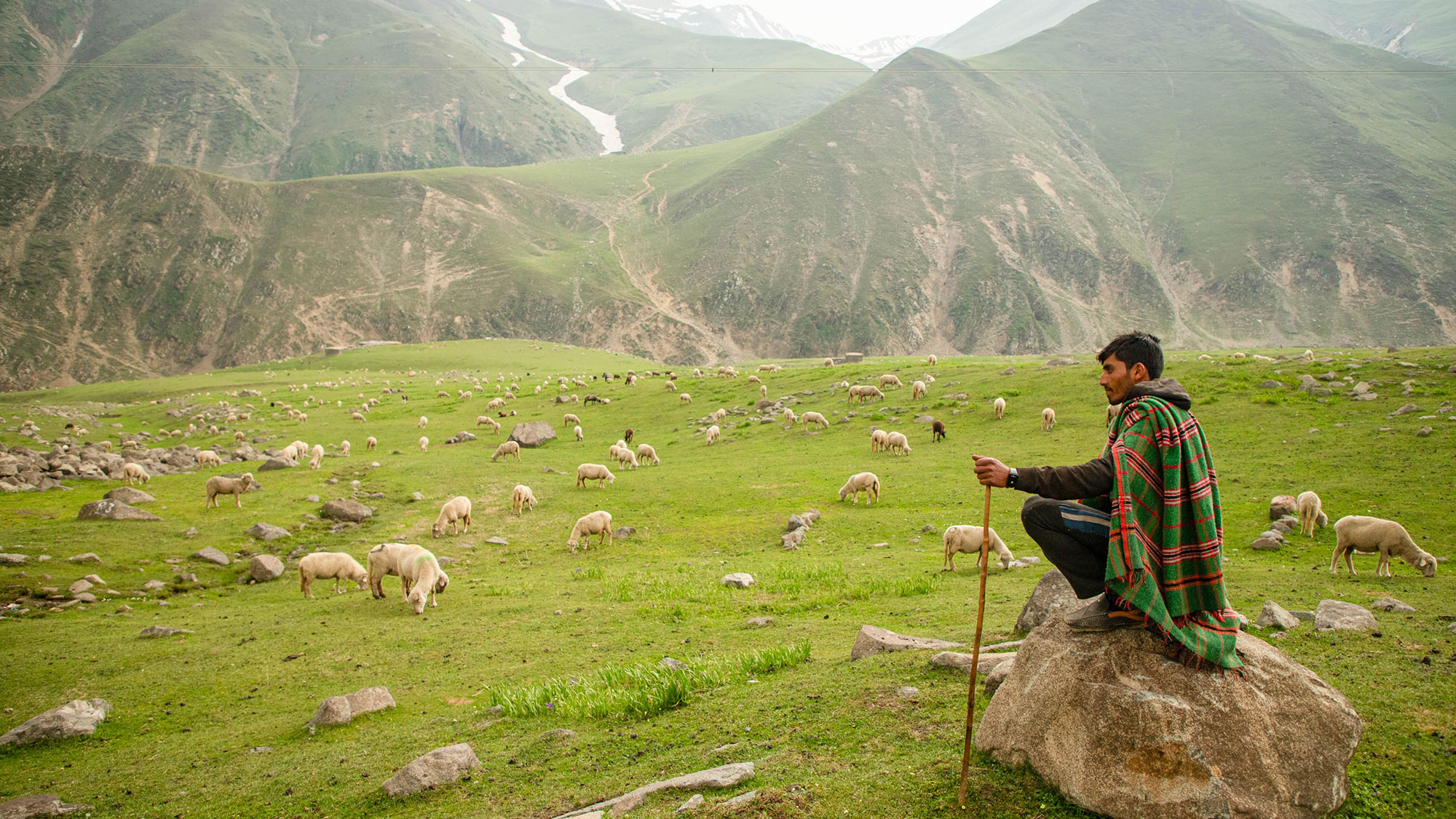
As climate change exacerbates water scarcity and land degradation, many national governments have responded with counterproductive measures. Rather than supporting traditional mobile pastoralism, several states have imposed strict caps on herd sizes and enacted sweeping restrictions on animal mobility.
These regulatory crackdowns run completely counter to peer-reviewed scientific consensus. Extensive research published by organizations like the Food and Agriculture Organization (FAO) and ecological journals demonstrates that mobile pastoralism plays a vital role in enhancing regional biodiversity, managing wildfire risks, and maintaining climate-resilient landscapes through natural fertilization and seed dispersal. By restricting movement, governments disrupt ecological feedback loops that have maintained rangeland health for millennia.
Official Statements and Perspectives
The Voices from the Ground
The pastoralist delegation in Mongolia has brought a unified, urgent message to global policymakers: land restoration cannot succeed if the human beings living on that land are marginalized or displaced in the name of global development.
"We want to give the world a message that it’s not only the land that you will have to really look at. But you look at the people in that land, and maybe their lives should not be disturbed or sacrificed for the development of the world."
— Andrew Msami, Program Lead, PINGOs Forum (Tanzania)"We have the land degradation very, very fast, and of course we use our knowledge to try to restore the land. We try to fix it, but it is still there. The rate of desertification has accelerated beyond the point where traditional knowledge alone is enough."
— Hindou Oumarou Ibrahim, Chair, UNCCD Indigenous Peoples Caucus
The Legal and Rights-Based Imperative
Experts stress that technical interventions—such as tree-planting campaigns or artificial watering holes—are bound to fail unless they are anchored in robust legal protections for Indigenous land rights.
"Securing land and mobility rights is not separate from climate adaptation. It is a fundamental part of building resilience. None of their expertise and experiences matter unless countries protect rights to land and mobility."
— Solange Bandiaky-Badji, President and Coordinator, Rights and Resources Initiative (RRI)
Bandiaky-Badji emphasizes the critical need to enforce the principle of Free, Prior, and Informed Consent (FPIC). Because pastoralists are inherently mobile, their customary land claims are frequently overlooked by central governments, leaving them entirely unrepresented when industrial concessions, agricultural expansions, or conservation zones are negotiated on their ancestral territories.
Future Outlook: A Call for Systemic Integration
As the international community grapples with escalating environmental degradation, leaders at the UNCCD summit in Mongolia have issued a stark warning about the dangers of siloed environmental governance.
For decades, the global community has treated climate change, biodiversity loss, and desertification as distinct challenges requiring separate political processes. Solange Bandiaky-Badji argues that this fragmentation is fatal to long-term solutions:
"There is a link between climate resilience, protecting biodiversity, and restoring landscapes. They’re all interrelated. And until we start seeing them as interrelated, we might have these different COPs, but it will not really solve the systemic problem that we have been dealing with. And the climate crisis is a systemic problem that we need to deal with."
Looking forward, the roadmap for surviving a hotter, drier world must look backward to honor Indigenous wisdom, while moving forward with structural legal reforms. This requires:
- Institutional Inclusion: Replicating the UNCCD’s Indigenous caucus model across all major environmental summits, including the UNFCCC and CBD COPs.
- Tenure Security: Legally recognizing customary land rights and seasonal mobility corridors for mobile pastoralists, ensuring FPIC is rigorously enforced.
- Equitable Finance: Directing climate and land-restoration adaptation funds straight to grassroots pastoralist organizations rather than bureaucratic intermediaries.
Unless global leaders begin to view pastoralists not as obstacles to modernization, but as indispensable partners in ecological stewardship, the twin crises of desertification and climate change will continue to unravel both the earth’s vital rangelands and the human cultures that have sustained them for centuries.