By Liz Kimbrough Published via Mongabay Conservation News
Executive Overview
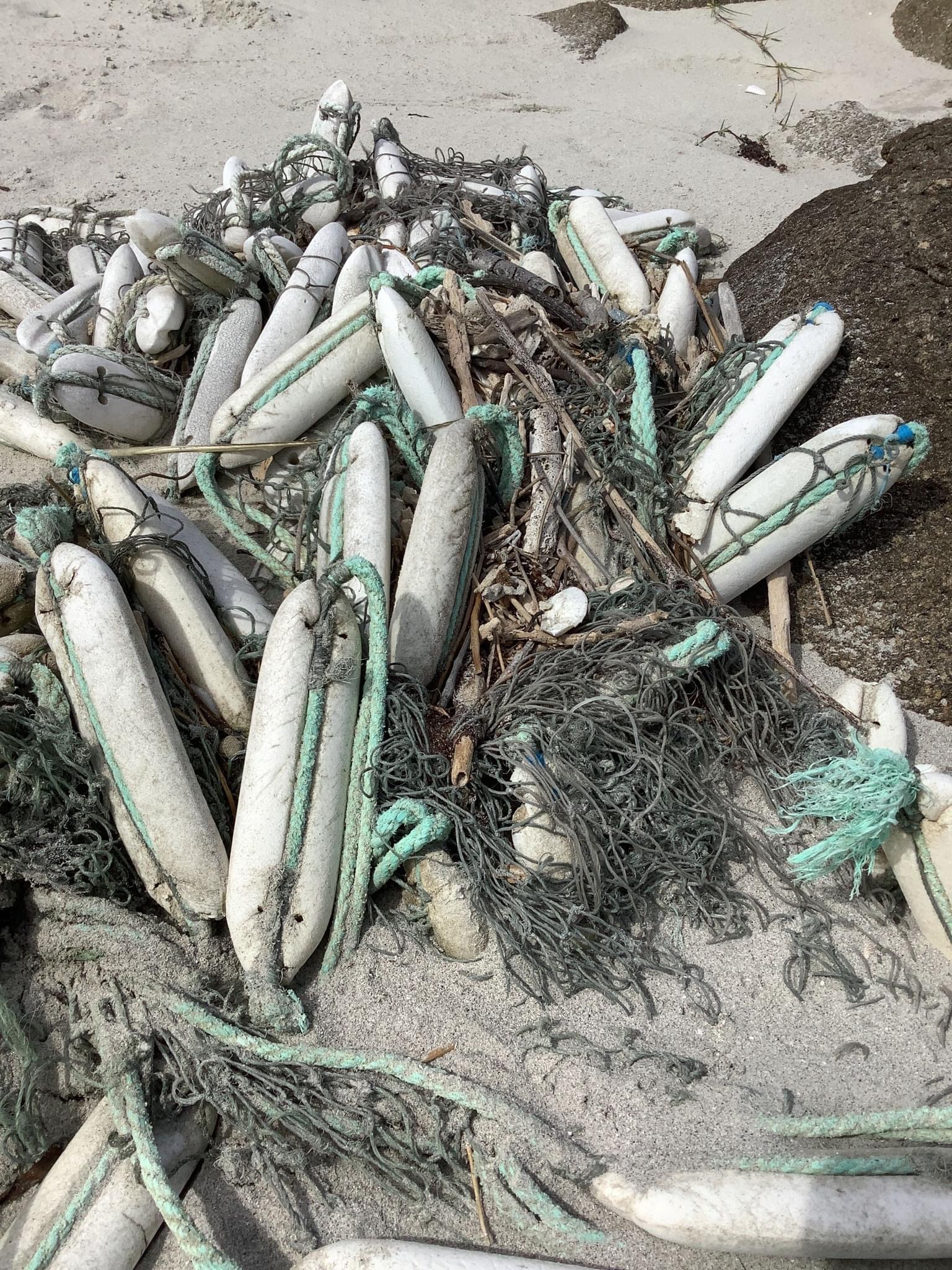
Along the sun-scorched, culturally sacred expanses of Australia’s northern coastline, a quiet ecological war is being waged. Here, on the windswept beaches of Groote Eylandt and the rugged shores of Arnhem Land, an endless tide of synthetic marine debris washes ashore, carried by ocean currents from distant fisheries across Southeast Asia. Among this pollution, the most insidious threat comes in the form of "ghost nets"—abandoned, lost, or deliberately discarded commercial fishing gear that drifts aimlessly for thousands of kilometers. These synthetic webs continue to trap, maim, and drown endangered marine life long after their commercial utility has ended.
To combat this silent crisis, Indigenous ranger groups—stewards of Aboriginal freehold land across Western Australia, the Northern Territory, and Queensland—are stepping onto the front lines. Armed with traditional ecological knowledge, advanced AI-powered drones, and heavy-duty four-wheel-drive machinery, these guardians are working tirelessly to heal their ancestral waters. Yet, despite recovering dozens of tons of deadly plastic each year, the task remains a daunting, Sisyphean challenge. Landfills are overflowing, remote beaches are nearly inaccessible, and the plastic keeps coming.
This comprehensive report explores the multifaceted crisis of ghost nets in northern Australia, detailing the tireless efforts of Indigenous rangers, the devastating toll on endangered species like the green and hawksbill turtles, the technological innovations transforming cleanup operations, and the international policy shifts needed to turn off the tap at its source.
Detailed Chronology: The Anatomy of a Coastal Cleanup
The Discovery on Groote Eylandt
On a remote beach on Groote Eylandt—a massive island nestled within Australia’s Gulf of Carpentaria—Kirsten Eden and her team from the Anindilyakwa Land and Sea Rangers made a telling discovery. They encountered a commercial fishing net that someone had attempted to eradicate at sea. The net had been deliberately burned and melted into a hardened, amorphous lump before being tossed overboard. Rather than sinking to the ocean floor, the buoyant synthetic material floated ashore, mutating into a wheel of hard plastic. Once an active fishing net measuring roughly 60 meters (nearly 200 feet) in length, it was now slowly fragmenting into the microplastics guaranteed to outlive generations of human civilization.
"So, the entire Groote Eylandt is Aboriginal freehold land," Kirsten Eden, manager of the Anindilyakwa Land and Sea Rangers, explained in an interview with Mongabay. "It’s spoken for by Indigenous Australians. So, they’re not beaches that anyone can just go to. There’s so much cultural value to these beaches. There’s so much significance. There are songlines, there are art sites… And I guess that’s the drive to try and protect it and move this debris. And it’s such an eyesore."
The Brute Labor of Recovery
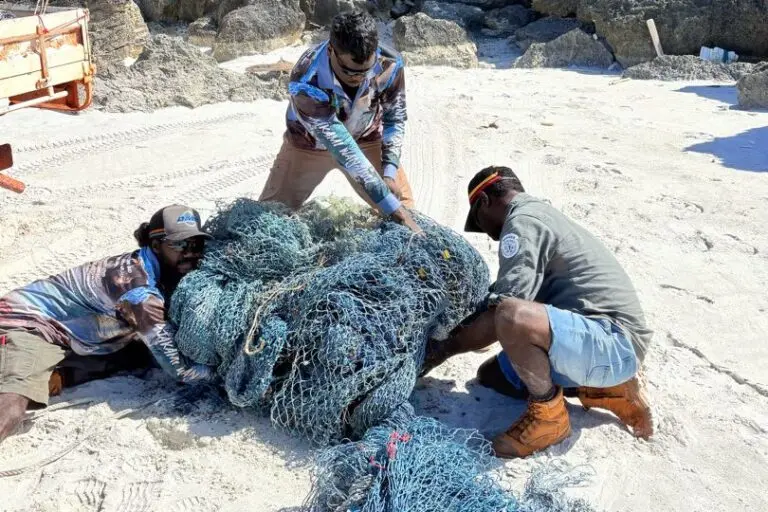
Extracting a multi-ton, deeply embedded ghost net from a remote coastline is not a task for the faint of heart. Many of these synthetic traps have rested on the shores for years, buried deep within shifting sands or tightly wound around jagged driftwood and coastal rock formations.
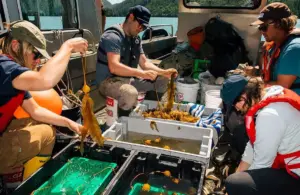
A single net can demand hours of grueling physical labor. Rangers deploy shovels to unearth buried webbing, while cranes mounted on specialized four-wheel-drive vehicles provide the mechanical strain required to wrench the debris free. For isolated beaches lacking terrestrial road access, the logistics grow exponentially more complex. The team relies on a custom-built barge that noses directly into hazardous shallows, deploying winches to haul massive nets aboard. Conducting these operations requires navigating perilous waters fraught with saltwater crocodiles and unforgiving, turbulent currents that make deploying divers virtually impossible.
Technological Leaps: From Days to Hours
For years, the sheer expanse of the coastline meant that finding and removing ghost nets was akin to searching for a needle in a haystack. However, recent collaborations with researchers from Charles Darwin University have introduced a technological game-changer: artificial intelligence combined with aerial drones.
Trained Indigenous Traditional Owners now pilot drones equipped with AI algorithms specifically designed to spot the distinct signatures of ghost nets from the air. The impact of this technology has been revolutionary. Earlier this year, during a single four-hour operational window, Eden’s team located and extracted 15 nets. Prior to the integration of drone surveillance, finding more than three nets in a single day was considered a remarkable success.
Despite these efficiency gains, the logistical footprint required to cover the territory remains immense. Eden’s team of approximately 20 rangers is tasked with patrolling roughly 1,000 kilometers (621 miles) of coastline across the Northern Territory. Reaching some of the most vulnerable beaches requires navigating a single, punishingly rough track for up to 14 hours.
"The area is quite huge, and the remoteness of some of those beaches is pretty hectic," Eden noted. "It’s very much an endless tide of pollution… [but] I love seeing that finished product, the beach just completely cleaned. That’s empowering."
Supporting Context & Metrics: The Ecological Toll
A Floating Death Trap for Marine Wildlife
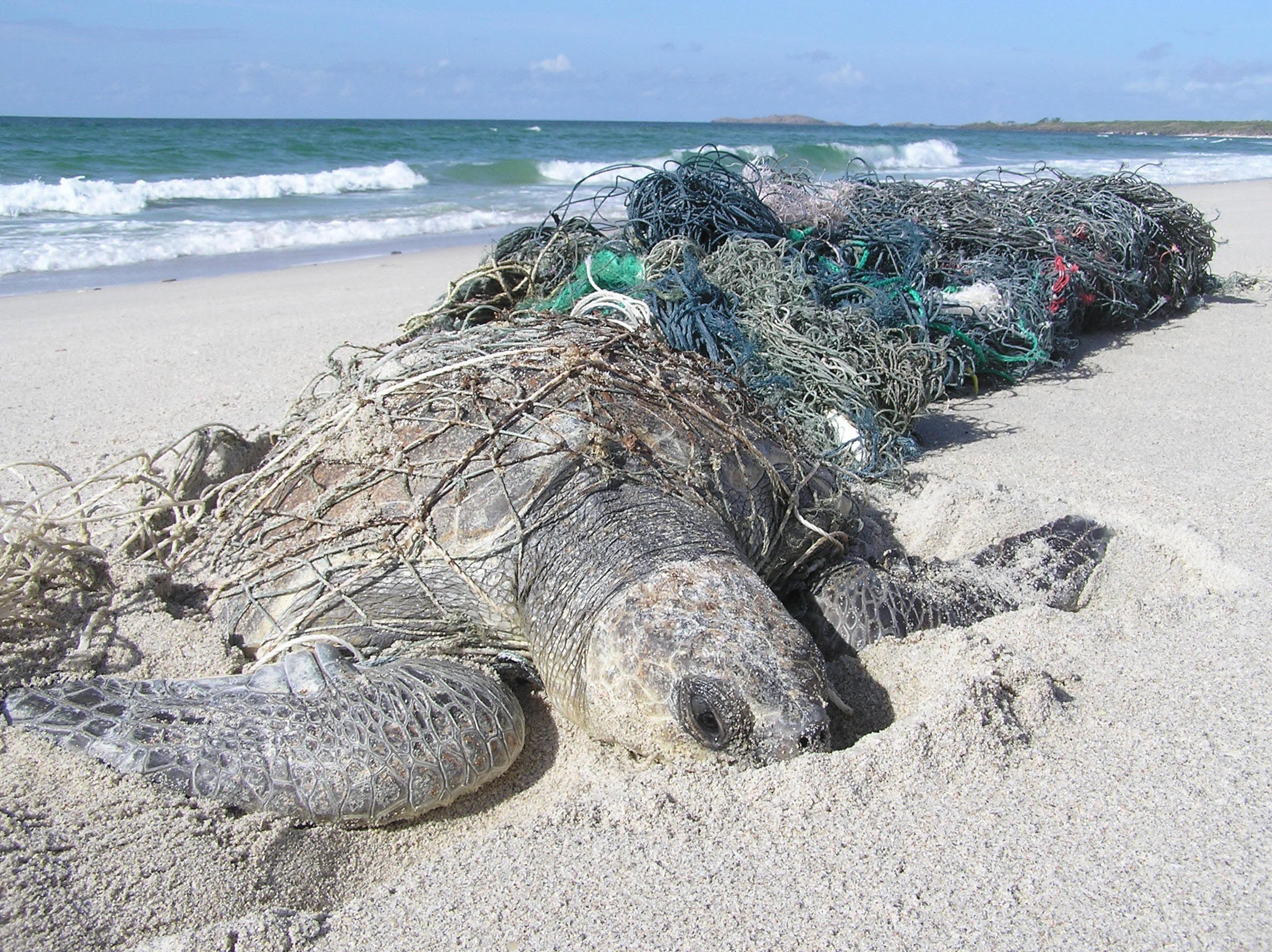
The moment a ghost net is hauled onto the sand does not mark the end of the operation. Rangers must meticulously comb through the tangled webbing to rescue any marine life caught in its suffocating grasp.
The ecological statistics surrounding these abandoned nets are staggering. Research commissioned by the OceanEarth Foundation, an Australian-based non-governmental organization, estimates that the ghost nets washing onto northern Australian shores capture between 4,000 and 14,000 turtles annually. According to Anissa Lawrence, managing director of the foundation, a significant portion of these victims belong to endangered species, notably the green turtle (Chelonia mydas) and the hawksbill turtle (Eretmochelys imbricata). Beyond turtles, these invisible killers regularly entrap dugongs, sharks, and numerous species of fish and seabirds.
The Regional Footprint: Voices from Arnhem Land
The Anindilyakwa rangers are far from alone in this fight. More than 20 distinct Indigenous ranger teams are actively clearing marine debris across Western Australia, the Northern Territory, and Queensland, with each group serving as the dedicated guardians of their ancestral coastal estates.
Further north along the coast from Groote Eylandt, the Dhimurru Aboriginal Corporation—a ranger group operated by the Yolŋu people on the Gove Peninsula in northeast Arnhem Land—manages approximately 550 kilometers (342 miles) of shoreline. In 2025 alone, their four dedicated rangers removed an astonishing 13 tons of marine debris.
Stephina Salee, executive officer of the Dhimurru Aboriginal Corporation and an Aboriginal and Torres Strait Islander leader, emphasizes the relentless nature of the crisis. On the region’s most heavily impacted beaches, approximately 3 tons of debris wash ashore per kilometer (0.6 mi). No matter how thoroughly or frequently the rangers clear the sand, the ocean continuously replenishes the supply.
"Ghost nets remain one of the most significant threats because they continue trapping turtles, dugongs, sharks and other marine life long after they’ve been lost," Salee stated.
The Geography of the Trap
The concentration of ghost nets in northern Australia is driven by a combination of oceanography and meteorology. Anissa Lawrence explains that the vast majority of these nets drift southward from commercial fisheries in Southeast Asia on prevailing ocean currents.
The Gulf of Carpentaria acts as a giant natural funnel. Seasonal monsoons push marine debris down into the gulf, while subsequent dry-season winds force the floating waste directly onto southeast-facing beaches. Tragically, these exact beaches—remote, rugged, and difficult to access—serve as vital nesting grounds for vulnerable marine turtles.
Official Statements: Cultural Connection and Systemic Solutions
The Inextricable Link Between Country and People
For Indigenous communities across northern Australia, the battle against marine debris extends far beyond wildlife conservation. It is an act of cultural preservation and spiritual duty.
The species threatened by ghost nets—such as marine turtles and dugongs—occupy central positions in Yolŋu culture and ancestral law. Consequently, clearing the nets is never viewed merely as an environmental cleanup. Lawrence highlights the profound worldview held by Traditional Custodians: when the country is sick, the people are sick, and healing the land and sea directly heals the human community.
Douglas Munyarryun, a Yolŋu Traditional Owner, captured this sentiment in a statement to Mongabay:
"Marine debris keeps coming back with the tides, but our Rangers keep coming back too. They don’t give up on Country. They are out there cleaning our beaches, protecting our sea life and looking after the places our old people have cared for forever."
The Waste Dilemma: Piles, Shredders, and Art
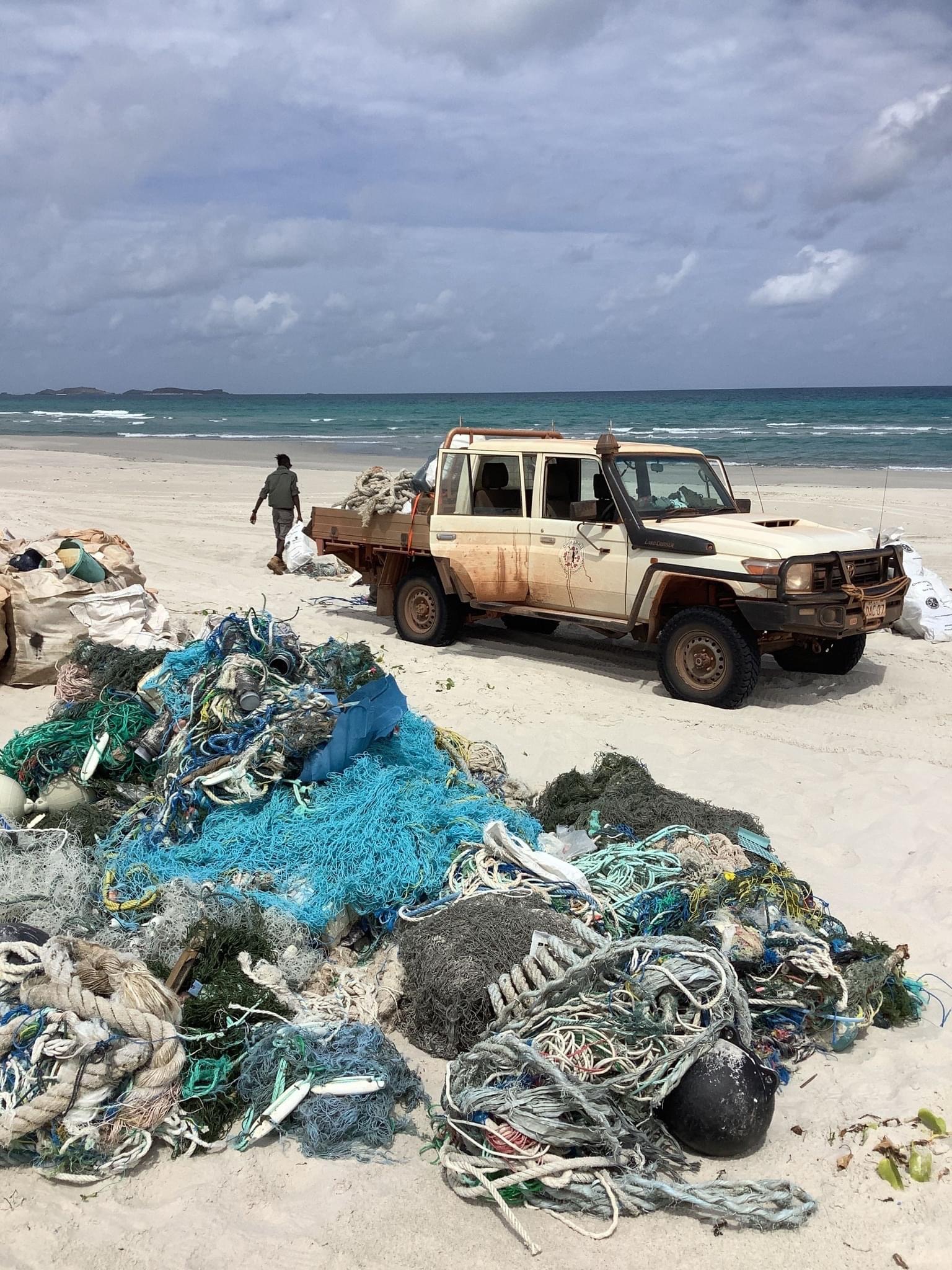
A major operational bottleneck in the ghost net campaign is finding a sustainable way to dispose of the recovered material. For three years, Kirsten Eden has been forced to stockpile mountains of collected nets at her ranger base due to a severe lack of local storage and recycling infrastructure.
Regional landfills are notoriously small and frequently at maximum capacity. Furthermore, some municipal waste facilities refuse to accept ghost nets because the discarded gear often contains embedded lead weights. In extreme cases, burning remains the only available method of disposal—releasing toxic fumes into the atmosphere.
While innovative initiatives like ghost-net weaving have transformed discarded nylon into celebrated forms of Indigenous art, the sheer volume of plastic recovered from the beaches completely overwhelms what the art sector can absorb. To address this, Eden has applied for a federal grant to purchase industrial shredders capable of reducing the plastic into a salable, reusable commodity. For now, however, the plastic remains piled high.
Future Outlook: Funding, Prevention, and the 2030 Vision
Governmental Investment and International Partnerships
Recognizing the escalating severity of the crisis, the Australian government committed AU$25.1 million (approximately $18 million USD) in December 2025 to fund marine cleanup and prevention efforts over a four-year period.
Of this allocation, approximately AU$20 million ($14 million USD) is dedicated to sustaining and expanding frontline Indigenous ranger operations. Crucially, the remaining AU$4.5 million ($3.2 million USD) is earmarked for preventative measures—what Anissa Lawrence terms "turning off the tap."
This preventative funding supports a vital international partnership uniting Australia, Indonesia, Papua New Guinea, and Timor-Leste. The collaborative framework establishes monitoring networks in neighboring source countries to track where and how commercial gear is lost before it drifts into Australian waters. Additionally, the initiative aims to provide fishers across the region with accessible shore-based facilities to safely hand in worn-out or damaged nets rather than cutting them loose at sea.
Measuring True Success
The overarching objective of these coordinated international efforts is ambitious: to eliminate all international and recreational ghost gear from northern Australian beaches by the year 2030.
For the leaders on the ground, the metric of ultimate victory has shifted away from mere tonnage.
"Success won’t be measured by how many ghost nets we remove," Stephina Salee emphasized. "It will be measured by how many never enter the ocean in the first place."
Addressing a crisis generated by multi-national commercial fleets requires moving beyond localized cleanups. As Anissa Lawrence notes, ghost gear is a systemic failure that demands a systemic solution. With Indonesia and other regional nations taking proactive steps to tackle ghost gear within their own territorial waters, a coordinated diplomatic and environmental framework is finally taking shape.
Until that systemic shift is fully realized, however, the tides will continue to deposit their synthetic burdens upon Australia’s shores. And week after week, fueled by a profound, unbroken commitment to their ancestral lands, the Indigenous rangers will return to the beaches—ready to meet the endless tide.
Article Information & Citation
Author: Liz Kimbrough (Ph.D. in Ecology and Evolutionary Biology, Tulane University)