Executive Overview
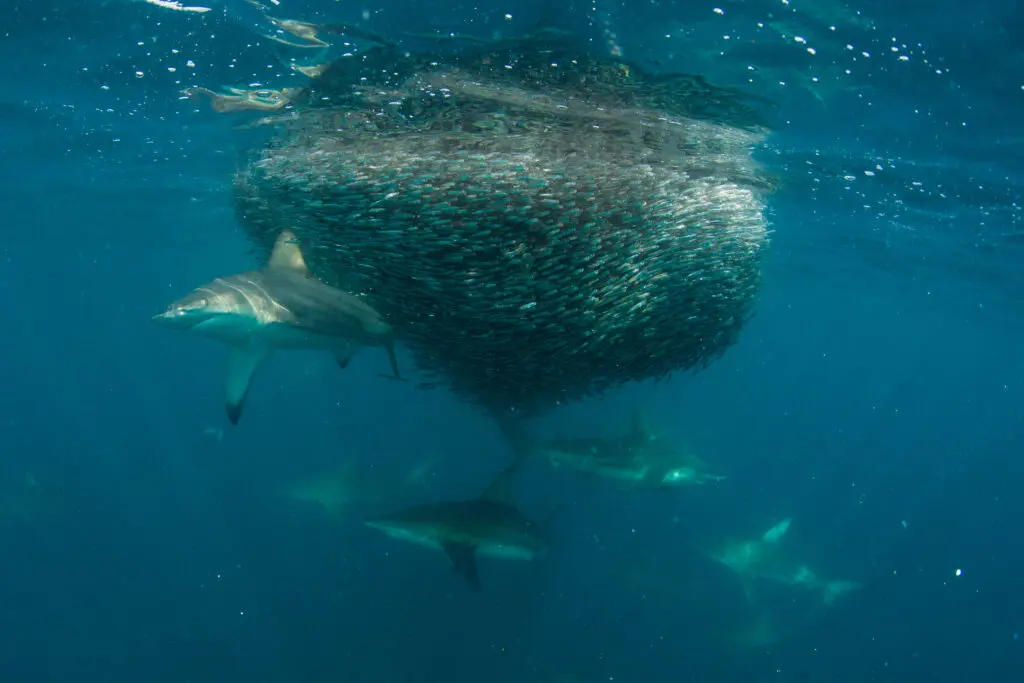
For upwards of 400 million years, sharks have glided through the world’s oceans, utilizing an iconic dorsal fin and powerful caudal mechanics to navigate marine habitats. Predating trees, flowering plants, and dinosaurs by tens of millions of years, these ancient cartilaginous fishes have evolved into more than 500 distinct species, occupying nearly every marine niche on the planet. From the colossal, filter-feeding whale shark to the diminutive, 8-inch (20 cm) dwarf lanternshark, and from the subterranean-dwelling goblin shark to the flattened angel shark, their biological diversity is staggering.
Beyond their evolutionary significance, sharks serve as indispensable linchpins of marine health. As apex and mesopredators, they regulate the behavior, distribution, and abundance of a vast array of marine species, preserving the structural and functional integrity of aquatic ecosystems. Famed oceanographer and founder of Mission Blue, Dr. Sylvia Earle, underscores their ecological barometer status: "Sharks are beautiful animals, and if you’re lucky enough to see lots of them, that means that you’re in a healthy ocean. You should be afraid if you are in the ocean and don’t see sharks."
Despite their resilience across geological epochs, modern shark populations face an unprecedented convergence of anthropogenic threats. Destructive industrial overfishing, localized habitat degradation, climate-induced thermal stress, and controversial coastal "shark control" measures—such as gillnets and baited drumlines—have pushed a significant fraction of these animals toward the brink of extinction. Recent assessments from the International Union for Conservation of Nature (IUCN) reveal a deeply alarming trajectory: over 300 species of sharks, rays, and chimaeras are now threatened globally. As governments, coastal communities, and marine scientists mobilize around marine protected areas and Mission Blue "Hope Spots," the push to transition from lethal mitigation strategies to advanced, non-lethal technologies has never been more urgent.
Detailed Chronology: An Evolutionary Timeline and the Rise of Anthropogenic Pressures
Understanding the plight of modern sharks requires looking back deep into Earth’s history, tracking their persistence through mass extinction events, and contrasting it with the rapid, devastating impacts of human industrialization over the past two centuries.
- 400+ Million Years Ago (The Paleozoic Era): The earliest fossil evidence of shark-like scales emerges during the Devonian period. These primitive cartilaginous creatures survive Earth’s first major evolutionary bottlenecks, predating terrestrial forests and terrestrial vertebrate lineages.
- 250 Million Years Ago (The Permo-Triassic Extinction): While roughly 90% of marine species and 70% of terrestrial vertebrate species perish during the "Great Dying," ancestral shark lineages adapt, outlasting major environmental upheavals.
- 66 Million Years Ago (The Cretaceous-Paleogene Extinction): An asteroid impact obliterates the non-avian dinosaurs and nearly three-quarters of plant and animal species on Earth. Deep-dwelling and pelagic sharks adapt to fluctuating oceanic food webs, successfully crossing the threshold into the Cenozoic era.
- Mid-20th Century (The Industrialization of Fisheries): Post-World War II commercial fishing rapidly expands. Powered by mechanized vessels, advanced synthetic nets, and global refrigeration, industrial fleets begin systematically exploiting pelagic and coastal shark populations for meat, liver oil, and fins.
- 1950s–1960s (Inception of Lethal Coastal Control): In response to public fear surrounding human-shark encounters, regional governments in South Africa and Australia begin deploying large-scale physical intervention programs, installing commercial shark nets and baited drumlines along popular bathing beaches.
- Late 20th Century (The Asian Fin Market Boom): Economic globalization and rising affluence in parts of East Asia trigger an explosive surge in demand for shark fin soup. Millions of sharks are caught annually, stripped of their fins while alive, and discarded back into the ocean—a wasteful, brutal practice known as shark finning.
- December 2024 (The IUCN Global Status Warning): The International Union for Conservation of Nature releases an updated global status report revealing that over a third (more than 300 species) of all sharks, rays, and chimaeras are now threatened with extinction, cementing their status as one of the most imperiled vertebrate groups on Earth.
- 2024–2025 Australian Season (Data Transparency and Bycatch Revelation): Freedom of Information (FOI) requests in New South Wales, Australia, expose that an overwhelming 89% of marine life entangled in coastal shark nets during the 2024/2025 season consists of non-target species—including endangered gray nurse sharks, dolphins, and leatherback turtles.
Supporting Context & Metrics: Ecological Value vs. Human Impact
The Mechanics of Ocean Health
Sharks exert top-down control that maintains the resilience of diverse marine biomes. By regulating herbivore populations and behavioral patterns, they prevent ecological cascades that can devastate coastal habitats.
Consider the following critical ecological dynamics:
- Kelp Forest Protection: In temperate marine systems, sharks prey upon or alter the behavior of intermediate predators, which in turn keeps herbivorous sea urchin populations in check. Without this predatory pressure, urchins overgraze kelp forests—vital carbon sinks and fish nurseries—turning them into unproductive "urchin barrens."
- Seagrass Meadow Management: In tropical and subtropical coastal zones, tiger sharks and other large predators act as ecological "sheepdogs." Their presence frightens large grazers like dugongs and green sea turtles, forcing them to constantly move rather than over-consume specific patches of seagrass. This dynamic prevents overgrazing, encourages healthy root systems, and promotes carbon sequestration in marine sediments.
The Scale of the Crisis: Overfishing and Bycatch
Despite their ecological importance, sharks are uniquely vulnerable to overexploitation. Unlike bony fish that produce millions of eggs and mature rapidly, many shark species exhibit what biologists call "K-selected life history strategies": they grow slowly, reach sexual maturity late in life, and produce very few offspring after long gestation periods. Consequently, once a local shark population is depleted, recovery takes decades—if it occurs at all.
Global overfishing operates via multiple vectors:
- Targeted Fisheries: Sharks are aggressively targeted for their meat (increasingly sold under pseudonyms like "flake"), squalene-rich liver oil, gill plates used in traditional remedies, and high-value fins.
- Unintended Bycatch: Industrial longlines, purse seines, and gillnets set for tuna and swordfish capture millions of unintended sharks annually. These animals suffocate, drown, or suffer mortal injuries before being hauled aboard.
The Paradox of "Shark Control" Programs
In regions like South Africa, Australia, Réunion Island, Brazil, and historically Hawaii, governments have long relied on physical gear—namely, large-mesh shark nets and baited drumlines—to reduce the statistical risk of swimmer-shark encounters. However, marine scientists widely criticize these methodologies.
Shark nets do not create a sealed underwater barrier; instead, they are stationary traps designed to entangle large marine life. Baited drumlines use large hooks to lure and capture animals. Far from targeting dangerous great white, tiger, or bull sharks exclusively, these devices indiscriminately slaughter ocean wildlife.
Data from New South Wales, Australia, highlights this lethal inefficiency: during the 2024/2025 season, 89% of all animals caught in coastal shark nets were non-target species. Among the casualties were endangered gray nurse sharks (Carcharias taurus), vulnerable marine mammals like dolphins, and critically endangered reptiles like leatherback turtles. Furthermore, more than 67% of all animals caught died either during capture or post-release due to exhaustion and trauma.
Official Statements and Expert Insights
The global scientific community and dedicated conservation networks are increasingly vocal about the necessity of moving past outdated, lethal wildlife management.
Dr. Sylvia Earle, legendary oceanographer and founder of Mission Blue, emphasizes the fundamental interconnectedness of marine ecosystems:
"Sharks are beautiful animals, and if you’re lucky enough to see lots of them, that means that you’re in a healthy ocean. You should be afraid if you are in the ocean and don’t see sharks."
Conservation champions operating across Mission Blue Hope Spots—globally recognized areas scientifically identified as critical to the health of the ocean—are leading the charge on community education, non-lethal management, and legislative reform:
- South Africa (Aliwal Shoal Hope Spot): Russel Symcox, Hope Spot Champion and leader of Wild Alliance Africa, advocates alongside local networks to protect raggies (sand tiger sharks) within their critical cave habitats, demonstrating that ecotourism provides far greater economic and ecological value than exploitation.
- Australia (Sydney Coast, Great Barrier Reef, Byron Bay, Gold Coast, and Moreton Bay Hope Spots):
- Sydney Coast: Championed by the Ocean Lovers Festival, organizing public mobilization and policy advocacy.
- Great Barrier Reef: Andy Ridley and Citizens of the Great Barrier Reef utilize citizen science to monitor and protect vulnerable reef-dwelling species.
- Byron Bay: Alice Forrest and Dr. Elizabeth Hawkins of Ocean Education and Conservation work tirelessly to shield regional marine life, including grey nurse sharks and rays.
- Gold Coast: Dr. Olaf Meynecke of Humpbacks & High-rises advances cutting-edge research on coastal shark movements and human-wildlife coexistence.
- Moreton Bay: Dr. Chris Roelfsema of Reef Check Australia fosters community stewardship across highly diverse coastal waters.
- Eastern Tropical Pacific (Galápagos, Malpelo, Cocos Islands & Coiba Ridge): A powerhouse coalition of Hope Spot Champions—including Alex Hearn, Sandra Bessudo, Randall Arauz, Todd Steiner, Héctor Guzmán, and James Ketchum—utilizes telemetry and satellite tracking via MigraMar to map the migratory superhighways of pelagic sharks, proving that these animals cross international boundaries and require cooperative multinational governance.
- Costa Rica (Golfo Dulce Sanctuary): Ilena Zanella and Andrés López of Misión Tiburón spearhead protections within Golfo Dulce, a vital, sheltered nursery ground for juvenile scalloped hammerhead sharks.
Future Outlook: The Shift Toward Non-Lethal Coexistence
The narrative surrounding sharks is undergoing a profound cultural and scientific transformation. Society is finally shedding the cinematic caricature of sharks as mindless maneaters, recognizing them instead as ancient, sentient, and structurally critical components of Earth’s biosphere.
To secure a future where both human beachgoers and marine apex predators can safely share coastal waters, governments and municipal planners must phase out obsolete gear like conventional nets and traditional drumlines. Proven, non-lethal alternatives are readily available and increasingly operational:
- SMART Drumlines: Shark Management Alert in Real Time (SMART) drumlines utilize satellite-linked gear that alerts marine biologists the instant an animal takes the baited hook. This allows responders to arrive within minutes, tag the shark, and safely relocate it offshore, drastically reducing mortality rates for both sharks and bycatch species.
- Acoustic and Magnetic Deterrents: Innovative technologies harnessing rare-earth magnets and targeted acoustic frequencies disorient sharks’ highly sensitive electrosensory organs (the ampullae of Lorenzini), steering them away from swimming zones without causing physical harm.
- Digital Surveillance and Drones: Real-time aerial drone patrols, paired with AI-driven spotting software and public smartphone alert applications, provide instantaneous tracking of coastal shark activity, empowering beach authorities to temporarily restrict swimming without laying a finger on marine wildlife.
- Eco-Barriers: Physical, sonar-tested barriers installed around high-use swimming areas block large marine life while allowing smaller fish, currents, and nutrients to flow freely.
What Can You Do?
A healthy ocean needs sharks, and sharks urgently need human advocacy. Citizens, travelers, and coastal residents can drive meaningful change by:
- Supporting regional marine conservation organizations and participating in citizen science programs (such as Reef Check Australia or MigraMar tracking initiatives).
- Demanding that local and national lawmakers defund lethal shark-control programs in favor of modern, eco-friendly technologies.
- Spreading awareness and dismantling the stigma that casts sharks as villains rather than irreplaceable allies in planetary health.
Through sustained collaboration, rigorous science, and community engagement, humanity can consign shark nets and indiscriminate culls to history—ensuring that the oceans’ most ancient guardians continue to cruise the blue depths for millions of years to come.