As 54 million K-12 students return to classrooms across the United States for another academic year, they unpack backpacks filled with notebooks, pencils, and the usual array of foundational learning tools for mathematics, English, history, and biology. Yet, alongside these traditional academic subjects, a quieter, heavily financed curriculum has steadily worked its way into school districts nationwide: the gospel of plastics.
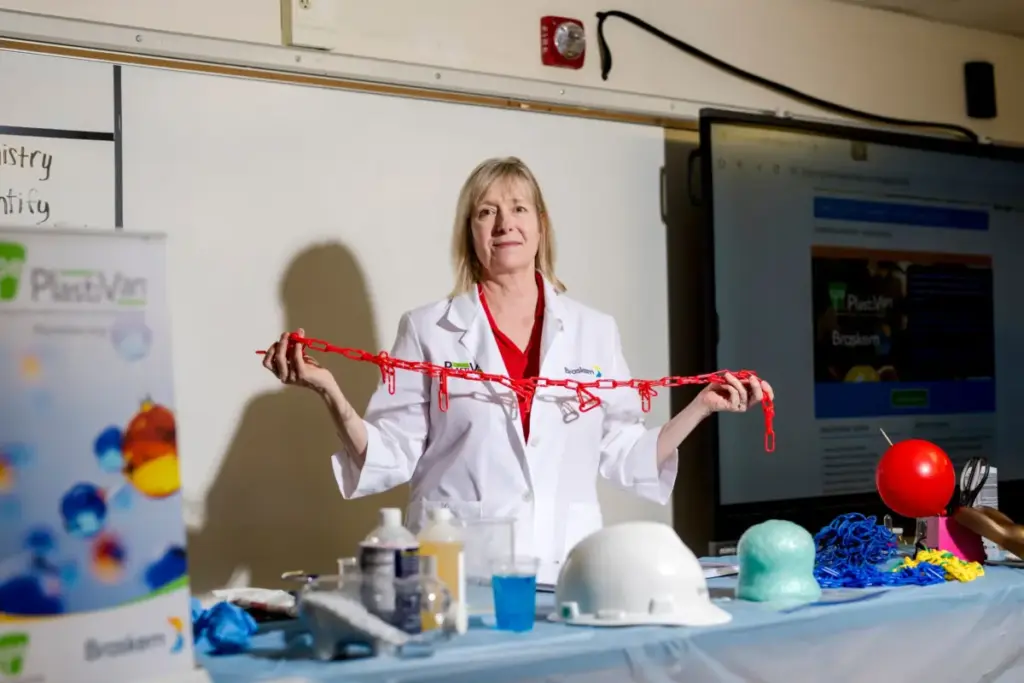
A comprehensive new report released by the nonprofit Plastic Pollution Coalition exposes the myriad ways petrochemical and plastics industry interests have successfully inserted their commercial and ideological agenda into American education. From complimentary lesson plans and downloadable worksheets to hands-on chemistry experiments and traveling roadshows like the SPE Foundation’s "PlastiVan," corporate-backed resources are influencing how the next generation perceives synthetic materials. While packaged as neutral STEM (Science, Technology, Engineering, and Math) enrichment, these materials systematically emphasize the economic utility and safety of plastics while downplaying, obscuring, or entirely omitting their well-documented hazards to human health and the global environment.
Executive Overview: The Corporate Infiltration of Public Education
The strategy is deceptively simple and mutually accommodating: cash-strapped public school districts, facing chronic underfunding, desperately need instructional materials, lab supplies, and ready-made lesson plans. Enter the plastics industry, trade associations, and petrochemical giants, offering free or deeply discounted educational resources that align superficially with state and national science standards.
However, beneath the veneer of public service lies a calculated public relations campaign. According to the Plastic Pollution Coalition’s findings, these corporate-sponsored materials frame plastics not as an ecological crisis, but as an indispensable cornerstone of modern life. They divert attention away from systemic overproduction by shifting the burden of environmental stewardship almost exclusively onto individual consumers, championing recycling as an infallible silver bullet despite decades of data proving its systemic failure.
Critics and education experts argue that this form of corporate outreach represents a sophisticated normalization campaign. By targeting children during their formative years, the industry aims to cultivate a loyal consumer base, dampen future regulatory pushback, and secure a pipeline of future workers for petrochemical careers—all under the guise of objective science education.
Detailed Chronology: From Industrial Lobbying to Classroom Integration
The infiltration of corporate narratives into public school curricula is not a recent phenomenon; it represents a decades-long strategic effort by manufacturing and fossil fuel interests to preempt environmental regulation through early education.
Early 2000s: Laying the Groundwork
While industry-backed educational initiatives existed in various forms during the late 20th century, the early 2000s marked a coordinated shift toward formalized K-12 outreach. Trade groups recognized that public opinion on environmental issues could be heavily influenced by shaping classroom perceptions. Between 2009 and 2011, for instance, a prominent plastics trade association actively lobbied the California Department of Education to integrate a dedicated section titled "The Advantages of Shopping Bags" into state high school textbooks, directly countering local debates over single-use bag bans.
2011–Present: The Expansion of Mobile Outreach and Interactive Programs
The launch of the SPE Foundation’s "PlastiVan" initiative in 2011 institutionalized direct classroom engagement. Touring schools nationwide, the program uses live demonstrations to teach children about the science behind polymers while actively promoting the narrative that modern existence is impossible without synthetic materials. According to organizational metrics, the initiative has reached over 132,000 students to date.

Concurrently, trade groups and chemical giants began digitizing their resources, offering teachers easily downloadable lesson plans that bypass the traditional vetting processes applied to state-approved textbooks.
Recent Years: Hyper-Local Petroleochemical Partnerships
In recent years, the strategy has evolved into hyper-local community investments, particularly in regions dominated by petrochemical infrastructure. A prime example is Beaver County, Pennsylvania, where energy giant Shell operates a massive 386-acre plastics production complex. Shell has funneled millions of dollars into local school districts and community colleges, funding plastics-related curricula, sponsoring recycling programs, donating hundreds of backpacks filled with school supplies, and even financing a new school basketball court. In exchange, the districts have integrated plastics recycling modules directly into their grade-school curricula, effectively tying the economic survival of the community to the expansion of the local petrochemical plant.
Supporting Context & Metrics: The Reality Behind the Lesson Plans
To understand the disconnect between corporate lesson plans and scientific reality, education specialists and environmental scientists point to a stark divergence in data regarding environmental impact, health risks, and recycling efficacy.
The Myth of Plastic Recycling
A central pillar of industry-sponsored curricula is the emphasis on recycling as the primary solution to plastic waste. Videos like the SPE’s Your Bottle Means Jobs and associated worksheets instruct students that proper disposal and increased recycling will resolve ecological concerns.
However, global metrics tell a vastly different story. According to data from the Organisation for Economic Co-operation and Development (OECD), only 9 percent of all plastics produced globally are successfully recycled. The remainder ends up in landfills, incinerators, or leaking directly into natural environments. Investigative reporting has repeatedly demonstrated that petrochemical executives have known for decades that mechanical recycling is economically and physically incapable of keeping pace with exponential growth in plastic production. Promoting recycling in classrooms functions less as a viable environmental strategy and more as a public relations tool designed to defuse public anxiety.
Health and Environmental Hazards
Corporate-backed lesson plans frequently characterize plastics as safe, inert, and economically vital. Conversely, independent scientific consensus highlights severe systemic threats:
- Human Health: Plastics leach hazardous chemical additives—such as endocrine-disrupting phthalates and bisphenols—into food, water, and human tissue, with growing links to reproductive, metabolic, and neurological disorders.
- Ecological Degradation: Beyond marine pollution where plastics entangle and poison wildlife, discarded synthetics clog municipal storm drains, significantly compounding urban flooding risks in vulnerable communities.
- Climate Impact: The entire lifecycle of plastics—from fossil fuel extraction and refining to manufacturing and degradation—releases massive quantities of greenhouse gases, actively driving global climate change.
Pedagogical Critique
Wendy Johnson, a science education specialist at the National Center for Science Education, notes that industry materials fail basic pedagogical standards. Rather than teaching the scientific method or encouraging open-ended inquiry, these lesson plans utilize complex, industry-specific jargon—such as "stretch blow molding" or "thermosetting"—to project an air of objective scientific authority while quietly instilling pro-industry economic ideologies.
Official Statements and Industry Silence
As public scrutiny intensifies, accountability remains difficult to secure. The Plastic Pollution Coalition report highlights several major entities central to the production of these curricula:
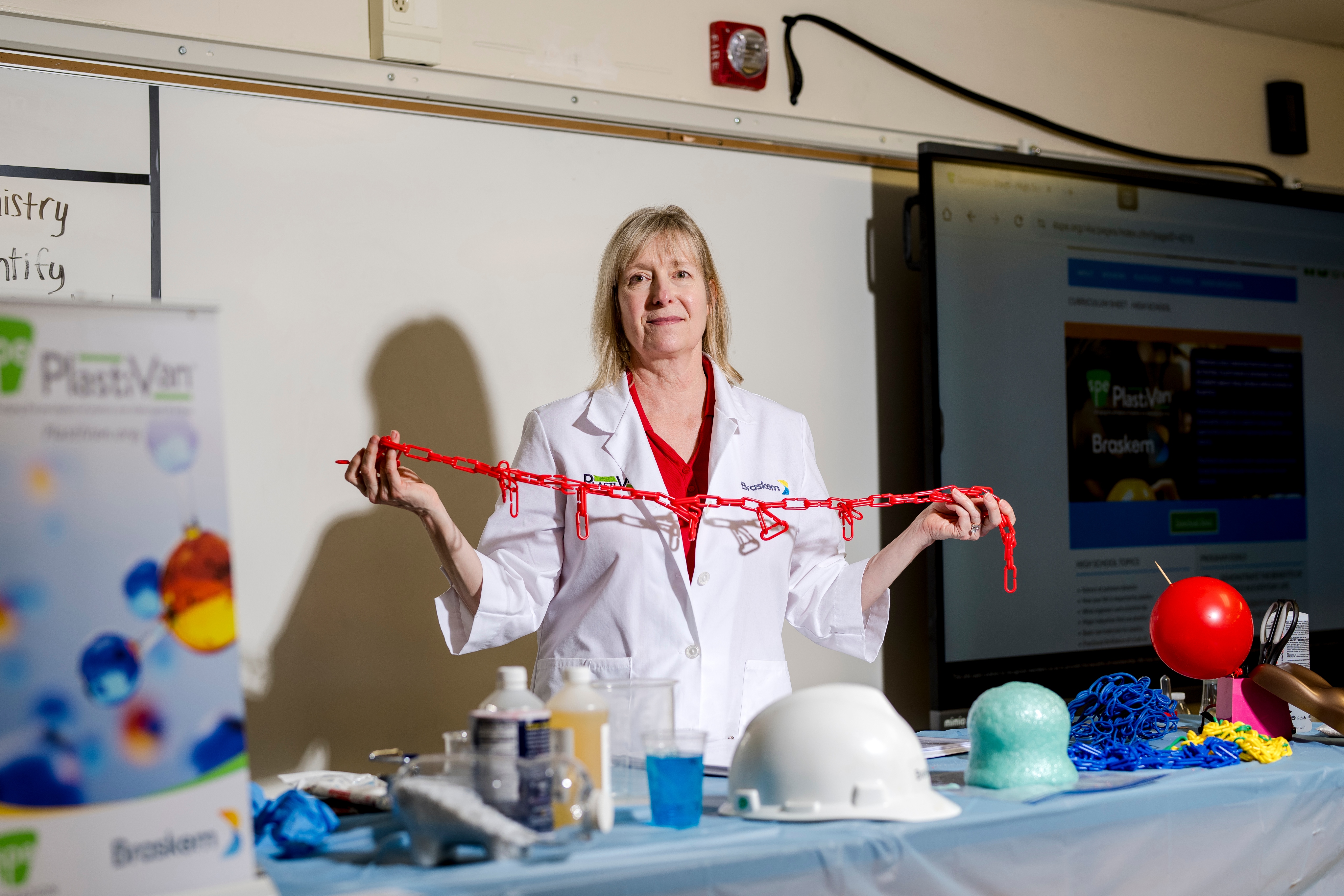
- The Society of Plastics Engineers (SPE) / Plastics Industry Association: Advocates for programs like the PlastiVan and creator of classroom scavenger hunts designed to teach children the "ubiquitous" nature and societal importance of plastics.
- The American Association of Chemistry Teachers (an initiative of the Dow Chemical Company): Publisher of elementary and middle school lesson plans that have students test the strength of grocery store plastic bags before asking them to role-play as Dow Chemical employees designing packaging for a customer.
- Shell: Operator of the Beaver County petrochemical complex, heavily invested in local school funding and curriculum development.
When contacted for comment regarding the findings of the Plastic Pollution Coalition report, Shell, the Society of Plastics Engineers, the American Association of Chemistry Teachers, and the Beaver County school district all declined or failed to respond to multiple inquiries from journalists.
Future Outlook: Navigating the Crossroads of STEM Education
The exposure of corporate influence in K-12 schools forces a critical reckoning for educators, policymakers, and school boards across the country. The debate centers on how to protect students from corporate propaganda without depriving underfunded classrooms of essential resources.
The Case for Strict Bans
Advocates like Madison Dennis of the Plastic Pollution Coalition argue for decisive legislative and administrative action. They are calling for school boards to enact explicit bans on educational materials sponsored by the chemical, fossil fuel, and plastics industries. Furthermore, advocates suggest that systemic reforms—such as eliminating multi-billion-dollar tax subsidies for petrochemical facilities—could return much-needed tax revenue to local municipalities, properly funding public education so teachers are not forced to rely on corporate handouts.
The Case for Critical Media Literacy
Conversely, other educators and nonprofit leaders argue against outright censorship. Katie Allen, executive director of the environmental nonprofit Algalita, contends that banning industry materials sets a dangerous precedent and underestimates the capabilities of educators. Allen suggests that teachers can use corporate resources as powerful teaching tools to foster critical media literacy, teaching students how to identify greenwashing, analyze corporate messaging, and evaluate source credibility.
Grassroots Alternatives
In the absence of corporate funding, many educators are proving that rigorous, engaging environmental education is possible without industry backing. Former elementary school teacher Jacqueline Omania famously transformed her Berkeley, California classroom into a zero-waste laboratory. Over an 11-year period, Omania and her students established classroom agreements to minimize synthetic consumption—such as swapping individual plastic glue sticks for communal containers—while simultaneously advocating for municipal policy changes, including successful local campaigns to ban single-use plastic foodware in restaurants.
"There are so many challenges in the world, but plastic is something tangible," Omania reflected. "It’s right there in front of them, and they can see the difference that they’re actually making through their actions."
Ultimately, as school districts navigate tight budgets and powerful corporate interests, the fundamental question remains: Will public classrooms serve as centers for independent, objective scientific inquiry, or will they continue to function as fertile ground for corporate image rehabilitation? The answer will shape not only the ecological literacy of millions of students, but the future health of the planet itself.