Executive Overview
The United States is currently grappling with a compounding environmental and agricultural crisis rooted in the ubiquitous presence of per- and polyfluoroalkyl substances (PFAS)—frequently referred to as "forever chemicals." At the center of this brewing storm is the U.S. Environmental Protection Agency’s (EPA) newly released draft guidance regarding the management of biosolids, the nutrient-rich organic materials derived from wastewater treatment plants that have historically been utilized as a low-cost agricultural fertilizer.
This latest regulatory maneuver has ignited a fierce, multi-front debate involving wastewater treatment utilities, agricultural lobbyists, environmental watchdogs, and state legislators. The core friction point is whether the EPA is doing enough to protect the nation’s food supply and soil health or if it risks overregulating a vital waste management pathway based on flawed scientific frameworks.
While wastewater agencies and major agricultural organizations have cautiously welcomed the EPA’s recent acknowledgment of the flaws in prior risk assessments—and its continued baseline support for land application—environmental advocates and affected farmers are sounding the alarm. Pointing to devastating real-world consequences in states like Maine and Texas, critics argue that the federal government is shifting an unfair financial and operational burden onto the agricultural sector while failing to stem the invisible tide of toxic contamination. As the October 5 comment deadline approaches, stakeholders across the board agree on one thing: the financial and structural fallout of managing PFAS-tainted biosolids will reshape waste management, farming practices, and corporate accountability for decades to come.
Detailed Chronology: The Evolution of the Biosolids and PFAS Crisis
To understand the gravity of the EPA’s current draft guidance, it is essential to trace the timeline of how "forever chemicals" migrated from industrial manufacturing plants into municipal sewer systems, agricultural soils, and ultimately, the American food chain.
1. The Industrial Boom and Pervasive Seepage (Decades Past)
For over half a century, PFAS chemicals—including PFOA (perfluorooctanoic acid) and PFOS (perfluorooctanesulfonic acid)—were incorporated into thousands of consumer and industrial products due to their unique resistance to heat, water, and oil. From non-stick cookware to waterproof clothing and firefighting foams, these synthetic compounds became foundational to modern manufacturing. However, because these chemicals do not break down naturally in the environment, they began accumulating in municipal wastewater streams. Industrial discharges, landfill leachate, and consumer runoff funneled massive quantities of PFAS into publicly owned treatment works (POTWs).
2. The Rise of Biosolids as Agricultural Fertilizer
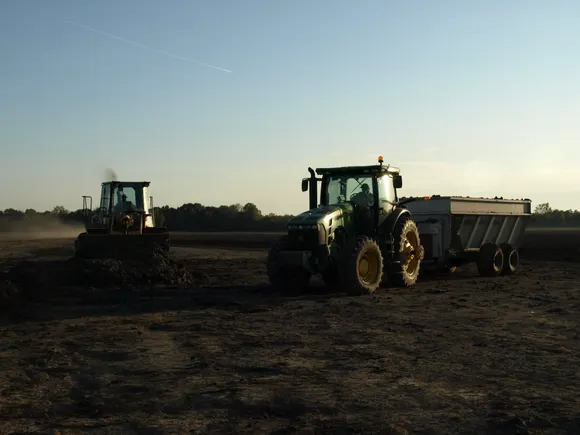
As wastewater facilities processed raw sewage, they generated massive tonnages of residual solid material known as biosolids. Recognizing that these biosolids are rich in nitrogen, phosphorus, and organic matter, federal and state agencies aggressively promoted their land application as a sustainable, circular-economy alternative to chemical fertilizers and landfill disposal. For decades, farmers across the U.S. welcomed this subsidized or low-cost nutrient source, unaware that it contained microscopic, resilient toxins.
3. The Scientific Awakening and State-Level Fallout (Late 2010s–Early 2020s)
The illusion of harmless recycling shattered as advanced testing methods uncovered widespread PFAS contamination in agricultural soils and groundwater across multiple states. Maine emerged as the epicenter of the crisis after state-level testing revealed that decades of spreading PFAS-laden municipal biosolids had poisoned local farms, dairy herds, and water supplies. In response, Maine took the unprecedented legislative step of enacting a total ban on the land application of biosolids, plunging the state into a severe sewage sludge disposal crisis. Other states, including Maryland and Virginia, began enacting targeted regional restrictions and monitoring thresholds.
4. Federal Interventions and the Current EPA Draft Guidance
Under pressure from environmental groups and affected communities, the Biden administration and the EPA initiated risk assessments to evaluate the hazards of PFOA and PFOS in biosolids. The release of the EPA’s latest draft guidance marks the current chapter in this saga. The document outlines various management practices adopted by states—such as mandatory monitoring for wastewater treatment operators and limited application bans—while carefully emphasizing that the agency is not formally endorsing these state-level actions. Simultaneously, the guidance has opened a Pandora’s box of criticism from all sides of the debate, setting the stage for a contentious comment period concluding on October 5.
Supporting Context & Metrics: The Scale of the Challenge
The financial, logistical, and environmental metrics underlying the PFAS biosolids crisis reveal a monumental challenge for municipal and agricultural infrastructure.
The Economic Ripple Effects Across Sectors
The EPA’s draft guidance is not merely an academic exercise; it carries profound economic implications. Wastewater treatment plants, which receive leachate containing PFAS from regional landfills and industrial sources, face immense financial pressure. If federal or state restrictions on land application continue to expand, these facilities will lose their primary disposal pathway.
Redirecting millions of tons of biosolids away from farms and toward specialized landfills or incineration units will drive up municipal operational costs. These costs will inevitably be passed down to ratepayers through higher sewer bills, or absorbed by wastewater utilities already operating on tight municipal budgets. Furthermore, farmers who rely on free or low-cost biosolids will be forced to purchase expensive synthetic fertilizers, squeezing profit margins in an already volatile agricultural economy.
Quantifying the Contamination
According to studies cited by state agencies and environmental advocacy groups, dozens of farms in states like Maine and Texas have documented dangerous levels of PFAS in their soils following years of authorized biosolids application. While the U.S. Food and Drug Administration (FDA) maintains that its routine sampling rarely detects high levels of PFOA and PFOS in commercially available grocery store foods, environmental toxicologists warn that cumulative, long-term exposure poses severe health risks, including immune system dysfunctions, developmental delays, and increased cancer risks.
The logistical hurdle of monitoring is equally daunting. With over 360 publicly owned treatment works represented by national organizations like the National Association of Clean Water Agencies (NACWA), establishing a nationwide baseline database for PFOA and PFOS occurrences will require massive investments in laboratory infrastructure, sampling protocols, and analytical technology.
Official Statements and Stakeholder Perspectives
The debate surrounding the EPA’s draft guidance has exposed deep ideological and strategic fractures among key stakeholders. The primary factions—municipal water agencies, agricultural federations, environmental watchdogs, and impacted lawmakers—offer sharply contrasting views on the path forward.
Municipal Utilities Seek Clarity and National Data
Representing more than 360 publicly owned wastewater treatment works nationwide, the National Association of Clean Water Agencies (NACWA) has engaged closely with the EPA. During a recent agency listening session, Emily Remmel, NACWA’s senior director of regulatory affairs, expressed appreciation for the EPA’s candid discussion regarding the "inherent flaws of the draft risk assessment."
"Public confusion remains widespread, and this draft guidance is helpful at clarifying misconceptions created by the draft risk assessment," Remmel stated during the call.
While NACWA continues to review the guidance with its membership, Remmel urged the federal government to take a proactive role by collecting comprehensive national data on PFOA and PFOS occurrences in biosolids. Such data, she argued, is essential to anchoring any future regulatory framework in rigorous, undeniable science. Crucially, NACWA has also thanked the agency for reaffirming its foundational support for the continued land application of biosolids, which remains the most economically viable management tool for wastewater utilities.
Agricultural Advocates Push Back Against "Solutions in Search of a Problem"
The American Farm Bureau Federation (AFBF) has taken a similarly critical view of the federal government’s methodology, aligning with municipal utilities in questioning the scientific rigor behind past risk assessments. Courtney Briggs, senior director of government affairs at the AFBF, characterized the Biden-era reports as "horribly flawed" during the agency’s listening session.
Briggs pointed to the rarity of PFOA and PFOS detections in grocery store foods by the FDA, suggesting that aggressive new regulations restricting land application might represent "a solution in search of a problem." From the perspective of large-scale agricultural producers, heavy-handed federal restrictions threaten to disrupt traditional farming inputs without delivering proportional health or environmental benefits.
Environmental Defenders Demand Accountability and Action
Conversely, environmental and public health organizations view the cautious stance of the EPA and the dismissive attitude of agricultural lobbies as dangerously shortsighted. Public Employees for Environmental Responsibility (PEER), an organization that has initiated multiple lawsuits over PFAS contamination in biosolids, is pushing the EPA to adopt a much more aggressive, hands-on regulatory posture.
Kyla Bennett, PEER’s director of science policy, launched a sharp critique of the new guidance during the EPA listening session.
"The guidance offers no alternative to land application other than shifting the burden to consumers and farmers themselves, which is ridiculous," Bennett asserted.
Bennett also criticized the American Farm Bureau Federation’s stance as oblivious to the human and economic toll already inflicted on agricultural communities, highlighting that farmers in Maine and Texas have been forced to shutter operations entirely after discovering that their once-productive soils were toxic.
State-Level Realities: Voices from the Front Lines
Few individuals understand the human cost of the biosolids crisis as intimately as Maine state Representative Bill Pluecker. Working alongside the Maine Organic Farmers and Gardeners Association (MOFGA), Pluecker has spent years in the state legislature attempting to clean up the contamination resulting from decades of fertilizer-grade sludge spreading.
Maine’s struggle to find alternative disposal capacities has been monumental. Although a specialized biosolids dryer is scheduled to come online this year at the WM-managed Crossroads Landfill, the state’s transition away from land application has been agonizingly slow and expensive. Pluecker emphasizes that the threat to farmers is existential, noting that state-sponsored studies have confirmed widespread soil contamination across dozens of agricultural properties.
"They have the power to take the burden off of farmers," Pluecker said in an interview, arguing that the EPA must abandon its passive approach and take decisive action to prevent further spreading of PFAS-laden materials.
Crucially, Pluecker—himself a working farmer—advocates for a coalition of interests that places financial responsibility where it truly belongs: upstream. Rather than allowing the crippling costs of monitoring, disposal, and remediation to fall on wastewater treatment plants and farmers, Pluecker believes that the chemical manufacturers who profited from the creation and distribution of PFAS should foot the bill.
"We are all facing this contamination, this crisis, and we don’t want to be pinned with the bill," Pluecker emphasized. "These folks are the ones making profits off of this, and they should be the ones picking up the bill as well."
Future Outlook: What Lies Ahead for Waste Management and Agriculture?
As the October 5 deadline for public comments on the EPA’s draft guidance rapidly approaches, the trajectory of American waste management and agricultural policy stands at a critical crossroads. The decisions made by federal regulators over the coming months will reverberate across multiple industries.
The Looming Infrastructure and Financial Crunch
If the EPA ultimately decides to tighten restrictions on the land application of biosolids, wastewater treatment plants will face immediate capital expenditure crises. Facilities will be forced to upgrade their monitoring capabilities, invest in advanced treatment technologies to strip PFAS from leachate before it enters municipal systems, or pay exorbitant tipping fees to redirect solid waste to secure landfills or incinerators. These expenses will test the financial resilience of local governments and utilities, many of which are already struggling to maintain aging water infrastructure.
The Search for Technological and Regulatory Solutions
Simultaneously, the scientific and engineering communities are racing to develop cost-effective technologies capable of destroying or sequestering PFAS compounds within biosolids. Thermal destruction, supercritical water oxidation, and specialized carbon filtration systems are currently being tested at pilot scales, but none are yet universally accessible or economically viable for small-to-mid-sized municipal plants.
On the regulatory front, the EPA faces the monumental task of balancing public health protection with agricultural stability. Crafting a national standard that satisfies environmental watchdogs without devastating wastewater utilities and farming cooperatives will require unprecedented collaboration between federal agencies, state legislatures, and private industry.
Conclusion: A Defining Test for Environmental Governance
The crisis of PFAS-tainted biosolids is more than a regulatory dispute; it is a profound test of modern environmental governance. It forces society to confront the long-term ecological consequences of a century of unchecked chemical manufacturing. Whether the federal government chooses to place the primary burden of remediation on municipal ratepayers, hardworking farmers, or the chemical corporations responsible for engineering these "forever chemicals" will define the health and safety of American agriculture for generations to come. As the public comment window closes, all eyes remain fixed on Washington, waiting to see whether the EPA will rise to meet the challenge of a truly systemic crisis.