

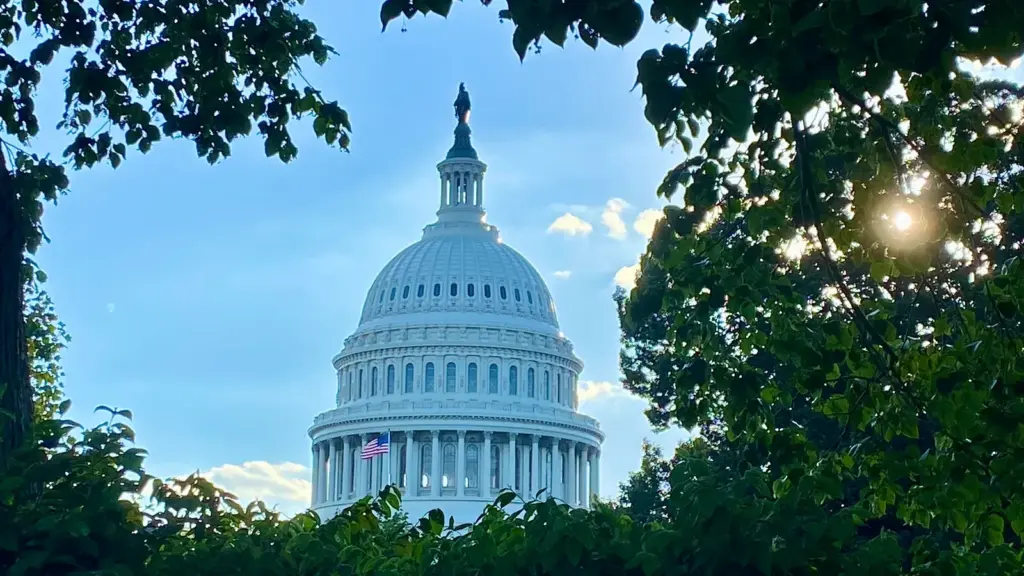
WASHINGTON — In a decisive legislative push ahead of an extended legislative recess preceding the midterm elections, the U.S. House of Representatives has overwhelmingly approved a sweeping package of measures spearheaded by the House Committee on Energy and Commerce. Among the legislative outcomes are three critical bills with profound implications for the waste management, recycling, and environmental remediation sectors.
Designed to reshape how the United States handles end-of-life electronics, industrial byproducts, and hazardous materials, these measures tie directly into a broader, bipartisan national strategy: securing a domestic supply chain for critical minerals. As geopolitical tensions rise and global demand for advanced technologies, defense systems, and clean energy infrastructure accelerates, Washington is increasingly viewing its mounting streams of waste not as an environmental burden, but as an untapped domestic mining reserve.
Executive Overview
The legislative package passed by the House represents a significant pivot in federal environmental and industrial policy. For decades, the management of hazardous waste and industrial byproducts has been viewed strictly through the lens of containment, disposal, and risk mitigation. However, the newly passed bills—specifically H.R. 9615 (the BRACE Act), H.R. 9617 (the CHARM Act), and H.R. 9616 (the EMRTAI Authorization Act)—reframe the waste sector as a primary engine for resource independence.
At the heart of this legislative pivot is a glaring vulnerability: the United States’ heavy reliance on foreign adversaries, most notably China, for the critical minerals necessary to power the 21st-century economy. Minerals such as lithium, cobalt, nickel, copper, and rare earth elements are foundational to everything from electric vehicle (EV) powertrains and grid-scale battery storage to advanced military guidance systems and telecommunications hardware.
By streamlining federal regulations, directing interagency coordination, and funding technological innovation, the House-passed bills aim to unlock secondary supplies of these vital materials. Proponents argue that the legislation will simultaneously cut bureaucratic red tape for domestic recyclers, turn environmental liabilities into strategic industrial assets, and accelerate long-delayed remediation projects across the country.
Detailed Chronology and Legislative Breakdown
The journey of these bills to the House floor reflects a concerted, months-long effort by the Energy and Commerce Committee to advance targeted, pragmatic legislation addressing both supply chain security and environmental stewardship. Following committee markups and favorable reports over the summer, the measures were bundled and brought to the floor for final approval just as lawmakers prepared to depart Washington.
1. Battery Recycling for America’s Competitive Economy (BRACE) Act (H.R. 9615)
Introduced by Representative Marianette Miller-Meeks (R-Iowa), H.R. 9615 takes direct aim at an outdated regulatory framework that has long stymied the domestic lithium-ion battery recycling industry.
Under current federal guidelines—specifically those governed by the Mercury-Containing and Rechargeable Battery Management Act of 1996—recycling regulations are anchored to decades-old technologies like nickel-cadmium and lead-acid batteries. They fail to adequately address the unique chemical compositions and rapid proliferation of modern lithium-ion batteries found in consumer electronics, energy storage systems, and electric vehicles.
The BRACE Act addresses this by directing the U.S. Environmental Protection Agency (EPA) to initiate a formal rulemaking process within 18 months of enactment. This rule will formally recognize lithium-ion batteries as "universal waste," a specialized subcategory of hazardous waste designed to encourage proper collection and recycling without imposing the overly burdensome tracking and permitting requirements associated with traditional hazardous waste.
According to technical briefings from Rep. Miller-Meeks’ office, updating this classification will drastically reduce operating costs and logistical hurdles for the recycling sector. Most notably, it will permit "destination facilities" to store and process lithium-ion batteries at the exact locations where they are recycled, eliminating unnecessary cross-country transport and streamlining the recovery of high-value commodities such as lithium, cobalt, nickel, and copper.
2. Coordinating and Harnessing America’s Recovery of Minerals (CHARM) Act (H.R. 9617)
Moving beyond consumer batteries, H.R. 9617 addresses the broader landscape of industrial and technological waste. Introduced jointly by Representatives Gary Palmer (R-Ala.) and Paul Tonko (D-N.Y.), the CHARM Act seeks to amend the foundational Solid Waste Disposal Act of 1965.
The legislation directs the EPA Administrator to collaborate closely with the heads of other relevant federal agencies to formulate a comprehensive National Critical Mineral Recovery Strategy. Rather than focusing solely on traditional mining operations—which face lengthy permitting delays and intense environmental scrutiny—the CHARM Act mandates a strategic assessment of opportunities to extract critical minerals from "discarded materials."
This includes casting a wide net over overlooked domestic waste streams:
- Electronic Waste (E-Waste): Discarded computers, smartphones, and household appliances laden with precious and rare earth metals.
- Legacy Mine Sites: Abandoned historical hardrock mines that continue to leach minerals into surrounding ecosystems.
- Coal Ash: The industrial byproduct generated by coal-fired power plants, which frequently contains significant concentrations of valuable rare earth elements.
By establishing a coordinated federal roadmap, the CHARM Act seeks to provide private industry with the regulatory clarity and strategic focus needed to invest in advanced recovery infrastructure on domestic soil.
3. Environmental Monitoring and Remediation Technology Assessment Initiative Authorization Act (H.R. 9616)
The third pillar of the legislative package focuses on transforming environmental liabilities into industrial assets. Introduced by Representatives August Pfluger (R-Texas) and Greg Landsman (D-Ohio), H.R. 9616 updates and expands upon a 2023 EPA program dedicated to technological innovation in remediation.
The original Environmental Monitoring and Remediation Technology Assessment Initiative (EMRTAI) was established to explore ways to recover critical materials from mining waste specifically during active cleanup operations at legacy sites. Pfluger’s bill broadens this mandate significantly, directing the EPA to expand the program’s scope to encompass a wider array of contaminated locations, with a specific emphasis on Superfund sites listed on the National Priorities List (NPL).
Crucially, the legislation authorizes $10 million in annual funding to drive research, development, and deployment of innovative extraction and monitoring technologies. This infusion of capital is designed to bridge the gap between environmental cleanup and economic development, allowing remediation contractors to offset the high costs of toxic site restoration by commercializing the critical minerals recovered in the process.
Supporting Context and Metrics: The Geopolitical Imperative
To fully understand the urgency driving these three bills, one must examine the stark economic and geopolitical metrics defining the global critical minerals market. For over two decades, China has executed a deliberate, state-sponsored strategy to dominate every tier of the critical mineral supply chain, from raw extraction to chemical processing, refining, and advanced component manufacturing.
The Monopolization of Processing
While the United States possesses significant domestic deposits of various critical minerals—including lithium in Nevada, rare earths in California, and copper across the West—the vast majority of these raw materials cannot be processed domestically at scale. According to data from the International Energy Agency (IEA), China currently controls:
- Over 60% of the world’s rare earth element mining.
- More than 80% of global rare earth refining capacity.
- Roughly 70% to 80% of global manufacturing capacities for electric vehicle battery cells and precursors.
This extreme concentration creates a severe single-point-of-failure for American national security, defense manufacturing, and the clean energy transition. Any geopolitical friction, trade dispute, or supply chain disruption centered in East Asia instantly ripples through Western industrial sectors, driving up costs and halting production lines.
The Domestic Secondary Reserve
Faced with the prohibitive capital costs and lengthy timelines required to open new primary hardrock mines—which often take 10 to 20 years to clear federal environmental reviews and permitting hurdles—policymakers have recognized that urban mining and industrial waste processing offer the fastest path to supply chain resilience.
Consider the following trajectory of domestic waste generation:
- Lithium-Ion Batteries: With millions of electric vehicles hitting US roads over the past decade, the first wave of EV battery retirements is rapidly approaching. Without streamlined universal waste rules like those in the BRACE Act, millions of metric tons of spent batteries risk improper disposal, export, or inefficient recycling.
- E-Waste Volumes: The United States generates millions of tons of electronic waste annually, representing a multi-billion-dollar reservoir of gold, silver, palladium, cobalt, and copper that largely bypasses domestic recovery facilities.
- Legacy Superfund Sites: Tens of thousands of abandoned mines and industrial sites across the American landscape continue to pose chronic environmental hazards. Utilizing initiatives like the EMRTAI Authorization Act to extract valuable elements during the remediation process turns a perpetual financial drain into a self-funding restoration model.
Official Statements and Bipartisan Perspectives
While energy and environmental policy has frequently served as a battleground for intense partisan division, the critical minerals debate has fostered unusual moments of bipartisan alignment. Lawmakers from both sides of the aisle emphasized that reducing foreign dependence is a matter of basic economic and national survival.
Rep. Marianette Miller-Meeks (R-Iowa), author of the BRACE Act:
"China dominates the global battery supply chain, and outdated federal rules have made it harder for American recyclers to compete. The BRACE Act fixes that by cutting red tape and letting our recyclers recover the critical minerals already sitting in used batteries right here at home."
Rep. Gary Palmer (R-Ala.), co-author of the CHARM Act:
"Critical minerals are essential to our economy and national security, yet America remains too dependent on China for these resources. The CHARM Act takes a commonsense approach by directing the EPA to develop a coordinated federal strategy to identify new opportunities to recover critical minerals from electronic waste, legacy mine sites, coal ash, and other overlooked sources already here at home."
Rep. August Pfluger (R-Texas), author of the EMRTAI Authorization Act:
"Today, the House took a critical step toward ending our dependence on foreign adversaries for the minerals America counts on. This legislation turns contaminated sites into strategic assets while speeding up the restoration work our communities need."
Co-sponsors and committee leaders echoed these sentiments, noting that modernizing federal environmental statutes to embrace circular economy principles is no longer a niche ecological goal, but a foundational requirement for industrial competitiveness.
Future Outlook: Path to the Senate and Implementation Hurdles
With the House having successfully passed the legislative package ahead of its extended recess, attention now shifts to the United States Senate. While the bills enjoyed strong momentum in the House Committee on Energy and Commerce and achieved crucial bipartisan buy-in on the floor, their immediate future in the upper chamber remains subject to the crowded legislative calendar of the approaching election cycle.
Should the Senate take up and pass the measures—either as standalone acts or incorporated into a larger end-of-year legislative vehicle—the implementation phase will present its own set of complex administrative challenges:
- EPA Rulemaking Timelines: Directing the EPA to classify lithium-ion batteries as universal waste within 18 months will require a massive interdisciplinary effort. The agency must balance the need for streamlined recycling logistics with stringent safety standards to prevent devastating lithium-ion battery fires during storage and transit.
- Interagency Coordination: The success of the CHARM Act depends heavily on the EPA’s ability to forge effective partnerships with the Department of Energy, the Department of the Interior, and the Department of Defense. Bureaucratic silos have historically hampered coordinated federal strategies; overcoming these institutional hurdles will be critical.
- Funding and Technology Transfer: The $10 million annual authorization for the EMRTAI program must be successfully translated into actionable grants and research partnerships. Ensuring that academic breakthroughs in mineral extraction from Superfund sites scale effectively to the commercial level will require sustained, long-term public-private cooperation.
Conclusion
The passage of H.R. 9615, H.R. 9617, and H.R. 9616 marks a watershed moment in U.S. waste and resource policy. By officially connecting the management of hazardous waste, electronic scrap, and industrial remediation sites to the broader mandate of national security and critical mineral independence, the House of Representatives has laid the groundwork for a more resilient domestic economy. As policymakers, environmental regulators, and industry leaders look toward the horizon, the message is clear: America’s industrial future may well be forged not in newly dug holes in the ground, but in the intelligent, innovative recycling of the waste it has already left behind.



