

Executive Overview
The global ocean—once viewed as an inexhaustible frontier of boundless bounty and bottomless resilience—now faces an unprecedented convergence of ecological stressors. From systemic overfishing and habitat destruction to the staggering proliferation of microplastics in remote island chains, the planet’s life support system is severely compromised.
Yet, this narrative is not defined solely by degradation. Beneath the surface of systemic environmental challenges lies an equally powerful testament to ecological resilience: when humanity halts its relentless exploitation and grants marine ecosystems the space to heal, the ocean bounces back with astonishing speed.
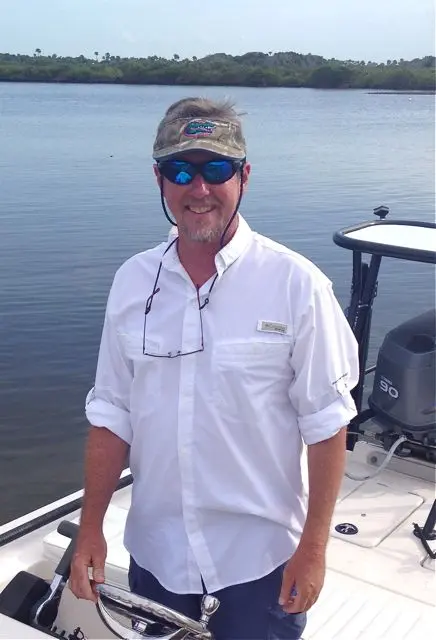
This is the central thesis drawn from a lifetime of observation by conservation advocate and lifelong mariner Bob Wallace. Through a personal lens shaped by decades of coastal living, academic immersion, and global exploration, Wallace’s testimony mirrors the broader scientific consensus. From the coral reefs of the Florida Keys to the seagrass meadows of Mosquito Lagoon and the plastic-choked waters of Indonesia, human activity has fundamentally altered the marine biosphere.
However, targeted conservation frameworks—such as science-based fishing limits, habitat protections, and global initiatives like Dr. Sylvia Earle’s Mission Blue and its designated "Hope Spots"—offer a proven roadmap for planetary recovery. This comprehensive report examines the historical trajectory of marine degradation, evaluates the empirical metrics of environmental loss and recovery, analyzes institutional frameworks for conservation, and outlines a future outlook centered on education, advocacy, and systemic awareness.
Detailed Chronology: A Lifelong Witness to Marine Transformation
To understand the scope of contemporary marine degradation, one must examine the shifting baselines of ocean health across generations. The trajectory of change is best understood through a chronological lens, tracing the transformation of coastal waters from mid-20th-century vitality to 21st-century fragility.
[1950s–1960s: The Era of Abundance]
   │
   ├── Pristine coral reefs (Staghorn coral in Florida Keys)
   ├── Clear coastal waters and lush seagrass meadows (Mosquito Lagoon)
   └── Robust offshore fisheries (Mackerel, tuna, grouper, cod)
   │
[1970s–1990s: The Tipping Point of Urbanization]
   │
   ├── Accelerated coastal development and habitat fragmentation
   ├── Unregulated commercial and artisanal overharvesting
   └── Early signs of coral bleaching and seagrass decline
   │
[2000s–Present: The Crisis and the Catalyst]
   │
   ├── Pervasive plastic pollution in remote global archipelagos
   ├── Collapse of local fisheries offset by legislative victories (Gill-net bans)
   └── Emergence of global marine protected areas (Hope Spots)
The Mid-20th Century: An Era of Apparent Abundance
For individuals who grew up along the coastlines of the mid-20th century, the ocean was an immersive classroom and an environment teeming with life. In regions like the east coast of Florida, summer traditions involved daily interactions with a vibrant, interconnected web of marine organisms.
During this era, offshore fishing excursions yielded robust populations of pelagic and demersal species—including mackerel, tuna, mahi-mahi, and grouper—that served as baseline indicators of ecological health. Coastal shallows featured thriving colonies of staghorn coral (Acropora cervicornis), forming complex structural habitats that sheltered thousands of juvenile species.
In estuaries and lagoons, such as Mosquito Lagoon near Cape Canaveral, waters remained crystalline, allowing sunlight to penetrate deep benthic zones dominated by lush, expansive seagrass meadows. These environments supported complex trophic webs, from nesting sea turtles and foraging crustaceans to apex marine predators.
The Late 20th Century: The Acceleration of Human Impact
As the decades progressed, rapid coastal urbanization, industrial expansion, and population growth began to exert immense pressure on these fragile marine ecosystems. The prevailing cultural paradigm treated the ocean as an infinite sink: an unmonitored dumping ground for municipal waste, agricultural runoff, and industrial pollutants, as well as a boundless pantry from which resources could be extracted without replenishment.
During this transitional period, long-term observers noted the gradual degradation of inshore habitats. Seagrass beds began to suffer from eutrophication and turbidity caused by upland development, choking out benthic light and reducing nursery grounds for commercially and ecologically vital fish stocks. Coral reefs faced early stressors from warming waters, pollution, and mechanical damage, setting the stage for more catastrophic declines in the decades to follow.
The 21st Century: Global Plastic Crisis and Systemic Overfishing
Today, the degradation of the marine environment is no longer localized; it is globalized and systemic. Recent maritime expeditions—spanning extended periods in Southeast Asia, the Caribbean, and beyond—reveal an ocean profoundly altered by human consumption.
In regions like Indonesia, the sheer volume of single-use plastics choking coastal waters and blanketing remote beaches defies comprehension. In popular cruising grounds across the Grenadines, once-thriving coral reefs are increasingly overgrown by macroalgae, fueled by nutrient runoff and the removal of herbivorous marine life. Meanwhile, artisanal and commercial fisheries worldwide continue to target lower trophic levels—such as juvenile snapper and pelagic baitfish—out of sheer desperation as large-scale predatory fish populations dwindle.
Supporting Context & Metrics: The Dual Realities of Decline and Resilience
Evaluating the health of the global ocean requires balancing sobering ecological metrics with empirical evidence of recovery. Science demonstrates that while anthropogenic pressures have devastated marine life, the ocean retains a remarkable capacity for biological regeneration when stressors are systematically removed.
The Metrics of Marine Decline
- Coral Reef Degradation: According to global marine assessments, over 50% of the world’s coral reefs have been lost or severely degraded over the past several decades due to rising ocean temperatures, ocean acidification, coastal development, and destructive fishing practices.
- Fisheries Collapse: The Food and Agriculture Organization (FAO) of the United Nations estimates that more than 34% of global fish stocks are currently fished at biologically unsustainable levels, up from just 10% in the mid-1970s.
- Plastic Pollution Accumulation: Scientific estimates indicate that upwards of 11 million metric tons of plastic enter the ocean annually. Without immediate intervention, this figure is projected to triple by 2040, impacting over 800 marine species through ingestion and entanglement.
The Mechanics of Ecological Rebound
Conversely, targeted conservation interventions provide undeniable proof of marine resilience. When governing bodies implement science-based catch limits, enforce marine protected areas (MPAs), and restrict destructive gear types, ecosystems respond with vigor.
- The Florida Mullet and Gamefish Rebound: Following the implementation of strict restrictions on commercial gill-net fishing for mullet in Florida waters, dependent apex inshore species—such as redfish (Sciaenops ocellatus), snook (Centropomus undecimalis), and tarpon (Megalops atlanticus)—experienced dramatic population rebounds. Concurrently, dependent avian predators, including ospreys and brown pelicans, recovered alongside their prey base.
- Red Snapper Recovery: Strict management and harvest limits in federal fisheries have successfully rebuilt overfished red snapper populations in the Gulf of Mexico, demonstrating the efficacy of quota-based management.
- Cetacean Resurgence: Whales that were hunted to the brink of commercial extinction during the whaling eras of the 19th and 20th centuries—including humpback, blue, and gray whales—are showing encouraging signs of demographic recovery in multiple global basins following international moratoriums on commercial whaling.
Official Statements and Institutional Solutions
Addressing the systemic challenges facing the marine biosphere requires coordinated international leadership, rigorous scientific frameworks, and grassroots advocacy. Pioneering organizations and marine scientists have established targeted methodologies to turn the tide against ocean degradation.
Dr. Sylvia Earle and the Vision of Mission Blue
At the forefront of global marine conservation is legendary oceanographer, explorer, and author Dr. Sylvia Earle. Through her foundation, Mission Blue, Dr. Earle has championed a science-driven initiative to reverse the decline of ocean health through the establishment of Hope Spots.
"To me, Mission Blue represents one of the most powerful ways on our planet to accomplish this imperative work," notes Bob Wallace, reflecting on the foundation’s strategic framework. "It brings together the kind of conservation vision, scientific understanding, advocacy, and public engagement the ocean urgently needs. But protecting places is only part of the challenge. We also have to help people understand why those places matter."
The Strategic Value of Hope Spots
Hope Spots are special areas of the ocean that are critical to its health—representing "hearts of the planet." Unlike traditional marine reserves that may focus solely on local economic interests, Hope Spots are designated based on scientific criteria encompassing:
- High Biodiversity: Areas supporting exceptional concentrations of endemic, rare, or endangered species.
- Critical Habitats: Essential spawning grounds, nursery habitats, and migratory corridors.
- Ecosystem Services: Regions providing vital carbon sequestration, coastal protection, or artisanal sustenance.
- Resilience and Recovery Potential: Zones where targeted protection can yield maximum ecological restoration.
By building localized community support, engaging policymakers, and leveraging global media campaigns, Mission Blue transforms these designated areas into beacons of marine protection, proving that strategic conservation can scale globally.
Future Outlook: Awareness, Education, and Action
The ultimate salvation of the global ocean does not rest solely on the shoulders of scientists, legislators, or institutional foundations. It requires a profound cultural shift in how modern, urbanized societies perceive their relationship with the natural world.
Overcoming Urban Detachment from Nature
In contemporary society, an increasing percentage of the global population resides in urban environments, far removed from direct, daily interactions with natural ecosystems. Concurrently, citizens are subjected to an endless, competitive stream of digital media, commercial advertising, and information overload.
Within this hyper-connected landscape, environmental conservation often struggles to maintain visibility. Yet, conservationists argue that ecological awareness must permeate the cultural mainstream. People cannot care about what they do not know, and they cannot protect what they do not understand.
The Power of Individual Agency
A central tenet of modern conservation philosophy is that every individual possesses the capacity to effect meaningful change. Citing the lifelong contributions of leaders like Dr. Sylvia Earle—who demonstrated that a single, dedicated voice can fundamentally alter global perceptions of the sea—advocates emphasize collective participation.
- Education as a Catalyst: Spreading awareness begins within local communities, families, and peer networks. Teaching children, friends, and colleagues about marine ecology fosters a generational baseline of respect and stewardship.
- Actionable Consumer Choices: Citizens can directly influence marine health by demanding sustainable seafood options, reducing single-use plastic consumption, supporting local and international conservation NGOs, and advocating for robust public policy measures.
- The "School of Fish" Metaphor: As Bob Wallace observes, individual actors may feel insignificant when faced with the vastness of global crises, but together, they form a cohesive unit: "Every one of us has this opportunity and ability, even if it is only being part of the greater effort. One member of the school of fish, so to speak."
Conclusion
The trajectory of the global ocean over the coming century hangs in the balance. The historical record demonstrates that humanity possesses the capacity to devastate marine life through unchecked extraction and negligence. Yet, the empirical evidence of recovery—from rebounding pelagic fisheries to flourishing coral and seagrass habitats—proves that nature possesses an extraordinary capacity to heal when granted protection.
Through the strategic expansion of Hope Spots, the institutional leadership of organizations like Mission Blue, and a grassroots cultural awakening centered on education and active stewardship, humanity can steer the ocean away from ecological collapse and toward a sustainable, vibrant future. The time to act is not after the last fish is caught or the last reef dies; the time to act is now.



