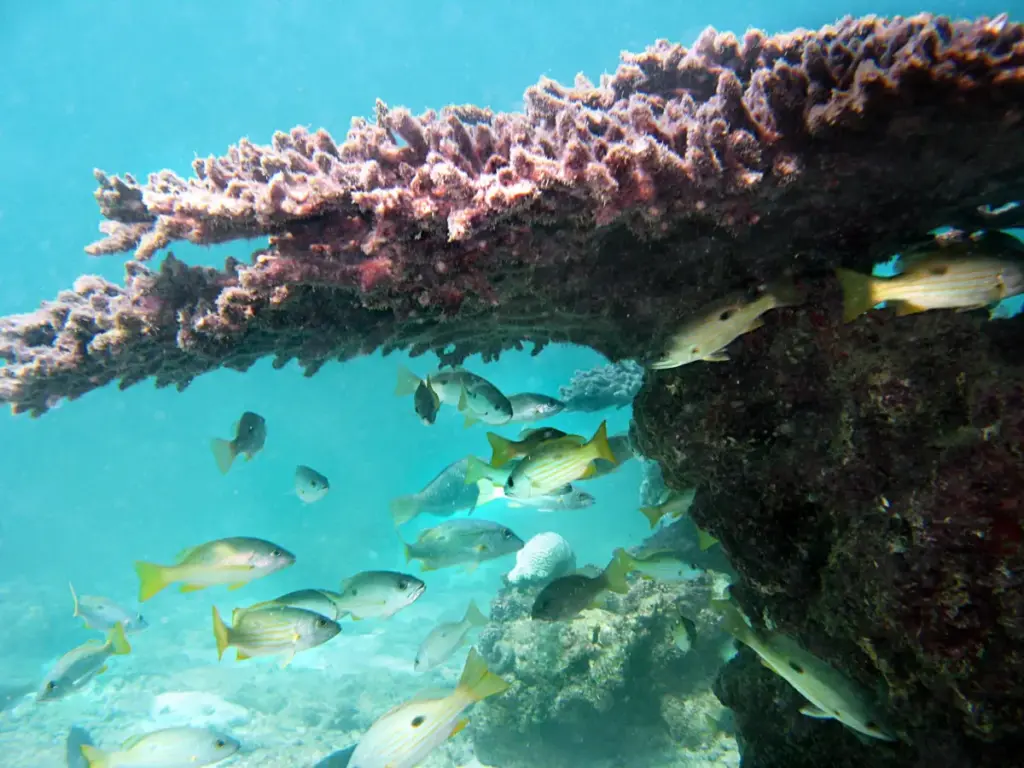
The world’s coral reefs are staring down an unprecedented existential crisis, losing not only vital hard coral cover but, just as critically, the temporal window they require to recover between increasingly frequent and intense marine heat waves. According to the Status of Coral Reefs of the World: 2025 report—the most comprehensive global reef assessment ever undertaken—decades of accumulated thermal stress, coupled with compounding climate anomalies, have severely compromised the ecological resilience of marine ecosystems across the globe.
Released by the Global Coral Reef Monitoring Network (GCRMN), the landmark assessment synthesizes an unprecedented pool of scientific data: 21.1 million individual observations drawn from 87,299 standardized surveys across 36,886 unique sites. Spanning 123 reef-bearing countries, territories, and economies between 1980 and 2024, the report provides an unvarnished look at the accelerating degradation of marine ecosystems that support a quarter of all marine life and sustain nearly a billion people.
Global hard coral cover—defined as the percentage of reef surface dominated by living hard corals—declined from an average of 30.2% during the 1980–2009 reference period to 27.3% between 2020 and 2024. This represents a contraction of 2.9 percentage points, or a 9.5% relative drop. However, marine scientists warn that this figure is conservative, masking a sharper downward trajectory that plunged hard coral cover down to 25.8% by the end of 2024. With oceans continuing to break heat records and a strengthening El Niño threatening further destruction, experts caution that time has nearly run out for the world’s shallow-water coral reefs.
Detailed Chronology of Global Bleaching
To understand the scale of the current crisis, scientists track mass coral bleaching events—catastrophic ecological breakdowns triggered when sustained marine heat waves force corals to expel the symbiotic photosynthetic algae (zooxanthellae) embedded in their tissues. Deprived of their primary energy source, corals turn stark white, starve, and face mass mortality.
Modern oceanic tracking reveals a harrowing acceleration of these global events:
The First Global Event (1998–1999): Triggered by an exceptionally intense El Niño, this event signaled the arrival of anthropogenic climate change as a dominant force in marine environments, causing widespread mortality across the Indian Ocean and parts of the Pacific.
The Second Global Event (2010–2011): Driven by compounding regional heat anomalies, this event inflicted heavy damage on Western Australia and Southeast Asian reef systems.
The Third Global Event (2014–2017): Spanning three consecutive years, this was the longest and most destructive bleaching event on record at the time, devastating the northern and central sectors of Australia’s Great Barrier Reef and causing unprecedented basin-wide devastation.
The Fourth Global Event (2023–2025): Declared by the U.S. National Oceanic and Atmospheric Administration (NOAA) following relentless heat stress across the tropical Atlantic, Indian, and Pacific oceans, this event accelerated the downward trend. According to the GCRMN report, the fourth global bleaching event drove an 8.9% relative drop in hard coral cover between 2023 and 2024 alone—marking the largest single-year decline in recorded history.
Crucially, lead author Manuel González-Rivero notes that the report’s baseline figures do not yet capture the full magnitude of the fourth global bleaching event, as severe thermal stress persisted deep into 2025. Extending the analysis through 2025 and 2026, researchers project a substantially steeper long-term decline.
Supporting Context & Metrics: The Numbers Behind the Crisis
Hard coral cover is prioritized in global assessments because hard corals function as primary ecosystem engineers. Their physical structures form the foundation of reef habitats, and their cover is easily measured, understood, and monitored across disparate regions. Yet, analyzing these metrics reveals deep regional disparities and alarming ecological shifts.
Uneven Geographic Losses
While global averages demonstrate a clear downward trend, regional impacts vary drastically, reflecting local hydrodynamics, localized pollution, and varying exposure to marine heat waves:
Arabian Region: The region encompassing the northern Arabian Sea, Persian Gulf, and Gulf of Oman suffered the most catastrophic collapse, with hard coral cover plummeting by 48.7%.
The Caribbean: Long plagued by warming waters, disease outbreaks, and coastal runoff, Caribbean reefs experienced a 43.4% decline.
The Pacific Ocean: Pacific reef systems saw hard coral cover drop by 18.3%.
Australia: Australia’s reef network, anchored by the iconic Great Barrier Reef, recorded a 10.9% decrease.
Conversely, some regions showed stable or seemingly positive trends—such as the Western Indian Ocean (reporting a 43% increase) and South Asia (up 16.2%). However, GCRMN researchers urge caution, noting that these apparent recoveries are often complicated by degraded historical baselines, sparse early-period observations, and shifts toward opportunistic, fast-growing species that lack the structural complexity of mature reefs.
The Macroalgae Threat and Shrinking Windows
Scientists also monitor macroalgal cover as a key indicator of ecological health. While seaweeds play important natural roles, excessive macroalgal growth crowds out coral larvae, stifling recruitment and preventing reef recovery following a disturbance. Although global macroalgal cover expanded by 44.1% relative to the 1980–2009 baseline, macroalgae occupied just 6.8% of global reefs in 2024. Researchers found no generalized, worldwide shift from coral-dominated systems to algae-dominated states, though such phase shifts have occurred locally.
The core vulnerability, however, lies in the recovery window. Historically, reefs experienced severe bleaching roughly once per decade, giving them adequate time to regenerate between shocks. Today, that recovery window has compressed to every four to six years.
Following the third global bleaching event, global coral cover managed a modest 6% bounce-back between 2017 and 2019. However, marine biologists emphasize that this nominal rebound masks a qualitative degradation: returning cover often consists of resilient, fast-growing monocultures rather than the rich, biodiverse assemblages that previously populated the reefs. Furthermore, average sea surface temperatures over global coral reefs climbed by 0.81°C (1.46°F) between 1985 and 2025.
Official Statements and Expert Perspectives
The gravity of the GCRMN findings has drawn urgent warnings from the international marine science community.
Manuel González-Rivero, lead author of the report, GCRMN global coordinator, and research team leader at the Australian Institute of Marine Science (AIMS), emphasized that the structural integrity of reefs is being pushed past its limits.
"Given current ocean temperatures and the strengthening of El Niño, we may anticipate conditions favouring another global bleaching event," González-Rivero told Mongabay. "Shrinking recovery windows will have a more profound impact on reef composition and function than we yet fully understand, with the potential for long-lasting consequences for coral reef ecosystems."
Independent experts share this grim outlook. Dr. Julia Baum, a prominent coral reef ecologist and professor at the University of Victoria in Canada, expressed profound skepticism regarding notions of ecological recovery.
"The coral recovery documented following the third global coral bleaching event is minimal and provides little cause for optimism," Baum noted. "I would not call 6% a rebound."
Addressing the compounding threats of current climate dynamics, Baum issued a stark warning regarding the intersection of record-high ocean heat and cyclical climate phenomena:
"With current global ocean temperatures at an all-time high, the unfolding El Niño will almost certainly be a death sentence for many of the world’s coral reefs."
Future Outlook: Mitigation Versus Adaptation
The stakes of this ecological decline extend far beyond marine biodiversity. While coral reefs cover less than 0.2% of the ocean floor, they provide critical habitat for at least 25% of all marine species. Moreover, approximately 104 million people now live within 5 kilometers (3.1 miles) of a coral reef—a 46% increase over the past two decades. Globally, nearly a billion people depend on reefs for food security, coastal protection against storm surges, economic livelihoods, and cultural traditions.
As the planet looks toward the remainder of the decade, scientific consensus converges on a sobering reality: local management and active restoration are no longer sufficient on their own.
NOAA projections indicate a greater than 90% chance that the unfolding El Niño will strengthen significantly through the fall and winter seasons. El Niño, a naturally occurring climate cycle involving the warming of surface waters in the central and eastern equatorial Pacific, acts as a force multiplier for global ocean heat content, setting the stage for widespread, synchronized thermal anomalies.
In response, conservationists advocate a dual-track strategy:
Local Resilience Management: Mitigating localized stressors by enforcing sustainable fishing practices, improving coastal water quality, and curbing destructive coastal development to give reefs the best possible chance of natural recuperation.
Targeted Interventions: Exploring coral reef restoration, active outplanting, and assisted evolution—breeding heat-tolerant coral strains capable of surviving higher thermal thresholds.
However, experts like Dr. Baum stress that technological interventions and local conservation amount to "rearranging the deck chairs on the Titanic" if greenhouse gas emissions are not immediately and drastically curtailed. Without rapid, economy-wide decarbonization, the underlying rise in ocean temperatures will continue to outpace any attempts at adaptation, condemning the vast majority of the world’s coral reefs to functional collapse before the end of the century.