Agricultural producers across Europe are confronting the devastating fallout of a summer defined by relentless heatwaves, historic droughts, and destructive wildfires. Intensified by human-caused climate change, these compound weather extremes have destabilized food production across the continent, severely undermining crop yields, diminishing total harvest outputs, and driving global food prices to heights not observed since early 2023.
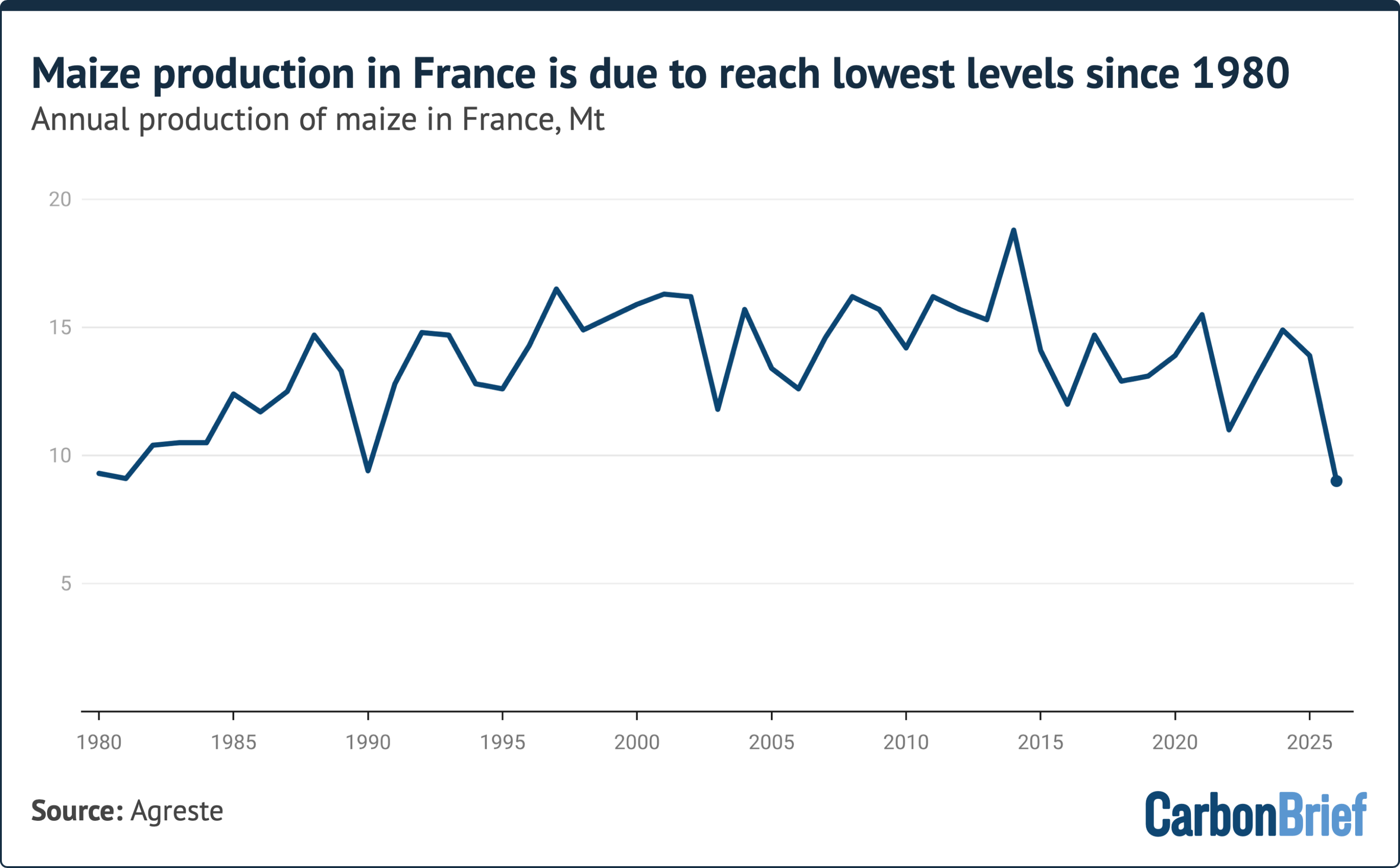
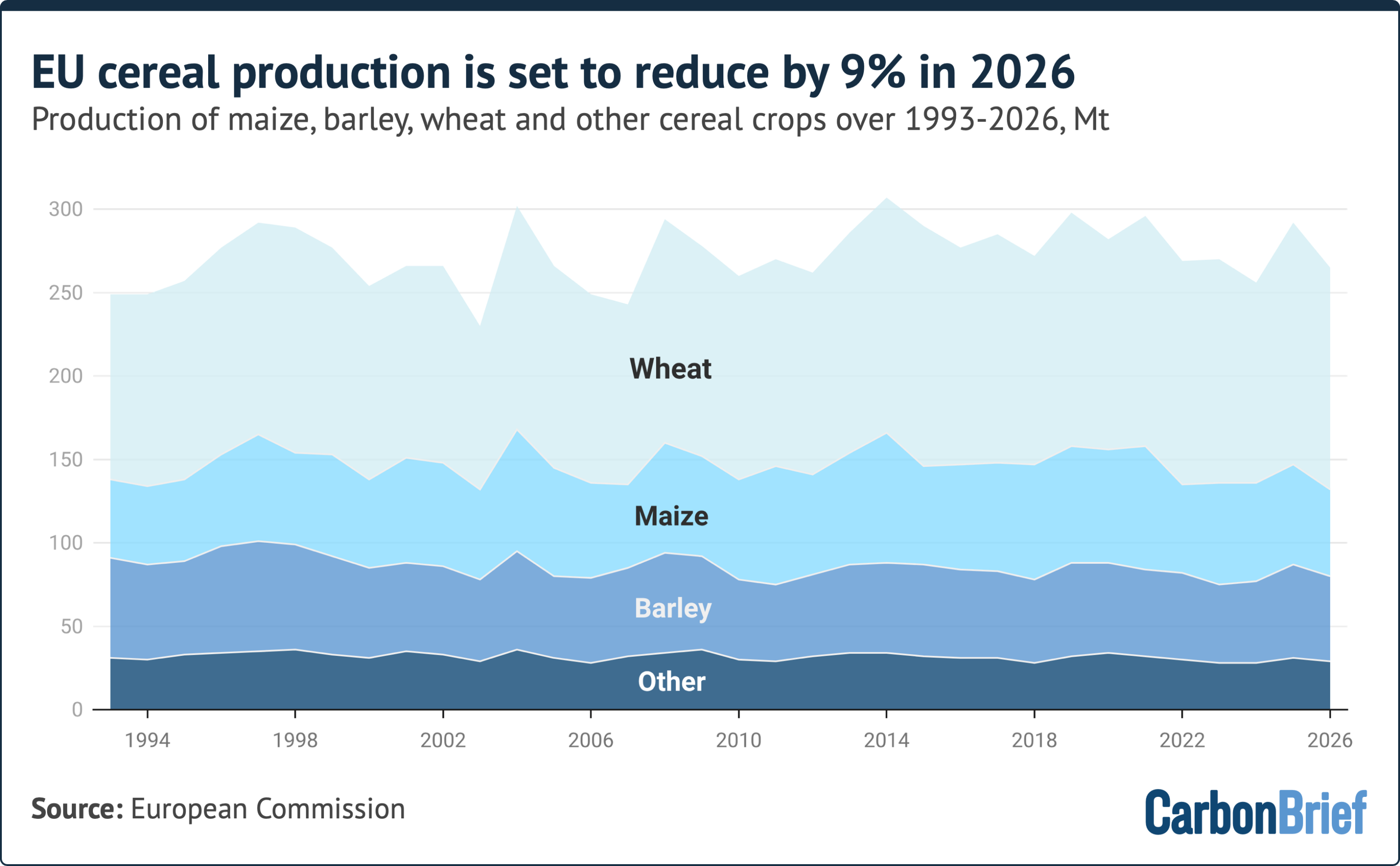
According to a comprehensive analysis of European Commission data, thinktank reports, and agricultural surveys compiled by Carbon Brief, the 2026 growing season has inflicted systemic damage across both primary grain belts and specialized crop regions. Total cereal production within the European Union is projected to drop by 9% year-on-year, with crucial staple crops such as grain maize suffering a historic 13% contraction continent-wide. In France—the EU’s primary agricultural engine—maize harvests have plummeted by 35%, reaching their lowest output since 1980. Concurrently, the United Kingdom is facing its worst overall harvest performance since detailed national record-keeping began in 1984.
+-----------------------------------------------------------------------+
|                 2026 EUROPEAN AGRICULTURAL CRISIS SUMMARY             |
+-----------------------------------------------------------------------+
|  Metric                                  | Value / Impact             |
+------------------------------------------+----------------------------+
|  Overall EU Cereal Production Drop       | -9% vs. 2025               |
|  EU Grain Maize Yield Reduction          | -13% (52 Mt total)         |
|  France Maize Production Collapse        | -35% (4-decade low)        |
|  June Heatwave Direct Grain Losses       | €2.0bn – €2.3bn            |
|  Estimated EU GDP Climate Drag (Triodos) | ~1.0% (~€180 billion)      |
|  UK Harvest Outlook                      | Worst since 1984           |
+-----------------------------------------------------------------------+
The economic shockwaves extend beyond the field. Financial assessments from Triodos Bank indicate that summer climate disruptions could erode the European Union’s gross domestic product (GDP) by roughly 1%, representing a direct loss of approximately €180 billion. When compounded by global supply chain disruptions—including fertilizer transport bottlenecks through the Strait of Hormuz and volatile fossil fuel pricing—the 2026 harvest failure underscores an escalating vulnerability: Europe’s agricultural architecture is struggling to absorb the realities of a rapidly warming world.
Detailed Chronology: A Season of Unprecedented Escalation
The agricultural crisis of 2026 developed through a rapid succession of climate anomalies that caught producers off guard during sensitive crop development cycles.
Spring into Early Summer: The June Heatwave
The crisis took shape in June, when an anomalous atmospheric high-pressure system anchored over Western and Central Europe, unleashing a record-breaking heatwave. Climate attribution scientists at World Weather Attribution (WWA) concluded that the intense heat experienced during this period would have been "virtually impossible" without the thermal forcing of accumulated greenhouse gas emissions. June 2026 registered as the hottest June on record for Western Europe and the second-warmest globally.
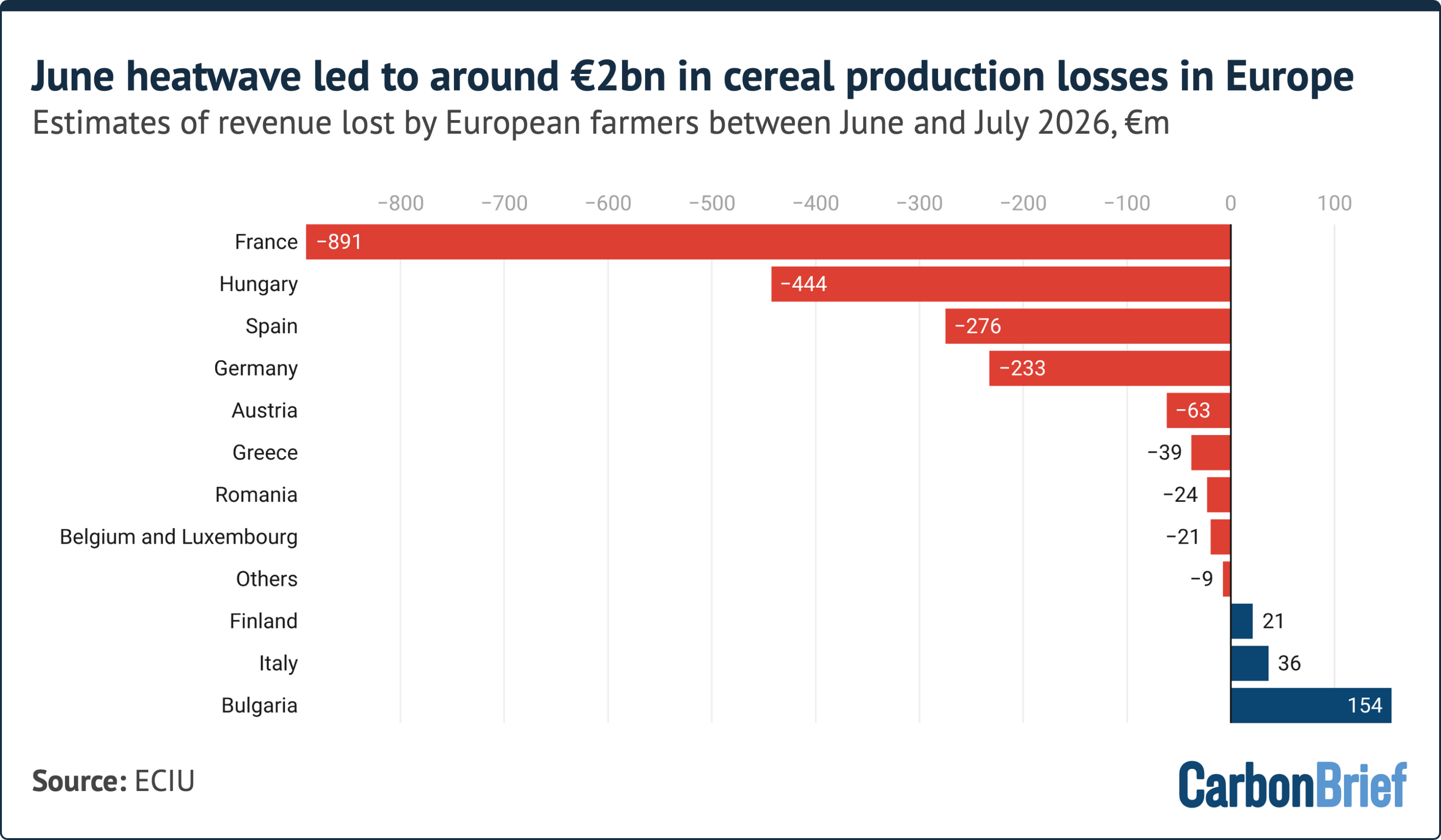
This extreme thermal stress coincided with critical flowering and grain-filling phases for winter and spring cereals. Analysis by the Energy & Climate Intelligence Unit (ECIU), based on grain association figures from Coceral, reveals that between June and July alone, revised production expectations erased between €2.0 billion and €2.3 billion in European grain value. Four nations—France, Germany, Hungary, and Spain—absorbed 86% of these direct fiscal losses.
        JUNE 2026 HEATWAVE: ESTIMATED REVENUE LOSS BY NATION
        +---------------------------------------------------+
        | France      | €891 Million                        |
        | Hungary     | €444 Million                        |
        | Spain       | €276 Million                        |
        | Germany     | Significant share of remaining 14% |
        | Total Loss  | €2.0B – €2.3B across Europe        |
        +---------------------------------------------------+
Mid-to-Late Summer: Compound Drought and Wildfires
As July progressed into August, thermal stress gave way to deep hydrologic deficits. Soil moisture across Western, Central, and Southern Europe was depleted. In France, national meteorological services documented a record number of monitoring stations surpassing the 40°C threshold, while public health authorities recorded more than 7,300 excess deaths attributed to the extreme weather.
Across Northern and Central Italy, prolonged rainfall deficits desiccated the Po Valley—the heart of Italy’s traditional rice belt—lowering irrigation reservoirs to critical lows. In Southern Europe and the Mediterranean basin, intense heatwaves triggered widespread wildfires that swept through historic olive groves and vineyard regions. By late August, the European Commission’s Joint Research Centre (JRC) issued a formal bulletin warning that heat and water scarcity had substantially impaired crop viability across central and western territories, transforming localized yield drops into structural harvest failures.
Supporting Context & Metrics: Regional and Sectoral Breakdown
The structural fallout of the 2026 weather anomalies manifests across multiple agricultural metrics, revealing severe localized losses alongside broader continental decline.
EU CEREAL PRODUCTION CHANGES (2025 vs. 2026)
----------------------------------------------------------------------------------------
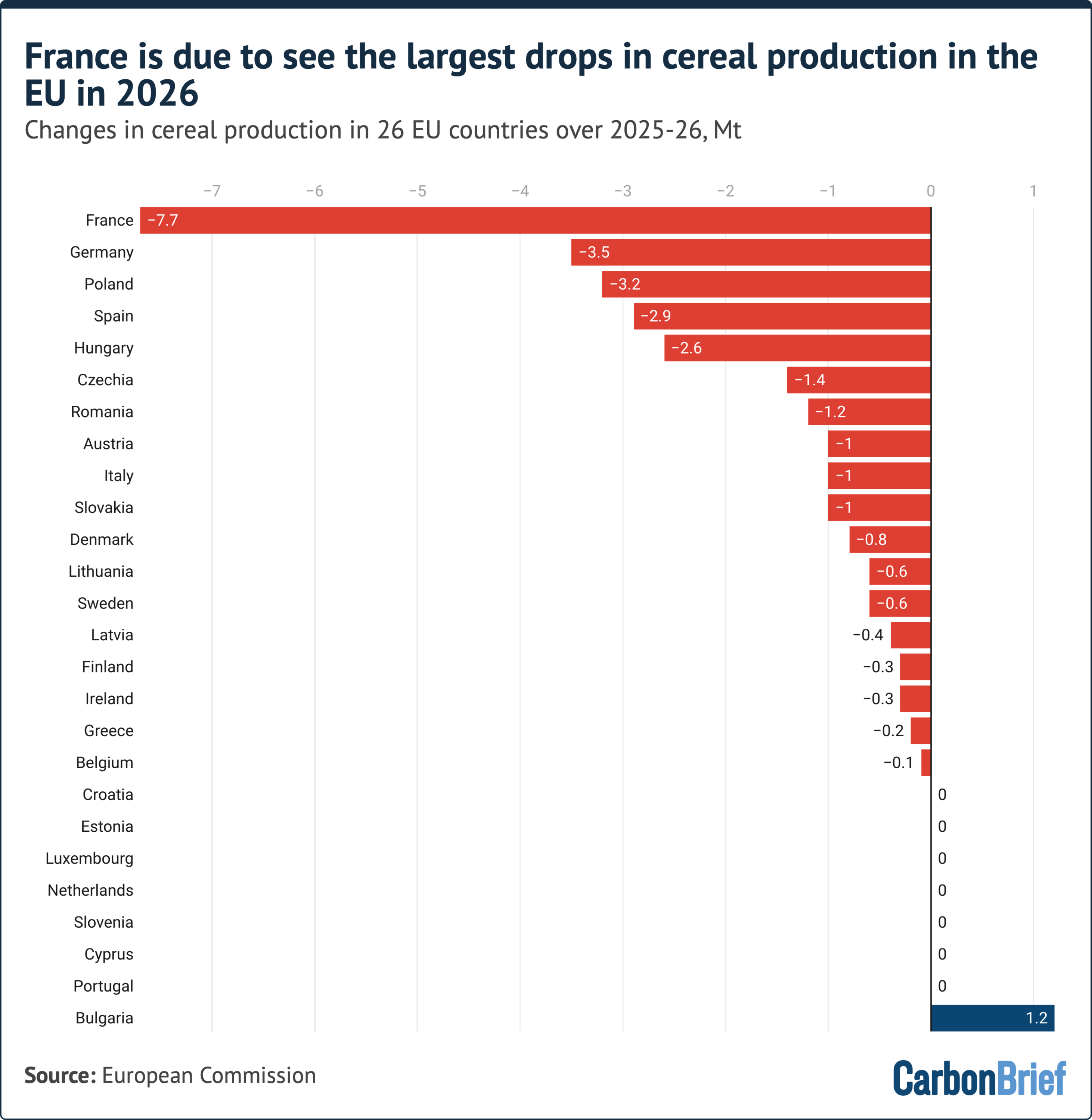
France    | [▼ -7.7 Mt]  ████████████████████████████████
Germany   | [▼ -3.5 Mt]  ███████████████
Poland    | [▼ -3.2 Mt]  ██████████████
Spain     | [▼ -2.9 Mt]  ███████████
Hungary   | [▼ -2.6 Mt]  ██████████
----------------------------------------------------------------------------------------
Note: Bulgaria was the primary exception, recording net year-on-year production gains.
1. Continental Cereal and Maize Contraction
EU-wide grain production contracted by 9% relative to 2025. Aside from 2024, the 2026 yield represents the lowest European grain volume in a decade.
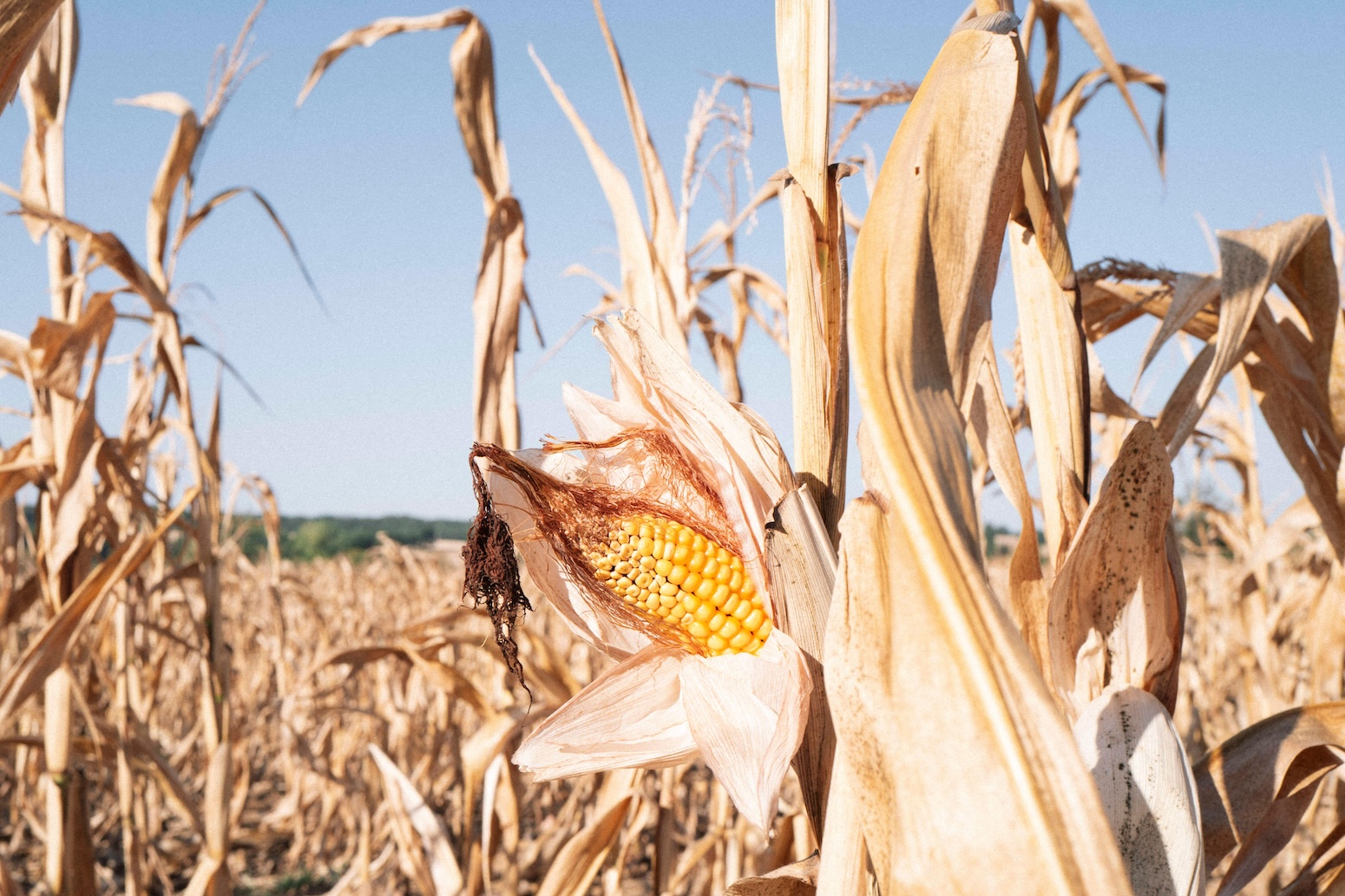
Grain Maize: Highly sensitive to thermal stress during pollination, EU maize output plummeted by 13% to 52 megatonnes (Mt)—the lowest overall output for the bloc since 2007.
France: Suffered the largest absolute volume reduction in the EU, losing roughly 7.7 Mt of total cereal production compared to 2025. Its maize output collapsed by 35%, marking a four-decade low last seen in 1980.
Germany: Recorded the second-largest absolute decline, dropping nearly 4 Mt of cereals year-on-year due to prolonged heat and soil moisture deficits.
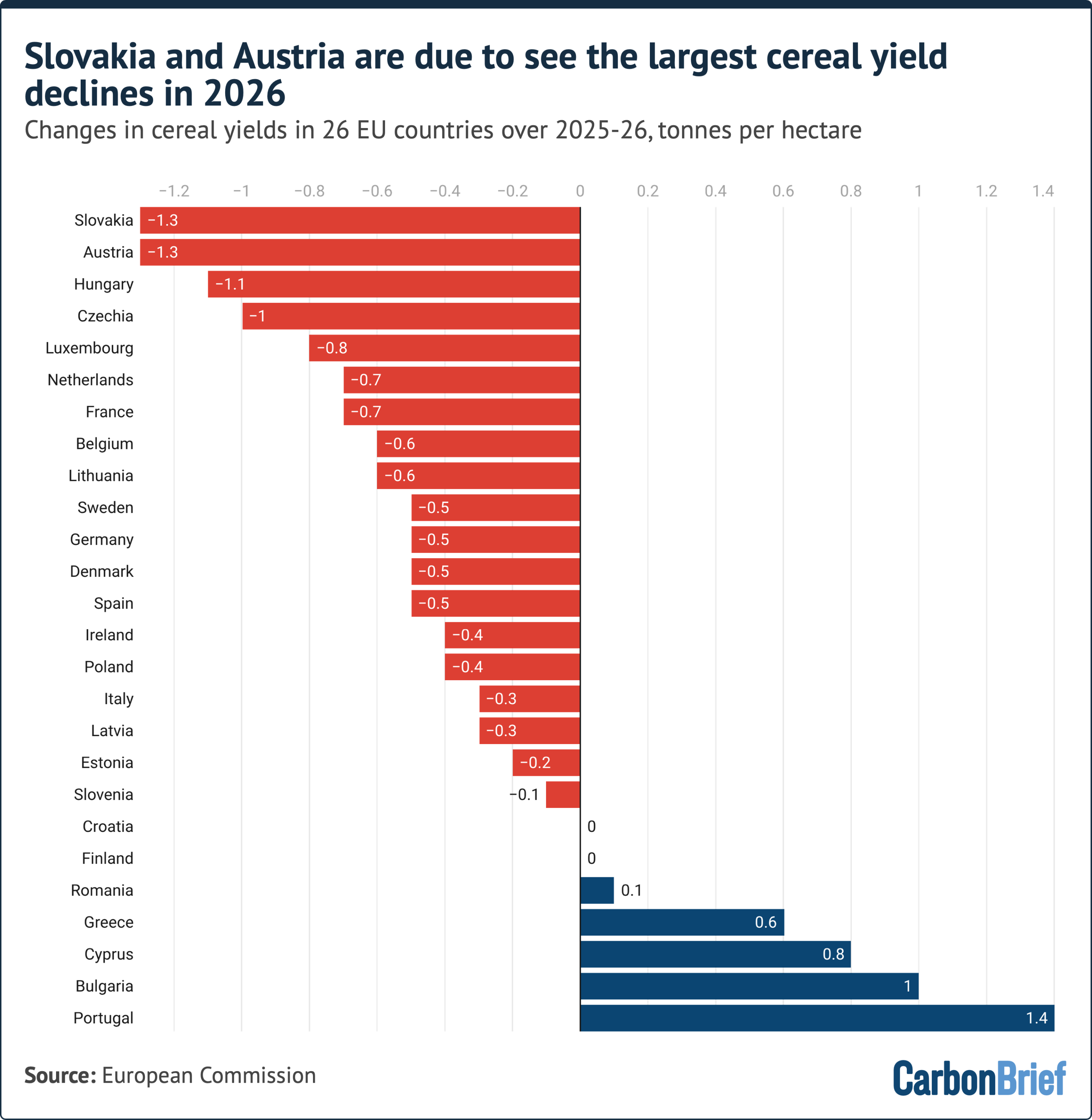
Central Europe: Slovakia, Austria, and Hungary sustained the highest per-hectare yield losses across the bloc, with each country seeing cereal yields plummet by more than 1.0 tonne per hectare compared to 2025 levels.
       CEREAL YIELD DROP PER HECTARE (2025 vs. 2026)
       +--------------------------------------------+
       | Country   | Yield Loss (Tonnes / Hectare)  |
       +-----------+--------------------------------+
       | Slovakia  |  -1.3 t/ha                     |
       | Austria   |  -1.3 t/ha                     |
       | Hungary   |  > -1.0 t/ha                   |
       +--------------------------------------------+
2. The United Kingdom’s Record Harvest Slump
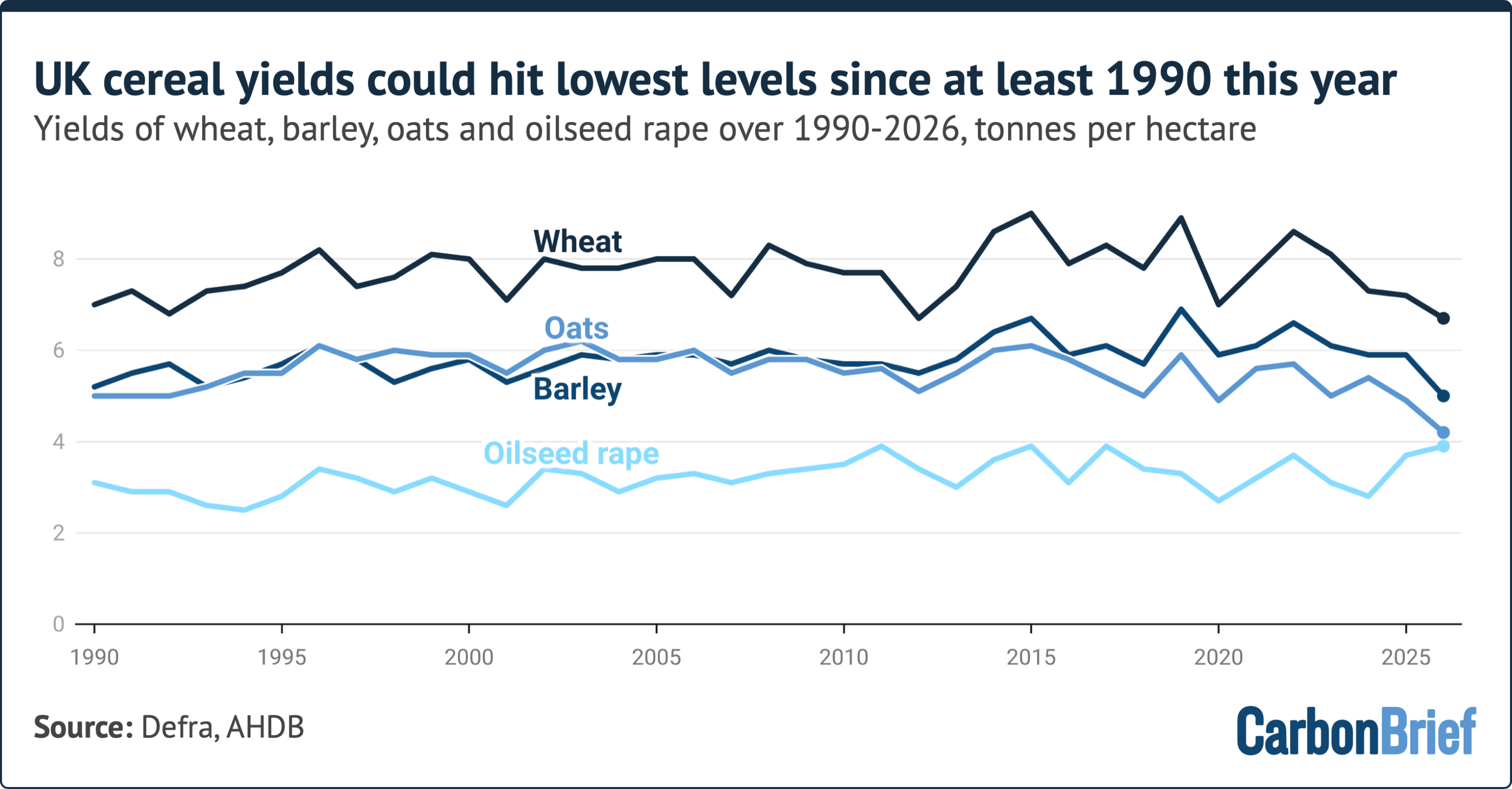
Data compiled by the Agriculture and Horticulture Development Board (AHDB) and analyzed by the ECIU indicates that the UK experienced its worst overall harvest since modern record-keeping began in 1984.
Extensive winter rain followed by summer drought created double-sided stress on root systems. The ECIU noted that even under optimistic mid-harvest conditions, 2026 ranks among the top five worst UK harvests on record—meaning that four of the five lowest harvests in modern British history have occurred within the past ten years alone.
Viticulture: In France, extreme heat forced vineyard operators into "record-early" grape harvests starting in mid-July. While early picking prevented total crop loss, berries were smaller and less juicy, reducing total liquid yields for winemakers.
Root Vegetables: Produce markets in Northern Europe reported reduced physical dimensions for tuber crops. The Netherlands saw shrunken potato yields, while French carrot harvests dropped significantly due to dry topsoil conditions.
Pasture and Livestock Fodder: Heat-scorched grasslands across Germany, Austria, and Central Europe forced livestock farmers to utilize stored winter feed during peak summer, raising long-term operating costs.
Fruit Production: While UK berry crops experienced a brief early-season production surge due to high sunlight hours, agriculturalists warned that accelerated plant exhaustion would lead to sharp yield drops later in the season.
                  SPECIALTY CROP IMPACT SUMMARY
+-----------------+---------------------+-----------------------------------+
| Region          | Sector              | Observed Impact                   |
+-----------------+---------------------+-----------------------------------+
| Netherlands     | Horticulture        | Shrunken potato tuber sizing      |
| France          | Viticulture         | Early harvest, reduced juice mass |
| Italy           | Arable Agriculture  | Desiccated Po Valley rice fields  |
| Mediterranean   | Tree Crops          | Wildfire-damaged olive groves     |
+-----------------+---------------------+-----------------------------------+
4. Macro-Economic and Geopolitical Factors
The climate-driven yield failures occurred alongside significant external disruptions. According to the United Nations Food and Agriculture Organization (FAO), global food commodity prices rose to their highest mark since early 2023.
            COMPOUND PRESSURES ON GLOBAL FOOD PRICES

    [ Climate Extremes ] ---> Heat, Drought, Wildfires
                                   +
    [ Energy Volatility ] --> High Farm Fuel Costs
                                   +
    [ Trade Bottlenecks ] --> Strait of Hormuz Fertilizer Disruptions
                                   =
               [ UN FAO Food Price Index Peak ]
Agricultural margins were further squeezed by input cost volatility. Maritime security disruptions in the Strait of Hormuz choked major export routes for global nitrogen fertilizer components, inflating input prices just as farmers required soil amendments. Simultaneously, sustained high prices for refined farm diesel escalated field operation expenses, amplifying financial pressure across the supply chain.
Official Statements and Expert Perspectives
Agricultural scientists, industry analysts, and policy advisers emphasize that the summer of 2026 represents a structural shift in agricultural risk rather than an isolated anomaly.
Evaluating the impacts on Central European growing regions, Prof. Til Feike, a cropping systems expert at Germany’s Julius Kühn-Institut, highlighted the severe compounding drivers behind the current grain losses:
"Many areas in Germany and Austria, as with other parts of Europe, have been hit hard by a long-lasting dry period in combination with record-high heatwaves. This has left dry grassland for animals and lowered yields of maize, which serves as a key fodder crop for livestock.
"In the long run, farming must adapt better to more extreme weather conditions—not only heat and drought, but also prolonged wet periods. There is no one-fits-all solution for climate change adaptation."
The policy implication for consumer pricing was echoed by commercial suppliers. Commenting on the UK and Northern European supply chains, Tim O’Malley, Chairman of major fresh produce distributor Nationwide Produce, told news outlets that market adjustments are inevitable:
"Consumers will likely see higher prices and smaller produce in supermarkets as a result of these sustained growth interruptions."
In its assessment, the EU Joint Research Centre (JRC) stressed that irrigation infrastructure provided only partial relief. While irrigated crops in countries like Portugal managed to maintain higher yields, non-irrigated, rain-fed crops across Western Europe exhibited widespread signs of irreversible heat stress.
Future Outlook: Strategic Imperatives for European Agriculture
The 2026 harvest shock has renewed calls for structural changes to Western climate and agricultural strategies. As global temperatures continue to rise, European food security faces systemic risks that traditional emergency farm relief subsidies cannot offset.
1. Accelerated Crop Breeding and Genetic Adaptation
European producers must accelerate the deployment of crop varieties bred specifically for thermal tolerance and erratic moisture availability. Traditional breeding cycles must prioritize deeper root architectures, shorter growing cycles to escape peak summer heat, and enhanced cellular heat-shock defenses—particularly for primary staples like maize and wheat.
2. Overhauling Water and Soil Management
With surface water reservoirs reaching historical lows during key summer weeks, flood irrigation and unmonitored extraction are becoming increasingly unviable. Future agricultural frameworks will require rapid capital investment in precision drip irrigation, night-time watering systems, and closed-loop farm water recycling. Concurrently, soil management policies must focus on increasing organic matter content to enhance the soil’s natural moisture retention capacity.
3. Policy Integration and Supply Chain Resiliency
The convergence of climate shocks and geopolitical input disruptions—such as fertilizer bottlenecks in the Strait of Hormuz—highlights the need for integrated security planning. Policy analysts stress that European land-use policies must balance decarbonization goals with agricultural resilience. Financial safety nets must transition from passive crop-disaster compensation toward proactive risk-reduction incentives, rewarding producers who implement regenerative practices, agroforestry shade buffers, and crop diversification.
The 2026 harvest serves as a clear warning: without rapid adaptation across farm management, water policy, and market infrastructure, climate volatility will continue to threaten European agricultural stability and food security.