

This coverage is made possible through a partnership between Grist and Interlochen Public Radio in northern Michigan.
Executive Overview
Across the rolling terrain of northern Michigan, a quiet, high-stakes battle is unfolding over the future of the American family farm. As millions of acres of agricultural land nationwide prepare to change hands over the coming decades, rural communities are navigating a complex intersection of surging land values, generational transitions, climate migration pressures, and alternative energy development.
In Michigan, where agriculture remains a pillar of both culture and economy, the stakes could not be higher. According to recent federal data, the state’s agricultural landscape is undergoing a structural transformation. Family-owned acreage is contracting, corporate leasing is on the rise, and land values are skyrocketing well above the national average. Amid these compounding pressures, a diverse coalition of multigenerational farmers, land conservancies, and agricultural extension agents are turning to innovative preservation tools—ranging from conservation easements to agrivoltaics—to protect productive soil before it is lost to development forever.
Detailed Chronology: The Roots and Realities of Modern Michigan Farming
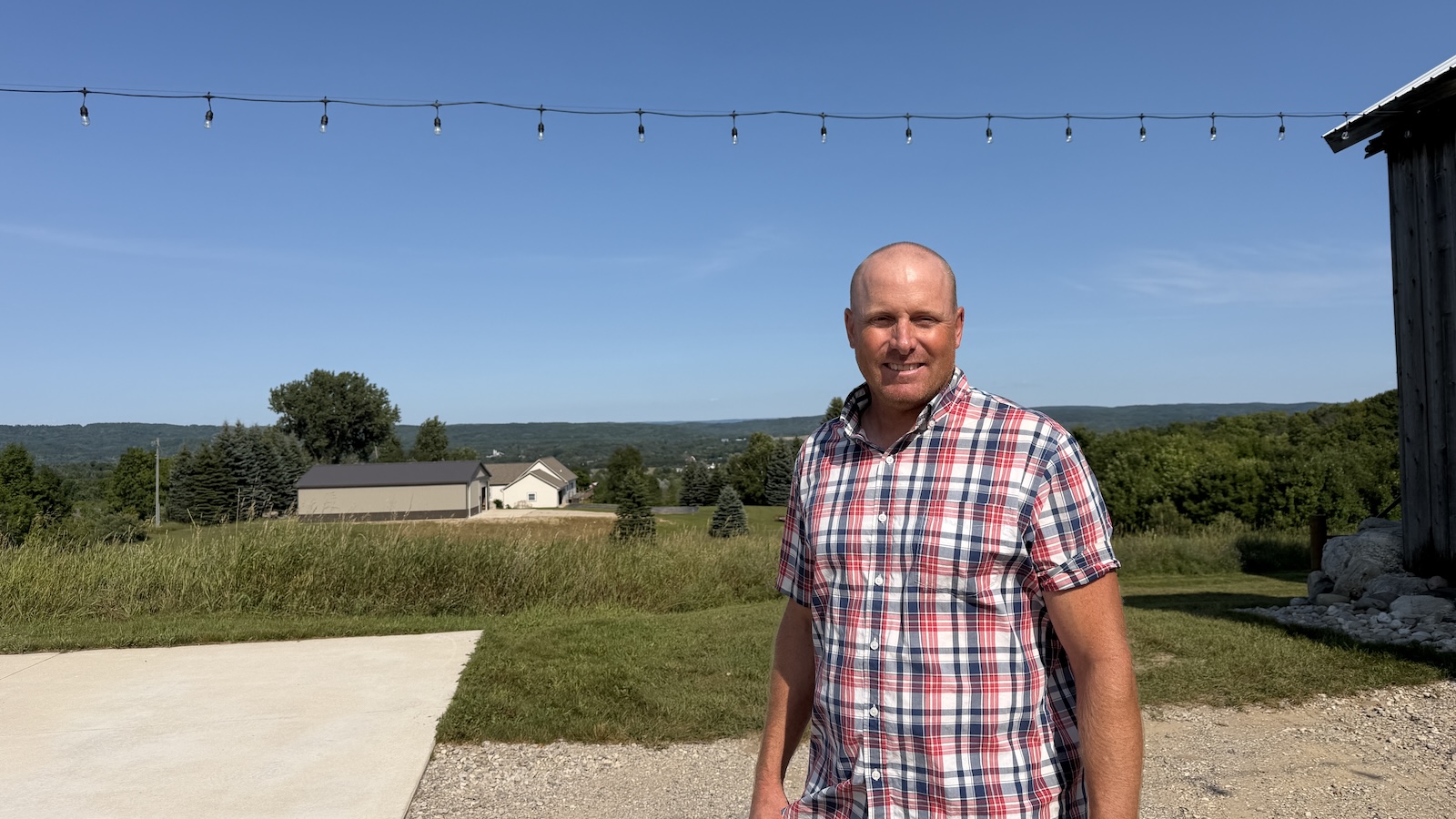
To understand the current pressures facing northern Michigan agriculture, one must look at the deep personal connections that tie farmers to the soil. John Boyer grew up on his family’s 131 acres of rolling fields featuring corn, oats, and wheat in a rural area near the tiny city of East Jordan. Over the decades, ownership of the farm shifted outside the family multiple times before Boyer managed to repurchase it in 2018. For Boyer, the decision was less a business investment and more a moral imperative: he felt a deep obligation to reclaim the land and prevent residential and commercial development from swallowing up the region’s tight-knit community of family farms.
"For any farmer, everything’s personal," Boyer reflects, standing along the edge of his tilled fields. "Every piece of property, every stone you pick up, you spend countless hours out there."
Boyer’s story mirrors a broader historical narrative sweeping through rural America. For generations, family farms have been passed down through bloodlines, serving as both homesteads and primary retirement portfolios. However, shifting socioeconomic conditions are fracturing this traditional model.
Between 2017 and 2022, the most recent U.S. Department of Agriculture (USDA) Census of Agriculture reveals that Michigan’s total land devoted to farming dropped by roughly 3 percent, shrinking to an estimated 9.5 million acres—representing about a quarter of the state’s total landmass. More alarmingly, farmland operated primarily by family-owned setups plummeted by nearly 470,000 acres during that same five-year window. Conversely, land leased or rented out for agricultural operations ticked upward by nearly 30,000 acres, underscoring a structural shift away from owner-operator models toward absentee landlords and large-scale leasing networks.
For fourth-generation fruit grower Rebecca Carlson—who operates Overlook Orchards in Northport, a village nestled at the tip of the Leelanau Peninsula along Lake Michigan—land fragmentation represents an acute threat. Alongside her husband, Carlson expanded their original 200-acre fruit operation into a sprawling 1,300-acre enterprise over an eight-year period. To achieve this growth, the couple purchased adjacent parcels while simultaneously leasing plots from aging farmers who lacked a younger generation willing or able to take over the family business.
"In order to be successful in farming today, in some cases, it’s a matter of ‘go big or go home’ with the climate of farming today," Carlson notes.
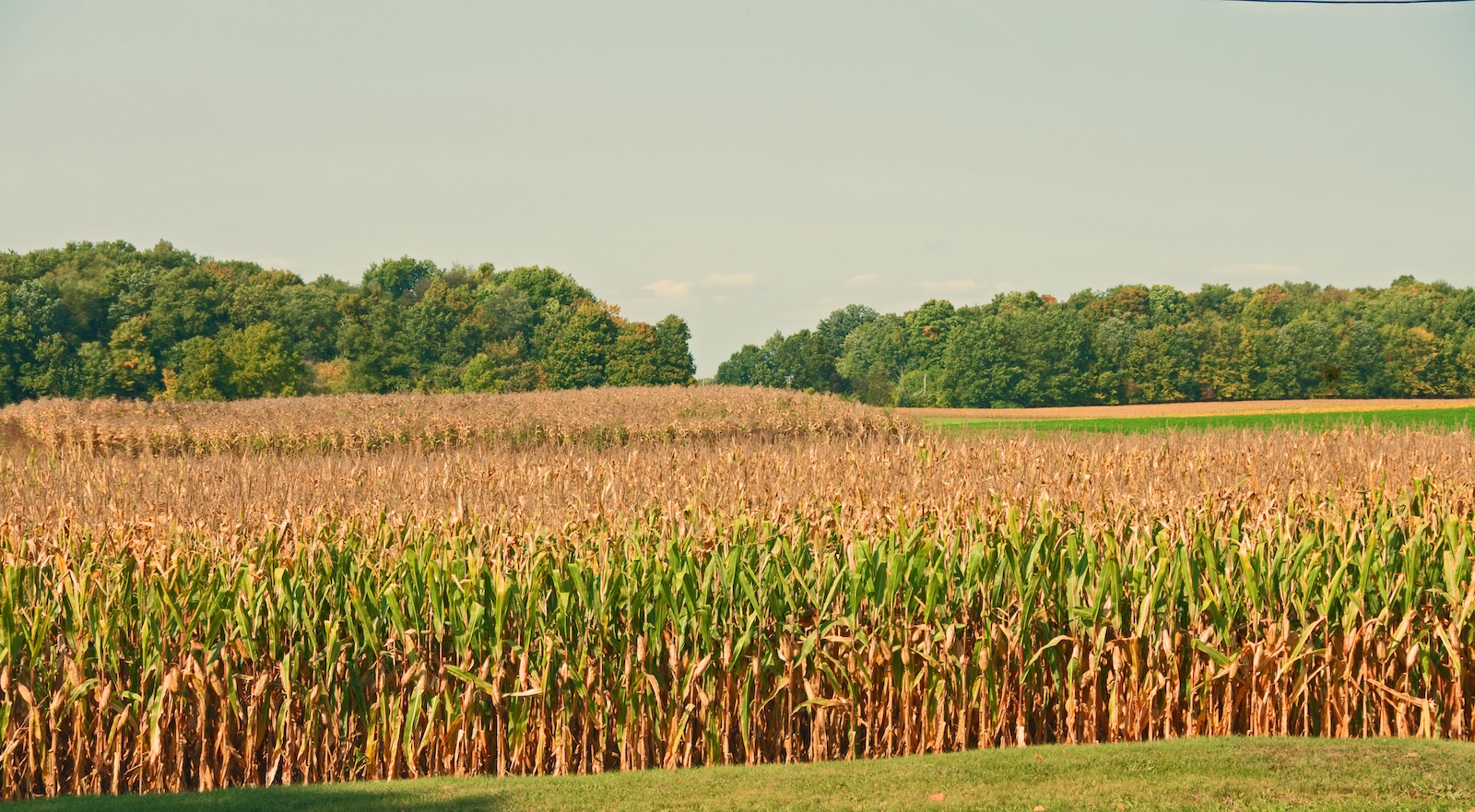
When aging farmers attempt to divide their holdings among multiple children, it often creates a patchwork of fragmented ownership. This subdivision routinely forces younger generations to sell off parcels to satisfy estate taxes or cash out equity, permanently breaking up multigenerational farms. Once a productive agricultural acre is paved over for housing subdivisions, commercial strip malls, or industrial facilities, it almost never returns to food production.
"Then suddenly a productive farm field or ground is gone, and it’s gone for generations," Boyer warns. "It’s gone forever."
Supporting Context & Metrics: Economics, Climate, and Land Value
The pressures facing northern Michigan farmers are amplified by stark economic realities and evolving environmental conditions. According to USDA metrics, Michigan farmland was valued at an average of roughly $6,800 per acre last year—marking a dramatic 7.8 percent increase from the previous year and easily outpacing the national average growth rate of 4.3 percent.
Howard Halderman, president and CEO of Halderman Companies, a farm real estate and management agency operating across Indiana, Michigan, and Ohio, explains that Midwest farmland values are holding steady or climbing even in the face of declining national farm incomes. This resilience is largely driven by intense demand from industrial and residential developers, as well as tax-deferred exchanges. These financial mechanisms allow landowners to defer heavy capital gains taxes when they liquidate highly appreciated property and roll the proceeds into alternative real estate.
"That’s where a lot of your farmland value gets support. Are there other buyers out there that keep a floor under it?" Halderman asks. "If you’re looking to buy farmland, that might be frustrating. However, if you’re a farmer that owns a lot of farmland and you like to keep your asset values on your balance sheet higher, it’s a good thing."
Compounding these real estate pressures is the looming shadow of global climate change. While northern Michigan farmers face mounting challenges from extreme precipitation events, unpredictable temperature swings, and emerging crop diseases, many agriculturalists view their geographic positioning as an emerging asset for national food security.
"As the world climate changes, this area could become more and more important for food production and food security," observes Dave Skornia, a farmer based in Boyne City, Michigan. "So, you got to have land."
Yet, securing long-term access to that land remains a hurdle. With approximately 39 percent of Michigan’s agricultural land currently farmed via lease agreements—right in line with the national average—tenant farmers face distinct vulnerabilities. A 2026 survey conducted by Michigan State University (MSU) Extension highlighted that high lease rates and the difficulty of finding land tailored to specific operational needs are the primary concerns for growers looking to expand. Furthermore, the success of a leased operation often hinges entirely on interpersonal dynamics.
"You might have a great relationship where you never worry a single day about whether or not you’re going to have the property a year from now," explains Jon LaPorte, a farm business management educator with MSU Extension. "In other cases, there’s some differences in terms of what each party’s goals are that kind of create that sense of anxiety about, ‘Is this going to last long-term?’"
Official Statements & Preservation Strategies
Faced with these economic headwinds, agricultural stakeholders are aggressively exploring alternative pathways to keep dirt farming viable. Two primary mechanisms have emerged at the forefront of the conservation movement in northern Michigan: conservation easements and agrivoltaics.
The Conservation Easement Dilemma
For John Boyer, the most definitive safeguard for his land was entering into a conservation easement with the Little Traverse Conservancy, a regional nonprofit land trust. Under this legal agreement, Boyer retained full ownership of his 131 acres, but permanently sold the future development rights. The conservancy holds these rights in perpetuity, ensuring that even if Boyer transfers the property to his children or sells it to an outside buyer later, the ground can never be subdivided or built upon.
Joe Graham, chief financial and operating officer for the Little Traverse Conservancy, acknowledges that signing an easement is rarely an easy decision for a farmer. Agricultural land typically serves as a grower’s single largest financial asset—a retirement fund or a safety net for college tuitions.
"We’re offering them another alternative," Graham says. "We’re offering a way to capture some of the equity and the value they have in that land without having to sell it and see it leave their ownership."
Despite the benefits, easements present complex financial calculations. Because land trusts pay landowners only a fraction of total market value for development rights, selling an easement yields significantly less immediate cash than an outright real estate sale. As land values escalate across rural northern Michigan, conservancies find that financial return alone is rarely the primary motivator for participating farmers. Timing and long-term opportunity costs weigh heavily on aging operators wondering what economic potential they might be sacrificing down the road.
Even so, the strategy is gaining traction. The USDA notes that Michigan added roughly 22,000 acres to protected easements between 2017 and 2022, continuing a national trend of rising conservation acreage. Of the Little Traverse Conservancy’s 30,000 protected acres spanning five northern Michigan counties and the Upper Peninsula, approximately 6,000 acres are dedicated farmland.
Balancing Renewable Energy and Agriculture
As Michigan aggressively pursues clean energy mandates to combat climate change, renewable energy developers have turned their attention to agricultural communities, seeking vast acreage for wind turbines, battery storage facilities, and utility-scale solar installations.
"From a landowner’s perspective, they’ve got bills to pay the same as a farmer, and they’re looking at situations of, ‘Where can I get the most value?’" LaPorte notes. "And if they struggle to find an interested farm, they might be willing to go into some of these long-term agreements that you see into wind turbines, solar."
While trade groups like the Solar Energy Industries Association report that solar installations currently occupy a mere fraction—0.6 percent—of USDA prime farmland in Michigan, local opposition to large-scale green energy projects can be fierce. Earlier this year in Wexford County, located at the northern tip of Michigan’s Lower Peninsula, early proposals from a renewable energy developer to construct solar arrays across nearly 1,500 acres of farmland sparked intense community pushback over the loss of productive topsoil.
To bridge the gap between energy transition and agricultural preservation, university researchers and forward-thinking farmers are championing agrivoltaics—the dual-use practice of simultaneously generating solar power while conducting agricultural activities, such as crop cultivation or livestock grazing, beneath and between the solar panels.
Charles Gould, a bioenergy educator with MSU Extension, points out that agrivoltaics can provide farmers with a reliable secondary revenue stream to offset fluctuating commodity prices, all while protecting the underlying soil from suburban sprawl.
"It doesn’t necessarily have to be a choice between producing power or food," Gould emphasizes. "If we can do both on the same acre of land, why wouldn’t we? We want to preserve the family farm. This is a very powerful tool."
Future Outlook: Securing the Next Generation of Stewards
The overarching trajectory of northern Michigan agriculture hinges on the choices made over the next decade. As older generations retire and land values climb, the pressure to cash out will intensify. Yet, the parallel rise in grassroots conservation easements, innovative leasing structures, and cooperative renewable energy models demonstrates a fierce regional commitment to keeping the countryside green.
For farmers like John Boyer and Rebecca Carlson, the mission transcends profit margins; it is an intergenerational contract with the landscape. Whether through legally binding conservation restrictions, cooperative land-leasing networks, or integrated solar-grazing enterprises, Michigan’s agricultural community is actively building a framework to ensure that food production remains viable in the north woods long into the future.
As Jon LaPorte aptly summarizes: "It’s a matter of trying to figure out what exactly is going to be the best fit for everybody’s situation. And there’s a lot of pressure. There’s a lot of money." Navigating that financial pressure while holding onto agrarian heritage will define the identity of rural Michigan for generations to come.



