In an era defined by rapid urbanization and the subsequent counter-migration of creative professionals, the Chinese countryside is undergoing a profound cultural and spatial renaissance. As a new generation of urban youth relocates to rural landscapes, they bring with them aspirations for a modern, urbane lifestyle. This demographic shift has created an unprecedented demand for dynamic rural destinations—cafés, independent boutiques, artisan bistros, and cultural hubs—that do more than merely provide goods; they actively generate social activity, foster community connections, and give visitors and locals alike compelling reasons to return.
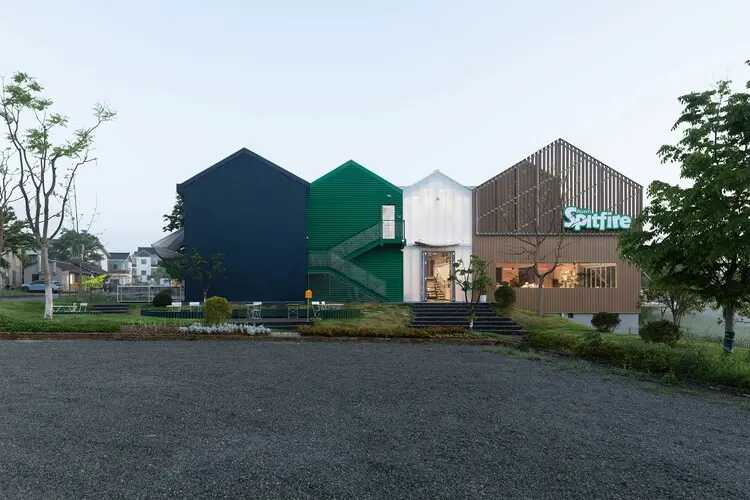
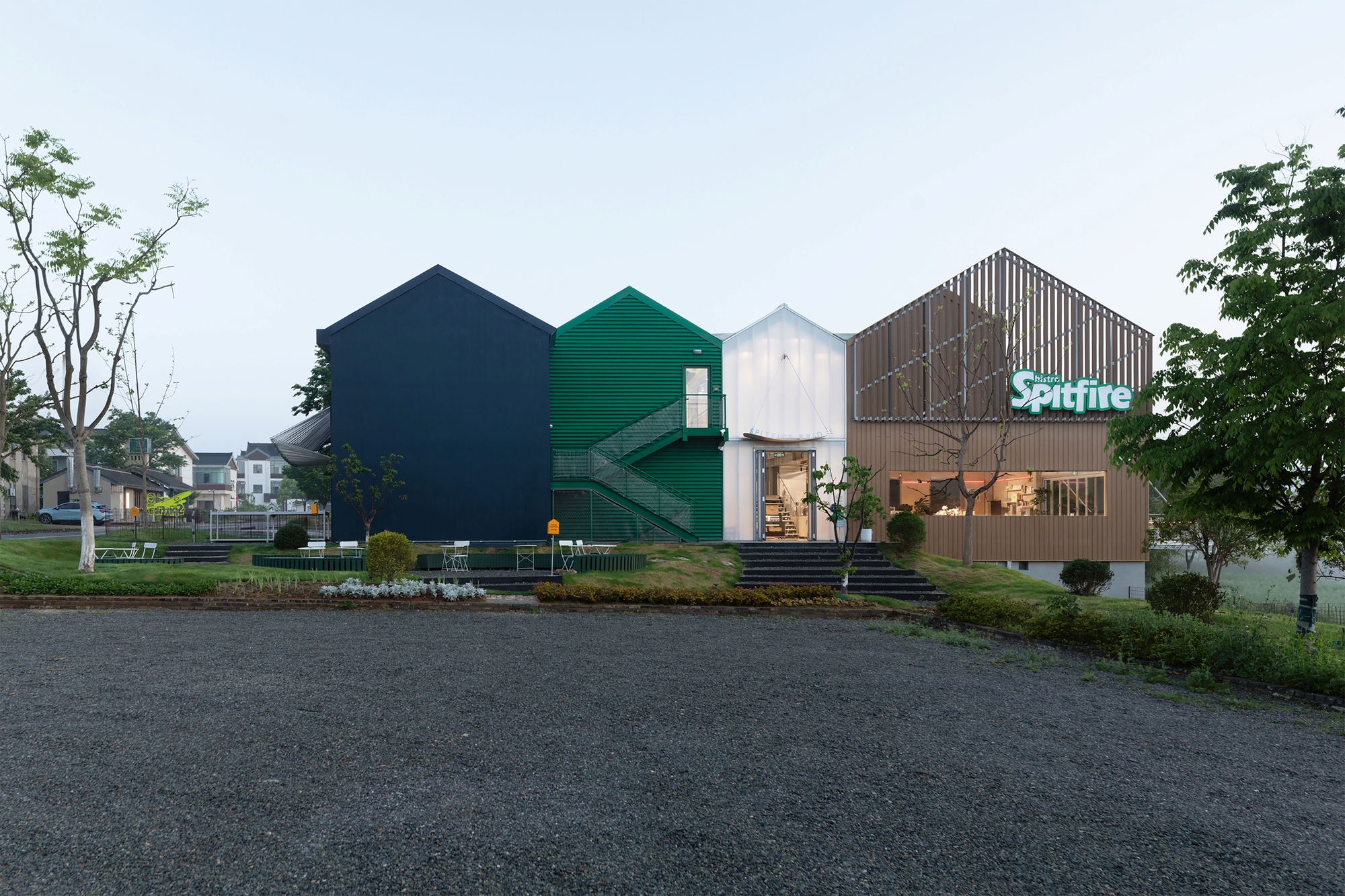
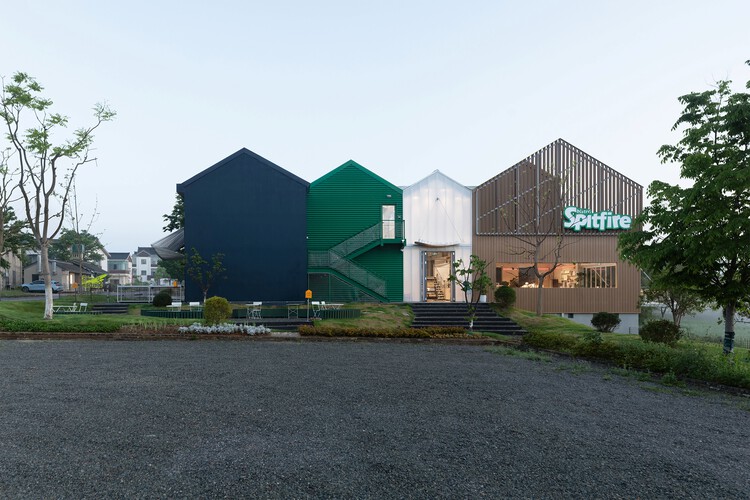
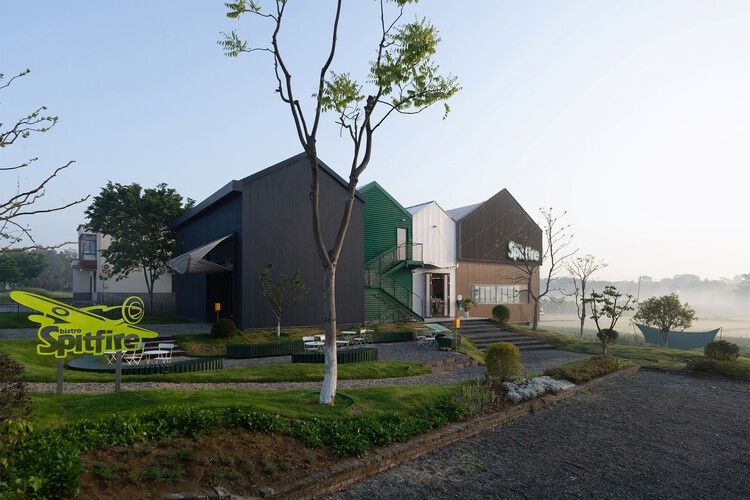
Located in Liyang, Jiangsu Province, the Spitfire Roastery, designed by Nota Architects, stands as a groundbreaking architectural response to this cultural evolution. Rather than treating coffee roasting as a purely utilitarian, closed-door industrial process housed within a conventional food production facility, the project reimagines the factory typologies of the past. It transforms an industrial plant into an integrated piece of lifestyle infrastructure.
By seamlessly blending industrial production, consumer engagement, leisure, social interaction, and public events under one architectural umbrella, Nota Architects has redefined what a rural manufacturing facility can be. The Spitfire Roastery is not just a place where coffee beans are processed; it is a vibrant social machine designed to bridge the gap between rural tranquility and contemporary urban vibrancy.
Detailed Chronology & Design Genesis
Conceptualization and the Rural Shift
The genesis of the Spitfire Roastery project began with a fundamental question confronting contemporary designers working in rural China: How can industrial architecture avoid becoming an alien intrusion on the natural landscape, and instead become an active participant in community life?
For Nota Architects, the answer lay in dismantling the traditional boundaries that separate the factory floor from the public realm. In typical industrial planning, production is sequestered away from the consumer, hidden behind security fences and sterile facades. The design team recognized that in a rural context—where open space, community visibility, and social connection are highly valued—this isolationist approach represents a missed opportunity.
The initial phases of the project involved intensive site analysis across Liyang, a region renowned for its picturesque hills, tea plantations, and evolving rural tourism economy. Nota Architects mapped out the regional flows of tourism and local agrarian life, identifying a distinct gap in the market for spaces that could host large public gatherings while simultaneously accommodating complex, heavy-duty industrial processing equipment.
Architectural Execution and Spatial Choreography
Construction of the Spitfire Roastery proceeded with a meticulous focus on material honesty, spatial transparency, and human-centric scale. The architects approached the building’s layout as a choreographed journey. Upon approaching the facility from the village road, visitors are greeted not by an intimidating industrial security gate, but by an inviting, porous facade designed by photographers and architects Shan Liang and Shiyun Qian to frame views of the surrounding rural topography.
The architectural layout pivots around a central atrium hub. This multi-functional atrium serves as the beating heart of the facility. It is deliberately scaled to accommodate diverse public events, ranging from artisan coffee-tasting workshops and cultural exhibitions to community gatherings and market days. Radiating outward from this central nexus are the primary zones of the facility:
The Production Wing: Housing state-of-the-art roasting machinery, where visitors can observe the entire lifecycle of coffee production through expansive acoustic glass partitions.
The Consumer and Leisure Zones: Integrated tasting bars, seating areas, and retail spaces that blur the boundaries between the spectator and the worker.
The Vertical Circulation Core: Featuring sculptural staircases that lead from the ground-floor atrium to upper-level viewing platforms, offering panoramic vistas of both the internal manufacturing process and the external rural landscape.
Supporting Context & Metrics: Architecture as Lifestyle Infrastructure
To fully appreciate the significance of the Spitfire Roastery, one must examine the broader socioeconomic and architectural metrics governing rural regeneration projects in modern China.
The Economics of Rural Tourism and Agritourism
Over the past decade, Chinese governmental policies focusing on rural revitalization (Xiangcun Zhenxing) have funneled billions of dollars into upgrading rural infrastructure. However, physical infrastructure—such as roads, utilities, and standard agricultural facilities—is often insufficient to attract the creative class. What is required is lifestyle infrastructure: spaces that merge economic productivity with cultural consumption.
Project Typology: Industrial Processing Facility / Public Lifestyle Hub
Location: Liyang, Jiangsu Province, China
Architectural Practice: Nota Architects
Core Photography: Shan Liang, Shiyun Qian
Design Philosophy: Integration of production, consumption, and public social interaction.
Spatial Strategy: Porous facades, centralized atrium hub, visual transparency between manufacturing and leisure.
Materiality and Environmental Integration
Nota Architects selected a palette of industrial materials—primarily exposed steel, board-formed concrete, and clear glass—balanced by warm timber accents and natural light. This deliberate juxtaposition honors the industrial heritage of roasting machinery while maintaining a tactile, human scale. The extensive use of glass not only facilitates visual transparency, allowing the public to witness the alchemy of coffee bean roasting, but also floods the interior with natural daylight, significantly reducing the building’s daytime energy consumption.
Furthermore, the building’s massing was carefully calculated to respect the horizontal datum of the surrounding Liyang countryside. Rather than imposing a monolithic vertical block upon the village road, the architects stepped the volumes, creating green terraces and sightlines that anchor the building firmly within its geographic and cultural context.
Official Statements & Design Philosophy
In their official design statement, the architects at Nota Architects elaborated on the socio-spatial drivers behind the Spitfire Roastery:
"In contemporary China, an increasing number of young people are drawn to the countryside, bringing with them new forms of urban life. Cafés, independent shops, bistros, and other lifestyle destinations are becoming part of rural life, creating a need for places that can continuously generate activities, foster connections, and give people reasons to return.
Spitfire Roastery, a coffee roasting factory in Liyang, Jiangsu, was conceived in response to this shift. Rather than treating coffee roasting simply as an industrial process housed in a conventional food factory, the project reimagines the factory as a new form of lifestyle infrastructure—a place that reconnects production, consumption, leisure, social interaction, and public activities."
This philosophy challenges the archaic Fordist model of factory design. In a Fordist factory, the worker is isolated, the consumer is externalized, and the surrounding community is ignored. Nota Architects flips this paradigm on its head: the worker, the consumer, the tourist, and the local villager share a unified spatial experience. The roastery becomes a theater of production where the roasting machine is the protagonist, and the architecture acts as the amphitheater.
Future Outlook: The Evolution of Rural Industrial Typologies
As the lines between urban sophistication and rural authenticity continue to blur, projects like the Spitfire Roastery point the way toward a new paradigm in architectural design. The success of Nota Architects’ intervention in Liyang offers several critical lessons for future developments across the globe:
Hybridization of Typologies: Future rural industries can no longer afford to be single-use monoliths. By integrating manufacturing with hospitality and public event programming, rural businesses can diversify their revenue streams while enriching the local community.
Architecture as a Social Catalyst: Buildings in rural areas must be evaluated not only by their square footage or manufacturing output, but by their capacity to act as social attractors. The central atrium hub at Spitfire proves that industrial spaces can successfully double as vibrant public squares.
Sustainable Cultural Integration: Respecting the countryside does not mean mimicking vernacular architecture with faux-traditional aesthetics. True contextual sensitivity often involves introducing modern, honest industrial typologies that engage in a respectful dialogue with the natural and cultural landscape.
Ultimately, the Spitfire Roastery transcends its functional mandate as a coffee processing plant. It stands as a manifesto built in concrete, glass, and steel—a testament to the fact that industrial production and high-design lifestyle culture can coexist harmoniously, breathing new life into the rural fabric of modern China.