

Executive Overview
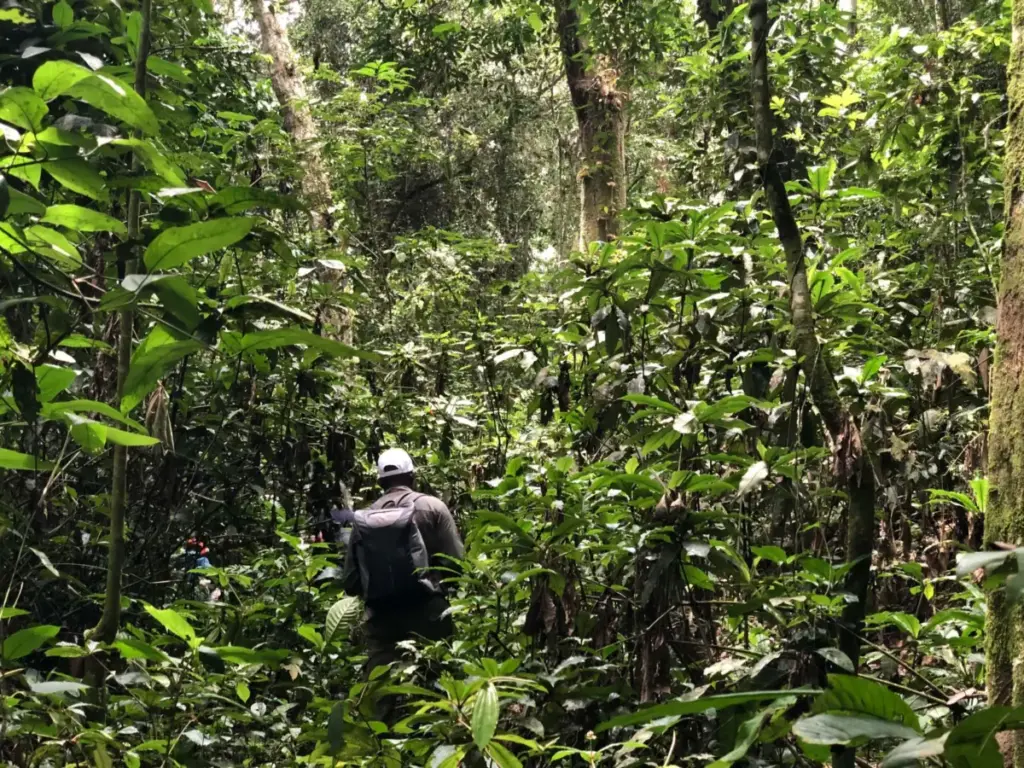
Deep within the Tshopo province of the Democratic Republic of Congo (DRC), the lush, vital expanse of the Yangambi Biosphere Reserve plays host to a quiet struggle between global environmental ambitions and local socio-economic realities. As home to the second-largest tropical rainforest in the world, the Congo Basin is universally recognized as a crucial buffer against global climate change. To track and quantify this ecological importance, international conservation groups and scientists installed a towering technological marvel known as the CongoFlux tower.
Yet, rather than serving solely as a beacon of scientific progress, the tower became the epicenter of a bizarre and volatile rumor: local villagers whispered that the structure was actively sucking oxygen from the Congolese rainforest and piping it to Europe to be sold for profit. When a regional heatwave struck in May 2024, the narrative morphed, with social media channels in the provincial capital of Kisangani amplifying claims that the scientific instrument was weaponizing the atmosphere and causing extreme heat.
While government officials and researchers have been quick to dismiss these claims as mere "ignorance" and "superstitions," political ecologists and sociologists argue that writing off these narratives misses a critical point. Far from being random misinformation, these conservation rumors are deeply strategic. They represent covert forms of resistance against marginalized conditions, channels for demanding economic reciprocity, and echoes of a complex historical legacy rooted in colonial extraction.
Detailed Chronology of a Crisis: From Scientific Tower to Social Media Panic
The friction surrounding the Yangambi Biosphere Reserve’s high-tech monitoring infrastructure did not materialize overnight. It evolved through distinct phases of misunderstanding, dashed economic expectations, and digital amplification.

2020: The Birth of the Oxygen Extraction Myth
Shortly after the construction of the scientific research tower in the villages surrounding the Yangambi reserve, an unusual narrative took root. Local communities, acutely aware of foreign interest in their natural environment, began to circulate a rumor: the tower was not studying the air, but stealing it. According to the story, mechanical systems were stripping pure oxygen from the surrounding rainforest, bottling or piping it away to Europe, and monetizing a resource that locals felt rightfully belonged to them.
As if to validate these growing suspicions in the public consciousness, a subsequent local initiative—the planting of fast-growing acacia trees around the reserve—was seamlessly woven into the conspiracy. Rumors claimed these trees were planted explicitly to churn out extra oxygen, effectively serving as a farmed supply chain for the European-bound extraction tower.
May 2024: The Heatwave and Digital Amplification
The friction escalated dramatically during an unusually severe heat spell in May 2024. Capitalizing on public discomfort and climate anxiety, a new and more dangerous iteration of the rumor spread like wildfire across social media platforms in Kisangani, Tshopo’s provincial capital.
This time, the CongoFlux tower was accused of directly causing the extreme heat by stripping oxygen out of the local atmosphere. The stakes transformed almost overnight from localized gossip into a public safety hazard. Tensions reached a boiling point when a charismatic agitator in a crowd of over 300 people publicly urged listeners to march on Yangambi and tear the scientific structure down.

Government Pushback and Empirical Corrections
Faced with escalating hostility, the DRC’s then-environment minister, Ève Bazaiba, took to public channels to combat the misinformation. Publicly labeling the claims as products of "ignorance" and "superstitions," Bazaiba released a video demonstration detailing the true mechanics of the CongoFlux tower.
Scientists labored to explain that the tower does not extract anything from the atmosphere; instead, it acts as a passive receptor, measuring trace greenhouse gas exchanges between the forest canopy and the sky. These measurements are intended to help the global community understand how the Congo Basin regulates the earth’s climate—knowledge that could theoretically unlock climate finance and carbon credits for the nation. However, these scientific corrections, while factually accurate, did little to address the underlying socio-economic grievances driving the panic.
Supporting Context & Metrics: Global Parallels and Local Grievances
The phenomenon observed in Yangambi is far from an isolated incident. Across the globe, conservation projects frequently become lightning rods for conspiratorial thinking and localized resistance where communities feel disenfranchised.
A Global Tapestry of Conservation Resistance
Academic literature tracking environmental sociology reveals striking parallels worldwide:

- Southern Chile: The establishment of private protected areas sparked pervasive rumors that conservation zones were merely covert fronts for foreign water-theft schemes or CIA-backed geopolitical operations. In separate incidents, farmers asserted that state wildlife authorities were secretly releasing pumas onto their lands.
- France, Norway, and Greece: Wolf conservation initiatives routinely triggered fierce backlash, with rural populations convinced that environmental NGOs and government agencies were covertly reintroducing predatory predators into the wild against the will of local inhabitants.
According to political ecologists like George Holmes, these narratives must be taken "seriously, but not literally." When marginalized populations lack formal, institutional channels to voice grievances against powerful state or international conservation authorities, rumors function as a decentralized, relatively anonymous, and highly adaptive form of resistance. They transform diffuse feelings of injustice into compelling, shared narratives that can rapidly mobilize populations—often culminating in noncompliance with conservation rules, destruction of research equipment, forest clearing, or direct attacks on conservation personnel.
The Ground Reality in Yangambi
In Yangambi, this resistance manifested in tangible acts of sabotage. Electrical cables connecting the CongoFlux tower to the grid were systematically severed, newly planted acacia trees were set ablaze, protected sections of the forest were illicitly cleared, and conservation facilities were looted. At one point, local Turumbu youths erected physical barricades to prevent researchers from accessing the tower entirely.
These actions stem from a stark economic contrast. International conservation organizations inject substantial funding into the region, and researchers continually emphasize the global ecological importance of the forest. Yet, the communities living directly adjacent to these carbon sinks remain mired in poverty, facing severe unemployment, limited livelihood opportunities, and a glaring lack of basic public services.
When villagers looked at the acacia-planting project managed by the Center for International Forestry Research (CIFOR), they anticipated a transactional economic relationship—expecting that researchers would return to purchase the mature trees from local growers. When that expected financial return failed to materialize, alternative, conspiratorial explanations rushed in to fill the economic void.

Historical Echoes: Dispossession, Extraction, and Broken Promises
To fully understand why the oxygen extraction rumor resonated so deeply in Yangambi, one must examine the region’s complex historical ledger, which is marked by both colonial exploitation and heavy socio-developmental paternalism.
The Colonial Shadow of Dispossession
The Yangambi Biosphere Reserve was originally established under Belgian colonial rule in 1939. In carving out the reserve, the colonial administration subsumed vast tracts of land that historically belonged to the ancestral estate of the Turumbu people. To this day, Turumbu elders and chiefs maintain that their communities were never adequately compensated for this historic land grab.
During the colonial era, Yangambi operated as a major hub for commercial production and aggressive resource extraction, exporting rubber, cotton, and timber directly to European markets. Therefore, modern stories about outsiders extracting invisible, high-value resources from the forest are not entirely foreign constructs; they are direct conceptual continuations of a long, painful history of colonial dispossession.
The Paradox of Colonial Paternalism
Conversely, the colonial era left behind another, more contradictory legacy: a comprehensive socio-developmental apparatus. Under institutions like the National Institute for Agronomic Studies and Research (INERA), the region supported a bustling economy where roughly 10,000 local people were employed. Workers were provided with company housing, healthcare, food rations, and schooling for their children. Furthermore, a local Turumbu agricultural cooperative provided roughly 1,000 members with guaranteed markets for their crops, along with seeds, tools, and ongoing technical assistance.

This historical juxtaposition creates an ambivalent political landscape today. Memories of colonial extraction fuel deep-seated suspicions that modern conservationists are simply engaging in a new form of resource theft. At the same time, memories of the robust economic and social provisions that once accompanied institutional science in the region foster an enduring expectation: local populations believe that if the forest is valuable enough to protect for the global good, the people living within it should receive tangible, reliable support in return.
Future Outlook: Listening Beyond the Factual Claims
As climate change accelerates and international pressure mounts to preserve the world’s remaining carbon sinks, the friction between global conservation imperatives and local populations is unlikely to vanish spontaneously. The case of the Yangambi Biosphere Reserve offers a stark warning to international organizations, NGOs, and government ministries operating in the Congo Basin and beyond.
Dismissing local anxieties as mere ignorance, superstition, or misinformation is an ineffective mitigation strategy. When conservation is imposed top-down without addressing local inequalities or delivering reciprocal economic benefits, it inadvertently incubates hostility. Rumors will continue to act as a barometer of community discontent—a collective alarm bell signaling that social contracts are broken.
Moving forward, conservation authorities must adopt a more nuanced, sociological approach to community engagement. True sustainability in the Congo Basin requires listening past the literal absurdity of rumors to hear the underlying questions being asked:

- What tangible place do local communities have within modern conservation frameworks?
- How are the immense financial flows of global climate governance trickling down to alleviate local poverty?
- Can conservation move past a history of extraction and exclusion to forge genuine partnerships based on mutual respect and economic reciprocity?
Until these foundational questions of justice and benefit-sharing are meaningfully answered, high-tech towers like CongoFlux will remain vulnerable not just to physical sabotage, but to the powerful, enduring currents of local mistrust.



