

Executive Overview
As the global automotive landscape accelerates its transition toward zero-emission mobility, the conversation surrounding electric vehicle (EV) infrastructure has traditionally focused on urban centers, dense residential areas, and major coastal corridors. However, as EV ownership transitions from an early-adopter niche into a mainstream phenomenon, a critical chokepoint has emerged: the Australian hinterland.
Regional tourist economies, which rely heavily on self-drive holidaymakers, face a stark choice. They can either adapt to the growing fleet of electric vehicles hitting highways or risk being bypassed by a new generation of travelers. This tension was thrown into sharp relief during a recent electric vehicle showcase in Kingaroy, Queensland—a rural hub situated approximately 218 kilometers northwest of Brisbane.
Organized by the Australian Electric Vehicle Association Queensland (AEVA QLD) alongside the South Burnett Sustainable Future Network (SBSFN), the event highlighted both the immense potential and the persistent hurdles facing regional EV adoption. While regional Queensland is experiencing explosive year-on-year growth in EV registrations—often outpacing metropolitan areas—the lack of reliable, high-speed charging infrastructure threatens to stifle the economic engine of regional tourism.
This report examines the Kingaroy EV showcase, analyzes the shifting demographics of regional EV adoption, explores the economic imperatives driving councils to embrace charging networks, and weighs the policy models required to future-proof Australia’s iconic road trips.
Detailed Chronology: The Road to Kingaroy
Kingaroy sits at the strategic junction of two major inland arteries: the D’Aguilar and Bunya Highways. Serving as the peanut capital of Australia and a gateway to boutique wineries, national parks, and rugged mountain ranges, the town of roughly 10,000 residents is an ideal pitstop for motorists navigating the journey inland. For decades, it has functioned as a traditional rest stop where travelers stretch their legs, consume local culinary offerings, and prepare for the next leg of their journey.
In the era of internal combustion engine (ICE) vehicles, refueling was a non-issue. For EV drivers, however, Kingaroy recently became a cautionary tale of regional infrastructure vulnerability.
The Lead-Up: Out-of-Service Frustrations
Weeks prior to the AEVA-led event, local EV advocates and members of the South Burnett Sustainable Future Network grew increasingly vocal regarding the state of the town’s charging infrastructure. While a pair of sluggish Level 2 destination chargers limped along, the town’s sole high-speed DC fast charger had broken down and remained out of service for several months.
For regional towns hoping to attract travelers migrating north from chillier southern states like Victoria during the winter months, a non-functional fast charger is a major deterrent. Word travels fast across online EV mapping tools like PlugShare; a broken high-speed unit can easily prompt a driver to reroute through an entirely different township, depriving local cafes, motels, and retailers of vital tourist dollars.
Fortunately, public pressure and event preparation paid off. Just in time for the AEVA showcase, the high-speed charger was repaired and has since demonstrated reliable performance.
The Showcase Event
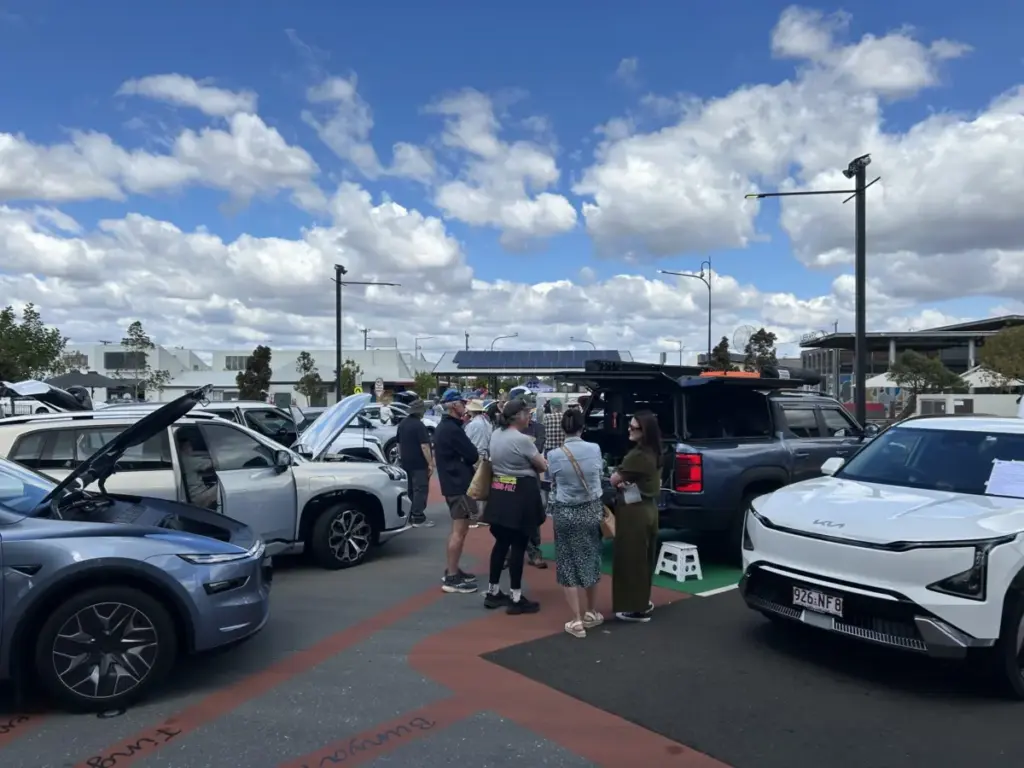
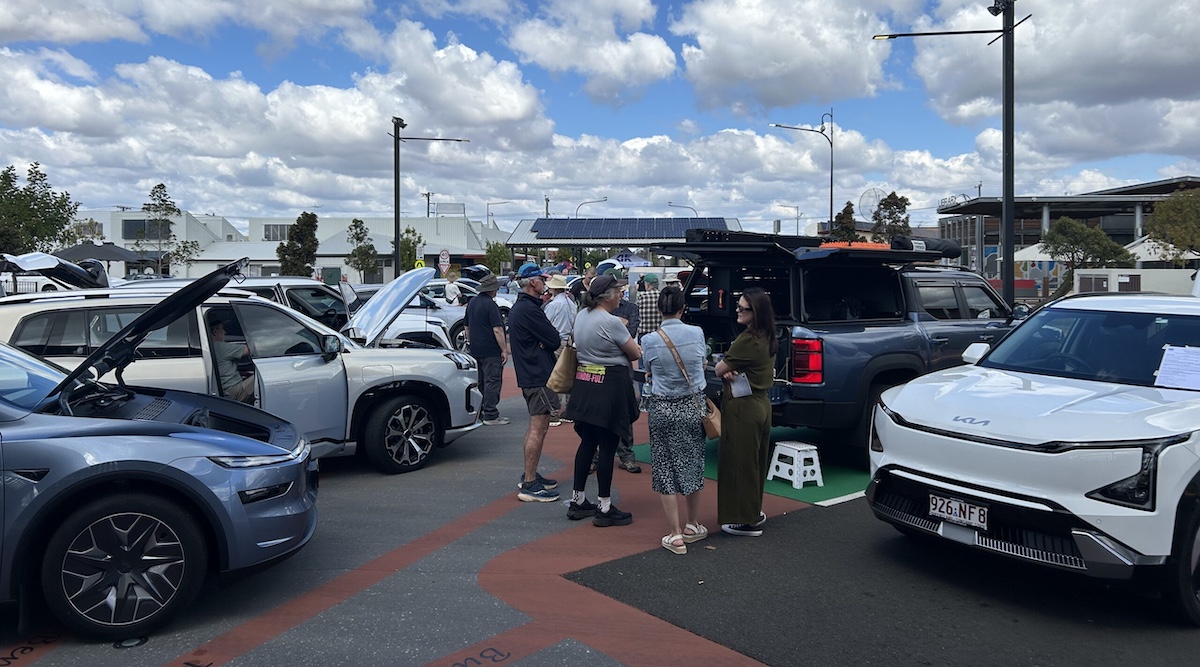
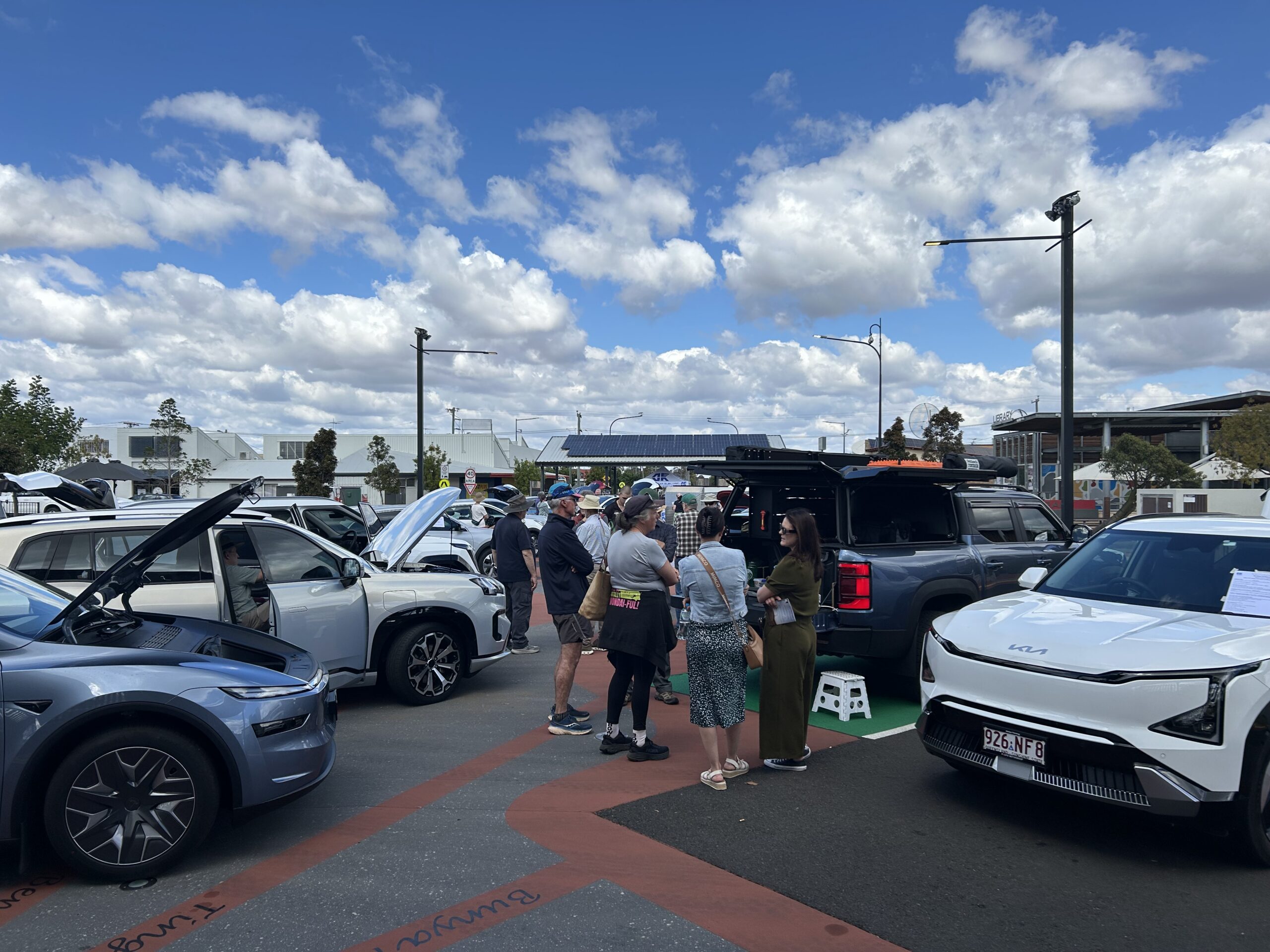
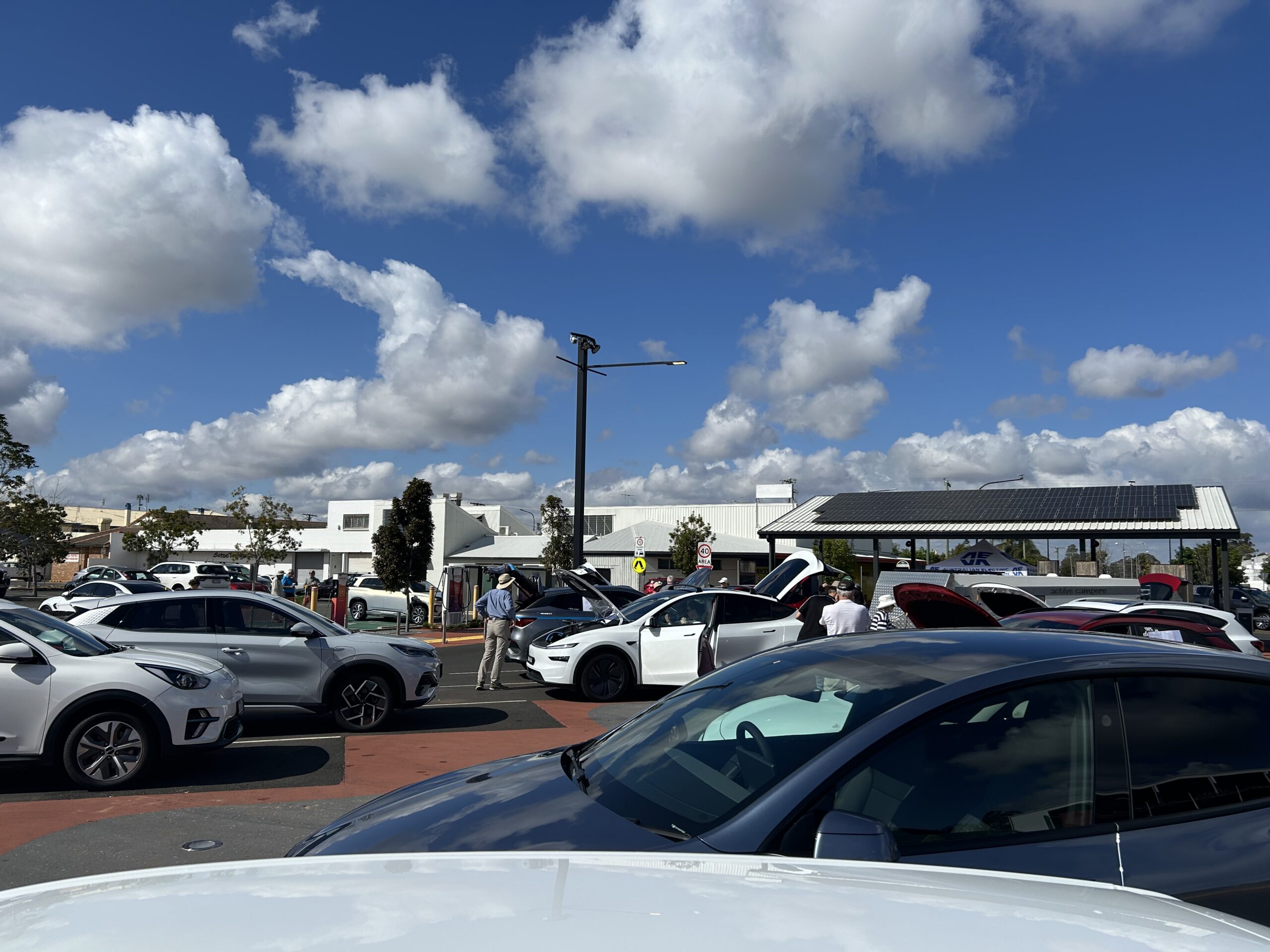
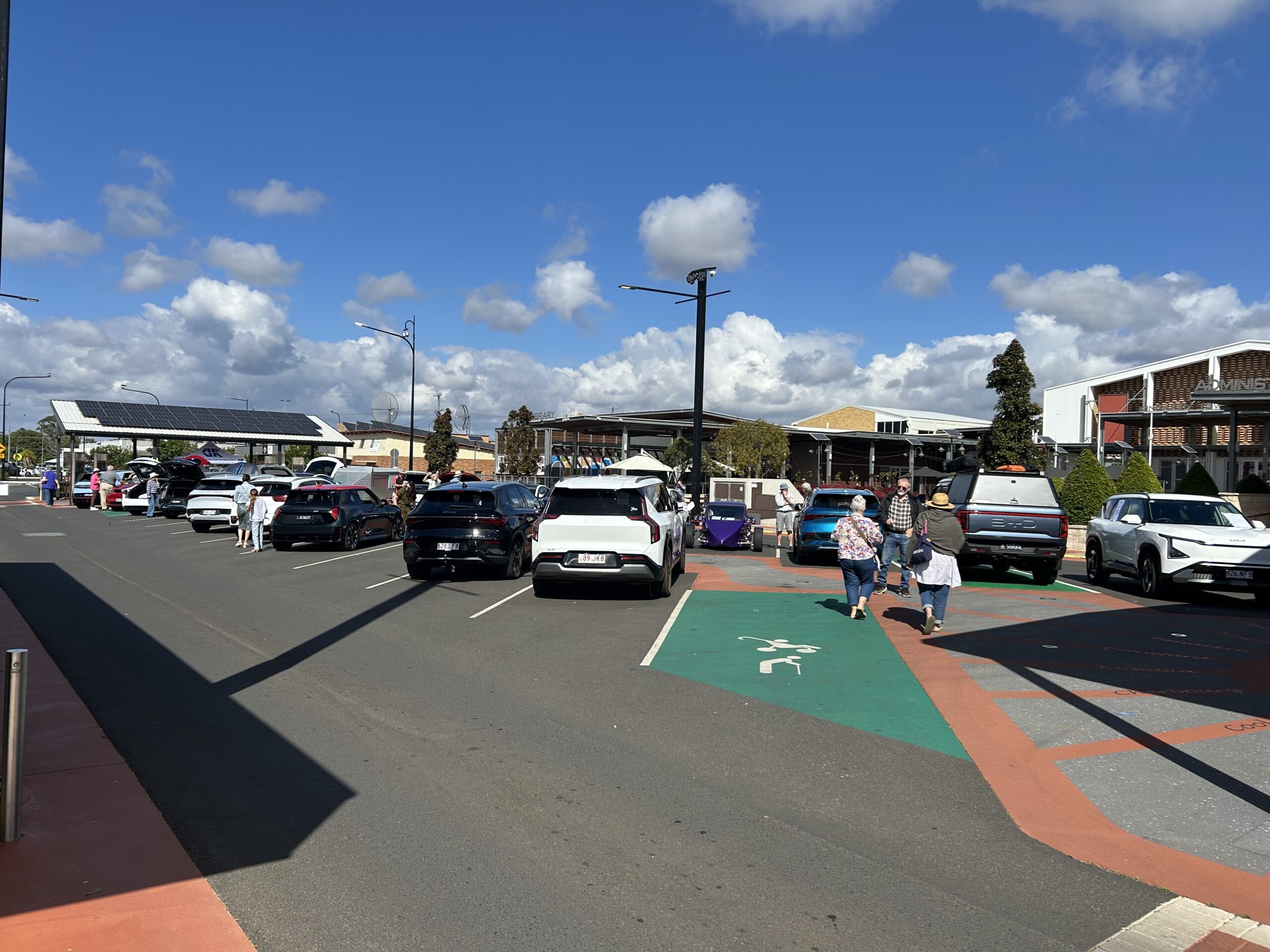
More than 20 electric vehicles converged on Kingaroy for the weekend meetup. Enthusiasts and curious locals rubbed shoulders, with participants traveling from as far away as Mackay, Gympie, the Sunshine Coast, Toowoomba, and Brisbane.
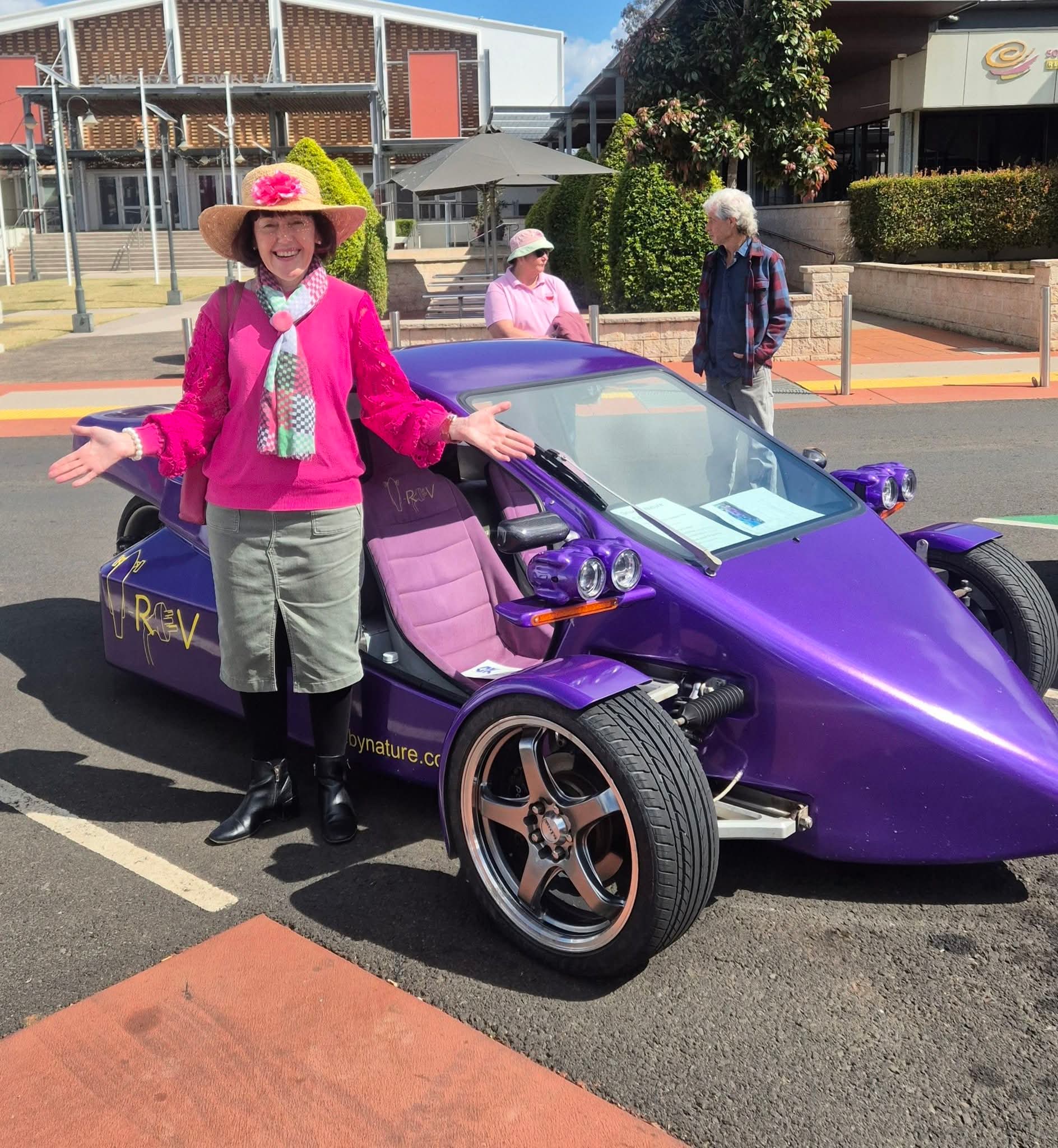
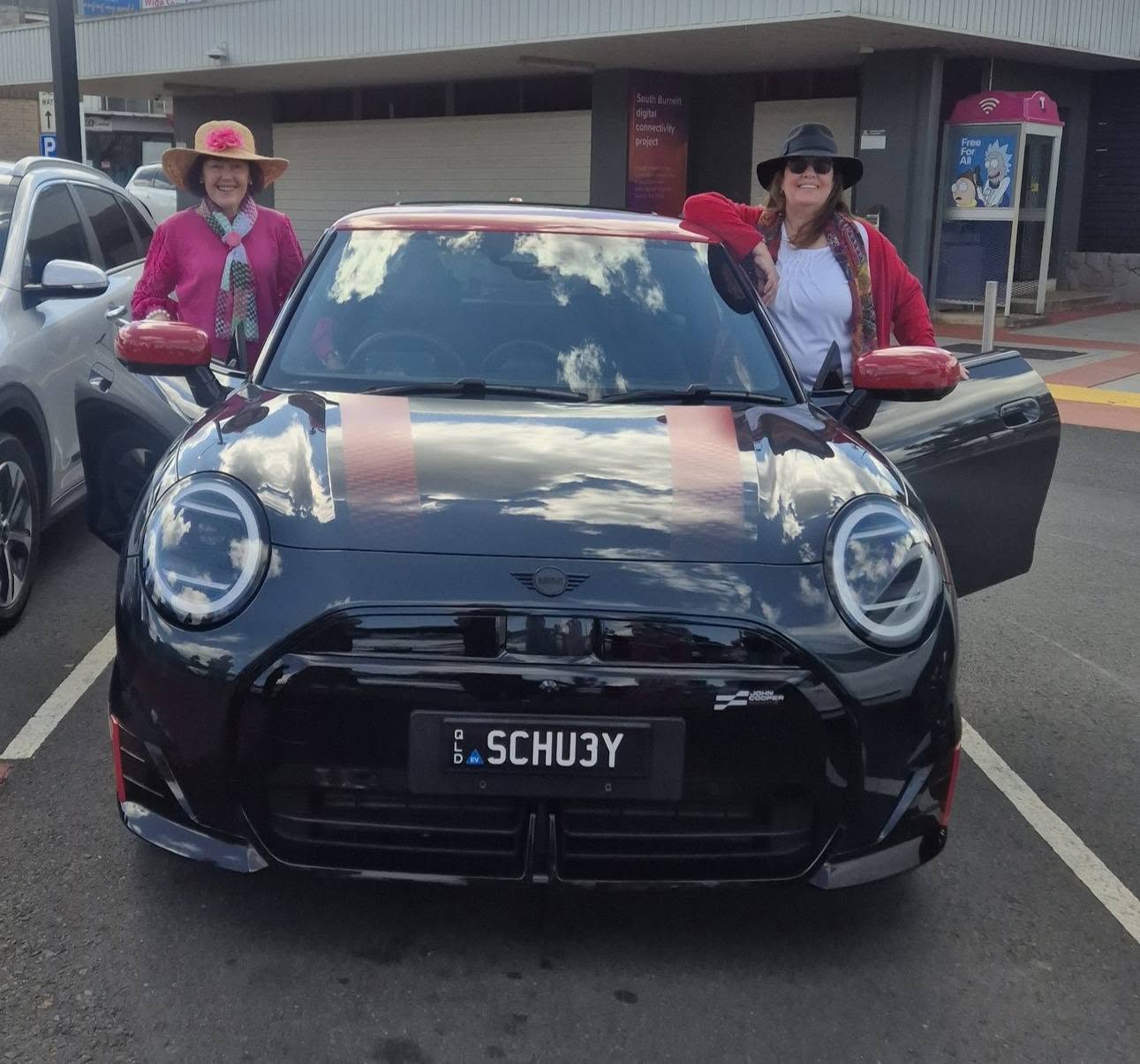
The vehicle lineup reflected the rapidly diversifying Australian EV market. While Tesla models and the BYD Atto 3 dominated the parking spaces—mirroring national sales trends—a variety of other models drew appreciative crowds, including the Mini Cooper EV, the Aion V, the Cupra Born, and various offerings from Hyundai and Kia.
Adding a practical dimension to the day was a Tesla towing a caravan. The sight generated intense interest, serving as a real-world demonstration that modern EVs are increasingly shedding their city-car image to take on heavy-duty touring and towing applications across rugged Australian terrain.
Supporting Context & Metrics: The Regional EV Boom
To understand the urgency behind Kingaroy’s charging needs, one must look closely at the rapidly shifting data regarding regional EV adoption across Queensland.
Outpacing the Metros
While major metropolitan centers like Brisbane, the Gold Coast, and the Sunshine Coast continue to post healthy year-on-year increases in EV registrations—ranging from 43% to 60%—Queensland’s regional and rural postcodes are surging at an unprecedented pace.
Data compiled by the Royal Automobile Club of Queensland (RACQ) for the period between June 2025 and June 2026 reveals a dramatic shift in geographic adoption patterns:
- Western Downs Region: Led the state with an astonishing 97.8% increase in EV ownership.
- Gladstone Region: Followed closely with a 95.6% surge.
- Somerset Region: Recorded an 87.2% lift.
These figures challenge the pervasive myth that electric vehicles are exclusively the domain of inner-city apartment dwellers and affluent suburbanites. Rural Australians are recognizing the economic and practical benefits of EV ownership—particularly those with access to residential solar power, which dramatically slashes the cost of vehicle fuel.
The Micro-Scale Reality in Kingaroy
Despite regional Queensland’s booming growth rates, the absolute baseline remains modest. Current postcode data indicates that approximately 80 plug-in electric vehicles are garaged within the Kingaroy area. Across rural Australia, regional EV penetration rates typically hover below 1% of total vehicle registrations.
This low local saturation makes the business case for private investment tricky. Local businesses and utility providers often look at the small number of locally registered EVs and question the immediate return on investment for expensive, high-speed DC fast-charging hardware.
However, this calculation ignores the fundamental nature of regional tourism. The primary consumers of high-speed chargers in towns like Kingaroy are not necessarily the local residents; they are the transient motorists pumping tourism revenue into the local economy as they explore the South Burnett region.
Official Statements and Cultural Dynamics
The intersection of zero-emission technology and traditional rural culture can sometimes spark friction, but the Kingaroy event proved largely constructive, punctuated by a mix of genuine curiosity and localized resistance.
Local Leadership and Practical Realities
Kingaroy Mayor Kathy Duff attended the showcase, throwing her support behind the initiative and engaging with EV owners. Speaking at the event, Mayor Duff acknowledged the critical link between infrastructure and economic development:
"EV chargers are a benefit to our region as they encourage more travellers and tourism to the South Burnett."
Behind the scenes, however, conversations with local leaders also revealed why fast-charging rollouts are so urgently needed. Mayor Duff noted that her own demanding travel schedule—often encompassing 1,200 kilometers per week away from home—made a hybrid vehicle the most practical current choice for her lifestyle. This candid admission underscores the reality of rural driving distances: until fast, ubiquitous charging infrastructure blanket the countryside, regional drivers with high-mileage demands will remain hesitant to make the full leap to pure battery-electric vehicles.
Cultural Reactions: From Curiosity to Caricature
As a traditionally conservative agricultural community, Kingaroy offered a fascinating testing ground for public sentiment toward clean technology. AEVA members reported that public interactions were overwhelmingly positive or neutral. Spectators were eager to ask questions about battery degradation, real-world range, and home-charging economics.
Yet, old cultural divides did not vanish entirely. Robert, an AEVA participant, noted a stark outlier during the day’s events:
"There was one [4×4 driver] that had dead gutted pigs hanging off the back of the ute, sun curing them, and smoking them with carcinogenic diesel soot, yelling abuse out the window as he drove past."
While instances of overt hostility—often referred to in the EV community as FUD (Fear, Uncertainty, and Doubt) or anti-EV aggression—were isolated, they highlight the cultural headwinds that clean energy technologies occasionally encounter in regional Australia. Despite this, organizers were pleasantly surprised that the event generated far more genuine public interest and constructive dialogue than hostility.
Future Outlook: Funding, Maintenance, and the Road Ahead
As electric vehicles steadily colonize the Australian countryside, stakeholders are forced to grapple with a foundational question: Who pays for the infrastructure?
The Funding Conundrum
Unlike metropolitan hubs, where local councils and commercial operators can capitalize on high-density parking spaces and commercial parking levies, regional councils operate on lean budgets. While EV drivers are more than willing to pay a fair per-kilowatt-hour rate for fast charging, the upfront capital expenditure required for grid upgrades, transformers, and high-speed DC chargers is often prohibitively expensive for small local businesses.
Experts suggest that a collaborative funding model is the most viable path forward. This model relies on cost-sharing agreements distributed across:
- Commercial Businesses: Venues like wineries, pubs, and roadhouses that directly benefit from increased dwell times while customers charge.
- Local Councils: Entities that stand to capture increased regional tourism spending.
- State and Federal Governments: Public grant programs designed to close the commercial viability gap in remote corridors.
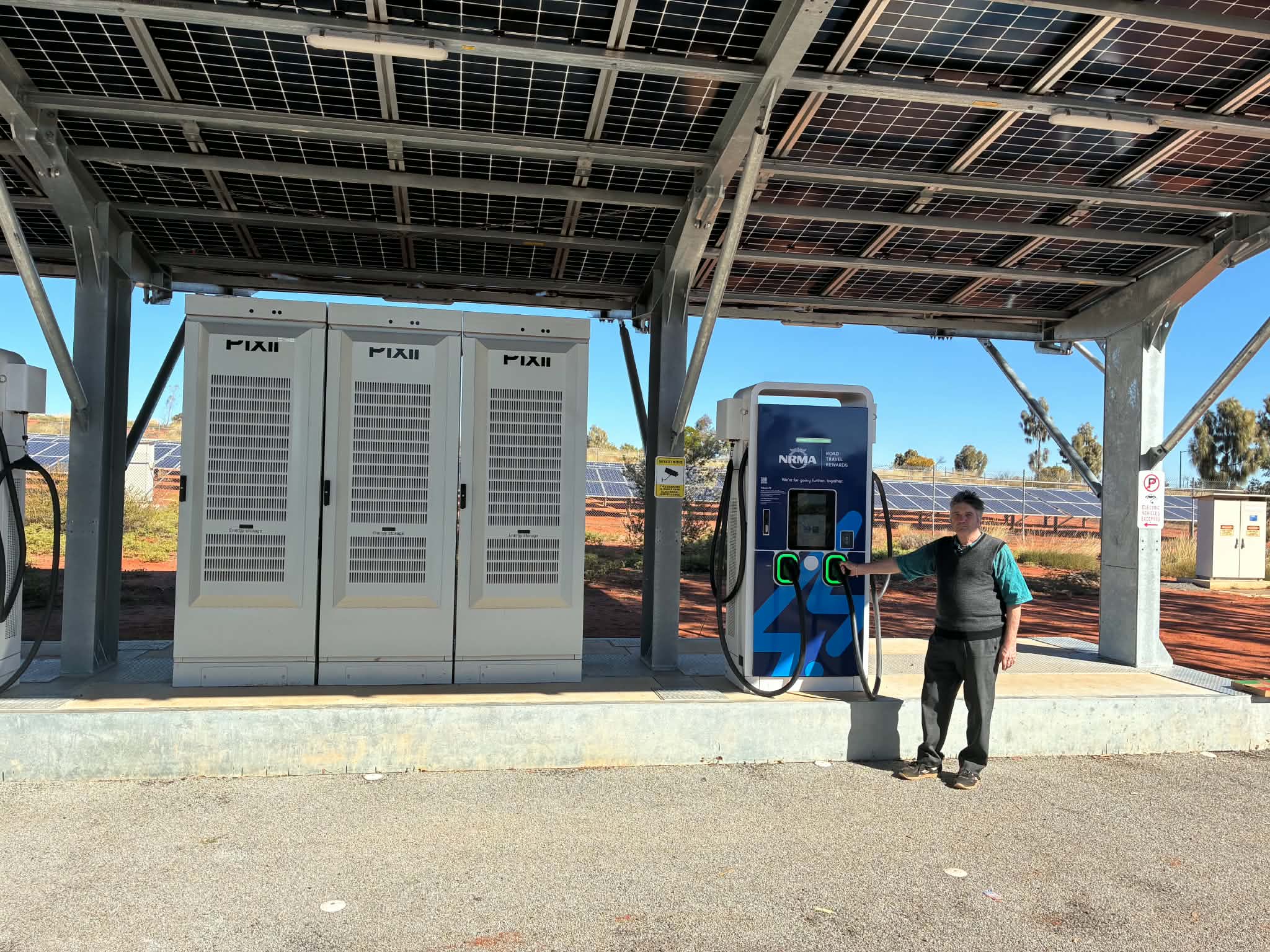
Proof that this is achievable exists even in the most remote corners of the continent. High-speed charging is already operational at Ayers Rock (Uluru) in the heart of the Australian red center. If the Red Centre can support high-speed EV transit, there is little technical excuse why agricultural and coastal tourist hubs across Queensland and the broader nation cannot do the same.
Maintenance as a Critical Pillar
Installing chargers is only half the battle; maintaining them is where regional networks historically fail. The initial frustration in Kingaroy—where a broken charger sat idle for months—demonstrates that remote infrastructure requires robust service level agreements (SLAs) and proactive monitoring. A broken charger in a major city is an inconvenience; in a remote regional town, it can break the fragile chain of confidence required for electric holiday touring.

Conclusion
The Kingaroy EV showcase served as a microcosm of Australia’s broader green transition. It exposed the infrastructure gaps that still plague regional tourism, highlighted the explosive growth of EV adoption in unexpected rural postcodes, and proved that grassroots advocacy can spark vital conversations with local leaders.
As RACQ Executive Manager of Public Policy Dr. Michael Kane noted, future-proofing regional road tourism is an economic imperative. With regional Queenslanders adopting EVs at a blistering pace, the countryside is no longer waiting for the cities to lead. Through coordinated planning, reliable maintenance, and strategic infrastructure investment, the future of regional Australian tourism is shaping up to be clean, green, and fully electrified.



