

Executive Overview
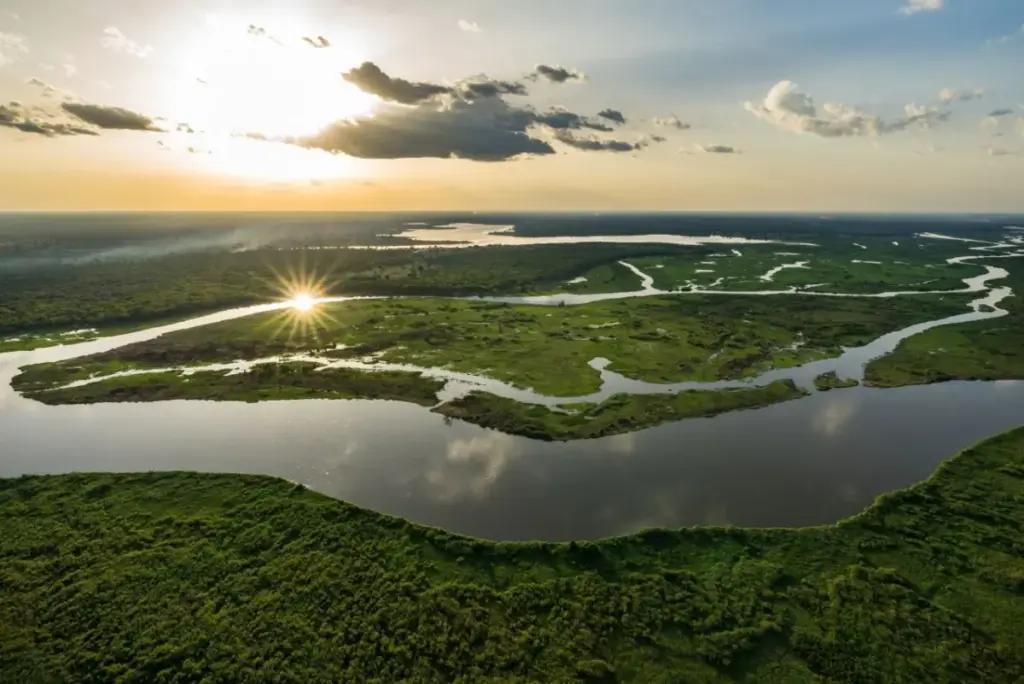
Every April, as the heavy seasonal rains break across the vast and untamed landscapes of South Sudan, the skies undergo a breathtaking transformation. Millions of migratory birds arrive to flood the atmosphere, a spectacle so dense that conservation managers describe the airborne masses as looking "like flies in the sky." This annual phenomenon marks the awakening of the Boma-Badingilo migratory landscape—a roughly North Korea-sized expanse of interconnected swamps, woodlands, grasslands, and flooded plains that sits firmly at the heart of Africa’s largest intact savanna ecosystem.
Long celebrated for hosting an estimated six million antelopes—including staggering populations of white-eared kob (Kobus kob leucotis) and Mongalla gazelles (Eudorcas albonotata)—this region is rapidly earning recognition for an entirely different ecological marvel: its critical, yet deeply mysterious, role as a haven and staging ground for pan-African avian migrants. In July, this monumental ecosystem received a historic designation as a UNESCO World Heritage Site. Conservationists hope this high-profile status will catalyze urgent investments to protect not just the megafauna, but the fragile, hyper-productive wetlands that sustain countless species of storks, kingfishers, cranes, and globally vulnerable waterbirds.
Yet, despite its newfound global status, vast scientific knowledge gaps remain. Ornithologists and ecologists are only beginning to piece together the transcontinental flight paths that connect South Sudan to nations thousands of kilometers away. From tracking tiny woodland kingfishers across hemispheres to unraveling the seasonal fluctuations of African openbills, researchers are locked in a race against time to map out these flyways before habitat loss, climate change, and human encroachment threaten the ecological integrity of this irreplaceable African Eden.
Detailed Chronology: The Seasonal Pulse of Boma-Badingilo
The April Rains and the Awakening of the Savanna
The ecological heartbeat of the Boma-Badingilo landscape is inextricably linked to the arrival of the rains. Beginning in April, the shifting weather patterns of the Intertropical Convergence Zone (ITCZ) sweep northward across the equator, drenching the dry soils of South Sudan. For Megan Claase, a conservation manager with African Parks—the organization managing Boma and Badingilo national parks in partnership with the South Sudanese government—the transition is swift and dramatic.

"I think it’s a very productive system after the first rains," Claase explains. As water inundates the parched earth, massive blooms of winged alates erupt from subterranean termite mounds. This sudden bounty of protein triggers an immediate feeding frenzy, drawing in an extraordinary diversity of avian predators. Among them are massive flocks of African openbills (Anastomus lamelligerus) and Abdim’s storks (Ciconia abdimii), alongside an array of colorful insectivores like the woodland kingfisher (Halcyon senegalensis).
As the wet season progresses, the landscape transforms into a vast, waterlogged mosaic. This seasonal saturation generates an explosion of invertebrate life. Snails and other aquatic mollusks proliferate, providing an essential food source for African openbills—birds uniquely adapted with a distinct gap in their mandibles designed specifically for prying open slippery shells.
The Transcontinental Journey: Tracking the Itinerant Avians
While the local productivity of Boma-Badingilo is staggering, the true significance of the region extends far beyond its borders. The wetlands and swamps act as a critical intersection for birds journeying across multiple African countries.
For Abdim’s storks, scientific literature confirms that individuals spending the southern hemisphere winter in Southern and East Africa utilize South Sudan as an indispensable "staging area" on their grueling northward migration toward breeding grounds in the Sahel.

Similarly, recent tracking studies have shed light on the astonishing journeys of smaller, vibrantly colored migrants. Between 2016 and 2019, ecologist Dayo Osinubi and his research colleagues deployed miniature tracking devices onto the backs of 20 woodland kingfishers in South Africa’s northern Limpopo province. Retrieving data from five of these trackers, the research team discovered a remarkable reality: these non-fishing kingfishers repeatedly traverse more than 4,000 kilometers (2,500 miles) north to South Sudan, later returning with absolute precision to the exact same nesting sites and individual trees in South Africa.
While the specific tagged birds ventured somewhat north of Boma-Badingilo, Osinubi notes that individuals belonging to this Southern African subspecies (H. s. cyanoleuca) undoubtedly utilize the Boma-Badingilo wetlands as a vital pit stop along their hemisphere-spanning migration.
Supporting Context & Metrics: Ecosystem Dimensions and Avian Biodiversity
To understand the sheer magnitude of the Boma-Badingilo migratory complex, one must look closely at its scale, geography, and the specialized life forms it supports.
- Geographic Scale: Spanning an area roughly equivalent to the size of North Korea, the Boma-Badingilo landscape—combined with the massive Sudd wetland to its northwest—forms the largest intact savanna and wetland ecosystem in Africa.
- Mammalian Abundance: The ecosystem supports an estimated 6 million antelopes, including the iconic white-eared kob, Mongalla gazelles, and tiang antelope, executing some of the largest mammalian migrations on Earth.
- Avian Diversity: The Sudd wetland alone provides habitat for approximately 470 distinct bird species, functioning as a Ramsar-protected sanctuary of international ecological importance.
- The Shoebill Sanctuary: Among the most charismatic residents is the prehistoric-looking shoebill (Balaeniceps rex), a pelican-relative listed as vulnerable to extinction due to hunting, nest disturbances, and habitat loss across its broader range. Unlike declining populations elsewhere, South Sudan hosts remarkably healthy numbers. Aerial surveys over the Goum swamp in northern Boma have recorded up to 40 shoebills in a single flight.
Despite these encouraging numbers, critical scientific mysteries persist. Dr. Jonah Gula, an ornithologist at the University of KwaZulu-Natal in South Africa, has extensively documented breeding populations of African openbills—such as a colony of up to 70,000 nests in western Zambia’s Barotse floodplain, over 2,000 kilometers (1,240 miles) to the southwest. However, Gula cautions that there is currently no direct evidence linking Southern African openbill populations to the massive flocks that materialize in South Sudan.

"It is true that the number of openbills in South Sudan, especially the Sudd, fluctuates hugely between seasons," Gula notes. Historical surveys conducted between 1979 and 1981 first highlighted these dramatic population shifts, yet the exact origin and destination of these transient flocks remain an open question demanding intensive radio-telemetry and banding research.
Official Statements & Conservation Perspectives
The formal inscription of the Boma-Badingilo migratory landscape as a UNESCO World Heritage Site in July represents a watershed moment for South Sudanese conservation. For decades, decades of civil conflict, political instability, and infrastructural isolation kept international researchers and conservation capital away from the region.
Megan Claase emphasizes that the UNESCO designation will fundamentally elevate the profile of the parks, unlocking much-needed international investment. This financial and institutional backing is expected to directly bolster anti-poaching measures, habitat preservation, and scientific research initiatives targeting both resident wildlife and migratory species.
Mark van Niekerk, regional director for the International Crane Foundation, echoes this sentiment while highlighting the urgent need for cross-border and landscape-level conservation strategies. Van Niekerk’s organization is turning its attention to another vulnerable wetland specialist: the black crowned crane (Balearica pavonina).

Researchers are currently planning to fit satellite tracking devices onto black crowned cranes in Chad’s Zakouma National Park to definitively determine whether these vulnerable birds travel to the Sudd or the Boma-Badingilo floodplains during their breeding seasons.
"Since birds are mobile, conserving large contiguous landscapes is critical," van Niekerk states. "We will be undertaking more aerial surveys in South Sudan going forward, and are engaging with community-based conservation organizations to fill our knowledge gaps."
Future Outlook: Challenges and Opportunities for South Sudan’s Skies
As South Sudan steps onto the global stage as the custodian of a newly minted UNESCO World Heritage property, the road ahead is fraught with both profound opportunity and complex challenges.
The primary frontier for conservation science in the region lies in connecting the dots. Researchers like Dayo Osinubi hope to expand telemetry studies directly within Boma and Badingilo, tagging woodland kingfishers and other migratory species on their staging grounds to map precise, point-to-point flyways connecting South Sudan to southern and western Africa. Only by understanding these ecological lifelines can conservationists design effective, multi-national protection frameworks.

Simultaneously, managing human-wildlife coexistence around these vast protected areas will be paramount. Engaging local pastoralist communities, empowering community-based conservation initiatives, and securing sustainable funding streams will dictate whether Boma-Badingilo can withstand mounting regional pressures, including climate change, shifting rainfall patterns, and agricultural expansion.
For now, however, every April brings a timeless renewal. As the rains break over the savanna and millions of storks, kingfishers, and herons fill the horizon, South Sudan’s skies offer a rare glimpse of Earth as it once was—wild, resilient, and gloriously untamed. The challenge for the international community is to ensure that these magnificent aerial spectacles continue to grace the African continent for generations to come.



