

Executive Overview
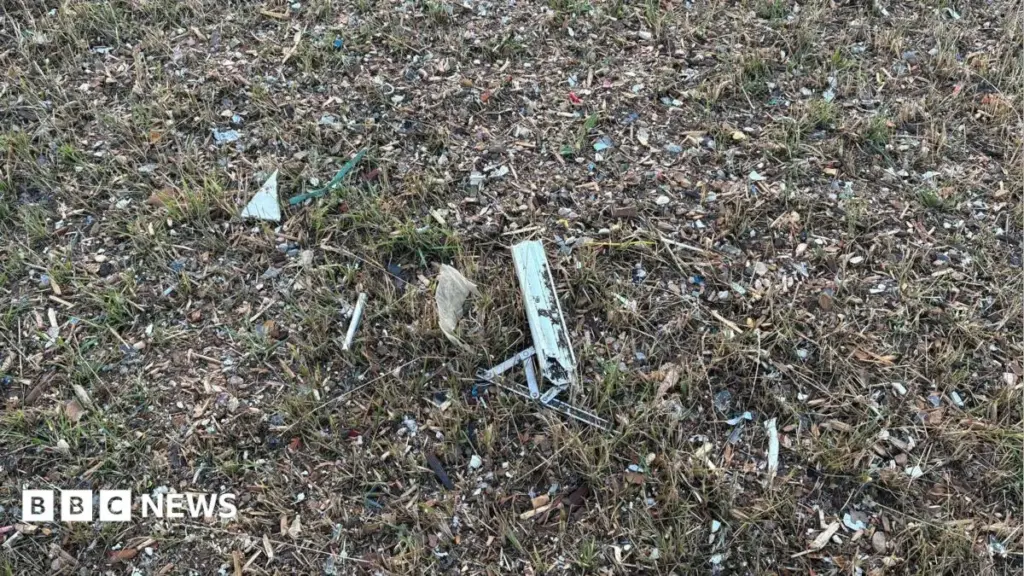
An intensive, multi-agency environmental investigation is currently underway in rural Worcestershire following credible allegations that industrial-scale quantities of illegal medical waste have been dumped and systematically spread on agricultural land. The tract of land in question, situated off Mill Lane near the village of Wadborough, directly abuts Great Blaythorn Meadow—a designated Site of Special Scientific Interest (SSSI) renowned for its fragile, highly protected lowland grassland habitats.
The Environment Agency (EA), operating in close coordination with West Mercia Police, Wychavon District Council, and Worcestershire County Council, has mobilized specialized enforcement teams to ascertain the full extent of the contamination. According to preliminary intelligence shared by local witnesses, heavy agricultural equipment—specifically a muck spreader typically reserved for distributing farmyard manure—was allegedly repurposed to aerially distribute bio-hazardous medical refuse across the fields.
This unfolding ecological crisis has ignited deep alarm among local residents, environmental conservationists, and statutory authorities alike. The proximity of the dumping site to an ecologically sensitive SSSI raises serious questions regarding the illegal transport, processing, and disposal networks operating within the UK waste management sector. Environmental crime is increasingly recognized by regulators not merely as a localized nuisance, but as a sophisticated, transnational or nationally organized enterprise that undercuts legitimate waste operators, generates illicit financial gains, and inflicts long-term, catastrophic damage on delicate local ecosystems.
As investigators deploy forensic soil sampling, aerial surveillance, and digital tracking of commercial haulage vehicles, public scrutiny is intensifying. This report provides a comprehensive, deep-dive examination of the Wadborough waste dumping incident, synthesizing the chronology of events, the regulatory framework governing SSSIs, the broader national landscape of waste crime, and the critical interventions required to prevent further degradation of Britain’s natural heritage.
Detailed Chronology of the Investigation
Discovery and Initial Reports
The alarm was first raised by local residents who observed unusual, heavy vehicular movements around the rural plot off Mill Lane, Wadborough. Unlike standard agricultural operations—which follow predictable seasonal patterns of tilling, planting, and manuring—the activity at the site exhibited hallmarks of industrial expediency, often occurring under the cover of twilight or during periods of reduced local visibility.
A resident, choosing to remain strictly anonymous out of fear of reprisals from organized criminal networks, came forward to detail the shocking mechanics of the operation. Speaking to investigative reporters, the witness revealed that a tractor-pulled muck spreader—a piece of agricultural machinery engineered to break up and cast farmyard manure evenly across fields—was allegedly loaded with hazardous medical waste instead of organic fertilizer.
The psychological and visual impact of witnessing clinical refuse being mechanically hurled across open pasture prompted immediate action. Recognizing the potential for widespread biological and chemical contamination, concerned citizens bypassed local inertia and escalated the intelligence directly to environmental watchdogs and law enforcement agencies.
Mobilization of the Multi-Agency Taskforce
Recognizing the multi-faceted nature of the alleged offenses—which span environmental protection laws, public health regulations, and potentially organized corporate fraud—a joint taskforce was rapidly assembled.
- The Environment Agency (EA): Serving as the lead investigative body for major environmental infractions, the EA deployed environmental crime investigators equipped with personal protective equipment (PPE) and specialized forensic sampling kits to secure the perimeter and extract core soil and material samples.
- West Mercia Police: Local constabulary units were brought in to secure the site, investigate potential links to organized crime syndicates, manage traffic control for forensic vehicles, and review automated number plate recognition (ANPR) data to trace heavy goods vehicles entering and leaving the Mill Lane corridor.
- Wychavon District Council & Worcestershire County Council: Local authority environmental health and planning enforcement officers were mobilized to cross-reference land ownership deeds, waste carrier licenses, and potential breaches of local zoning and environmental protection ordinances.
The coordinated response underscores a strategic shift in British law enforcement: treating waste crime not merely as a civil planning violation, but as a serious criminal enterprise requiring cross-jurisdictional synchronization.
Supporting Context & Metrics: The Ecological Threat to Great Blaythorn Meadow
To fully comprehend the gravity of the Wadborough investigation, one must examine the ecological significance of the adjacent landscape. Great Blaythorn Meadow is not just an ordinary patch of rural Worcestershire countryside; it is a legally protected Site of Special Scientific Interest (SSSI), a designation conferred by Natural England under the Wildlife and Countryside Act 1981 (as amended).
The Significance of SSSI Designations
SSSI status is the foundational conservation designation in England. It identifies the country’s very best wildlife and geological sites. Natural England, the government’s official advisor for the natural environment, evaluates land based on its rare flora, fauna, geological features, and physiographic landforms.
- Biological Interest: Great Blaythorn Meadow is formally recognized for its exceptional biological interest.
- Habitat Preservation: The primary conservation objective for the meadow is the safeguarding and active management of its rare lowland meadow and neutral grassland ecosystems.
The Fragility of Lowland Grassland Ecosystems
Lowland meadows that have escaped intensive agricultural improvement—such as heavy synthetic fertilization, deep ploughing, and reseeding with high-yield rye grasses—are among the rarest and most threatened habitats in the United Kingdom. Over the past century, the UK has lost over 97% of its flower-rich lowland meadows due to changing agricultural practices.
Remaining pockets like Great Blaythorn Meadow function as vital biodiversity reservoirs. They support intricate, interdependent webs of life, including:
- Botanical Diversity: Indigenous flora such as green-winged orchids, adder’s-tongue ferns, yellow rattle, and knapweed.
- Invertebrate Populations: Specialized pollinators, rare butterflies, beetles, and soil-dwelling micro-organisms that form the foundation of the local food web.
- Avian and Mammalian Life: Ground-nesting birds and small mammals that rely on undisturbed grassland matrices for foraging and breeding.
The Catastrophic Risk of Medical Waste Contamination
The introduction of medical waste into an ecosystem flanking an SSSI introduces a terrifying matrix of chemical, biological, and physical hazards. Medical waste is broadly categorized to include pharmaceutical residues, sharps (needles and surgical blades), infectious biological agents, pathological waste, chemical reagents, and potentially radioactive or cytotoxic materials.
If medical waste is spread across land bordering an SSSI, the risks to the conservation area are immediate and profound:
- Soil Micro-biome Destruction: Heavy metals, pharmaceutical compounds (such as antibiotics and endocrine disruptors), and chemical disinfectants leaching into the soil can eradicate native microbial communities, effectively sterilizing the earth and halting nutrient cycling.
- Flora Toxicity: Rare grassland plants are exquisitely sensitive to changes in soil chemistry. Alterations in pH, nitrogen loading, or the presence of xenobiotic compounds can cause rapid die-off of indigenous flora, allowing aggressive, nutrient-tolerant invasive species to colonize the fragile ecosystem.
- Faunal Poisoning: Invertebrates and small mammals feeding on contaminated vegetation or soil organisms ingest toxins that bioaccumulate up the food chain, threatening predatory birds and mammals with secondary poisoning.
- Hydrological Runoff: Rainfall on the Mill Lane site can wash soluble contaminants, pathogens, and particulate matter directly into the surface and groundwater tables feeding the SSSI, expanding the zone of ecological devastation far beyond the immediate dumping grounds.
Official Statements and Regulatory Framework
The scale and brazenness of the Wadborough incident have drawn sharp rebukes from senior environmental officials, highlighting the ongoing national battle against illegal waste operators—often referred to in regulatory circles as the "waste underworld."
Environment Agency Response
An official spokesperson for the Environment Agency issued a robust statement addressing the public concern, emphasizing the agency’s zero-tolerance stance on environmental offending:
"Waste crime scars communities and the environment and, in line with our 10-point plan, we’re acting quickly to tackle illegal activity."
This reference to the EA’s 10-point plan is significant. In recent years, the Environment Agency has pivoted from a reactive posture to a proactive, intelligence-led enforcement strategy. The plan targets high-risk waste sites, dismantles illegal networks operating under the guise of legitimate businesses, utilizes enhanced digital surveillance, and increases cross-agency cooperation with police forces and HM Revenue & Customs (HMRC) to seize assets acquired through environmental crime.
The National Landscape of Waste Crime
To understand why illegal dumping of medical waste occurs, one must examine the economics of waste disposal. In the United Kingdom, disposing of hazardous clinical and medical waste legally is subject to stringent, costly regulatory controls. Licensed incinerators, specialized sterilization facilities, and secure disposal pathways require significant capital investment and continuous compliance auditing.
Unscrupulous operators—acting as rogue brokers or phantom waste management firms—undercut legitimate market rates by charging businesses significant fees to "dispose" of medical waste, only to dump it illegally on agricultural land, in abandoned warehouses, or on remote forestry tracks. This practice, known in the industry as "fly-tipping on an industrial scale" or "ram-raiding waste sites," generates massive profit margins for criminal syndicates while transferring millions of pounds in cleanup costs onto taxpayers, landowners, and the environment.
Legal Penalties and Regulatory Powers
Under the Environmental Protection Act 1990 and associated regulations (such as the Hazardous Waste Regulations 2005), individuals and corporations convicted of illegal waste dumping face severe legal consequences:
- Uncapped Fines: Corporate entities found guilty of illegally depositing hazardous waste can face multi-million-pound fines that reflect the severity of environmental damage and the commercial gain achieved.
- Custodial Sentences: Company directors, hauliers, and landowners proven to be complicit in illegal waste operations face significant prison sentences, often ranging up to five years or more for aggravated offenses involving hazardous materials.
- Proceeds of Crime Act (POCA) Confiscation: Investigators routinely utilize POCA legislation to strip criminals of their assets, homes, vehicles, and bank accounts acquired through illegal waste activities.
- Landowner Liability: Crucially, under UK law, landowners can also be held legally and financially responsible for clearing waste dumped on their property—even if they claim they were unaware of the activity—unless they can prove they took all reasonable precautions to secure their land.
Future Outlook: Remediation, Prosecution, and Prevention
As the multi-agency investigation at Mill Lane, Wadborough, progresses into its critical phases, several key milestones will dictate the short- and long-term trajectory of the case.
1. Forensic Assessment and Site Remediation
The immediate priority for the Environment Agency and environmental scientists is the comprehensive forensic mapping of the contamination zone.
- Soil and Water Testing: Comprehensive core samples are being analyzed in accredited laboratories to identify specific chemical and biological agents present in the soil.
- Remediation Engineering: Once the exact nature of the medical waste is quantified, specialist contractors will be deployed to excavate contaminated topsoil safely without causing further structural or ecological damage to the neighboring Great Blaythorn Meadow SSSI.
- Cost Recovery: Authorities will seek to recover every penny of the remediation costs from the perpetrators through the courts.
2. Criminal Prosecution and Accountability
The intelligence gathered by West Mercia Police and the EA’s enforcement teams is expected to culminate in formal criminal charges. Investigators are tracing the provenance of the medical waste back through the paper trail—or lack thereof—to identify the original clinical generators (such as clinics, laboratories, or care facilities) that handed hazardous waste over to unlicensed carriers.
In the UK waste sector, "duty of care" legislation dictates that businesses producing waste are legally responsible for ensuring it is handled by authorized persons. If a commercial entity has bypassed legitimate channels to save money, they too face severe legal exposure.
3. Strengthening Rural Security and Intelligence Networks
The Wadborough incident serves as a stark reminder of the vulnerabilities facing rural communities. Isolated agricultural land, rural tracks, and poorly monitored boundaries make prime targets for environmental criminals.
Moving forward, local authorities and community policing teams are likely to encourage enhanced preventative measures:
- Target Hardening: Installation of secure gates, heavy-duty earth bunds, CCTV surveillance, and automated number plate recognition (ANPR) systems along rural access routes like Mill Lane.
- Community Vigilance: Strengthening networks such as Rural Watch, empowering residents and farmers to report suspicious heavy vehicle movements before dumping occurs.
- Regulatory Tightening: Continued lobbying for stricter oversight of agricultural land leasing, ensuring landlords vet individuals renting out pasture for purported agricultural use.
Conclusion
The illegal dumping of medical waste along the borders of Great Blaythorn Meadow is an environmental outrage that highlights the persistent threat of waste crime in rural Britain. While the multi-agency response spearheaded by the Environment Agency, West Mercia Police, and local councils demonstrates a resolute commitment to holding wrongdoers accountable, the incident underscores the urgent need for eternal vigilance. Protecting our most precious ecological sanctuaries—our SSSIs—requires not only rapid enforcement when crimes occur, but a systemic overhaul of how industrial and medical waste is tracked, managed, and secured across the United Kingdom.



