

Executive Overview
In British political vernacular, the term "watermelon"—green on the outside, red on the inside—has long been deployed by critics to describe those within the environmental movement whose ecological convictions are inextricably bound to hard-left socialist ideologies. Today, this descriptor sits at the very heart of an existential debate consuming the Green Party of England and Wales.
Since Zack Polanski secured a landslide leadership victory in 2025, capturing 85% of the vote across every faction of the party, the Greens have experienced an unprecedented membership boom. Approximately 160,000 individuals have flocked to the party, drawn to a political vacuum on the left that they feel has been vacated by the mainstream Labour Party. This rapid influx has reinforced the perception that the organization has morphed from a single-issue environmental campaign into a full-throated vehicle for eco-socialism.
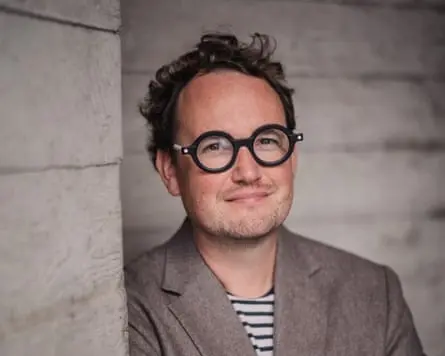
However, a new book by former party staffer and strategist Russell Warfield, titled The Green Socialist: Zack Polanski and the Battle for Britain’s Future, challenges the prevailing narrative that Polanski’s leadership represents a sudden, hostile takeover or a radical departure from tradition. Instead, Warfield argues that the party’s "watermelon" identity is not a recent infection, but rather the culmination of a 50-year ideological evolution.
As the Greens position themselves to challenge the political establishment—culminating in an upcoming high-stakes parliamentary battle in the Holborn and St Pancras byelection—the party faces a defining crossroads. Can it successfully bridge the gap between traditional ecological conservation and populist economic radicalism, or will the controversies surrounding its charismatic leader alienate the very electorate it seeks to mobilize?
Detailed Chronology: From Deep Ecology to Eco-Populism
To understand the current trajectory of the Green Party under Zack Polanski, one must trace the winding historical path that brought the organization to this juncture. The roots of the modern Green movement in Britain stretch back to the early 1970s, when the party was originally founded under the name "People."
The Ideological Pioneers
At its inception, the party’s intellectual foundations were hardly uniform. As Warfield’s research highlights, early figures included individuals with remarkably diverse political backgrounds, such as Teddy Goldsmith, an environmentalist hailing from a prominent Tory family. Goldsmith’s pioneering work in "deep ecology" introduced Malthusian anxieties concerning human population growth and a sometimes misanthropic worldview that blamed humanity as an undifferentiated monolith for ecological destruction.
Yet, even among these disparate early influences, a core tenet was established—one that continues to bind Goldsmith’s intellectual descendants to Polanski’s modern platform: the absolute rejection of infinite economic growth and endless resource extraction on a finite planet.
The 50-Year Shift to Social Ecology
Over the subsequent decades, the party steadily shifted its focus toward social ecology. While early environmental movements often treated conservation as a technical or apolitical challenge, successive generations of Green activists argued that ecological degradation could not be separated from its systemic, socio-economic roots.
By the time Polanski launched his deputy leadership bid in May 2025 with an explicit "eco-populism" vision, the ground had been thoroughly prepared. Running against co-contenders Adrian Ramsay and Ellie Chowns, Polanski tapped into a deep well of latent discontent among members who felt the political mainstream was failing to address compounding crises of housing, wealth inequality, and climate breakdown.
His subsequent victory with an 85% mandate was heralded by supporters as a democratic mandate for change, though it was concurrently met with private dismay from institutional stalwarts. A senior Green source infamously characterized the leadership election as a "hostile takeover," while figures such as Caroline Lucas—the party’s pioneering first MP and former leader—publicly urged Polanski to maintain a sharper, more consistent focus on core environmental issues rather than expanding into broader culture-war battlegrounds.
Supporting Context & Metrics: Polling, Public Trust, and the "Watermelon" Reality
The tension between the party’s traditional conservation base and its surging socialist contingent plays out daily in the public square. Critics frequently point out that since assuming the leadership, Polanski has commanded headlines addressing everything from international geopolitical conflicts in Gaza to domestic wealth taxes—subjects of undeniable progressive weight, but ones that sit adjacent to traditional notions of tree-planting and carbon reduction.
Public Perceptions and Electoral Volatility
Despite these criticisms, quantitative data suggests that the British public maintains a remarkably distinct view of the Greens. According to YouGov polling, 34% of UK voters trust the Green Party more than any other political entity on the issue of the environment—representing the highest level of trust recorded for any party on any single policy domain.
"There is not a voter in this country—left-wing, right-wing, old, young, rural, urban, whatever—that does not strongly associate the Green party with taking action on the environment," Warfield contends. This formidable baseline of public trust, he argues, has afforded the party the strategic latitude to broaden its electoral appeal.

However, this expansion has not been without immediate political costs. Polanski’s tenure has also been marked by steep volatility in voter intentions and personal approval ratings:
- Polling Shifts: Green voting intentions surged to 21% of the electorate in March 2026, capitalizing on disillusionment with the governing Labour administration. By September 2026, however, that figure dropped back to 11% amid a series of high-profile personal controversies.
- Trust Dynamics: While core environmental credibility remains exceptionally high, the party’s integration of hard-hitting socialist economic policies—such as aggressive wealth taxes—continues to polarize moderate voters.
Official Statements and Internal Debate
The friction between strategic expansion and message discipline has sparked intense internal debates regarding how the party communicates its vision.
Defending the Mandate
Addressing claims that Polanski’s platform represents a foreign ideological body grafted onto the party, Russell Warfield is categorical. "It’s just obvious nonsense," he says of the ‘hostile takeover’ label. "Look at the mandate, it was 85%. He won across every wing of the party."
Furthermore, Warfield pushes back against the notion that Polanski is single-handedly driving the party into unfamiliar ideological territory. He emphasizes that Green Party policy is collectively formulated and voted upon by its membership, with leaders constitutionally bound to advocate for those positions.
"Take the wealth tax," Warfield notes in his book. "He did not arrive at this policy personally. A ‘wealth tax’ is called for as ‘a means of limiting large accumulations of wealth’ in a Green party manifesto published long before Polanski’s leadership."
Managing the Leader’s Profile
The leader’s penchant for direct, unfiltered digital engagement has also subjected the party’s communications apparatus to severe stress-testing. Polanski faced fierce backlash following critical commentary on the police response to the Golders Green attack—remarks that Metropolitan Police Commissioner Sir Mark Rowley publicly dismissed as "inaccurate and misinformed."
Further controversies ensued when Polanski had to retract a false claim that he had served as a British Red Cross spokesperson, and when he steadfastly refused to apologize for sharing a social media image depicting a man wearing a T-shirt featuring a guillotine alongside the phrase "We’re only making plans for Nigel"—an aggressive jab at Reform UK leader Nigel Farage.
When asked whether the party should curtail Polanski’s social media autonomy, Warfield adopts a pragmatic stance: "Golders Green was a misstep. But what you don’t want is to get to a situation where every post needs double-tick signoff from different members of staff and you can’t just let Zack engage with social media in the way that allows him to reap the political points of authenticity."
Regarding the Farage guillotine controversy, Warfield defends the leader’s refusal to bow to public pressure: "Reform were trying to goad him into apologising for incitement to murder. If you do that, you legitimise the claim that they’re making. I think there’s a lot of strength in not succumbing to the pressure of playing that game."
Future Outlook: The Holborn and St Pancras By-election
The ultimate test of whether Polanski’s high-risk, high-reward brand of eco-populism can deliver tangible electoral breakthroughs will arrive shortly. Following Keir Starmer’s decision to vacate his seat, a high-stakes parliamentary byelection in Holborn and St Pancras has been scheduled for 8 October.
Strategists within the Green camp view the contest as a golden opportunity to pressure the ruling Labour administration from the left, capitalizing on local and national frustrations. Warfield is unequivocal about the strategic calculus facing voters in the constituency:
"You could vote Labour again and you get another backbencher who is one among literally hundreds of Labour MPs and that doesn’t make much difference to anything," Warfield argues. "Or you can put a really prominent, independently minded Green in there and continue to put pressure on the [government] from its left."
Whether the electorate in Holborn and St Pancras embraces the "watermelon" platform will serve as a bellwether for British politics. If Polanski can translate grassroots eco-socialist fervor into a historic parliamentary victory, his detractors will be forced to concede that his 50-year evolutionary thesis for the Green Party is not an electoral aberration, but the dawn of a formidable new era on the British left.



