

Originally published by Grist. Edited to conform with Corporate Knights style.
Executive Overview
The European summer of extreme weather will long be studied as a watershed moment for modern infrastructure. Repeated, record-shattering heat domes cooked the continent, driving June temperatures to unprecedented heights and setting off a devastating, compounding feedback loop. A simultaneous—and increasingly linked—drought shriveled major European rivers to historic lows, exposing forgotten relics of past global conflicts while choking the very lifeblood of the continent’s traditional energy system.
As public health advisories flashed red across Western and Southern Europe, the dual crises of extreme heat and drought placed an unprecedented strain on regional power grids. Wind generation faltered under the stagnant atmospheric conditions characteristic of heat domes, while "thermal" power plants—spanning nuclear, natural gas, and coal assets—were forced to drastically curtail output. These traditional powerhouses rely heavily on vast quantities of river water for cooling systems; as waterways warmed and dwindled, that essential resource evaporated.
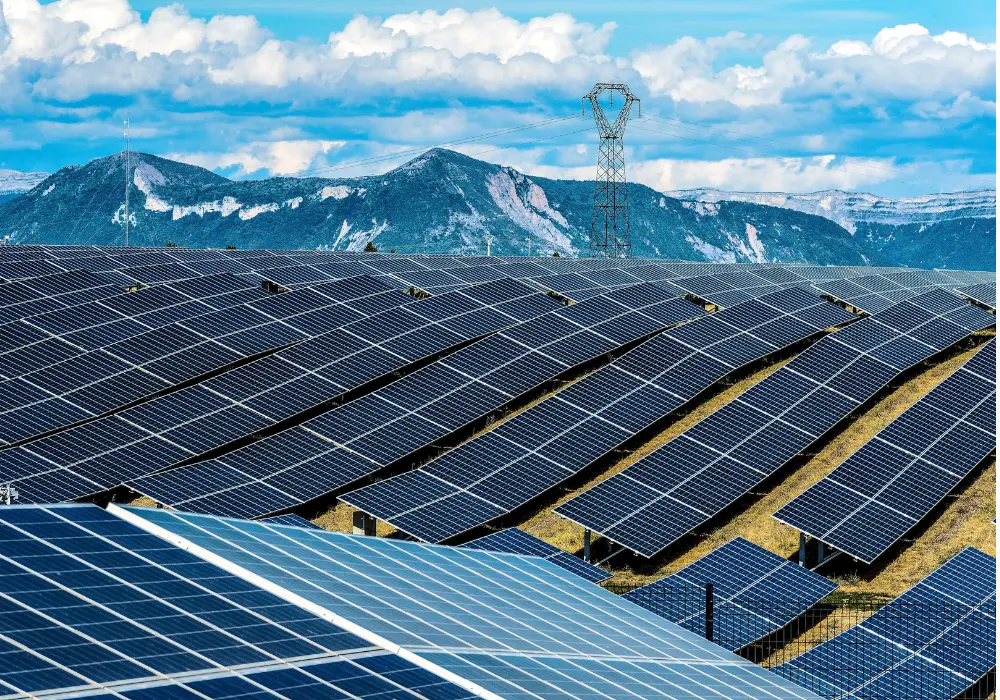
Amid this systemic vulnerability, solar power emerged as the single major energy source to outperform baseline expectations, offering a crucial lifeline. Paired with rapidly expanding battery storage, photovoltaic (PV) arrays successfully met the surging demand for air conditioning during the hottest daylight hours.
However, as scientists grapple with the climatic mechanics behind these recurring thermal anomalies, the summer of extremes has laid bare a sobering reality. With only a fraction of European households currently equipped with air conditioning, and climate change accelerating the probability of such heat waves by a factor of 200 compared to pre-industrial eras, the continent’s energy systems are entering an unforgiving new epoch.
Detailed Chronology: A Summer of Cascading Failures
The descent into Europe’s energy crisis began in earnest in late June, when an unyielding heat dome settled over the western half of the continent. The atmospheric trap triggered immediate, drastic spikes in electricity consumption. According to data from the energy think tank Ember, extreme temperatures bumped up Italy’s power demand by an astonishing 28% compared to the preceding week. In France, power demand climbed by 14% over the same timeframe.
As the sun began to set, compounding the crisis, electricity and natural gas prices spiked precipitously during evening peak hours. With solar generation tapering off and residential cooling demand remaining stubbornly high, regional spot prices soared to heights not witnessed since the height of the 2022–2023 winter gas crisis—a market shock originally catalyzed by Russia’s invasion of Ukraine.
While demand curves climbed, generation metrics plummeted across multiple vectors:
- The British Gas and Wind Crunch: In the United Kingdom, five major natural gas plants were forced to collectively reduce output by 2.5 gigawatts because ambient heat undermined the thermodynamic efficiency of their cooling systems. Simultaneously, heat-induced atmospheric stagnation halved typical wind farm generation throughout June.
- The Great Hydrological Shrinkage: England and Wales recorded their driest July in history, while the Danube River in Central and Eastern Europe receded to record lows. The receding waters laid bare historical artifacts, including Second World War shipwrecks and prehistoric remains, but also crippled energy generation. Europe’s hydropower production hit its lowest July level in a decade.
- The Nuclear Chill: Multiple nations were forced to curtail nuclear power generation as warm, depleted rivers threatened the integrity of cooling operations. France lost 18% of its nuclear capacity to "environmental factors" by mid-July, continuing a worrying trend of summertime outages. French nuclear reactors draw river water at natural temperatures, using it for cooling before discharging it back into waterways. Because national environmental regulations strictly cap the temperature of discharged water to protect fragile aquatic ecosystems, plants must scale back operations when incoming river water is already overheated by prolonged droughts and heat waves.
Supporting Context & Metrics: The Solar Savior and the Cooling Gap
Where conventional thermal and wind resources faltered, solar power performed with remarkable resilience. European heat waves inherently provide optimal meteorological conditions for photovoltaic systems: cloudless, intensely sunny skies. Energy analytics show that Europe’s solar panels produced 17% more power during the summer’s heat waves than under normal seasonal baselines. This unexpected surplus stabilized regional grids precisely as afternoon cooling demand reached its zenith.
Crucially, utility-scale and behind-the-meter battery storage systems captured this midday solar surplus and discharged it into evening hours. This intervention prevented rolling blackouts as residual heat lingered and households cranked air conditioning units to bearable levels for sleep.
Despite this success, Europe faces a stark structural vulnerability: its low baseline adoption of mechanical cooling.
- Only 23% of European households currently possess or regularly use air conditioning.
- Adoption rates vary widely by geography: roughly 50% of households in Italy and Spain feature air conditioning.
- In contrast, just 25% of French households and similarly low numbers in Northern Europe possess cooling infrastructure, compared to roughly 90% of households in the United States.
This massive "cooling gap" represents an inevitable trajectory of future energy demand. As heat waves become permanent fixtures of the European climate, citizens will be forced to adapt, transforming residential energy loads permanently.
Official Statements: Perspectives from Industry and Policy Leaders
The structural stress placed on the grid has forced a rapid evolution in political and industrial rhetoric. Long-standing dogmas regarding energy consumption and technological adaptation are crumbling under the weight of empirical climate data.
Marine Tondelier, national secretary of France’s Ecologist Party, voiced a profound pragmatic shift in June. Historically, European green parties staunchly opposed the widespread adoption of air conditioning due to its high greenhouse gas emissions and contribution to urban heat island effects. Confronted with lethal thermal thresholds, Tondelier conceded the new reality:
"There are places where we just can’t do without it now."
From the industrial sector, executives emphasize that the grid’s survival hinges on addressing the temporal mismatch between solar generation and evening temperature peaks. Walburga Hemetsberger, CEO of the industry group SolarPower Europe, highlighted this operational hurdle:
"The next challenge is the evening period. Temperatures often remain high after sunset and AC demand can stay elevated, even as solar production declines. This is why battery storage is becoming such an important part of the energy transition."
Regulatory bodies echo these warnings, framing the summer’s financial volatility not as an anomaly, but as a systemic diagnostic. Beatrice Petrovich, a senior energy analyst covering Europe at Ember, noted the policy implications of the recent price shocks:
"Extreme price spikes during heat waves are a blaring signal for regulatory changes that increase power system flexibility. Treating this summer as a turning point for energy storage would be an opportunity to remove existing barriers."
Future Outlook: Adaptation, Investment, and the Road Ahead
In response to these cascading climate shocks, European utilities and governments are drafting multi-billion-dollar adaptation strategies. France’s state-owned utility, Électricité de France (EDF), has announced plans to invest more than $10 billion over the next 15 years. The capital will target the climate-proofing of nuclear and hydropower fleets against rising water temperatures and worsening droughts. Investments will explicitly fund closed-loop cooling towers and advanced heat exchangers designed to cool discharged water before it enters sensitive river ecosystems, ensuring compliance with environmental standards without sacrificing generating capacity.
Simultaneously, the private and municipal sectors are doubling down on decentralization and storage. The deployment of clean energy infrastructure accelerated drastically through 2025:
- Europe installed 36 gigawatt-hours of battery storage in 2025 alone, representing a staggering 48% increase over the previous year’s deployment rate.
- Battery installations marked their 12th consecutive year of uninterrupted growth, underpinned by falling technology costs and urgent grid-balancing needs.
Yet, headwinds remain formidable. Grids are not only absorbing the surging residential demand for air conditioning; they are simultaneously grappling with the exponential load growth driven by the expansion of power-hungry artificial intelligence data centers across the continent.
Ultimately, the summer of extremes serves as both a stress test and a blueprint. By laying bare the vulnerabilities of baseload thermal generation and validating the agility of solar-plus-storage frameworks, the crisis has catalyzed a profound reckoning. If Europe is to navigate a fossil-fuel-warmed future safely, regulatory frameworks must pivot decisively to remove bureaucratic bottlenecks around energy storage, transforming a season of vulnerability into an enduring foundation for grid resilience.



