Executive Overview
The pristine, fog-shrouded waters of Bodega Bay have long stood as a biological crossroads along the central coast of Northern California. Teeming with kelp forests, migratory marine mammals, and a complex web of artisanal fisheries, this dynamic marine ecosystem represents both the breathtaking resilience and the acute fragility of the Pacific Ocean.
Recently, the global marine conservation spotlight turned intensely toward this windswept stretch of coastline, galvanized by a unique convergence of endurance athleticism and grassroots environmental advocacy.
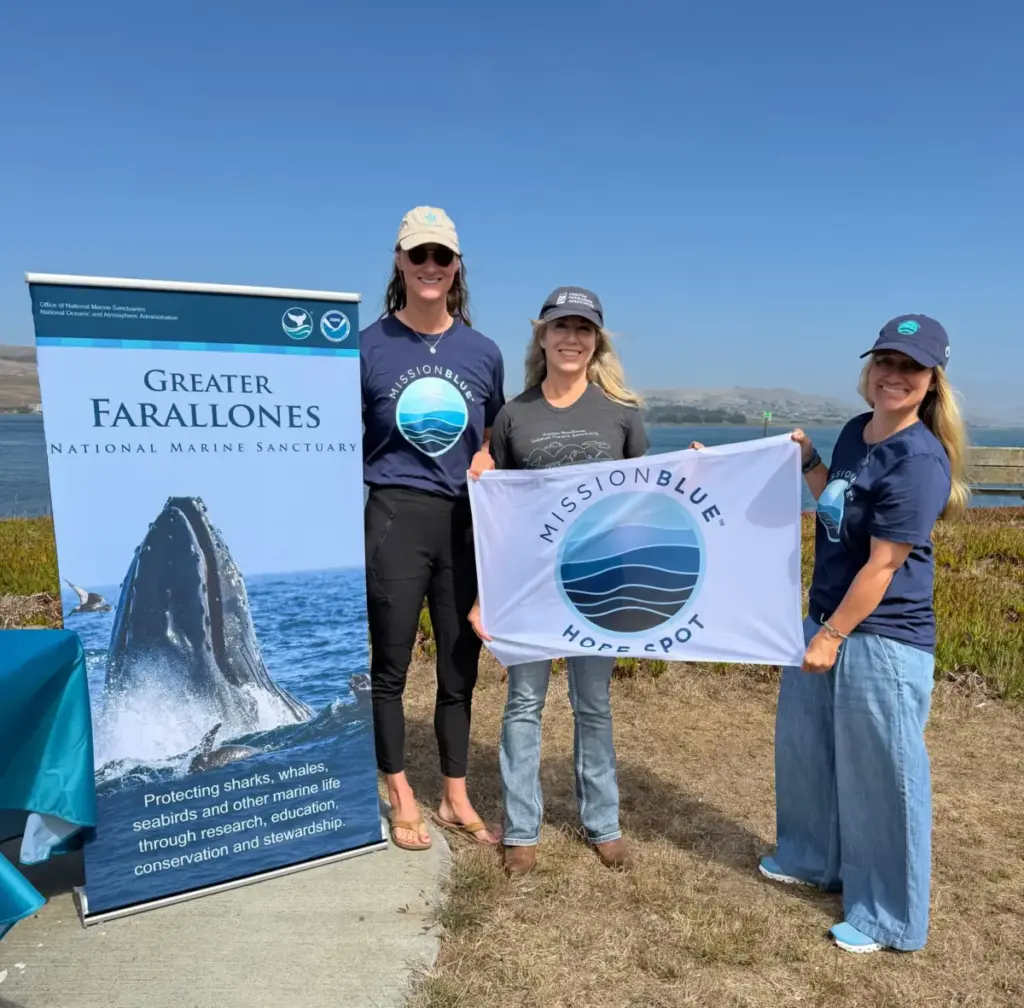
Shannon McIntyre Rake, a prominent voice for the renowned global conservation organization Mission Blue, recently appeared on KTVU to articulate the urgent imperatives facing Bodega Bay’s marine habitats. Rake’s media appearance followed a high-profile visit from Bay Area native and elite endurance swimmer Catherine Breed.
Breed is currently undertaking a monumental, historic 900-mile open-water swim spanning the entire length of the California coast—from the Oregon border down to the Mexican border. More than just a grueling test of human stamina, Breed’s epic aquatic journey serves as a floating platform to amplify the voices of local grassroots organizations, marine scientists, and community leaders who are dedicating their lives to ocean stewardship.
This article provides an in-depth exploration of the intersection between Breed’s historic coastal odyssey and Mission Blue’s localized conservation initiatives in Bodega Bay. By analyzing the ecological pressures facing the region, detailing the logistical scope of Breed’s swim, capturing official statements from conservation leaders, and evaluating the future outlook for California’s Marine Protected Areas (MPAs), we illuminate the critical battles being waged beneath the surface of the Pacific.
Detailed Chronology: From the Oregon Border to Bodega Bay
The Genesis of a Historic Swim
The seeds of Catherine Breed’s 900-mile expedition were sown years before she ever wetted her wetsuit in the frigid northern waters of the Golden State. As a lifelong Bay Area native, Breed developed a profound, visceral connection to the Pacific Ocean early in life. A competitive swimmer of international caliber, she understood that her platform as an athlete could be leveraged to draw public attention to the rapidly deteriorating health of marine environments.
The Pacific coastline of California is roughly 840 miles in a straight geographic line, but navigating its jagged headlands, treacherous currents, hidden rocks, and deep bays pushes the total swimming distance to an estimated 900 miles. Very few people have successfully swum the entire California coast, and none have done so with the explicit mission of creating an interconnected digital and community-based mosaic of marine conservation stories.
Hitting the Water: The Northern Leg
Breed’s journey commenced at Pelican State Beach near the Oregon-California border. The northernmost stretch of the expedition is widely considered the most dangerous. Water temperatures routinely hover in the low-to-mid 50s Fahrenheit, the risk of encounters with great white sharks is ever-present, and the sheer force of the North Pacific swell creates punishing turbulence.
Despite these harrowing conditions, Breed maintained a grueling daily schedule, logging miles under the watchful eye of a safety and support crew aboard a support vessel. Along this northern leg, she stopped at remote fishing villages, tribal lands, and state parks, engaging with local residents who depend on the ocean for their livelihoods and cultural heritage.
The Arrival at Bodega Bay
As Breed’s support vessel rounded the iconic headlands of Bodega Head and entered the protected waters of Bodega Bay, she was greeted by local conservationists, researchers, and community members. Bodega Bay represents a vital milestone in her journey—not merely as a geographical waypoint, but as a microcosm of successful, community-led marine conservation.
During her stopover in Bodega Bay, Breed collaborated with regional researchers and environmental advocates to document local restoration projects, eelgrass bed monitoring initiatives, and sustainable fishing practices. Her arrival catalyzed local media interest, culminating in Shannon McIntyre Rake’s appearance on KTVU to synthesize the broader conservation narrative.
Supporting Context & Metrics: The Ecological Significance of Bodega Bay
Marine Biodiversity Hotspots
To understand why Mission Blue and Catherine Breed have focused heavily on Bodega Bay, one must examine the unique oceanographic features that make this region an ecological powerhouse. Bodega Bay is heavily influenced by the California Current, one of the world’s major eastern boundary upwelling systems.
Upwelling brings nutrient-dense, cold, deep-ocean water up to the sunlit surface layer, triggering massive blooms of phytoplankton. This microscopic bounty forms the foundation of a remarkably rich food web that supports:
- Humpback and Blue Whales: Which routinely feed just offshore during their seasonal migrations.
- Pacific Harbor Seals and California Sea Lions: Utilizing local haul-out sites along the rocky shores.
- Commercial and Recreational Fisheries: Including Dungeness crab, salmon, and rockfish, which are vital to the socio-economic fabric of Sonoma County.
The Threat Matrix
Despite its outward appearance of wild abundance, Bodega Bay and the surrounding coastal ecosystems face an escalating array of anthropogenic threats:
- Ocean Warming and Marine Heatwaves: Persistent marine heatwaves—often colloquially referred to as "The Blob"—have devastated kelp forests along the Northern California coast. The loss of kelp has triggered population explosions of purple sea urchins, creating extensive "urchin barrens" where vibrant kelp ecosystems once thrived.
- Ocean Acidification: As atmospheric carbon dioxide levels rise, the ocean absorbs a significant portion of this excess gas, lowering seawater pH. This acidification directly impairs the ability of calcifying organisms—such as Dungeness crab larvae, oysters, and microscopic pteropods—to build and maintain their shells.
- Runoff and Pollution: Agricultural runoff from the nearby Russian River watershed introduces excess nutrients, agricultural chemicals, and plastic debris into the marine environment, exacerbating coastal eutrophication and habitat degradation.
Mission Blue’s "Hope Spots" Framework
Mission Blue—founded by legendary oceanographer Dr. Sylvia Earle—operates on the premise that safeguarding the oceans requires the designation and active management of "Hope Spots." These are special places that are scientifically identified as critical to the health of the ocean.
While Bodega Bay operates adjacent to existing state-managed Marine Protected Areas (MPAs), conservationists like Shannon McIntyre Rake emphasize that the broader region functions as an essential corridor that must be vigilantly monitored and protected from cumulative environmental pressures. Mission Blue’s strategy relies on building public support, empowering local communities, and leveraging high-profile expeditions like Catherine Breed’s swim to transform local apathy into passionate ocean stewardship.
Official Statements and Media Analysis
Shannon McIntyre Rake on KTVU
During her appearance on KTVU, Shannon McIntyre Rake articulated the core philosophy driving Mission Blue’s engagement with endurance athletes and grassroots movements.
"When someone like Catherine Breed undertakes an unimaginable physical feat like swimming 900 miles down the California coast, she isn’t just testing the limits of human endurance—she is holding up a mirror to the ocean," Rake stated during the broadcast. "Every coastal community she visits has its own unique story of triumph and trial. Bodega Bay is a shining example of a community that understands its ecological wealth, yet it reminds us that we can never afford to let our guard down."
Rake elaborated on the symbiotic relationship between top-down regulatory frameworks (such as state and federal marine reserves) and bottom-up community activism. She pointed out that laws on paper are insufficient without a deeply invested local populace monitoring water quality, reporting illegal harvesting, and advocating for climate-resilient coastal policies.
Catherine Breed’s Reflections from the Water
Speaking from the support vessel during a brief weather window, Catherine Breed shared her perspective on what the swim has revealed about the state of the Pacific:
"Swimming this coastline gives you an entirely different perspective than driving down Highway 1. You feel the temperature shifts, you see the clarity of the water change from mile to mile, and—most importantly—you meet the people who live and breathe these waters every single day," Breed noted. "Stopping in Bodega Bay was profoundly grounding. Seeing the dedication of the scientists and local advocates working to protect these kelp forests and marine life gave me renewed energy to push through the grueling miles ahead."
Media Reception and Public Engagement
The synergy between Breed’s athletic endeavor and Mission Blue’s institutional advocacy has generated unprecedented media coverage across West Coast television and digital platforms. By translating complex marine science into an accessible, human-interest narrative, the campaign has successfully engaged demographics that typically tune out traditional environmental reporting.
Future Outlook: The Road Ahead for California’s Coastline
The Next Leg of the Journey
As Catherine Breed pushes southward past San Francisco, Monterey Bay, and the rugged expanses of Big Sur, her expedition enters its most physically demanding and logistically complex phases. Navigating major shipping lanes, complex tidal gates around the Golden Gate, and varying regional water temperatures will require absolute precision from her support crew and unwavering mental fortitude from the swimmer herself.
Upon reaching the Mexican border, Breed and the Mission Blue team plan to synthesize their findings into a comprehensive multimedia report and documentary campaign. This archive will serve as an educational resource for schools, policy-makers, and conservation organizations worldwide, mapping the human and ecological pulse of the California current in the 21st century.
Policy Implications and Community Action
The ultimate success of initiatives spearheaded by Mission Blue in Bodega Bay and beyond hinges on translating public awareness into tangible policy outcomes. Key future priorities include:
- Expanding Kelp Forest Restoration: Funding scientific pilot projects aimed at manually culling purple sea urchins and outplanting lab-grown, heat-resilient bull kelp strains.
- Strengthening MPA Enforcement: Ensuring that existing Marine Protected Areas are adequately funded, monitored via satellite and drone technology, and respected by commercial and recreational users.
- Climate Mitigation Advocacy: Pushing for aggressive municipal and state-level reductions in carbon emissions to combat the root causes of ocean warming and acidification.
Conclusion
The convergence of Catherine Breed’s historic 900-mile swim and Mission Blue’s dedicated advocacy in Bodega Bay marks a pivotal moment for California marine conservation. It demonstrates that protecting the ocean is not merely the domain of scientists and legislators, but a collective human endeavor requiring grit, empathy, and persistent action. As Breed continues her southward journey and local stakeholders in Bodega Bay defend their precious coastal heritage, the message echoing across the Pacific is clear: the health of our ocean is the health of our future.
To watch the full interview with Shannon McIntyre Rake and learn more about Mission Blue’s ongoing conservation initiatives in Bodega Bay, visit the official KTVU Online Video Archive.