Published by ArchDaily Insights | September 2026 Author: Olivia Poston Enriched Editorial Feature
Executive Overview
Public space is fundamentally conceptualized as a universal commons—an egalitarian stage where citizens of all backgrounds, genders, and socioeconomic statuses can converge, traverse, and congregate freely. Yet, this idealized vision often fractures upon contact with reality. For millions of women, navigating the contemporary city does not involve passive enjoyment of the urban landscape. Instead, it requires a continuous, subconscious calculus of exposure: evaluating visibility, proximity to dense crowds or isolated stretches, lighting conditions, transit reliability, escape routes, and the immediate risk of harassment or assault.
These calculations are not merely social phenomena; they are directly sculpted by spatial conditions. Urban safety is an intricate product of urban form, physical maintenance, mobility networks, local governance, and the equitable distribution of municipal investment. While the built environment cannot single-handedly cause or eradicate gender-based violence, poor architectural choices can severely intensify vulnerability, normalize unequal access, and reinforce systemic marginalization within public spaces.
For architects, urban planners, and municipal policymakers, a critical distinction must be drawn between security and safety. Traditional security frameworks lean heavily toward surveillance, aggressive policing, physical control, and the restrictive management of movement. In contrast, true safety is organic. It depends on whether people can see and be seen, whether pedestrian routes are legible and intuitive, whether public spaces invite diverse activities across all hours of the day, and how rigorously spaces are maintained over time. The fundamental role of progressive urban design is to alter the foundational conditions under which public life takes place, replacing apprehension with autonomy.
Detailed Chronology: The Evolution of Gender-Sensitive Urban Planning
To understand how contemporary urban design is beginning to address women’s safety, it is essential to trace the historical progression of city planning through a gender lens—shifting from gender-blind universalism to targeted, community-driven spatial interventions.
Phase 1: The Feminist Critiques and the Birth of Safety Audits (Late 20th Century)
Historically, city planning operated under the assumption of a universal male baseline—often referred to in planning theory as the "standard citizen," who commutes linearly from a suburban home to a central business district. Feminist geographers and urbanists in the late 1970s and 1980s began challenging this paradigm, pointing out that women’s journeys are typically multi-directional, multi-stop, and tied to caregiving and domestic labor.
During this era, grassroots organizations pioneered the concept of the "Safety Audit." These walk-through evaluations empowered women to collectively assess neighborhoods after dark, documenting broken streetlights, obscured pathways, blind corners, and lack of visual surveillance. These audits laid the groundwork for treating safety not as a matter of individual caution, but as a structural failure of urban design.
Phase 2: The Integration of Mobility and Transit Equity (1990s–2010s)
As cities expanded, urban theorists realized that spatial segregation and inadequate public transit systems disproportionately restricted women’s economic mobility. Cities like Vienna famously pioneered "gender mainstreaming" in urban planning during the 1990s, systematically evaluating every municipal budget, park redesign, and sidewalk expansion to see how it affected women and girls differently than men. Public transportation hubs were identified as primary bottlenecks of vulnerability, prompting investments in better-lit subterranean passages, open-plan platforms, and clear line-of-sight wayfinding systems.
Phase 3: The Data-Driven and Grassroots Era (2020–2025)
Entering the 2020s, the digital revolution introduced crowdsourced mapping tools, mobile applications, and spatial analytics that allowed women to log real-time data regarding street harassment, unsafe dark zones, and infrastructure decay. Architects and municipal governments could no longer rely on anecdotal evidence; heatmaps of urban fear guided targeted capital improvements. Initiatives in Latin America, Europe, and the Middle East began to test innovative typologies, transforming neglected municipal margins—under bridges, steep staircases, and post-industrial brownfields—into vibrant, gender-equitable community hubs.
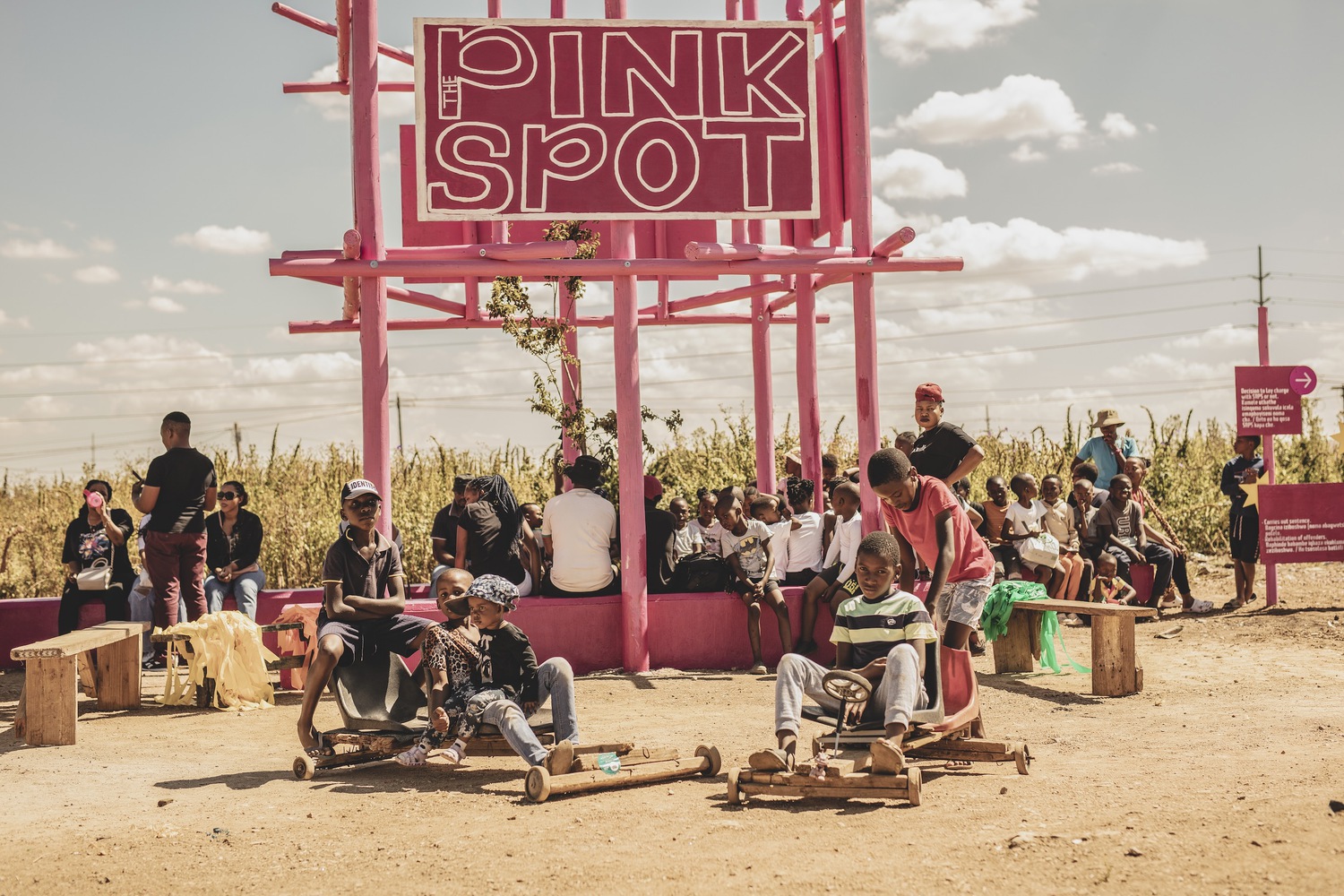
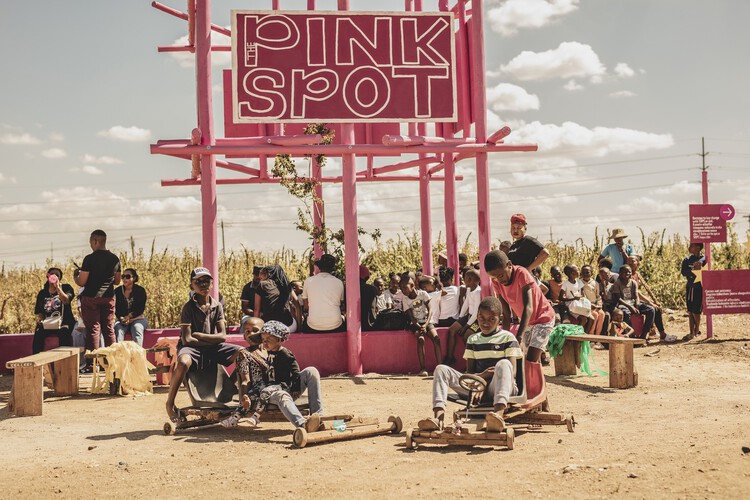
Phase 4: Current Paradigm—Lessons from Four Public Spaces (2026)
Today, contemporary urban design looks beyond generic "crime prevention through environmental design" (CPTED) dogmas, which often over-rely on hostile architecture and heavy surveillance. Instead, current best practices are illuminated by diverse global interventions that prioritize inclusivity, activation, and community ownership.
Supporting Context & Metrics: The Spatial Reality of Urban Inequality
Statistics consistently underscore the disconnect between municipal intent and lived urban experience. According to global urban mobility studies:
Over 70% of women in major urban centers report feeling unsafe in public transport systems and poorly lit peripheral zones after dark.
Mobility Poverty: Women are significantly more likely to walk or use multi-modal public transit than private vehicles. Consequently, poorly maintained sidewalks, missing curb ramps, and disconnected pedestrian networks impose a heavy "spatial tax" on their daily routines.
The Maintenance Deficit: Urban decay—such as overgrown shrubbery, broken windows, unlit alleyways, and abandoned storefronts—signals a breakdown in municipal care. This "broken windows" effect disproportionately heightens fear among women, who read these environmental cues as indicators of potential danger and isolation.
Security vs. Safety: A Paradigm Shift
Metric / Dimension
Traditional Security Approach
Gender-Sensitive Safety Approach
Primary Tool
Closed-circuit cameras (CCTV), private security, heavy policing.
Natural surveillance ("eyes on the street"), transparent architecture, lighting.
Spatial Strategy
Restriction of movement, gating, closing off vulnerable zones.
Passive consumers of protected spaces; reliance on authorities.
Active co-creators of public space; community stewardship and ownership.
Long-Term Impact
Often increases anxiety and creates a fortress mentality.
Builds trust, social cohesion, and sustained public life.
Official Statements and Expert Perspectives
As urban planners grapple with the complexities of gender-equitable design, thought leaders from architecture, sociology, and municipal governance have weighed in on the transformation of public spaces:
"When we design cities that work for women, we design cities that work for everyone—children, the elderly, people with disabilities, and marginalized communities. Safety is not achieved by locking the city down with cameras and fences; it is achieved by opening the city up through light, visibility, and vibrant public life."
— Dr. Elena Vance, Professor of Urban Sociology and Gender Dynamics
Urban design practitioners emphasize that physical interventions must be paired with community engagement.
"A public space cannot be made safe in a boardroom. It requires deep listening sessions with the women who navigate those specific street corners every single day. They know where the shadows hide risk, and they know where community care can replace isolation."
— Lead Architect, Emergent Vernacular Architecture (EVA Studio)
Furthermore, municipal authorities are recognizing the economic and social dividends of gender-sensitive planning. Investments in inclusive public infrastructure do not merely mitigate crime; they stimulate local economies by encouraging longer stays, evening commerce, and active community participation across all demographic groups.
Future Outlook: Designing the Inclusive City of Tomorrow
Looking forward, the evolution of urban design in relation to women’s safety points toward a holistic, multidisciplinary future. As cities face compounding pressures—including climate change, rapid urbanization, and shifting economic landscapes—the metrics of a successful city must evolve beyond gross domestic product and vehicular throughput to include human comfort, emotional well-being, and spatial equity.
Key directions for the future of gender-sensitive urbanism include:
Integrated Multi-Modal Infrastructure: Seamlessly connecting pedestrian walkways, cycling lanes, and mass transit stops with continuous, high-lux lighting and unobstructed lines of sight.
Participatory Design Mandates: Institutionalizing community-led safety audits and co-design workshops as mandatory steps in municipal master-planning processes.
Active Edges and Mixed-Use Zoning: Moving away from mono-functional zoning blocks that empty out at night, encouraging instead porous ground floors, cafes, community spaces, and residential windows that maintain natural "eyes on the street" 24/7.
Maintenance as Infrastructure: Treating municipal maintenance—repairing sidewalks, replacing lightbulbs, trimming vegetation—not as routine upkeep, but as core infrastructure investment essential for public safety.
By fundamentally rethinking how we shape the physical boundaries of our shared environments, the architecture and planning professions hold the power to dismantle the invisible barriers that restrict half the urban population. The city of the future must be a place where public space truly lives up to its name: universal, accessible, and safe for all.