

Executive Overview
The global discourse surrounding artificial intelligence has long been dominated by two competing narratives: the utopian promise of automated productivity and the existential dread of human displacement. However, a far more immediate and material crisis is unfolding in zoning offices, utility boardrooms, and municipal water districts across the United States. The transition from simple, prompt-and-response chatbots to autonomous "agentic" AI systems has fundamentally broken previous environmental impact calculations, quietly shifting the true cost of the digital frontier onto local communities and utility ratepayers.
While asking a generative AI model a single, straightforward question consumes roughly the same amount of electricity as running a household microwave for one second, the paradigm of human-AI interaction is shifting. Today’s cutting-edge applications deploy autonomous "agents"—software entities designed to plan their own multi-step workflows, query search engines, write and test code recursively, and run continuously until they deem a task complete. A single agentic workflow can consume as much electricity as running a personal laptop for nearly six hours.
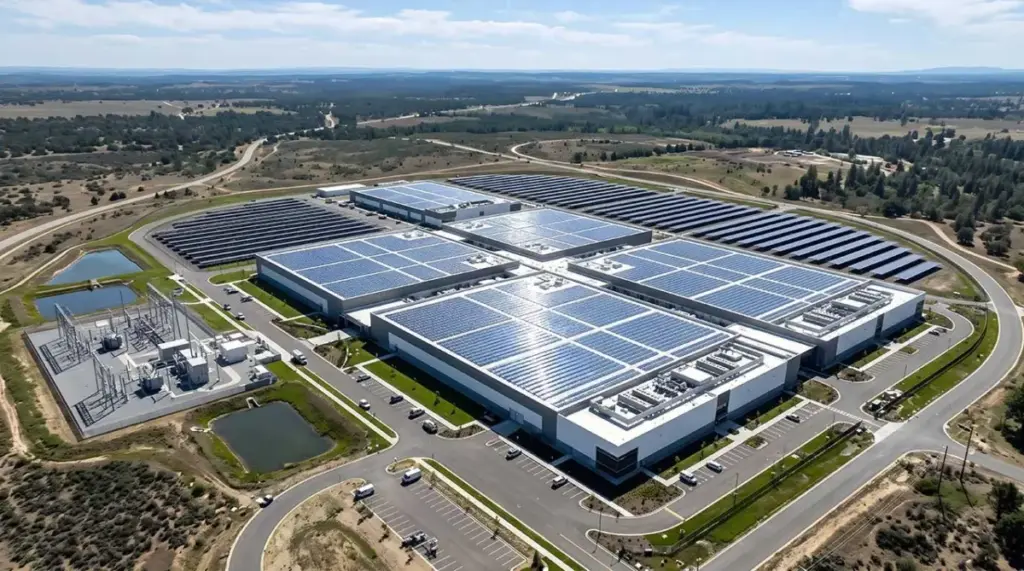
This technological evolution has triggered an unprecedented surge in localized resource consumption. Beyond the sheer electricity demand, the rapid buildout of hyperscale data centers has exposed deep vulnerabilities in public infrastructure:
- The Ratepayer Burden: Capacity market auctions designed to secure power grid reliability have seen price increases of over 1,000%, driven largely by data center demand, with the financial fallout socialized across residential utility bills.
- The Water Paradox: While tech conglomerates boast of "water-neutral" facilities by switching to dry cooling systems on-site, the off-site water footprint required to generate the electricity powering these facilities is up to twelve times larger, depleting regional watersheds.
- The Democratic Deficit: Municipalities are finding themselves outmatched and outmaneuvered by multi-billion-dollar developers utilizing non-disclosure agreements (NDAs) to bypass local environmental reviews, leading to a wave of grassroots resistance and state-level legislative interventions.
This investigative report examines the thermodynamics of agentic AI, traces the regulatory and community battles reshaping the American landscape, and analyzes the structural economics of a technology that is increasingly running up against the physical limits of the earth.
Detailed Chronology: The Escalation of the Data Center War (2024–2026)
The tension between AI development and environmental sustainability has escalated from an academic debate into a series of high-stakes legal, political, and regulatory battles.
[Feb 2024] ----------------- [Jun-Aug 2025] --------------- [Sep-Nov 2025] ------------ [Q1-Mid 2026]
Scientific Reports           Tucson "Project Blue"          Saline Township Lawsuit      National Backlash &
Flawed Carbon Study          Backlash & Council Rejection   & Forced Settlement          New York Moratorium
February 2024: The Flawed Benchmark
Researchers from three prominent universities published a study in Scientific Reports claiming that an AI model generating a page of text emitted 130 to 1,500 times less carbon dioxide than a human writer producing the same page. The paper calculated the human carbon footprint by dividing the average American’s annual emissions (15 tons) by the hours in a year, effectively charging the writer for existing while working. Critics immediately pointed out that human writers do not cease to exist—or emit carbon—when replaced by an AI; the only true net change is the additional electricity drawn by the data servers.
June–August 2025: The Tucson "Project Blue" Showdown
Amazon attempted to secure a 290-acre, 10-building data center campus in Pima County, Arizona, under the codename "Project Blue." Operating behind strict confidentiality agreements signed in 2023, the county board of supervisors approved the land sale in June 2025 without public disclosure of the tenant’s identity or the project’s projected resource demands. Following investigative leaks revealing the scale of the facility’s water requirements in an active desert basin, over 1,000 residents packed municipal hearings. In August 2025, the Tucson City Council voted unanimously to deny annexation and refuse municipal water services, forcing the developer to bypass the city’s jurisdiction by purchasing unincorporated land nearby.
September–November 2025: The Capitulation of Saline Township
In Michigan, OpenAI and Oracle targeted 575 acres of agricultural land in Saline Township for a $16 billion hyperscale facility. In September 2025, the local planning commission and township board voted to deny the necessary rezoning, citing grid stability and preservation of rural character. Two days later, the developer filed a federal lawsuit, claiming the township’s lack of industrially zoned land constituted an illegal exclusionary zoning practice. Unable to afford a multi-million-dollar, multi-year legal defense, the township of 2,900 residents settled in October, allowing construction to begin in November 2025 in exchange for a $14 million community benefits package.
November 2025: The Woo Rebuttal and the "Correctness" Metric
Researcher Nolan Woo published a direct response in Scientific Reports, demonstrating that the initial February 2024 study ignored task accuracy. Using programming challenges from national high school computing contests, Woo ran four distinct AI models through up to 100 iterative error-correction loops to achieve passing scores. The study demonstrated that the true driver of AI emissions was not the static size of the model, but the volume of computational iterations required to produce a correct, verifiable output.
First Quarter 2026: The Grassroots Explosion
Data Center Watch, a national watchdog group, reported that at least 75 major data center projects valued at $130 billion were blocked, delayed, or legally challenged in the first three months of 2026 alone—a figure matching the total opposition recorded for the entirety of 2025. The number of organized community opposition groups surged to 833 across 49 states, accompanied by the introduction of more than 300 bills in state legislatures aiming to restrict data center tax incentives, water access, or grid hookups.
July 2026: The New York Moratorium
Following Michigan’s localized battles and Virginia’s grid crises, New York became the first state in the nation to pass a formal pause on new large-scale data center construction pending a comprehensive statewide environmental and grid-reliability audit.
Supporting Context & Metrics: The Thermodynamics of Agentic AI
To understand why the environmental footprint of artificial intelligence has expanded so rapidly, one must look at the transition from static inference to agentic workflows, alongside the physical realities of power generation and water consumption.
The Computational Toll of Autonomous Agents
Traditional AI queries are transactional: a user inputs a prompt, the model processes the tokens, and it returns a static output. Agentic AI, however, operates on recursive loops.
[User Goal]
    │
    ▼
[Agent Planner] <───> [Web Search / Tool Execution] (Hardware sits idle, drawing power)
    │
    ▼
[Code Generator] ───> [Execution & Error Check] ─── (Loop up to 100x) ───┐
    ▲                                                                     │ (Error detected)
    └─────────────────────────────────────────────────────────────────────┘
    │
    │ (Success)
    ▼
[Final Output]
Researchers at KAIST (Korea Advanced Institute of Science and Technology) measured the "hidden energy" of these agentic architectures. They discovered that a single-agent task consumed an average of 348 watt-hours of electricity—roughly 136 times the energy required by the same underlying model to answer a single static prompt.
This energy delta is driven by two main factors:
- Prolonged Execution Time: Agentic tasks take up to 154 times longer to resolve due to continuous reasoning loops, web scraping, and internal validation steps.
- Hardware Idle Overhead: The KAIST team noted that the specialized graphics processing units (GPUs) hosting these models sat idle for more than 50% of the execution time—waiting for external API calls, database queries, or web pages to load—yet continued to draw significant baseline power.
The Carbon Break-Even Analysis
How does this translate to carbon dioxide emissions? To establish a realistic comparison, consider a standard 20-hour research project conducted by a human using a laptop and external monitor, which emits approximately 2 kilograms of $CO_2$ (factoring in the operational energy of the devices and their share of manufacturing emissions).
The number of agentic AI requests required to surpass this 2-kilogram carbon threshold depends entirely on the carbon intensity of the electrical grid supplying the host data center:
| Data Center Grid Profile | Number of Agentic Requests to Equal 2 kg of $CO_2$ |
|---|---|
| Clean Grid (Direct procurement of dedicated nuclear/hydroelectric power) | ~46 requests |
| Average U.S. Grid (Standard national energy mix) | ~15 requests |
| Dirty Grid (Regions where data centers are clustered near fossil-fuel plants) | ~11 requests |
This comparison highlights a critical issue: data centers are increasingly being constructed in regions with carbon-intensive energy profiles. A 2026 study of data center site selection found that the local electricity grids serving newly constructed hyperscale facilities are, on average, 48% more carbon-intensive than the national average. This is driven by developers prioritizing cheap land, lax zoning, and immediate access to high-voltage transmission lines over clean energy availability.
Jevons’ Paradox and the Productivity Trap
The tech industry frequently points to rapid improvements in algorithmic and hardware efficiency as proof that energy consumption will naturally plateau. Indeed, in April 2026, the International Energy Agency (IEA) reported that the energy efficiency of AI task execution was improving at an "unprecedented rate."
However, this efficiency gain is directly countered by Jevons’ Paradox—an economic principle first observed by William Stanley Jevons in 1865. Jevons noted that more efficient steam engines did not decrease coal consumption; instead, they made coal-powered energy so cheap and useful that overall demand skyrocketed.
Similarly, as AI inference becomes cheaper and faster, businesses do not use the savings to reduce runtimes. Instead, they run more agents, perform deeper analyses, and automate highly repetitive tasks.
A study under review by the National Bureau of Economic Research (NBER) found that employees with high exposure to generative AI tools did not work fewer hours; instead, they logged an average of 3.5 additional hours per week. Saved time was quickly absorbed by increased project volume, leading to a net expansion of computational demand.
Algorithmic & Hardware Efficiency Increases
        │
        ▼
Cost per AI Task Drops Significantly
        │
        ▼
New Use Cases & Constant Agentic Loops Become Viable
        │
        ▼
Exponential Growth in Total Computational Volume
        │
        ▼
Net Increase in Grid Load and Resource Consumption (Jevons' Paradox)
The Dual Footprint of Water Consumption
The water footprint of a data center is split into two categories: direct and indirect.
┌─────────────────────────────────────────────────────────────────────────┐
│                          TOTAL WATER FOOTPRINT                          │
└─────────────────────────────────────────────────────────────────────────┘
                                    │
         ┌──────────────────────────┴──────────────────────────┐
         ▼                                                     ▼
┌──────────────────────────────────┐        ┌──────────────────────────────────┐
│        DIRECT (ON-SITE)          │        │       INDIRECT (OFF-SITE)        │
│    ~17.4 Billion Gallons/Yr      │        │    ~211 Billion Gallons/Yr       │
├──────────────────────────────────┤        ├──────────────────────────────────┤
│ Evaporative cooling systems used │        │ Water consumed by thermoelectric │
│ to keep server halls within safe │        │ power plants generating the      │
│ operating temperatures.          │        │ electricity to run the servers.  │
└──────────────────────────────────┘ └──────────────────────────────────┘- Direct Water Use (On-site Cooling): According to the Lawrence Berkeley National Laboratory, U.S. data centers consumed approximately 17.4 billion gallons of fresh water in 2023 for evaporative cooling systems. These systems evaporate water to keep server halls within safe operating temperatures. Analysts project this figure could quadruple by 2028.
- Indirect Water Use (Off-site Generation): Thermoelectric power plants (coal, gas, and nuclear) rely on massive volumes of water for steam generation and cooling. The electricity required to run U.S. data centers in 2023 accounted for an estimated 211 billion gallons of indirect water consumption—nearly twelve times the volume consumed on-site.
This distinction allows data center operators to claim "near-zero water use" by installing dry, air-cooled chillers. While this eliminates direct water use, it often lowers the facility’s overall energy efficiency, forcing the local power grid to run hotter and consume more water off-site at the power plant.
Furthermore, reporting standards remain highly inconsistent. In Texas, which hosts one of the largest concentrations of digital infrastructure in the world, 83% of the state’s 341 operational data centers had failed to file mandatory water consumption reports by early 2026.
Official Statements & Industry Perspectives
The rapid expansion of data centers has created a sharp division between tech developers, utility operators, community advocates, and state regulators, each operating under a different set of priorities.
The Tech and Developer Coalition
Industry advocates argue that data centers are vital economic engines that lay the groundwork for the next generation of productivity. A spokesperson for Leading the Future, a pro-AI political action committee backed by $140 million in funding from major venture capital firms and tech executives, defended the rapid buildout:
"To maintain technological leadership, the United States must build the physical infrastructure of intelligence. Restricting data center construction or imposing artificial energy caps is the digital equivalent of unilateral disarmament. These facilities bring billions of dollars in direct capital investment to rural communities, fund local schools through property taxes, and catalyze the transition toward next-generation grid infrastructure."
This position is supported by state-level economic impact studies. Virginia’s Joint Legislative Audit and Review Commission (JLARC) reported that the state’s data center industry supports approximately 74,000 jobs and generates $9.1 billion in annual economic activity. However, the commission also noted a key structural caveat: the vast majority of these jobs and economic inputs occur during the initial construction phase, with permanent operational staffing remaining relatively low.
The Utility Sector and Grid Monitors
For utility operators, the sudden, highly concentrated demand from hyperscale facilities presents a serious threat to grid stability and ratepayer equity. The independent market monitor for PJM Interconnection, the regional transmission organization managing the grid for 65 million people across 13 Eastern states, highlighted the financial impact of this demand:
"We are seeing an unprecedented surge in capacity bids, driven almost entirely by the projected loads of planned data center campuses. The capacity auction price for the 2026–2027 delivery year cleared at $329 per megawatt-day, up from $29 in the previous cycle. While this ensures that power plants are compensated for remaining online, it represents a multi-billion-dollar shift in costs that will ultimately be borne by residential and commercial ratepayers."
PJM Capacity Auction Price Evolution (per Megawatt-Day)
  2024-2025: $29   ██
  2026-2027: $329  ████████████████████████████████████████████████████████████
In response to these concerns, utility Pepco in Washington, D.C., added a surcharge of approximately $21 per month to residential bills to cover grid upgrades. Similarly, average residential electricity rates in Ohio and Pennsylvania rose by 9% and 14%, respectively, over a 12-month period, driven largely by grid integration costs for new data centers.
Grassroots and Reform Alliances
On the other side of the debate, a growing coalition of conservationists, municipal leaders, and tech workers are organizing to challenge this rapid expansion. A representative from the Guardrails Alliance, a grassroots organization funded by small-dollar donations from tech sector employees, expressed concern over the lack of public oversight:
"Hyperscale developers are exploiting a fragmented regulatory system. They use non-disclosure agreements to prevent municipal governments from understanding the true resource demands of these projects until the land deals are finalized. We are socializing the environmental and financial costs of AI—through higher power bills, strained water tables, and increased fossil-fuel generation—while the financial returns are concentrated among a handful of platform monopolies."
Future Outlook: Navigating the Physical Limits of Compute
As the computational demands of AI continue to rise, the industry is moving toward a regulatory and structural reckoning. The path forward will likely be shaped by three main developments:
1. Structural Grid Reforms and Tariff Segmentation
The practice of spreading data center grid connection costs across all residential ratepayers is facing intense political pushback. States are increasingly moving to isolate these industrial loads:
- Ohio has implemented a regulatory framework requiring hyperscale data centers to sign 12-year power contracts with minimum billing clauses, ensuring they pay for the dedicated transmission infrastructure they require.
- Virginia has established a distinct utility rate class specifically for high-density data centers, preventing developers from accessing subsidized residential and commercial tariffs.
2. The Move Toward Behind-the-Meter Power
To bypass public opposition and transmission bottlenecks, major cloud providers are shifting toward "behind-the-meter" power generation. This involves co-locating new data centers directly adjacent to existing power plants—particularly nuclear facilities.
While this strategy insulates the public grid from sudden spikes in demand, it reduces the volume of clean, carbon-free energy available to meet municipal decarbonization targets, potentially forcing utilities to keep older fossil-fuel plants online longer.
3. State-Level Moratoriums and Local Autonomy
The legislative pause enacted by New York is likely to serve as a blueprint for other states facing rapid data center expansion. Over 19 municipalities in Michigan have passed localized building freezes on large-scale data centers following the Saline Township settlement.
As local zoning boards become more aware of the long-term resource demands of these facilities, developers will face increasingly strict requirements regarding:
- On-site, closed-loop water recycling.
- Mandatory procurement of new, local renewable energy generation.
- Structural guarantees that facilities can be safely transitioned to dry cooling systems.
Ultimately, the environmental footprint of artificial intelligence is not a fixed metric dictated by algorithmic efficiency. It is a dynamic variable shaped by local zoning codes, state utility regulations, and community-level decisions. As agentic systems become a larger part of daily life, the true cost of these tools will be measured not just in computational speed, but in the resilience of the physical infrastructure and communities that support them.



