Executive Overview
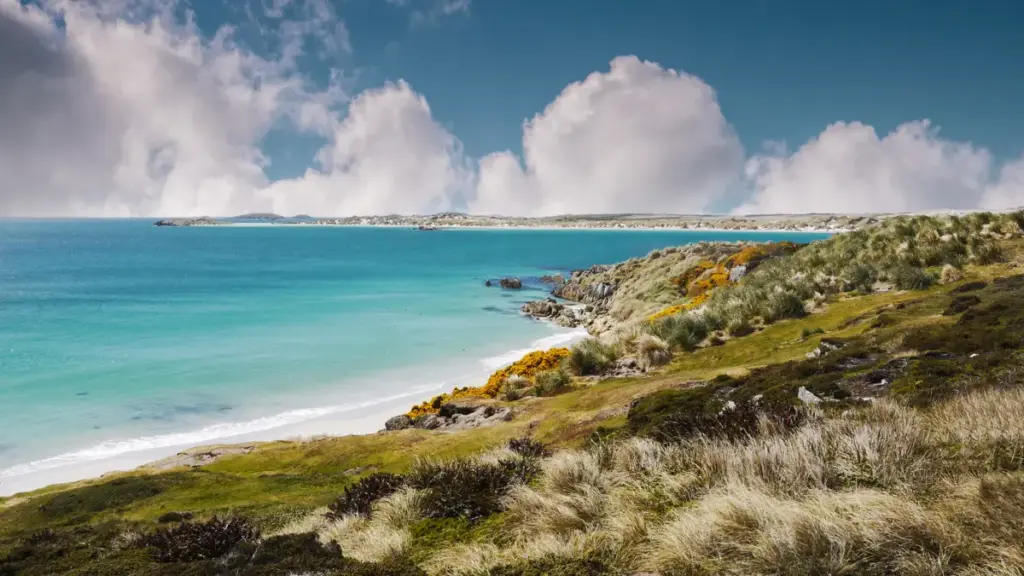
Nestled in the windswept and unforgiving reaches of the South Atlantic Ocean, the Falkland Islands represent one of the planet’s final truly pristine wildernesses. Characterized by dramatic coastlines, nutrient-rich upwellings, and a relative absence of human disturbance, this British overseas territory is an ecological sanctuary. Its icy, pristine waters teem with krill and squid, drawing a magnificent array of apex marine predators, including sea lions, elephant seals, energetic pods of dolphins, and majestic whales. On land and along the rocky shores, penguins—representing five distinct species—vastly outnumber the archipelago’s human population of approximately 3,500 residents.
However, this delicate balance between humanity and untamed nature faces an unprecedented existential threat. A nascent initiative to transform the Falkland Islands into a commercial salmon-farming frontier has deeply polarized the local community, sparking bitter debates across dinner tables, local council chambers, and fishing ports.
What began as a localized policy discussion regarding economic diversification has now erupted into a full-scale democratic crisis. Frustrated by what they characterize as an opaque, industry-skewed consultation process, opponents of the salmon farming proposal are demanding a direct public referendum. They argue that the future of the islands’ environment and economic heritage is too precious to be decided behind closed doors.
At the heart of this confrontation lies a classic modern dilemma: the clash between aggressive economic expansion and the preservation of irreplaceable global ecosystems. Conservation groups, international legal experts, and concerned local residents are pushing back against government-backed initiatives, alleging that the public consultation has been compromised by a lack of independent oversight and an overreliance on unverified, industry-supplied data. As the debate intensifies, the outcome of this dispute will not only shape the future of the Falklands but will also serve as a critical global case study on how remote island economies balance fragile ecosystems with industrial aquaculture.
Detailed Chronology: From Economic Exploration to Democratic Backlash
To understand how the Falkland Islands arrived at the precipice of a major political and environmental showdown, it is necessary to trace the trajectory of the commercial aquaculture push over recent years.
Phase 1: The Quest for Economic Diversification
Historically, the economy of the Falkland Islands has rested on two main pillars: commercial fisheries (predominantly squid and finfish licensing) and agriculture (primarily sheep farming and wool production), supplemented in recent decades by burgeoning tourism. However, as global markets fluctuate and local leaders look toward long-term financial sustainability, the Falkland Islands Government (FIG) has continuously explored avenues for economic expansion.
Industrial aquaculture—specifically Atlantic salmon farming—was introduced to the policy radar as a high-value export sector capable of generating substantial revenue, creating jobs, and diversifying the territory’s gross domestic product. Proponents argued that the cold, clean waters of the Falklands offered ideal biological conditions for salmon rearing, potentially mirroring the economic booms seen in regions like Chile, Norway, and Scotland.
Phase 2: The Rollout of the Public Consultation
To gauge the viability and public appetite for the industry, the government initiated a formal consultation process. Designed as a mechanism to gather community input, environmental assessments, and economic forecasts, the consultation was intended to lay the groundwork for regulatory frameworks.
However, as draft reports and impact assessments began circulating among the public, skepticism quickly mounted. Local residents, environmental advocates, and commercial fishermen began combing through the government-sponsored documents. What they discovered alarmed them: reports detailing the feasibility of salmon farming appeared to rely heavily on projections, data sets, and assertions provided directly by aquaculture interests, rather than rigorous, peer-reviewed scientific studies or independently audited field data.
Phase 3: The Erosion of Public Trust
By mid-2026, friction between the government and the anti-salmon-farming faction had reached a boiling point. Grassroots opposition groups emerged, uniting under the banner of environmental preservation and democratic accountability. Critics argued that the consultation was not an objective gathering of facts, but rather a managed public relations exercise designed to grease the wheels for an industry already favored by certain political factions.
The tipping point occurred when independent watchdogs and international conservation organizations intervened. Legal experts examined the consultation dossiers and identified systemic flaws, chief among them the absence of independently verified primary data. The realization that major policy decisions were being guided by documents laden with self-serving corporate disclaimers shattered what little confidence remained in the official process.
Phase 4: The Call for a Referendum
Having lost faith in the government-led consultation, opponents of the initiative pivoted from passive critique to active political disruption. They launched a formal campaign demanding a territory-wide referendum. By taking the issue directly to the ballot box, organizers hope to bypass what they view as a compromised administrative apparatus and let the 3,500 residents decide unequivocally whether they want open-pen salmon farms anchoring in their pristine bays and fjords.
Supporting Context & Metrics: The Ecological and Economic Stakes
The debate over salmon farming in the Falklands cannot be understood without examining the unique ecological landscape at risk, alongside the contested economic promises made by the aquaculture sector.
A Fragile and Irreplaceable Ecosystem
The Falkland Islands sit at a unique oceanic crossroads, influenced by nutrient-rich currents flowing from both the Pacific and Atlantic oceans. This confluence creates an extraordinarily productive marine food web.
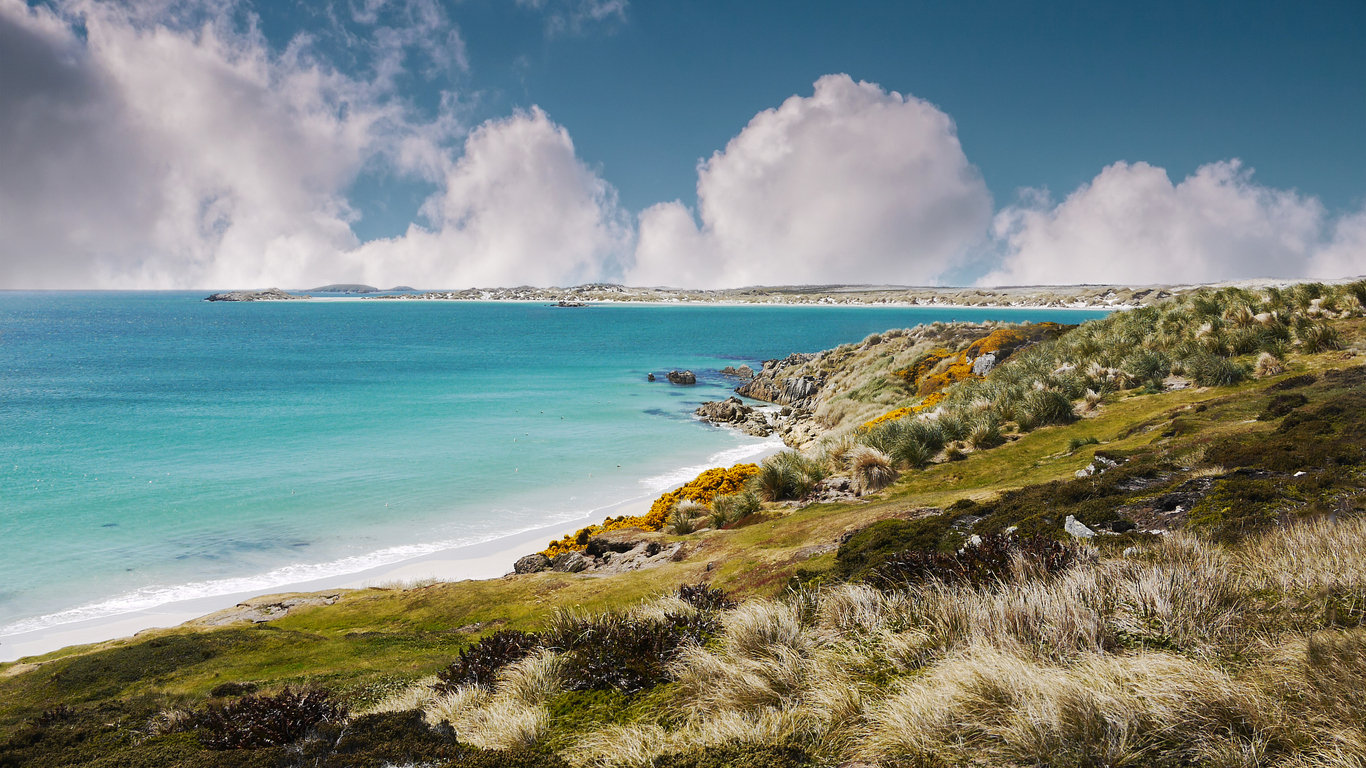
- Biodiversity Hotspot: The local waters support massive populations of krill and squid, which in turn sustain millions of seabirds and marine mammals.
- Penguin Capital: The islands are home to five distinct penguin species—Magellanic, Gentoo, King, Rockhopper, and Macaroni—drawing eco-tourists from across the globe.
- Pristine Condition: Unlike many northern hemisphere coastal waters that have suffered decades of industrial pollution and over-exploitation, the Falklands remain largely uncompromised, making them an invaluable baseline for marine scientific research.
The Threat Matrix of Open-Pen Aquaculture
Environmental scientists and conservationists point to well-documented catastrophes in other salmon-producing regions to illustrate the grave risks facing the Falklands:
- Disease and Parasite Transmission: High-density pen farming acts as a breeding ground for sea lice and infectious pathogens, which can easily spread to wild migratory fish and native marine species.
- Nutrient Overload and Benthic Pollution: Uneaten feed and massive quantities of fish waste settle on the ocean floor, suffocating benthic communities, depleting oxygen levels, and creating dead zones beneath the pens.
- Chemical Use: The intensive use of antibiotics, antifoulants, and chemical treatments to manage disease can leach into the surrounding water column, disrupting delicate marine microbiomes.
- Escapes and Genetic Pollution: Farmed salmon frequently escape their enclosures, competing with native species for resources and interbreeding with wild populations, which dilutes genetic resilience.
Economic Realities vs. Ecological Risks
Proponents of the industry argue that salmon farming can be conducted under strict regulatory controls, pointing to technological advancements in closed or semi-closed containment systems. They project employment opportunities and increased export earnings that could bolster public services in the remote territory.
Conversely, opponents argue that these economic gains are short-term and speculative, whereas an environmental catastrophe would permanently impair the islands’ established revenue streams. Eco-tourism, sustainable fisheries, and the global brand of the Falklands as an untouched wilderness represent long-term economic assets that could be instantly devalued by the visual and ecological blight of industrial fish farms.
Official Statements and Legal Critiques
The controversy has drawn sharp rebukes from international legal and environmental authorities, who have called out what they describe as profound institutional shortcomings in the Falkland Islands Government’s handling of the dossier.
Dr. Tom Appleby, head of legal affairs at the prominent NGO Blue Marine Foundation, did not mince words when evaluating the government’s consultation materials. In a scathing critique, Dr. Appleby stated:
"It is extraordinary that the Falklands Islands government have got themselves in a position where they are providing reports to the public in this consultation that do not use independently verified primary data. The reports are so littered with disclaimers as to the sources of information as to be meaningless."
This legal perspective highlights a dangerous precedent: when public bodies rely on corporate self-reporting for foundational environmental assessments, they abdicate their duty of care to the citizenry. Without rigorous, peer-reviewed baselines regarding water currents, carrying capacities, and disease vectors, any policy decision derived from the current consultation is built on a foundation of scientific quicksand.
Local grassroots leaders have echoed Dr. Appleby’s sentiments, emphasizing that the consultation process felt top-down and impervious to genuine community feedback. Residents have expressed dismay that complex ecological hazards were framed in official literature as manageable administrative hurdles, ignoring the lived experiences of fishermen and conservationists who understand the volatile nature of the South Atlantic environment.
For its part, the Falkland Islands Government faces an unenviable balancing act. Officials must navigate intense lobbying from corporate aquaculture interests while attempting to maintain social cohesion within a tight-knit community where dissenting voices cannot be easily marginalized. As public pressure mounts for a binding referendum, the government’s response will test the resilience of the territory’s democratic institutions.
Future Outlook: What Lies Ahead for the Falklands?
As the calendar moves forward, the battle over salmon farming in the Falkland Islands stands at a critical juncture. The coming months will determine whether democratic mechanisms can successfully intervene in a process marred by controversy.
The Push for a Referendum Gains Momentum
The immediate battleground is political. Organizers behind the referendum petition are working tirelessly to rally public support, collect signatures, and compel the Legislative Assembly to authorize a formal, legally binding vote. If successful, a referendum would force a definitive community-wide verdict on whether industrial aquaculture is welcome in the territory. Such a vote would carry immense moral and political weight, making it politically perilous for any administration to ignore.
Legal and Scientific Challenges
Even if the government attempts to push forward with regulatory frameworks, it will likely face a barrage of legal challenges from environmental NGOs and local coalitions. Courts may be asked to evaluate whether the public consultation met the legal standards of fairness, transparency, and reliance on sound science. Furthermore, independent scientific bodies are expected to ramp up independent baseline studies to counter the contested data found in government reports, ensuring that the true ecological costs are laid bare for the public to see.
A Global Microcosm
Beyond the rocky shores of the South Atlantic, the Falkland Islands salmon controversy serves as a vital test case for the modern era. As remote ecosystems around the globe face increasing industrial encroachment under the guise of economic development, local communities are increasingly finding themselves outmatched by corporate lobbies. How the people of the Falklands—numbering just 3,500—navigate this existential threat will send shockwaves through international conservation and governance circles.
Will the Falkland Islands safeguard their status as one of the world’s last pristine wildernesses, or will they succumb to the industrial tide of modern aquaculture? The answer rests in the hands of a determined citizenry demanding their democratic right to decide the fate of their blue frontier.