The European agricultural sector is currently reeling from one of the most severe summer weather compound crises in modern history. Driven by human-induced climate change, a destructive convergence of record-breaking heatwaves, multi-month droughts, and devastating wildfires hit the continent throughout the summer of 2026. From the burnt olive groves of the Mediterranean to the desiccated cereal belts of Central and Western Europe, food producers are grappling with unprecedented volatility.
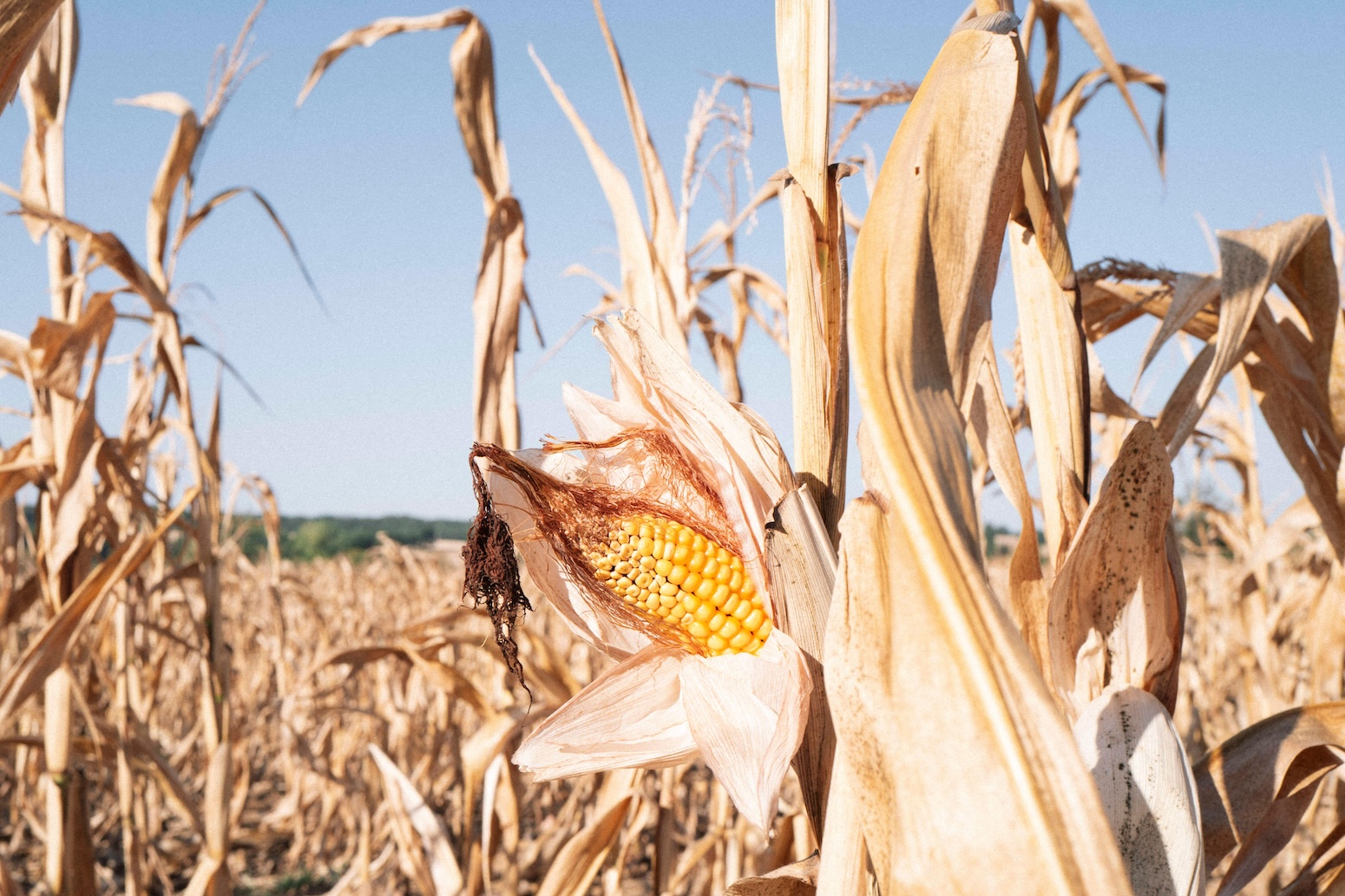
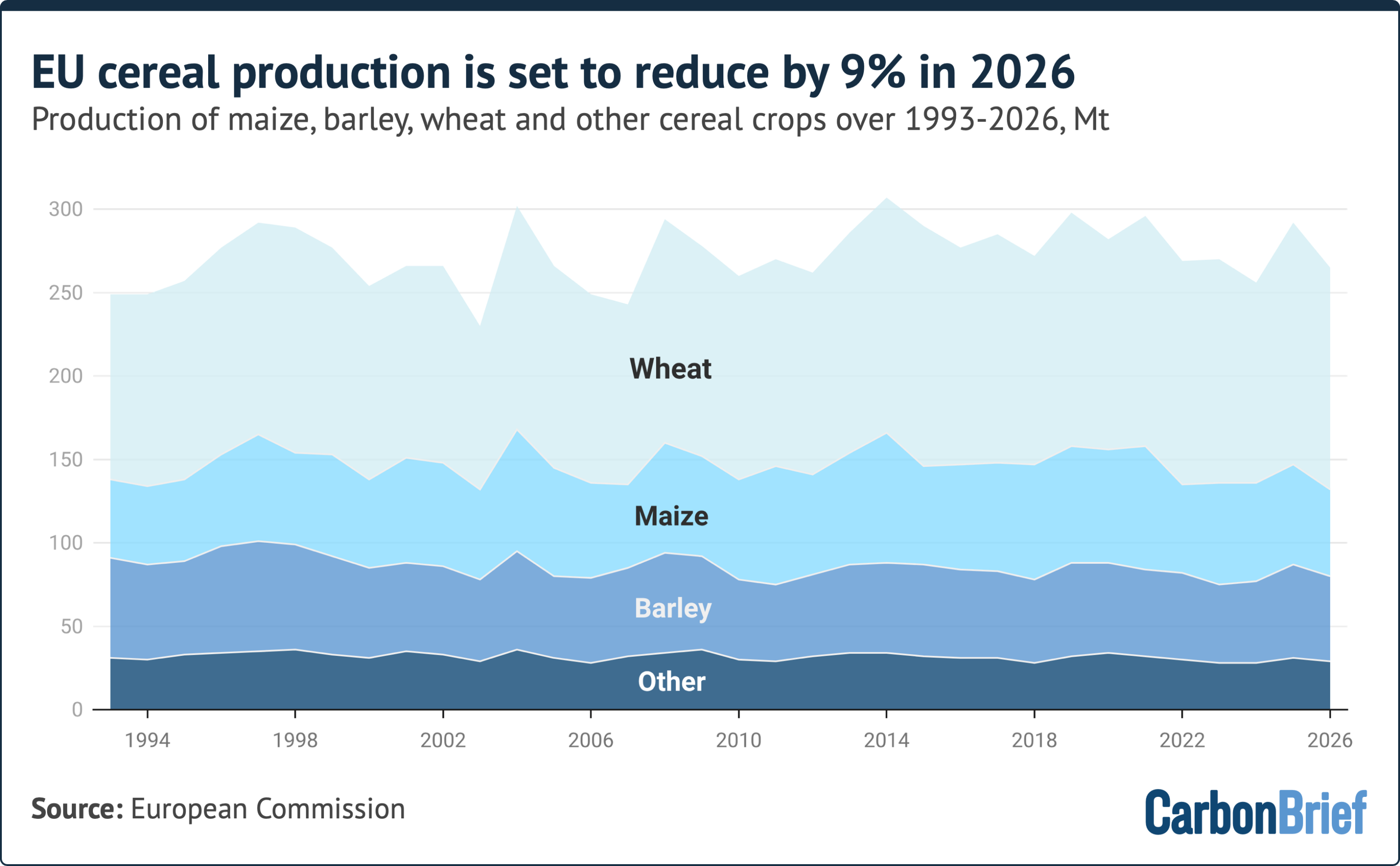
According to consolidated data from the European Commission, the United Nations Food and Agriculture Organization (FAO), and the EU Joint Research Centre (JRC), total European Union cereal output is projected to fall by 9% in 2026 compared to 2025 levels. Maize crops have taken the hardest hit, plunging by 13% to 52 megatonnes (Mt)—the lowest output recorded across the bloc since 2007. In major agricultural powerhouses such as France, maize yields have plummeted to four-decade lows.
       EUROPEAN AGRICULTURAL CRISIS (2026)
+-------------------------------------------------+
|  EU Cereal Production        ▼ 9% vs 2025       |
|  EU Maize Production         ▼ 13% (52 Mt)      |
|  June Heatwave Revenue Loss  ~€2.0B - €2.3B     |
|  Estimated EU GDP Impact     ▼ ~1% (~€180B)     |
+-------------------------------------------------+
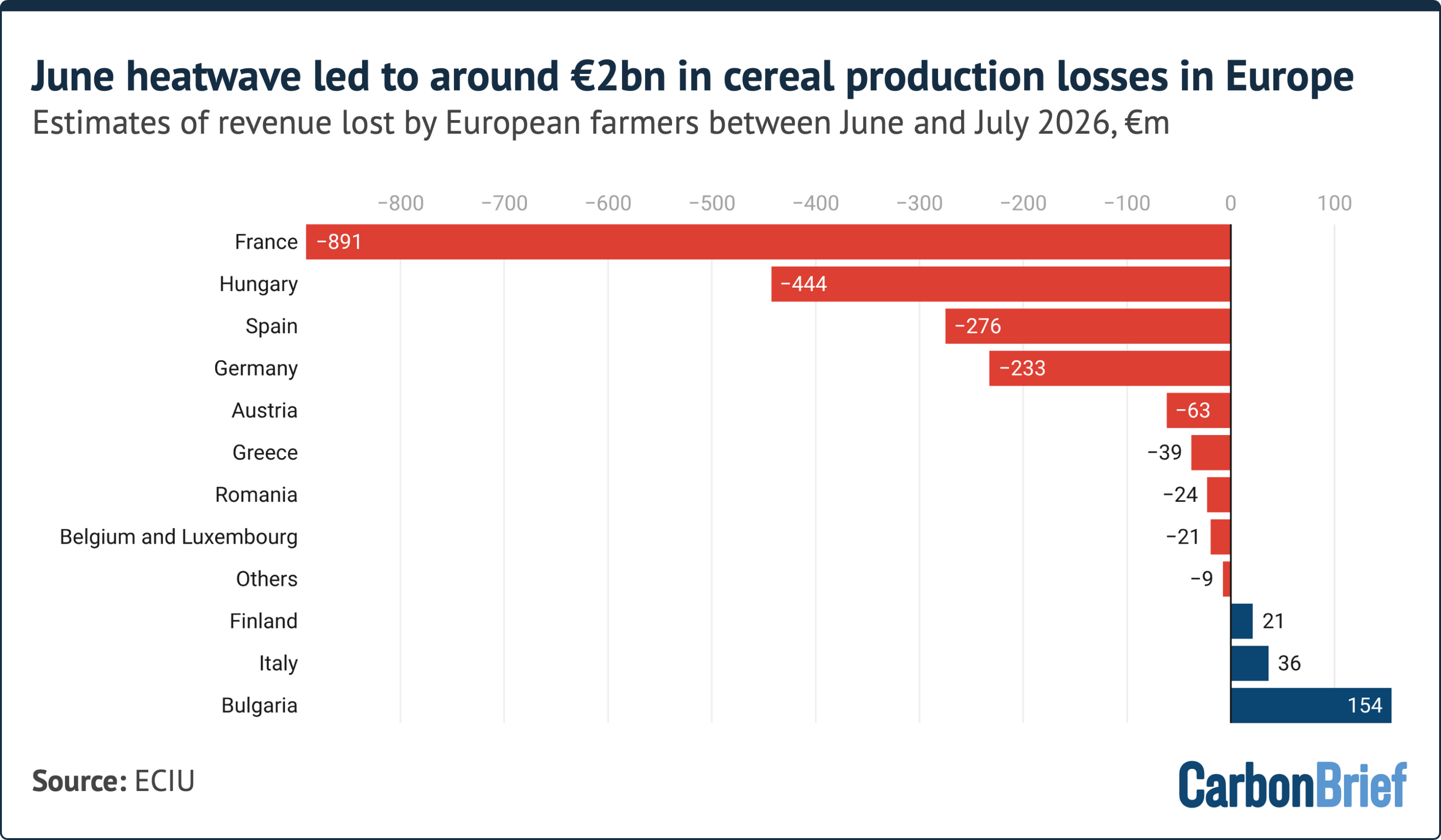
Beyond field-level destruction, the financial ramifications are severe. The Energy & Climate Intelligence Unit (ECIU) estimates that a single extreme heatwave in June inflicted between €2 billion and €2.3 billion in direct grain yield losses across Europe. Broadening the scope, financial analysts at Triodos Bank indicate that the summer’s systemic climate shocks could shave nearly 1% off the EU’s overall Gross Domestic Product (GDP) this year, amounting to approximately €180 billion in lost economic value.
Compounded by external supply disruptions—including high fuel costs and blocked fertilizer routes through the Strait of Hormuz—global food prices have escalated to their highest levels since early 2023. European consumers face immediate food price inflation, shrinkflation in fresh produce, and heightened supply uncertainty as the agricultural landscape fundamentally shifts under climate stress.
Detailed Chronology of the 2026 Climate Shock
The agricultural crisis of 2026 was not the result of a single isolated weather anomaly, but rather a unrelenting sequence of extreme climate events that systematically undermined the crop lifecycle from planting through harvest.
2026 CRISIS TIMELINE
[Spring] -------------> [June] ------------------> [July] -----------------> [August/Sept]
Fertilizer & Input       Record Heatwave           Widespread Drought        Harvest Metrics
Supply Bottlenecks       (€2B+ Cereal Losses)      Record-Early Grape        9% EU Cereal Drop
(Strait of Hormuz)       Hottest June on Record    Harvests (France)         UK Record-Low Yields
Spring 2026: Pre-Existing Vulnerabilities and Input Bottlenecks
Even before summer temperatures spiked, European growers were operating under severe baseline pressure. Geopolitical friction in the Middle East led to logistics bottlenecks in the Strait of Hormuz, severely throttling global fertilizer shipments. Combined with persistently elevated agricultural fuel prices, farm input costs soared. When crops were planted, soil moisture levels across Western Europe were already lower than historical averages, leaving fields highly vulnerable to incoming heat stress.
June 2026: The Record-Breaking Thermal Shock
In June, a historic heatwave engulfed Western and Central Europe. Climatological assessments by World Weather Attribution (WWA) and the Copernicus Climate Change Service confirmed it to be the hottest June on record for Western Europe—an event deemed "virtually impossible" five decades ago without fossil-fuel-induced global warming.
The abrupt, intense heat hit crops during their critical flowering and grain-filling stages. Across France, Germany, Spain, and Hungary, grain development stalled. In a matter of weeks, upward revisions to crop expectations turned negative, wiping out an estimated €2 billion to €2.3 billion in grain value across 28 European nations.
July 2026: Intensification of Drought and Wildfires
As summer progressed, high temperatures persisted, locking much of the continent into a deep hydrological drought. In France, more than 7,300 excess heat-related deaths were recorded as temperatures repeatedly surged past 40°C across dozens of monitoring stations.
Wildfires swept through Southern Europe and portions of France, burning agricultural land and damaging infrastructure. By mid-July, viticulturists in major French wine regions were forced to initiate "record-early" grape harvests to salvage crops from burning temperatures, yielding smaller, less juicy grapes with altered sugar-acid balances.
August–September 2026: Harvest Realities and Output Deficits
By late summer, as combines finished working through fields, official yield assessments confirmed widespread agricultural distress. Northern Italy’s famed Po Valley saw dried-up rice fields due to record-low water supplies. Netherlands growers harvested severely shrunken, heat-stunted potatoes. Mediterranean olive groves suffered heavy flower drop and fruit scorch.
By September, official statistics confirmed that almost every EU member state—with the sole exception of Bulgaria—had experienced year-on-year declines in total grain production.
Supporting Context & Regional Metrics
The structural impacts of the 2026 summer weather hit different regions with varying severity, depending on local crop types, soil moisture dynamics, and irrigation infrastructure.
EU Cereal Production and Yield Contraction
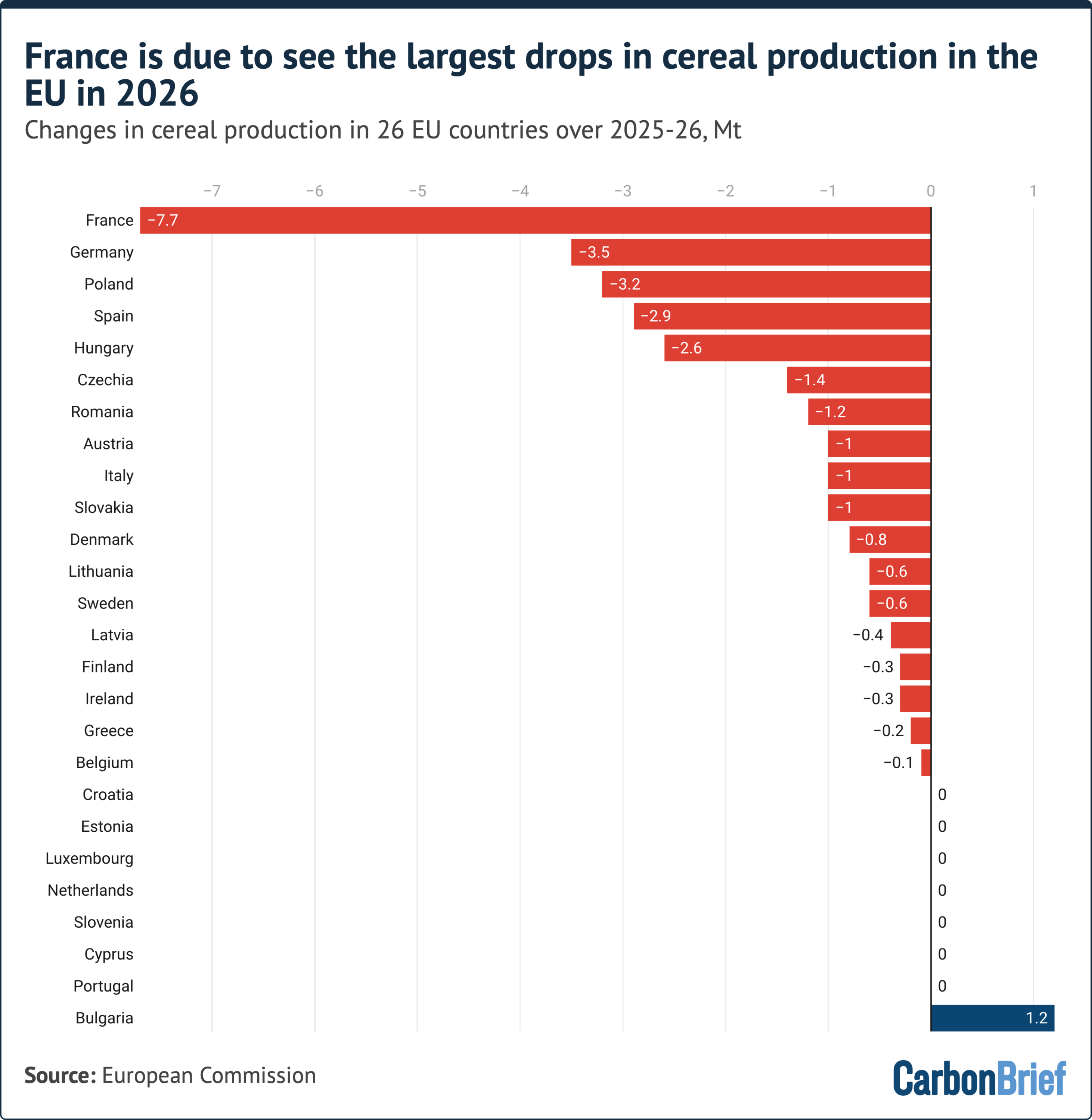
Data from the European Commission highlights a widespread reduction in cereal volume—encompassing wheat, barley, maize, and oats—across the 27-member bloc. Total output contracted by 9% year-on-year, with single-year production standing as the second-lowest recorded in the past decade, barely surpassing the disastrous harvest of 2024.
TOP CEREAL PRODUCTION LOSSES BY COUNTRY (2025 vs. 2026)
+------------------+---------------------------+
| Country          | Production Drop (Mt)      |
+------------------+---------------------------+
| France           | -7.7 Mt                   |
| Germany          | -3.5 Mt                   |
| Poland           | -3.2 Mt                   |
| Spain            | -2.9 Mt                   |
| Hungary          | -2.6 Mt                   |
+------------------+---------------------------+
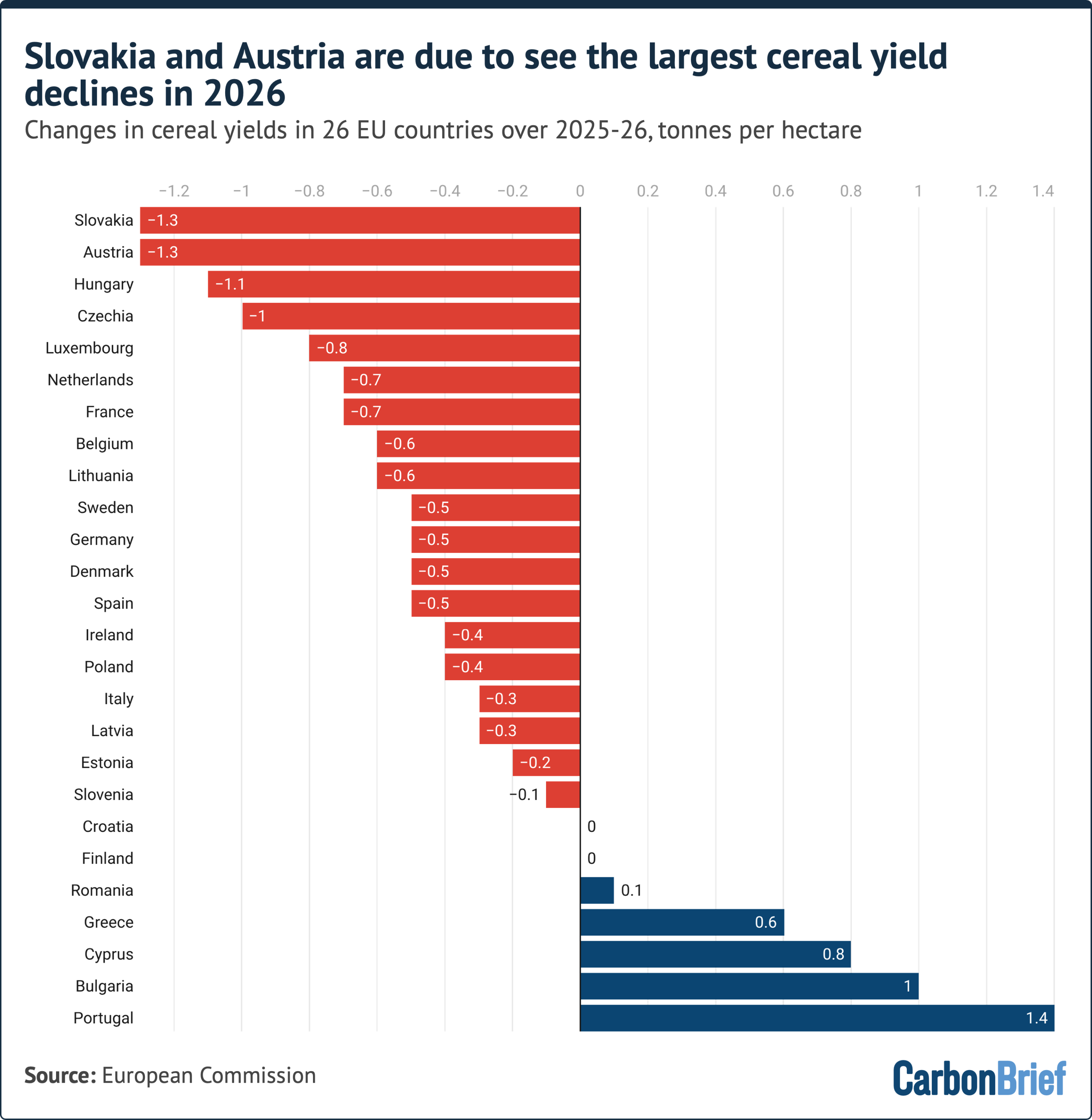
When evaluating crop yields—measuring productivity per hectare—Central and Eastern European nations experienced the sharpest declines:
Slovakia & Austria: Decreased by more than 1.3 tonnes per hectare year-on-year.
Hungary: Suffered structural losses in both rain-fed cereals and row crops, driving an estimated €444 million in direct grain revenue losses.
Portugal (The Outlier): Portugal stood out as one of the few regions recording yield gains for irrigated crops. However, Portuguese rain-fed crops suffered severe thermal damage, illustrating the stark divide between irrigated and non-irrigated farmland.
JUNE HEATWAVE: REVENUE LOSS BY COUNTRY (ECIU ESTIMATES)
+------------------+---------------------------+
| Country          | Estimated Revenue Loss    |
+------------------+---------------------------+
| France           | €891 Million              |
| Hungary          | €444 Million              |
| Spain            | €276 Million              |
| Germany          | Significant (~€200M+)     |
| Combined Share   | Top 4 account for 86%     |
+------------------+---------------------------+
French Maize Collapse
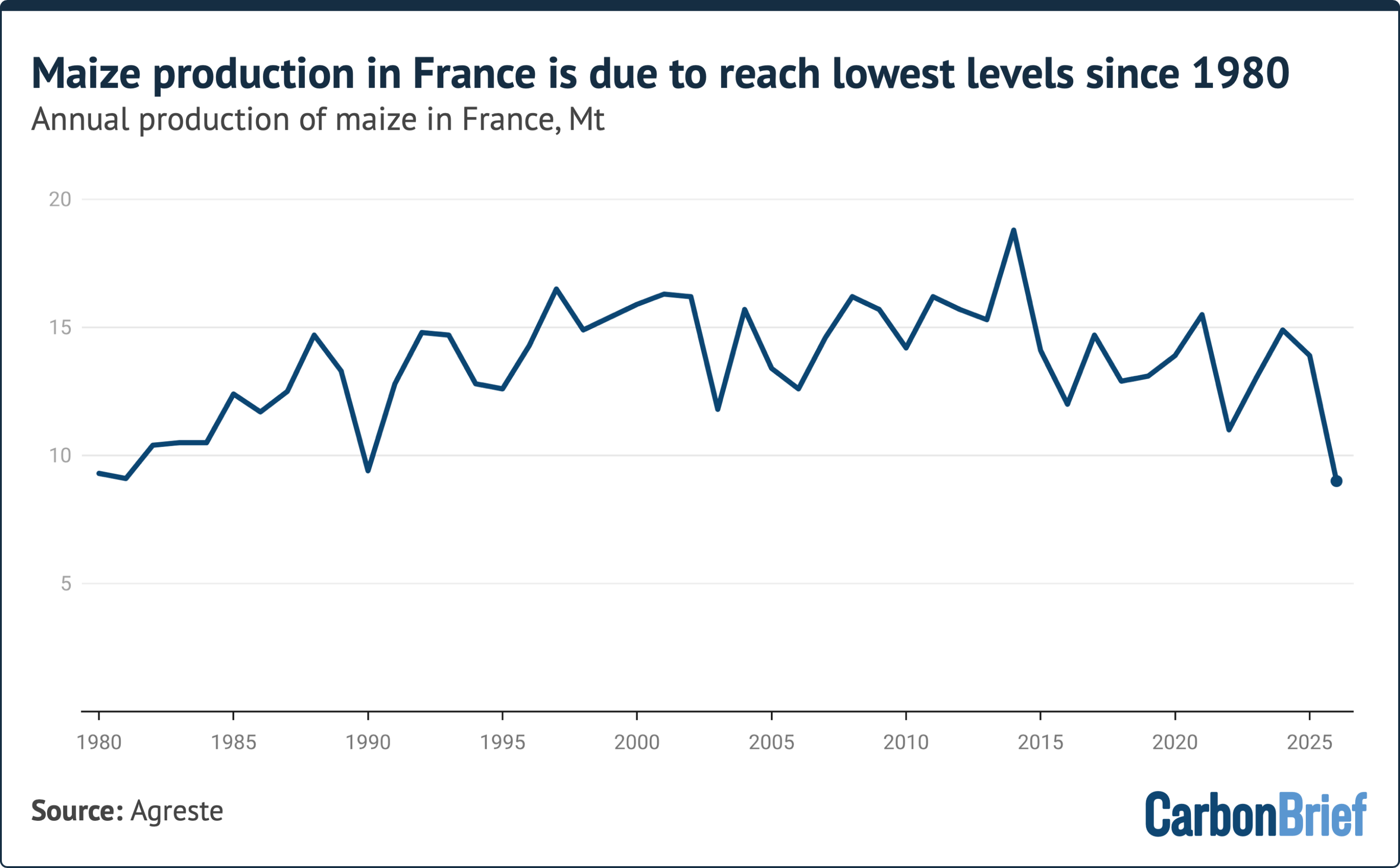
France, Europe’s premier agricultural exporter, suffered heavily. According to Agreste, the statistical arm of the French Ministry of Agriculture, French maize output plummeted by 35% year-on-year. This pushed French maize harvests down to levels not seen since 1980—a 46-year low.
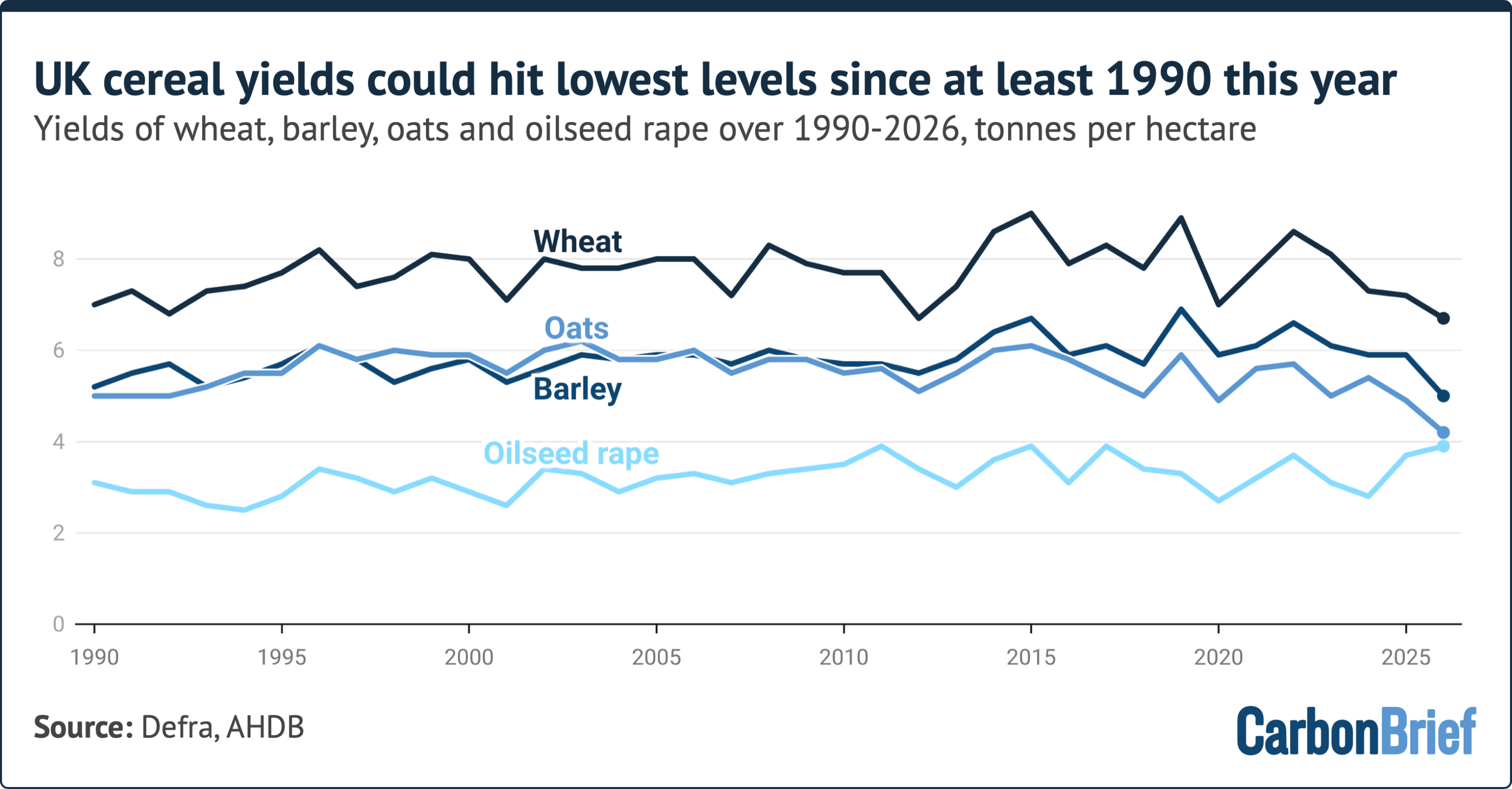
Across the English Channel, the United Kingdom faced its worst harvest metrics in decades. Post-harvest surveys by the Agriculture and Horticulture Development Board (AHDB) revealed severe crop contractions:
Barley Yields: Down 15% year-on-year.
Oats Yields: Down 14% year-on-year.
Wheat Yields: Down 6% year-on-year.
Analysis by the ECIU noted that 2026 is on track to rank among the five worst harvests in the UK since detailed record-keeping began in 1984. Notably, four of those five historic low harvests have occurred within the past decade alone, reflecting a structural downward trend driven by volatile weather patterns.
Official Statements & Expert Analysis
Agricultural scientists, macroeconomists, and industry representatives have emphasized the urgent need for systemic adaptation to counteract escalating climate volatility.
Climatology and Agronomy Perspectives
Prof. Til Feike, a cropping systems expert at Germany’s national research institute for cultivated plants, the Julius Kühn-Institut, highlighted the compound stress factors that defined the 2026 growing season:
"Many areas in Germany and Austria, as with other parts of Europe, have been hit hard by a long-lasting dry period in combination with record-high heatwaves. This has resulted in dry grassland for animals and lower yields of maize, which is a key fodder crop for livestock.
In the long run, farming must adapt better to more extreme weather conditions, not only heat and drought, but also prolonged wet periods. So, there is no one-fits-all solution for climate change adaptation."
The European Commission’s Joint Research Centre (JRC) echoed these concerns in its August crop monitoring bulletin, warning that water stress had permanently damaged yield potential across Western Europe:
"Exceptionally dry and hot conditions have substantially worsened crop expectations in western and most of central Europe. Yields are expected to be significantly reduced, with local crop failures likely in key productive zones including France, southern Germany, northern and central Italy, and Hungary."
Market Dynamics and Supply Chain Impacts
The macroeconomic consequences are filtering down directly to consumer markets. The UN Food and Agriculture Organization (FAO) confirmed that global food commodity prices spiked over the summer, propelled by combined weather shocks and elevated energy dynamics.
In the UK, produce suppliers warned that the hit to staple harvests would quickly spill over to retail shelves. Speaking to BBC News, Tim O’Malley, Chairman of Nationwide Produce, emphasized the commercial impact:
"Consumers will likely see higher prices and smaller vegetables in supermarkets as a direct result of these heatwaves. When extreme heat hits root vegetables and key staples during growth phases, the physical size drops and overall packable yields decline precipitously."
Concurrently, economic commentators warn of wider fiscal drag. Triodos Bank’s macro-environmental assessment stressed that summer heatwaves are no longer isolated agricultural problems, noting that the overall €180 billion drag on EU GDP underscores how climate vulnerability directly threatens broader economic growth.
Future Outlook & Strategic Adaptation
The catastrophic agricultural performance of summer 2026 marks a turning point for European food policy. With four of the UK’s worst harvests occurring in the past ten years and broader EU grain outputs dropping toward historical lows, the status quo of European farming is increasingly unviable under accelerating climate change.
STRATEGIC ADAPTATION PATHWAYS
+-----------------------+------------------------------------------------+
| Area                  | Key Initiatives                                |
+-----------------------+------------------------------------------------+
| Crop Genetics         | Breeding drought/heat-tolerant grain cultivars |
| Water Management      | Expanding closed-loop precision irrigation     |
| Policy Reform         | Overhauling EU Common Agricultural Policy (CAP)|
| Land-Use Systems      | Integrating agroforestry & soil conservation   |
+-----------------------+------------------------------------------------+
1. Re-evaluating Crop Selection and Agronomic Systems
The sharp drop in water-intensive crops—such as French maize and Italian paddy rice—is accelerating calls to transition toward heat-tolerant and early-maturing varieties. Agronomists are increasingly urging farmers to shift toward drought-resilient alternative grains like sorghum, millet, and winter-sown cereals that can mature before peak summer heat hits.
2. Water Rights and Precision Irrigation Infrastructure
As seen in Portugal, access to managed irrigation buffered crops against total heat failure. However, expanding traditional surface irrigation is constrained by falling water tables across Southern and Central Europe. Future resilience will depend on high-efficiency, closed-loop precision drip irrigation, combined with farm-scale rainwater harvesting to build reserves against prolonged summer dry spells.
3. Policy and Insurance Realignment
The financial fallout of 2026 is putting pressure on the European Union’s Common Agricultural Policy (CAP) and national land-use frameworks. Governments face growing calls to shift direct farm subsidies away from basic acreage payouts toward targeted climate-adaptation funding. Key focus areas include expanding soil cover incentives to preserve soil moisture, supporting agroforestry to provide microclimate shade, and establishing public-private agricultural risk insurance schemes to protect farmers from climate-driven insolvency.
4. Supply Chain and Global Market Realignment
As climate impacts destabilize domestic yields, European food processors and retailers are forced to build more resilient, diversified supply chains. However, with global grain stocks tightening and geopolitical bottlenecks persisting along major maritime trade lanes, reliance on food imports poses clear food-security risks.
The summer harvest of 2026 stands as a stark warning: without aggressive, structural adaptation, Europe’s agricultural system faces persistent climate-driven volatility, carrying severe consequences for farmers, consumer prices, and broader economic stability.