

Executive Overview
In a decision that has sent shockwaves through the international development community and reshaped the UK’s climate diplomacy stance, Downing Street has proposed a significant restructuring of its Overseas Development Assistance (ODA) and International Climate Finance (ICF) framework. Under the plan, the British government intends to reduce the volume of direct climate finance grants provided to vulnerable nations, replacing a substantial portion of these funds with sovereign and concessional loan instruments.
According to internal Treasury estimates and official briefs, this structural transition is projected to liberate roughly £400 million in public funds. The administration plans to immediately reallocate these savings to underwrite domestic transport policy—specifically, sustaining and expanding the national cap on bus fares across the United Kingdom.
While ministers defend the maneuver as a pragmatic alignment of foreign assistance with domestic cost-of-living relief, the international development sector, climate economists, and non-governmental organizations (NGOs) have reacted with fierce condemnation. Critics argue that substituting interest-bearing debt for non-repayable grant aid forces developing nations to assume additional financial burdens for a crisis they contributed least to creating. Development analysts have characterized the policy as a betrayal of global solidarity, claiming the UK is effectively "throwing Global South countries under the bus" to address internal municipal infrastructure pressures.
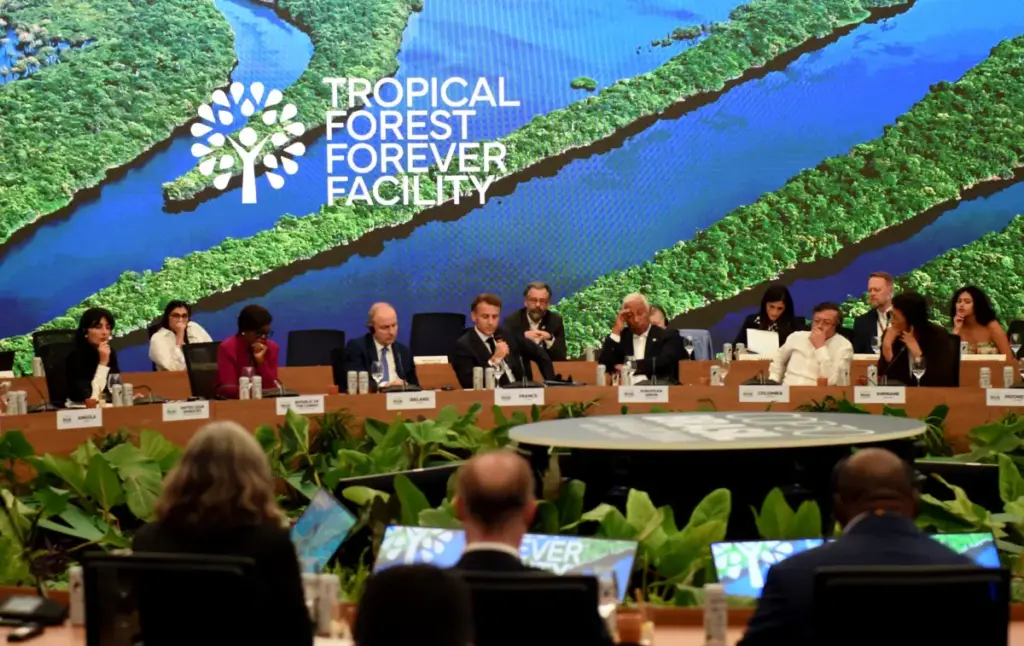
As the government prepares to direct these revised loan contributions toward emerging multilateral vehicles, such as the newly conceptualized Tropical Forest Forever Facility (TFFF), the move opens a high-stakes debate on the ethics, accounting practices, and strategic efficacy of international climate finance in an era of fiscal austerity.
Detailed Chronology
========================================================================================
TIMELINE: THE EVOLUTION OF THE UK'S CLIMATE FINANCE PIVOT
========================================================================================

[2019–2021] ----------------------------------------------------------------------------
• UK pledges £11.6 billion in International Climate Finance (ICF) over a five-year period.
• Global economic shocks prompt the reduction of the UK ODA target from 0.7% to 0.5% of GNI.

[Early Fiscal Review Period] -----------------------------------------------------------
• Treasury identifies severe structural deficits in domestic transport subsidies.
• Ministers evaluate options to fund the popular £2 national bus fare cap.

[Policy Development Phase] -------------------------------------------------------------
• Policy advisors propose converting direct grant allocations into capital loans.
• The scheme targets £400 million in grant reductions without altering headline finance totals.

[Public Announcement & Reaction] -------------------------------------------------------
• Government formally outlines the climate grant reduction and local reallocation plan.
• Development experts, including CGD researchers, criticize the move.
• Development sector raises major concerns regarding debt sustainability in recipient nations.

========================================================================================
The Origins of the Climate Finance Mandate
The backdrop to this decision stems from the UK’s historical commitments under the UN Framework Convention on Climate Change (UNFCCC) and the 2015 Paris Agreement. Between 2019 and 2021, successive UK administrations committed to spending £11.6 billion in International Climate Finance over a five-year cycle. This pledge was framed as a cornerstone of Global Britain’s soft power and moral responsibility as an early-industrializing nation.
However, the fiscal landscape altered dramatically following macro-economic shocks, inflation spikes, and domestic budget contractions, which previously led to the controversial downscaling of the UK’s broader foreign aid target from 0.7% to 0.5% of Gross National Income (GNI).
The Fiscal Pivot
As domestic inflationary pressures began eroding household disposable incomes throughout the UK, the government faced intense political pressure to extend populist relief measures. Chief among these was the nationwide bus fare cap, a policy designed to subsidize public transit for lower-income commuters and incentivize low-emission urban transit.
During early-quarter budget planning sessions, Treasury officials evaluated mechanisms to retain popular domestic expenditure caps without expanding net borrowing or hiking broad-based domestic taxes. The solution emerged from within the climate finance portfolio: by altering the financial instrument—transitioning from grants to concessional loans—the government could report similar nominal commitments to international climate targets while reclaiming hundreds of millions of pounds in cash outlays.
Unpacking the Announcement
When the government confirmed its intention to save £400 million by shifting grant budgets into loan mechanisms, the political response was immediate. Development advocates pointed out that the fiscal maneuver leveraged financial technicalities in OECD Development Assistance Committee (DAC) rules to maintain headline delivery numbers while extracting real capital from climate adaptation budgets to address domestic transport shortfalls.
Supporting Context & Metrics: The Economics of Climate Grants vs. Loans
To understand the friction caused by this policy transition, it is necessary to examine the functional and financial differences between grant-based climate assistance and loan-based finance.
+--------------------------------------------------------------------------------------+
|                     GRANT-BASED vs. LOAN-BASED CLIMATE FINANCE                       |
+----------------------------------------------------+---------------------------------+
| Grant-Based Finance                                | Loan-Based Finance              |
+----------------------------------------------------+---------------------------------+
| • Zero repayment obligation for recipient nation   | • Requires capital repayment    |
| • Ideal for non-revenue generating projects        |   plus interest                 |
|   (e.g., seawalls, community adaptation)           | • Best suited for commercial    |
| • Does not add to sovereign debt burdens           |   energy projects (solar/wind)  |
| • Directly absorbs economic risk of climate loss    | • Increases public debt ratios  |
|                                                    |   in vulnerable economies       |
+----------------------------------------------------+---------------------------------+
The £400 Million Reallocation Matrix
The £400 million slated for extraction from the grant pool represents a significant portion of the UK’s annual flexible climate adaptation funding. Adaptation projects—such as constructing flood defenses, restoring mangrove ecosystems, and establishing early-warning weather systems in low-income countries—rarely generate direct commercial revenue. Consequently, they cannot be reliably financed through debt, as vulnerable governments lack project cash flows to service the loans.
Conversely, allocating that same £400 million to fund the UK domestic bus fare cap provides direct economic relief to millions of British bus riders, subsidizing bus operators for the margin between local standard fares and the statutory cap.
        £400M ICF GRANT REDUCTION
                 │
                 ├──► Diverted to Domestic Transport Subsidies
                 │    └── Sustains national £2 bus fare cap for UK commuters
                 │
                 └──► Replaced by Sovereign Loan Mechanisms
                      └── Diverted to market/debt facilities (e.g., TFFF)
                           └── Creates future debt liabilities for Global South nations
The Tropical Forest Forever Facility (TFFF) Dilemma
A primary vehicle proposed to absorb these newly converted UK loans is the Tropical Forest Forever Facility (TFFF). Designed as an international investment mechanism, the TFFF aims to mobilize institutional capital to compensate tropical nations for preserving standing forests.
While the TFFF is engineered to utilize capital investments, green bonds, and return-yielding financial structures, critics argue that relying primarily on loans for forest conservation misaligns the financial structure with the goal.
- Capital Structure: The TFFF requires vast liquidity injections to maintain yields that incentivize forest management.
- Risk Redistribution: Injecting loan capital into the TFFF shifts financial risk onto rainforest nations. If yield expectations fail or conservation performance metrics fluctuate, host countries remain obligated to service debt or accept reduced structural payouts.
- Grant Displacement: By substituting direct forest preservation grants with debt-backed TFFF contributions, the UK significantly reduces the net financial benefit to recipient nations.
Debt Sustainability and the Global South
The shift comes at a time when sovereign debt levels in low- and middle-income nations are at historic highs. According to World Bank and IMF data:
- Debt Distresses: Over 60% of low-income countries are currently in or at high risk of debt distress.
- Servicing Costs vs. Adaptation Costs: Several climate-vulnerable states now spend more on annual external debt servicing than on their entire domestic climate adaptation and healthcare budgets combined.
- The Additionality Principle: Under the 1992 UNFCCC framework, climate finance provided by developed nations is meant to be "new and additional" to traditional development assistance, supplied predominantly as grants to account for historical emissions footprints.
Official Statements and Industry Reactions
The Government’s Defense
Government representatives have framed the decision as a necessary exercise in fiscal responsibility and modern financial engineering. Speaking on behalf of the administration, Treasury and Foreign Office spokespersons maintained that the shift represents an evolution toward sustainable finance rather than a retreat from international obligations.
"Our commitment to international climate action remains firm. However, in the current economic environment, we must ensure every pound of public money delivers maximum efficiency for the British taxpayer while maintaining our global responsibilities. By utilizing innovative financial instruments, capital guarantees, and concessional loans through vehicles like the Tropical Forest Forever Facility, we can mobilize substantial capital for international climate goals while freeing up £400 million to directly support working families across the UK with essential transport costs."
— HM Treasury Official Statement
Proponents of the plan within government argue that concessional loans allow donor countries to stretch public balance sheets further, leveraging private sector capital and creating revolving funds where repaid principal can be recycled into future projects.
Development Sector Backlash
The response from non-governmental organizations, policy think tanks, and international development economists has been overwhelmingly negative. Critics maintain that using foreign assistance funds to solve domestic budget gaps undermines international trust and dilutes the efficacy of climate finance.
Euan Ritchie, a Senior Research Associate in the Europe Programme at the Center for Global Development (CGD), offered a critical assessment of the structural mechanics behind the government’s decision:
"Replacing climate grants with loans is a false equivalence that ignores the reality of climate adaptation. Developing nations cannot borrow their way out of a climate crisis they did not cause. By stripping £400 million in grant assistance from the Global South to cover a domestic bus fare cap, the government is engaging in financial engineering that erodes the real value of the UK’s international commitments. It effectively forces vulnerable countries to shoulder debt so that domestic transit can be subsidized."
— Euan Ritchie, Senior Research Associate, Center for Global Development
Climate justice networks and civil society advocates joined the critique, citing the moral hazard created by substituting debt for grants in climate-stressed regions:
"This proposal quite literally throws Global South countries under the bus to clear up a domestic political balance sheet. Grant finance is not a charity handout; it is a fundamental component of climate justice and international obligation. Forcing nations that are already battered by extreme weather events into taking on additional loans for basic adaptation and forest protection is both economically counterproductive and morally indefensible."
— Joint Statement, Climate Action & Development Coalition
Future Outlook: Geopolitical Fallout and the Credibility Deficit
The proposal to convert £400 million in climate grants to debt financing in order to cover domestic transport subsidies marks a major shift in UK international development policy. The decision carries several broader implications:
+--------------------------------------------------------------------------------------+
|                     PROJECTED IMPACTS OF THE CLIMATE FINANCE SHIFT                   |
+--------------------------------------------------------------------------------------+
| 1. Diplomatic Strain at Multilateral Summits (UNFCCC COP)                            |
|    • Undermines UK negotiating leverage on international loss and damage funds.      |
|    • Deepens trust deficits between industrialized donors and developing blocs.      |
|                                                                                      |
| 2. Risk of Donor Contagion                                                           |
|    • Sets a precedent for other donor states to reclassify climate grants into       |
|      concessional debt to cover domestic budget gaps.                                |
|                                                                                      |
| 3. Long-Term Financial Risk for Recipient States                                     |
|    • Accelerates debt accumulation in nations already vulnerable to climate shocks.  |
|    • Reduces funding available for non-commercial climate adaptation projects.       |
+--------------------------------------------------------------------------------------+
Diplomatic Strain at Multilateral Summits
As upcoming UNFCCC COP summits approach, the UK’s position as a credible climate leader faces heightened scrutiny. Developing nations, organized through coalitions such as the G77 and the Alliance of Small Island States (AOSIS), have repeatedly demanded that climate finance remain predominantly grant-based, predictable, and separate from commercial market debt. The UK’s pivot risks weakening its influence in key multilateral negotiations, where its calls for ambitious global reduction targets may be met with demands for financial accountability.
The Risk of Donor Contagion
International observers worry that the UK’s strategy could set a precedent for other Western donor nations grappling with fiscal deficits and domestic political pressures. If secondary donor states begin reclassifying their grant commitments as loans to free up capital for domestic initiatives, the net flow of actual concessional capital to the Global South could drop significantly, despite headline pledge figures remaining nominal unchanged.
Parliamentary Resistance and Implementation
The policy faces significant hurdles domestically before it can be fully implemented. Cross-party parliamentary committees, including the International Development Select Committee, are expected to launch inquiries into the accounting practices used to justify the £400 million reallocation. Opposition lawmakers and backbench MPs are raising questions about whether using ODA-linked accounting adjustments to subsidize domestic transit complies with statutory foreign aid definitions and international transparency standards.
Conclusion
The UK government’s effort to balance domestic transit spending with international climate commitments highlights the growing tension between national spending priorities and global responsibilities. While the reallocation of £400 million provides immediate financial support for domestic bus fare caps, it alters the UK’s climate finance strategy. By substituting grants with loan mechanisms like the TFFF, the policy risks increasing the debt burden on climate-vulnerable nations, triggering broader debates over climate equity, financial accountability, and the future of global development assistance.



