


Executive Overview
As the United States grapples with a compounding crisis of climate change and economic affordability, a profound and disturbing disparity has come to light within the nation’s home insurance market. A landmark report published by the Consumer Federation of America (CFA)—a nonprofit coalition representing roughly 250 consumer advocacy groups—reveals that homeowners in predominantly Hispanic and Black neighborhoods are shouldering a disproportionate share of skyrocketing insurance premiums.
The findings indicate that this financial burden is not merely a byproduct of general inflation or rising construction costs. By examining identical policy parameters across diverse neighborhoods to strip away variables tied to home value, structural size, or coverage selections, the report isolated the stark reality of racial pricing gaps. Homeowners in predominantly Hispanic ZIP codes face premiums that are, on average, 30 percent higher—amounting to roughly $950 more annually—than those paid by residents in white communities. Meanwhile, homeowners in predominantly Black ZIP codes face an average premium increase of 16 percent, translating to roughly $500 more per year.
Over the typical lifespan of a 30-year mortgage, these compounding disparities accumulate into thousands of dollars in extra costs: at least $28,500 for homeowners in Hispanic communities and $15,000 for those in Black communities. This widening gap threatens to destabilize minority homeownership precisely as human-driven climate change accelerates the frequency and severity of billion-dollar weather disasters. Critics argue that while explicit, intentional discrimination may be less common today, modern underwriting practices—ranging from credit score penalties to opaque artificial intelligence algorithms—are perpetuating the structural disadvantages rooted in 20th-century redlining.
Detailed Chronology & Historical Context
To understand the modern inequities of the home insurance market, one must examine the deep historical roots of housing discrimination in the United States. The term "redlining" originated in the 1930s under the federal Home Owners’ Loan Corporation and the Federal Housing Administration, during which maps were drawn up to grade neighborhoods based on their perceived investment risk. Communities with high concentrations of Black and immigrant populations were routinely shaded in red and labeled "hazardous" or "degraded."
For decades, these designations effectively blocked residents of color from accessing conventional mortgages, stifling generational wealth creation and entrenching residential segregation. Although the passage of the landmark Fair Housing Act of 1968 outlawed explicit housing discrimination and redlining, the economic scars left behind did not vanish. The legacy of these practices persists across multiple facets of civic life, creating enduring disparities in public infrastructure investment, educational funding, healthcare access, proximity to environmental hazards (such as urban heat islands), and, ultimately, the cost of property protection.
In the decades following the Fair Housing Act, civil rights regulators and federal authorities occasionally cracked down on direct insurance redlining. Notable enforcement actions in the 1990s underscored how deeply embedded discriminatory practices were within the property casualty sector. For instance, Nationwide Insurance agreed to a $17.5 million settlement following a major federal lawsuit alleging the company discouraged agents from operating in Black neighborhoods, categorized Black ZIP codes as undesirable, and utilized discriminatory profiling to deny coverage. Similarly, the American Family Mutual Insurance Company was forced to pay more than $16 million to settle allegations that it provided inferior policies or outright denied coverage to Black homeowners based on race.
Fast-forwarding to the 21st century, the nature of insurance underwriting has evolved from manual evaluations and overt neighborhood blacklisting to complex, automated data systems. In July 2026, the Consumer Federation of America released its comprehensive study detailing how modern risk-assessment metrics continue to penalize low-income neighborhoods and communities of color, renewing national debate over whether contemporary insurance pricing systems are genuinely colorblind or simply reproducing historical inequities through a digital lens.
Supporting Context, Data, and Regional Metrics
The CFA report emphasizes that the disparities cannot be rationalized away by variations in home construction quality or policy specifications. The analysis utilized controlled models that evaluated identical policies across different demographic zones. While local catastrophe risk factors do account for a portion of the pricing divergence, a massive gap remains even after controlling for objective geographic hazards.
The financial pressure points vary significantly by state, revealing striking regional concentrations:
Hispanic Communities and High-Risk States
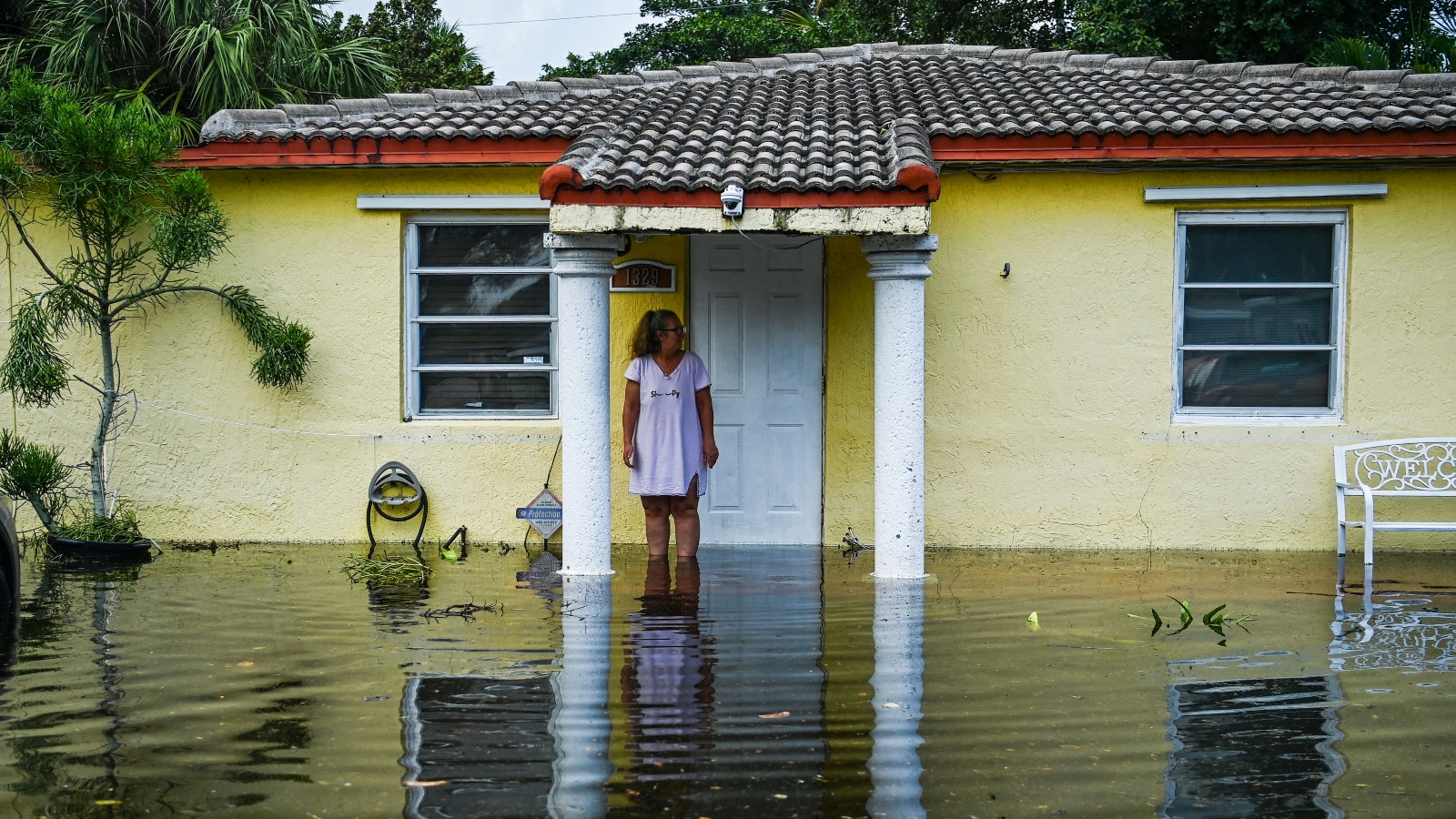
The most acute home insurance disparities for Hispanic homeowners are concentrated in Florida, a state battered repeatedly by severe tropical storms and hurricanes. In predominantly Hispanic ZIP codes across Florida, homeowners pay an astonishing 58 percent more—amounting to $5,014 annually—for the exact same level of coverage found in comparative white communities.
Other states display significant, albeit less extreme, gaps for Hispanic populations:
- New York: 20 percent higher ($431 more annually)
- Washington: 18 percent higher ($278 more annually)
- Massachusetts: 16 percent higher ($244 more annually)
- Kansas: 15 percent higher ($633 more annually)
Black Communities and Regional Disparities
For predominantly Black ZIP codes, the highest cost disparities shift toward the industrial Midwest and the Mid-Atlantic:
- Michigan: 74 percent higher ($1,768 more annually)
- Pennsylvania: 57 percent higher ($1,048 more annually)
- New Jersey: 22 percent higher ($332 more annually)
- Massachusetts: 20 percent higher ($321 more annually)
- New York: 19 percent higher ($417 more annually)
The Macroeconomic and Technological Drivers
These localized cost spikes occur against a backdrop of a broader national affordability crisis. According to prior CFA research, the cost of home insurance nationwide surged by an average of 24 percent between 2021 and 2024. This inflation is largely driven by climate change: greenhouse gas emissions from fossil fuels continue to warm the atmosphere and oceans, intensifying weather patterns, fueling catastrophic wildfires, and amplifying the destructive power of hurricanes.
Compounding this climate-driven risk is the adoption of new, proprietary underwriting technologies. Insurance companies increasingly rely on big data, credit-based insurance scores, and artificial intelligence models to determine premiums and process claims. Critics note that these tools can introduce systemic bias. For example, previous CFA research demonstrated that homeowners with lower credit scores face an average penalty of $1,996 annually—a 99 percent increase—for the same coverage. Because of structural economic inequalities and historical wealth gaps, communities of color are disproportionately represented among those with lower credit scores.
Official Statements and Industry Perspectives
The release of the CFA report has sparked an intense debate between housing advocates, who view the pricing gaps as clear evidence of systemic bias, and insurance industry representatives, who maintain that rates are strictly tethered to objective risk and regulatory compliance.
Sharon Cornelissen, director of housing at the Consumer Federation of America and a co-author of the study, emphasized that the public conversation has largely ignored the demographic equity dimensions of the broader insurance crisis.
"We’ve talked a lot about our insurance affordability crisis," Cornelissen noted. "What we haven’t really talked about is sort of the racially inequitable impacts of that, and that Black and Hispanic homeowners are particularly struggling."
Addressing the role of modern technology in exacerbating these gaps, Cornelissen clarified that regulators rarely find explicit racial biases hard-coded into underwriting algorithms, but rather witness indirect outcomes:
"I’m not saying that they have some secret race factor that they put into their model. A lot of this bias can kind of creep in if they’re not paying attention to potential unequal impacts. A lot of this could be through AI models or other factors that have a disproportionate impact on Black and Hispanic communities."
Moira Birss, a senior fellow at the progressive think tank Climate and Community Institute, described the staggering financial penalties faced by Floridian homeowners and other minority populations as unconscionable. Pointing to the opacity of private sector data models, Birss challenged the industry to justify its pricing structures:
"Unless the insurance industry wants to give us more information about why this is happening, it’s pretty hard not to interpret this as pretty serious racial discrimination."
Conversely, the insurance industry fiercely defends its methodologies. Mark Friedlander, spokesperson for the Insurance Information Institute (III), asserted that premiums are strictly calculated on actuarial risk rather than demographics, operating under the purview of rigorous state regulatory oversight.
"Using race, or any proxy for race, to set insurance rates is illegal in every U.S. jurisdiction, and state insurance regulators review and approve the rating factors insurers use precisely to guard against that," Friedlander stated. "Many of the communities cited in reports like this are located in areas with objectively higher catastrophe exposure or higher costs to rebuild and repair after a loss."
Friedlander argued that the most effective path toward rate relief and market stabilization is not found in restricting underwriting variables, but in aggressive, proactive risk reduction. He advocates for increased public and private mitigation funding, modernization of building codes, and community resilience projects designed to withstand future climate shocks.
Future Outlook
As global temperatures continue to rise and the frequency of billion-dollar weather events mounts, the home insurance market faces a painful reckoning. States like Florida, California, and Louisiana are already experiencing insurance availability crunches, with major carriers pulling back operations or raising deductibles to unmanageable levels.
For communities of color, the convergence of climate vulnerability, historical economic disadvantages, and modern algorithmic underwriting creates a compounding existential threat. Without legislative intervention, strict enforcement of fair housing laws, and greater transparency from insurance companies regarding their proprietary pricing models, the American dream of homeownership risks slipping further out of reach for Black and Hispanic families.
The CFA report serves as a stark warning to policymakers: tackling the climate crisis and the insurance affordability crunch cannot be separated from the pursuit of racial and economic justice. True resilience requires not only fortifying physical infrastructure against floods and fires, but also repairing the financial fault lines that threaten to price vulnerable communities out of safe shelter altogether.



