

Executive Overview
The United States electric vehicle (EV) market finds itself at a fascinating and complex crossroads. According to initial market estimates released by Kelley Blue Book (KBB) for November 2025, the automotive sector continues to grapple with a protracted sales slowdown, even as underlying vehicle prices edge lower and manufacturer incentives climb significantly.
In total, estimated EV sales across the United States reached just over 70,000 units in November. This figure represents a sobering reality for domestic automakers: volumes were down more than 40% compared to the same period in 2024 and slipped roughly 5% below the totals recorded just a month prior in October.
Yet, looking strictly at topline sales figures tells only half the story. Beneath the surface, the macroeconomic landscape of EV retail is experiencing shifting dynamics. Average transaction prices (ATPs) have moderated slightly on a month-over-month basis, while promotional discounts and dealer incentives have spiked aggressively as manufacturers scramble to jumpstart demand.
As the industry actively hunts for a "new normal" following years of hyper-growth, legacy players and EV pioneers alike are discovering that consumer hesitation, demographic concentrations, and evolving product lifecycles are redefining what it takes to move inventory in a maturing market.
Detailed Chronology and Performance Breakdown
To fully understand the current state of the US EV market, it is essential to trace the trajectory of recent monthly performances, pricing modifications, and the specific fortunes of dominant brands like Tesla.
The November Numbers: Prices, Incentives, and Sales Volumes
Throughout November 2025, the average transaction price for a brand-new electric vehicle settled at $58,638. While this reflects a modest 3.7% increase compared to November 2024—driven largely by product mix and inflation over the course of the year—it actually represents a 0.8% decrease from October’s average pricing.
Conversely, dealer discounts and manufacturer incentives told a much more aggressive story. Incentives averaged 13.3% of the overall transaction price. While this figure is slightly lower than the aggressive discounting seen in November 2024, it represents a dramatic 20.1% month-over-month surge compared to October. Automakers are clearly leaning on financial sweeteners to tempt hesitant buyers off the sidelines.
Despite these monetary inducements, overall volume contracted. The downward trend highlights a persistent cooling effect that has lingered through the autumn months, leaving industry analysts to question when consumer confidence will rebound.
Tesla Under Pressure: Model-Specific Struggles
As the undisputed bellwether of the American EV market, Tesla continues to feel the brunt of this transitional phase. In November, Tesla’s average transaction price stood at $54,310. This marks a 1.7% decrease year-over-year, though it registers a 1.5% tick upward compared to October’s figures.
More concerning for investors and executive leadership, however, is Tesla’s sales volume. The company experienced a sales decline for the second consecutive month, with volumes tumbling 22.7% compared to the same period in 2024. The primary catalyst for this downward slide was a steep, unexpected drop in consumer demand for the Tesla Model 3.
- Model 3: Sales for the popular sedan plummeted by 42.1% year-over-year in November, alongside an 11.9% drop from October levels. The steep decline suggests that competition in the electric sedan segment is intensifying, and buyers may be delaying purchases in anticipation of further refreshes or competitor offerings.
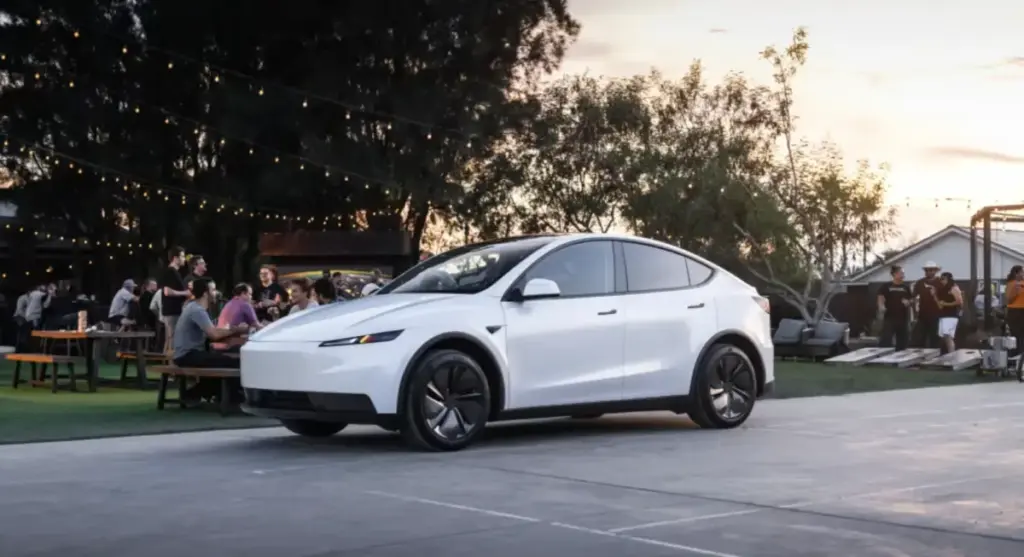
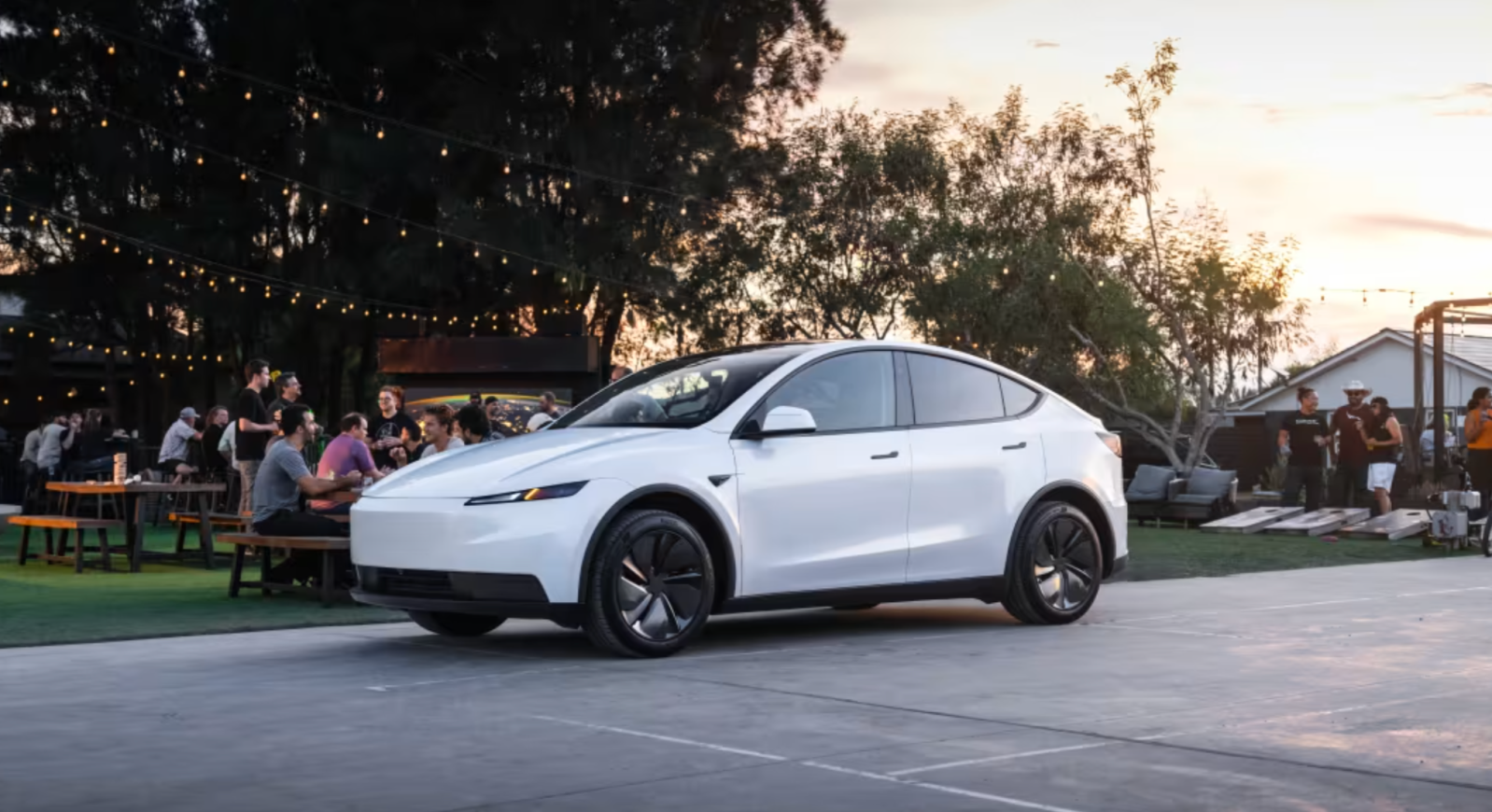
- Model Y: Serving as a stabilizing force, the Tesla Model Y retained its crown as the best-selling electric vehicle in the United States. Its pricing remained remarkably stable, ticking up 0.9% both year-over-year and month-over-month. Sales performance for the crossover was virtually flat compared to last November—slipping a negligible 0.5%—while managing a 2.5% increase over October.
- Cybertruck: Tesla’s polarizing stainless-steel pickup truck showed distinct signs of cooling off after an initial wave of early-adopter enthusiasm. Once heralded as the top-selling vehicle priced above the $100,000 threshold, Cybertruck sales contracted to just 1,194 units in November, marking the lowest monthly sales total of 2025 thus far. Its average transaction price hovered at $94,254, registering increases both year-over-year and relative to October, signaling that higher pricing tiers are encountering a ceiling of available buyers.
Supporting Context & Metrics: Decoding Market Realities
The apparent disconnect between falling overall sales volumes and stubbornly high average transaction prices ($58,638) requires deeper contextualization. To understand why EVs remain relatively expensive despite a broader push for affordability, market researchers look closely at who is actually buying these vehicles.
According to Cox Automotive executive analyst Erin Keating, aggregate statistics can often mask consumer behavior.

"It’s important to remember that the KBB ATP is a measure of what is bought, not what is available," Keating explains.
This distinction is crucial. The current buyer demographic for new vehicles in the United States skews significantly older and wealthier than the general population. Data indicates that nearly half of all new-vehicle buyers are over the age of 55—individuals firmly within their peak earning years.
Consequently, these demographic groups are shopping for premium, high-end SUVs and luxury crossovers rather than entry-level, budget-friendly commuter cars. This consumer preference heavily skews the average transaction price upward. In fact, retail data from November underscored this phenomenon dramatically: the luxury and premium price tier consisting of vehicles costing over $75,000 saw substantially higher cumulative sales volume than the ultra-budget category of vehicles priced under $30,000.
As long as the primary demographic purchasing new vehicles remains skewed toward affluent, older buyers, automakers will naturally prioritize higher-margin, luxury configurations over mass-market economy models, keeping average transaction prices elevated even as broader market demand softens.
Official Statements and Industry Analysis
Industry experts view the late-2025 automotive landscape not as a collapse of the electric vehicle paradigm, but rather as a necessary, albeit painful, recalibration.
For several years, the EV market expanded on a wave of unbridled early-adopter enthusiasm, regulatory tailwinds, and aggressive corporate investments. Today, the industry has crossed into the chasm described by diffusion of innovation theory—the transition from early adopters to the pragmatic early majority. This mainstream consumer base is markedly more cautious, price-sensitive, and demanding of traditional automotive conveniences, charging infrastructure reliability, and financial certainty.

Furthermore, macroeconomic pressures—including fluctuating interest rates and broader consumer anxiety regarding economic stability—have compounded the hesitation. When combined with the expiration or restructuring of various regional and federal tax incentives, buyers are increasingly selective.
Automakers, for their part, are caught in a delicate balancing act. They must protect profit margins by managing production volumes while simultaneously deploying record-level incentives (which jumped over 20% in a single month) to clear out lot inventory. The corporate strategy has largely shifted from aggressive expansion at all costs to disciplined, profitable growth.
Future Outlook: What Lies Ahead for the EV Landscape
As the industry looks past the final weeks of 2025 and prepares for the year ahead, several critical vectors will determine the trajectory of the American electric vehicle market:
- Infrastructure Maturity: Range anxiety and charging station reliability remain persistent psychological barriers for the mainstream consumer base. Continued investments in the North American Charging Standard (NACS) integration and federal network expansions will be pivotal in reassuring hesitant buyers.
- Product Portfolio Diversification: To capture the massive untapped market beneath the $40,000 threshold, automakers must successfully bring truly affordable, "cheap and cheerful" electric models to market. If legacy manufacturers and startups can crack the code on low-cost battery production and vehicle manufacturing efficiency, volume constraints could quickly dissipate.
- Regulatory and Incentive Shifts: With political and regulatory landscapes evolving, automakers are preparing for potential adjustments to federal and state-level EV tax credits. The speed at which manufacturers can localize their supply chains and battery sourcing to comply with strict domestic requirements will directly dictate their ability to offer competitive point-of-sale discounts.
- The Tesla Factor: As Tesla continues to navigate softening demand for older volume drivers like the Model 3 and experiences a plateau in high-end flagships like the Cybertruck, the pressure is mounting for the company to accelerate its next-generation platform rollout. How Tesla responds to intensifying competition from both domestic legacy automakers and aggressive international entrants will set the tone for the entire sector.
Ultimately, November 2025 serves as a clear snapshot of an industry shedding its early growing pains. While the road ahead features speed bumps—evidenced by sliding sales volumes and compressed high-end demand—the fundamental transition toward electrification remains firmly rooted, awaiting the next wave of accessible products and stabilized consumer confidence.



