Every year, billions of birds take to the skies in one of nature’s most awe-inspiring spectacles. Driven by the shifting seasons, they traverse continents and oceans to reach breeding grounds, escape the harsh grips of winter, and sustain the genetic diversity of their populations. Yet, this ancient rhythm of life is breaking down.
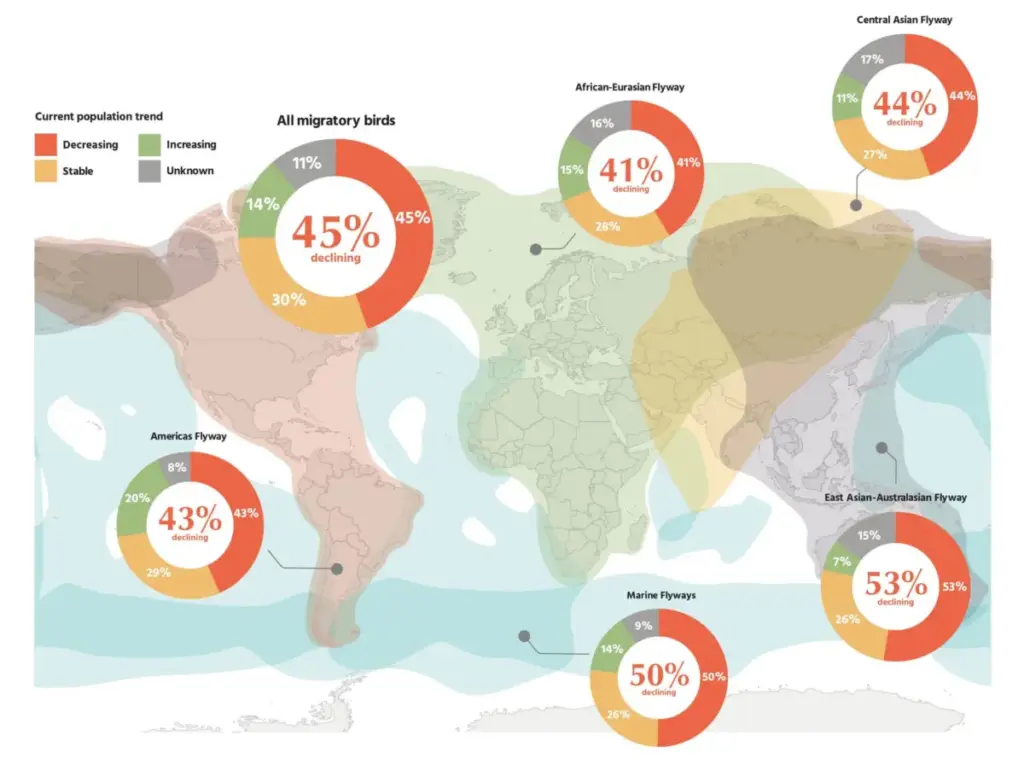
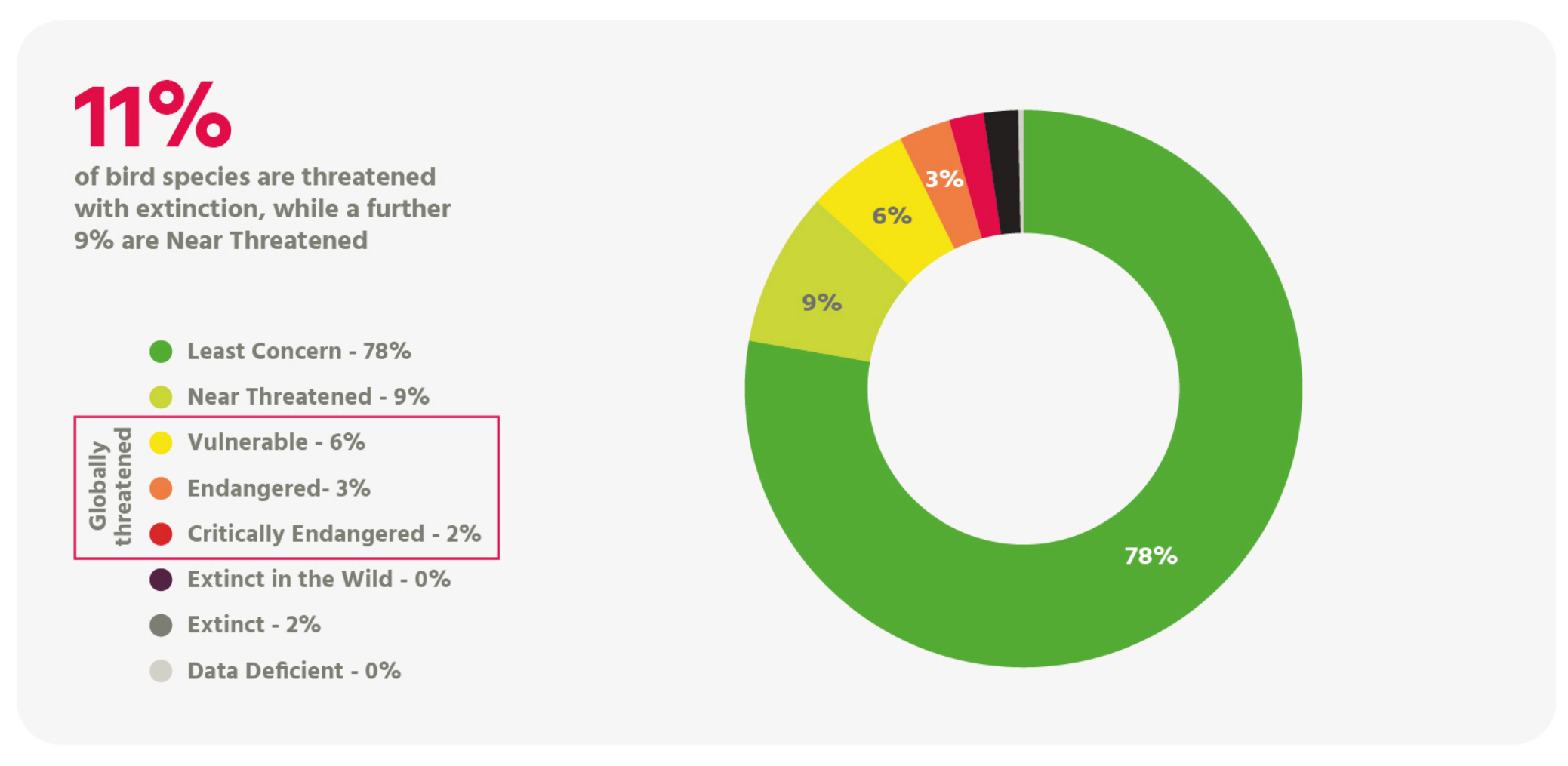
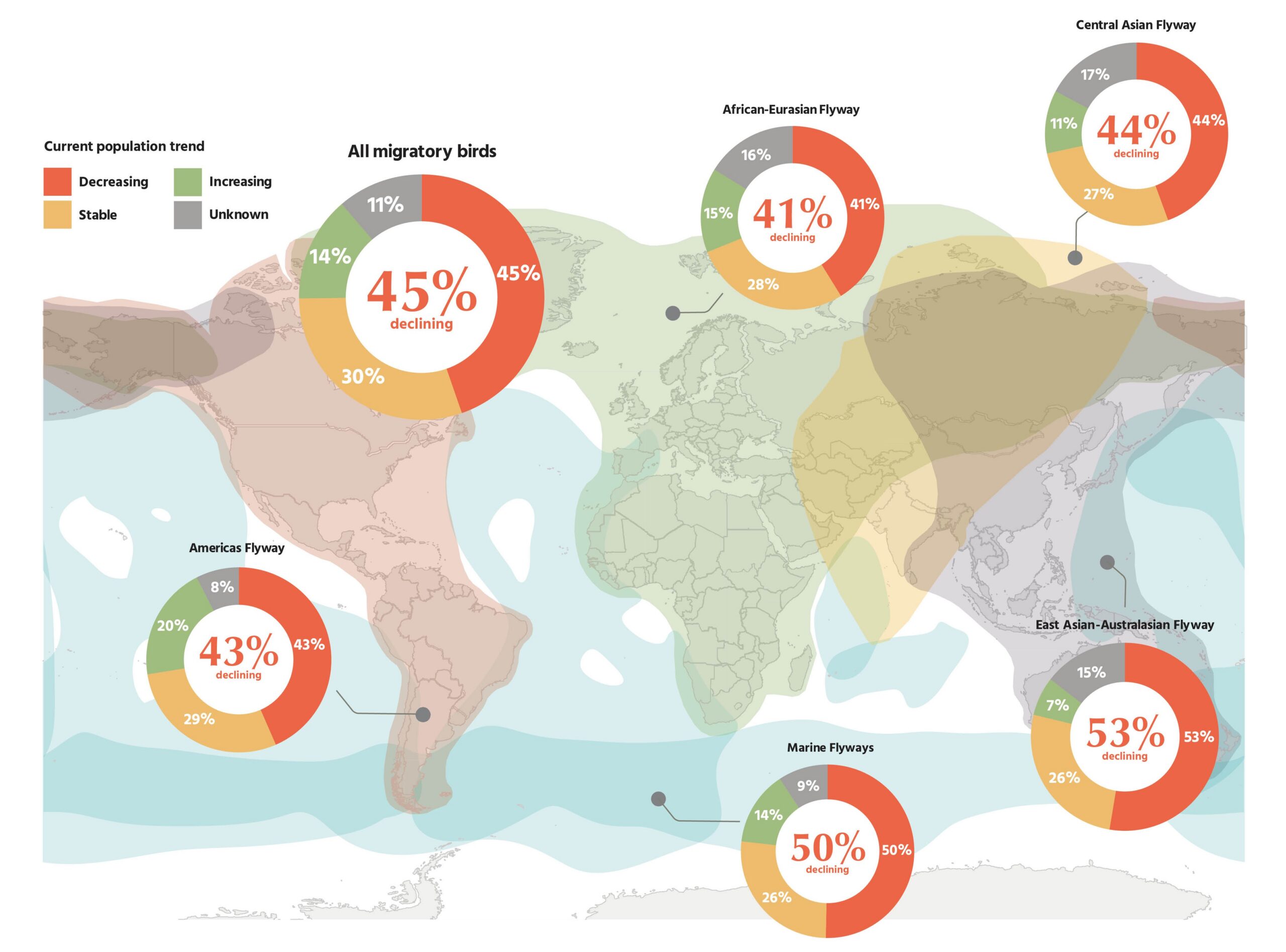
According to the latest State of the World’s Birds report, released by BirdLife International at the Global Flyways Summit in Nairobi, Kenya, an alarming 45% of all migratory bird species are in active population decline, with 11% facing the immediate threat of extinction.
Unlike non-migratory birds, which enjoy a relatively higher degree of localized habitat protection, migratory species are uniquely vulnerable. Traversing geopolitical borders, diverse ecosystems, and various climate zones, they act as the ultimate biological canaries in the coal mine. Their declining numbers are not just an isolated crisis for ornithologists; they serve as a flashing red warning light regarding the overarching health of global ecosystems, human economies, and planetary stability.
Despite the sobering statistics—which include the recent, tragic confirmation of the extinction of the slender-billed curlew—the report also highlights unprecedented opportunities for conservation. Coinciding with the Nairobi Flyways Declaration, multilateral financial institutions and global governments are committing billions of dollars to safeguard critical flyways, proving that coordinated international action can pull species back from the brink.
Detailed Chronology: From Regional Warnings to Global Consensus
The path toward the 2026 State of the World’s Birds report has been marked by a series of escalating warnings from international conservation bodies, charting a steady acceleration in avian vulnerability over recent years.
The 2024 Shorebird Reassessments
The crisis facing migratory networks came sharply into focus in 2024, when mounting data revealed steep, unprecedented population crashes among North American shorebirds. In response, BirdLife International undertook a massive reassessment of more than 100 shorebird species. The results shocked the scientific community: nine species were abruptly reclassified from “least concern” to “vulnerable,” while the threat level for another 16 species was elevated to “near threatened.”
At the time, Ian Burfield, BirdLife International’s global science coordinator, pointed out the insidious nature of these declines. While many shorebirds remained superficially numerous and were still regularly spotted by casual observers along their traditional flyways, long-term monitoring programs told a starkly different story. Comprehensive data analyses revealed that the global populations of several core species had plummeted by more than a third in just a few decades.
The Extinction of the Slender-Billed Curlew
These warnings materialized into irreversible tragedy when the International Union for Conservation of Nature (IUCN)—the global wildlife conservation authority—officially confirmed the extinction of the slender-billed curlew (Numenius tenuirostris). Last sighted in the wild in Morocco in 1995, the waterbird became a poignant, heartbreaking symbol of the mounting pressures bearing down on migratory species across the globe.
According to avian experts, the slender-billed curlew is far from an isolated casualty. Across the last century and a half, at least seven other migratory bird species have been confirmed or strongly suspected to have vanished entirely from the Earth.
The September 2026 Global Flyways Summit in Nairobi
The culmination of these mounting concerns arrived on September 11, 2026, at the Global Flyways Summit in Nairobi, Kenya. Here, BirdLife International officially launched the latest edition of the State of the World’s Birds report—the organization’s first-ever publication with an exclusive, laser-focused lens on migratory birds.
The summit served as a gathering point for world governments, indigenous leaders, conservation NGOs, and international development banks. Crucially, the release of the report catalyzed the historic signing of the Nairobi Flyways Declaration, a multi-nation pact committing signatories to legally and financially protect vital avian migratory pathways.
Supporting Context, Metrics, and Ecological Vulnerabilities
The numbers presented in the 2026 BirdLife International report paint a grim statistical portrait of the modern biosphere, while simultaneously underscoring systemic gaps in global conservation frameworks.
The Red List Breakdown
To contextualize the scale of the crisis, BirdLife analyzed data across more than 11,000 bird species cataloged on the IUCN Red List (encompassing both resident and migratory taxa):
11% of all global bird species (1,256 species) are currently threatened with extinction.
45% of migratory bird species display ongoing, downward population trends.
Only 14% of migratory species are exhibiting increasing population trajectories.
11% of migratory species possess population trends that remain entirely unknown, highlighting critical data deficiencies in remote regions.
The Protection Gap
One of the most revealing metrics in the report highlights the profound structural inequality in global conservation efforts. Currently, only around 9% of migratory bird species enjoy adequate, legally binding protection across their full annual cycle. In stark contrast, 45% of non-migratory species receive comparable levels of safeguarding.
Because migratory birds depend on a patchwork of geographically separated habitats—spanning breeding grounds in the high north, wintering sites in the global south, and numerous critical stopover wetlands along the way—disruptions at any single point in their journey can cause catastrophic population collapses.
Key Biodiversity Areas in Peril
Further compounding this vulnerability is the catastrophic degradation of stopover sites. An analysis of 1,099 Key Biodiversity Areas (KBAs) essential for migratory birds revealed that over half are currently in poor or very poor condition.
For instance, iconic wetlands like Lake Natron in northern Tanzania—where massive flocks of lesser and greater flamingos amass—face mounting pressures from upstream water extraction, agricultural encroachment, and industrial development. Across marine habitats, coastal wetlands, and dense boreal forests, the combined pressures of invasive species, intensive agricultural expansion, rapid commercial and residential development, climate change, and unmanaged hunting continue to degrade the ecological fabric of global flyways.
Official Statements and Expert Perspectives
The release of the report drew immediate reactions from the global conservation community, balancing severe warnings about planetary health with pragmatic optimism regarding new financial and political commitments.
Lucy Haskell, senior science officer at BirdLife International and the lead author of the report, emphasized in an interview with Mongabay that migratory birds are far more than just feathers and song. They are complex barometers of planetary health.
"This report is about migratory birds, but it also serves as a warning about the state of the planet in general," Haskell stated. Because they cross oceans and continents, experiencing dozens of distinct ecosystems within a single year, their physical decline directly reflects the widespread fraying of global life-support systems.
Stuart Butchart, chief scientist at BirdLife International and chief editor of the report, echoed this sentiment, framing the protection of migration as an absolute economic and social necessity, not merely an environmental luxury.
"We can and we have to safeguard this amazing wonder of migration, both for its own sake, but also because the ecosystems that those birds depend on underpin our economies, our livelihoods, and human health as well," Butchart explained. "Migratory birds provide both a warning but also a source of hope."
Katie-Jo Luxton, director of conservation at the Royal Society for the Protection of Birds (RSPB), who was not directly involved in the drafting of the report, underscored the urgent need for systemic, trans-boundary habitat restoration:
"The findings of this report are sobering, but there are also reasons for hope, with increasing ambition around the world to halt and reverse species declines," Luxton wrote via email. "The need to conserve and restore key habitats at scale across international flyways has never been greater as this benefits all biodiversity. Maintaining efforts to address climate change and the human activities that remain the major driver of declines is just as critical."
Future Outlook: A Glimmer of Hope on the Horizon
Despite the overwhelming scale of degradation highlighted in the 2026 report, the summit in Nairobi also served as a birthplace for tangible, well-funded solutions. Conservationists stress that while the challenges are vast, targeted, multi-national interventions have repeatedly proven capable of reversing the fortunes of endangered species.
Financial Commitments from Multilateral Banks
A major breakthrough at the Nairobi summit was the active engagement of international development banks. Recognizing that healthy ecosystems provide vital climate mitigation, flood control, and food security for local human communities, financial institutions are stepping up with unprecedented capital injections.
Notably, the Asian Development Bank (ADB) pledged a staggering $3 billion earmarked specifically for the protection and restoration of wetlands and coastal ecosystems along the East Asian-Australasian Flyway.
Stuart Butchart highlighted these structural partnerships:
"We’ve established a number of what we call regional flyway initiatives, where we’re partnering with multilateral development banks. That will benefit birds, but also local people and provide climate mitigation through habitat restoration and protection."
The Egyptian Vulture: A Blueprint for Success
To demonstrate that cross-border conservation is not merely a theoretical exercise, Lucy Haskell pointed to the remarkable, ongoing recovery of the Egyptian vulture (Neophron percnopterus).
Less than a decade ago, the Balkan population of this iconic raptor faced near-certain extinction, crushed by the combined threats of poisoning, illegal shooting, and habitat loss. However, a coordinated, multi-country international conservation effort—spanning breeding grounds, migratory corridors, and wintering sites—successfully halted the population’s downward spiral. Today, the Balkan Egyptian vulture population is actively recovering.
"This is probably one of the first really great success stories to come out of this flyway-scale conservation," Haskell noted, offering a vital blueprint for how the global community can address the broader crises outlined in the 2026 report.
As governments ratify the Nairobi Flyways Declaration and financial resources begin to flow toward the protection of neglected Key Biodiversity Areas, the international community stands at a crossroads. The silent crisis in our skies is a stark reminder of human impacts on the natural world, but it also illuminates a clear path forward: by safeguarding the pathways of migratory birds, humanity ultimately secures its own sustainable future on a changing planet.