

Executive Overview
As the global community marks World Dolphin Day—an awareness initiative established in 2022 by the marine conservation non-profit Sea Shepherd—the state of the world’s cetaceans remains a complex narrative of escalating ecological pressures and hard-won conservation triumphs. According to comprehensive data from the International Union for Conservation of Nature (IUCN), the global authority on the status of wildlife, nine distinct dolphin species, alongside several critical subspecies and vulnerable local populations, stand teetering on the precipice of extinction.
These highly intelligent, socially complex marine mammals face a relentless barrage of anthropogenic threats. From the silent, devastating sweep of illegal drift nets in the Mediterranean to the pressures of captive breeding industries in Southeast Asia, dolphins are perpetually impacted by human activity. Yet, this bleak reality is met with unprecedented resilience and dedication from the scientific and conservation communities. Recent breakthroughs in behavioral ecology reveal remarkable cognitive adaptability—such as novel tool use observed thousands of kilometers apart—while regulatory bodies face mounting pressure to enforce stricter protections.
This article explores the multi-faceted landscape of dolphin conservation today. By examining the recent uplisting of endangered subspecies, investigating ongoing illicit fishing operations, highlighting corporate shifts away from captivity, and celebrating groundbreaking behavioral research, we present a holistic overview of the challenges and hopes defining the modern era of marine mammal preservation.
Detailed Chronology: Key Conservation Milestones and Investigations
To understand the trajectory of modern dolphin conservation, one must trace the timeline of key regulatory changes, field investigations, and behavioral discoveries that have shaped public awareness and policy over recent years.
Late 2025: Lahille’s Bottlenose Dolphin Uplisted to Endangered
In late 2025, the conservation status of Lahille’s bottlenose dolphin (Tursiops truncatus gephyreus), a distinct and vulnerable subspecies of the common bottlenose dolphin, suffered a severe blow. Following comprehensive assessments by the IUCN, the subspecies was officially reclassified from "Vulnerable" to "Endangered."
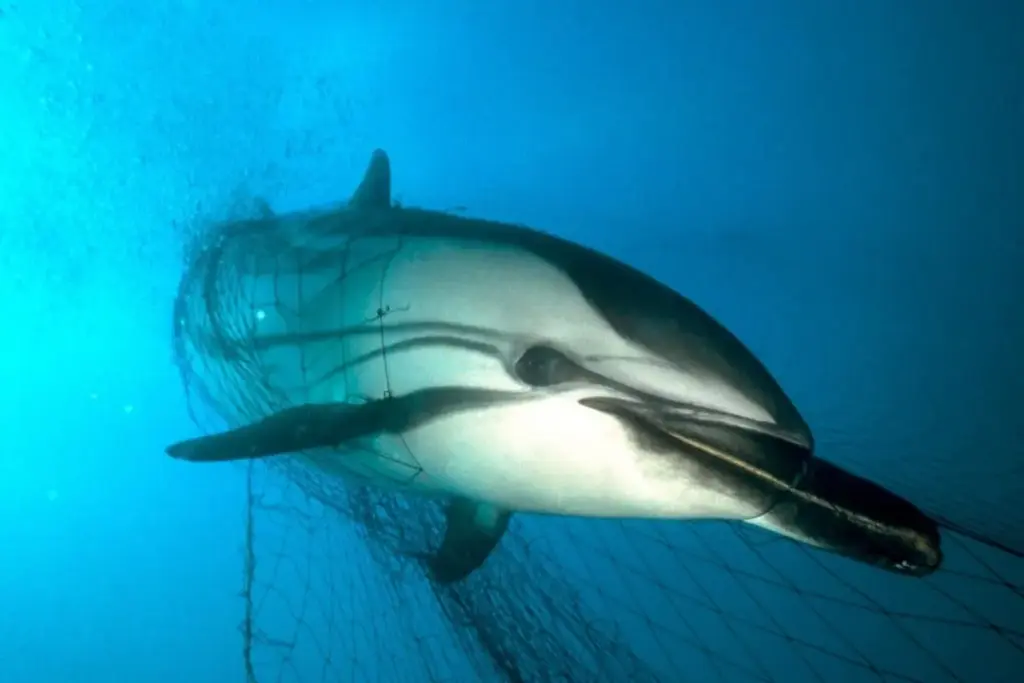
Current population estimates project that fewer than 400 mature individuals remain in the wild. Marine biologists and conservationists have identified the primary driver of this population decline: incidental mortality, commonly known as bycatch, resulting from gillnet fisheries operating indiscriminately along the coastal waters of southern Brazil, Uruguay, and Argentina. Despite localized protections, the proliferation of these destructive net systems continues to decimate the remaining pods.
March 2026: Shifts in Captive Breeding in Singapore
The welfare of captive cetaceans gained significant traction in March 2026, when industry insiders and investigative reports revealed a major policy shift by a prominent resort in Singapore. According to reports, the facility suspended its controversial captive breeding programs involving wild dolphins and halted the commercial sourcing of wild-caught individuals for its oceanarium.
At the time of the announcement, the facility housed more than 20 Indo-Pacific bottlenose dolphins (Tursiops aduncus), the majority of which were direct descendants of animals captured from the wild in the Solomon Islands during 2008 and 2009. The corporate entity owning the oceanarium announced the formation of an advisory panel comprising independent marine experts to chart a sustainable and humane future for the remaining captive animals.
July 2026: Exposing Illegal Drift Nets in the Alboran Sea
In July 2026, investigative findings published by the Environmental Justice Foundation (EJF) brought renewed international scrutiny to the Mediterranean Sea. While the European Union maintains a strict ban on the use of drift nets for swordfish due to their devastating propensity to capture non-target species—including dolphins, whales, pelagic sharks, and sea turtles—investigations revealed that these illegal nets remained widely deployed in the Alboran Sea.
This critical ecological corridor, situated between northwestern Morocco and the southern coast of Spain, serves as a vital transit and feeding ground for numerous marine species. The persistence of illegal drift netting threatens to unravel decades of regional marine protection agreements.
August 2026: Unprecedented Tool Use Documented in Eastern Australia
In a striking reminder of the sophisticated intellect of cetaceans, marine researchers in August 2026 documented a remarkable behavioral phenomenon off the east coast of Australia. A mother bottlenose dolphin and her calf were filmed utilizing empty sea snail shells as foraging tools, trapping fish inside the hollow chambers to secure a meal.
While this specific foraging technique—dubbed "shelling"—had previously been documented in Western Australia, it was believed to be an isolated cultural tradition restricted by vast geographic distances. The discovery of the same behavior thousands of kilometers away on the opposite coast has forced behavioral ecologists to reconsider how marine mammal culture spreads and adapts.
Supporting Context & Metrics: The Scale of the Crisis
The plight of dolphins cannot be viewed in isolation; it is symptomatic of broader, systemic disruptions within marine ecosystems. The IUCN’s Red List assessments serve as the definitive barometer for the health of global cetacean populations, painting a stark picture of biodiversity loss.
Bycatch and Industrial Fisheries
Bycatch remains the single most pervasive threat to small cetaceans worldwide. Industrial and artisanal fisheries utilizing indiscriminate gear—such as gillnets, longlines, and drift nets—routinely entangle marine mammals. Unable to surface for air, entangled dolphins drown within minutes.
In regions like the southwestern Atlantic, where Lahille’s bottlenose dolphin struggles for survival, overlapping claims between coastal fisheries and fragile marine habitats create an unsustainable mortality rate. Similarly, in the Mediterranean, despite stringent EU prohibitions, enforcement gaps allow illegal operators to continue deploying high-impact gear with near impunity.
The Captive Industry Dilemma
For decades, the display of cetaceans in marine parks and oceanariums has been a subject of intense ethical debate. The capture of wild dolphins—often involving traumatic drive hunts in locations such as the Solomon Islands or Japan—rips highly social animals from complex familial pods.

Facilities like the Singapore resort holding Indo-Pacific bottlenose dolphins represent a broader cultural shift. As public sentiment increasingly rejects the commodification of sentient marine life, institutions face mounting pressure to phase out live animal displays, halt captive breeding programs, and transition toward rehabilitation, retirement sanctuaries, or educational models that rely on technology rather than captive animals.
Cognitive Frontiers and Behavioral Adaptation
Even as anthropogenic pressures mount, scientific discoveries continually underscore the remarkable adaptability and intelligence of dolphins. The documentation of shell-foraging in eastern Australia highlights the transmission of complex cultural knowledge across generations. Animal ecologist Alexis Levengood, reflecting on the moment the behavior was captured on film, noted the profound realization: “The second I saw it, I was like, oh my God, oh my God, oh my God, this is huge.”
Researchers suspect that this tool-use behavior developed independently on Australia’s eastern and western coasts, suggesting that given adequate habitat stability, dolphin populations possess the cognitive flexibility to innovate under changing environmental conditions.
Official Statements and Expert Perspectives
The complexities of modern dolphin conservation necessitate ongoing dialogue between field researchers, policy advocates, and international regulators.
Addressing the ecological degradation observed in the Mediterranean, Jesús Urrios Culiañez, an ocean policy officer at the Environmental Justice Foundation, emphasized the urgency of localized intervention:
"We can see that it is having an impact on precious ecosystems in a unique area, which is the Alboran Sea."
The ongoing failure of regional enforcement has prompted international bodies to step up. Anticipated policy shifts from European fisheries regulators signal a growing recognition that domestic oversight alone is insufficient to curb transnational illegal fishing practices.
Regarding corporate shifts in marine entertainment, Anbarasi Boopal, former co-chief executive of Singapore’s Animal Concerns Research and Education Society (ACRES), offered a cautiously optimistic view of the resort’s decision to halt wild sourcing and captive breeding:
"Long overdue progress for animal welfare in Singapore."
Boopal stressed, however, that the true measure of success will depend on whether the facility’s long-term strategy is genuinely rooted in animal welfare principles and whether it paves the way for meaningful rehabilitation initiatives.
Future Outlook: Policy Horizons and Conservation Pathways
As World Dolphin Day prompts reflection on the state of global cetaceans, the path forward requires a coordinated synthesis of rigorous science, robust legal enforcement, and shifting societal values.
Strengthening International Regulatory Frameworks
Regulatory milestones on the horizon offer a degree of hope. In November 2026, the European Union is expected to present fisheries regulators with a comprehensive proposal for significantly stronger international rules governing maritime operations. If adopted and rigorously enforced, these enhanced measures could close critical loopholes exploited by illegal drift-net operators in the Mediterranean and adjacent waters, providing a vital protective buffer for vulnerable cetacean populations.
Expanding Marine Protected Areas (MPAs)
Effective conservation must extend beyond species-specific legislation to encompass holistic habitat protection. Establishing and actively patrolling Marine Protected Areas (MPAs) along critical migration corridors—such as the Alboran Sea and the coastal waters of South America—remains essential. By restricting destructive industrial fishing practices within these zones, conservationists can drastically reduce bycatch mortality and allow depleted fish stocks to recover, directly benefiting apex predators like dolphins.
Ending Exploitation and Fostering Coexistence
The decisions made by entertainment institutions in urban centers like Singapore demonstrate that public pressure and corporate responsibility can intersect to dismantle cruel confinement practices. As sanctuaries and ethical oversight committees gain prominence, the industry standard must pivot away from capture and captivity toward sanctuary retirement and respect for wild populations.
Ultimately, securing the future of the world’s dolphins requires humanity to view these intelligent mammals not as commodities or accidental casualties of commerce, but as vital architects of healthy marine ecosystems. Through sustained research, unwavering enforcement of conservation laws, and a deepened appreciation for their complex cultural lives, we can ensure that dolphins continue to thrive in the world’s oceans for generations to come.



