

By David Tjyakala
Published in Mongabay Conservation News
DOI: https://doi.org/10.66709/news-329430
Executive Overview
Angola stands at a critical environmental crossroads. While the government has stepped onto the international stage, officially ratifying key global pacts like the Montreal Protocol and the Kigali Amendment—pledging to phase out hydrochlorofluorocarbons (HCFCs) by 2030 and slice hydrofluorocarbons (HFCs) by 80% by 2045—the reality on the ground tells a far more complicated story.
The southern African nation is enduring relentless climate shocks. Protracted droughts in the south, widespread soil degradation, and catastrophic seasonal flooding in urban and rural centers alike have destabilized communities, directly impacting more than 2.2 million people. These compounding crises threaten food security, economic stability, and the fundamental habitability of entire regions.
Yet, amid this gathering storm, a resilient new wave of homegrown environmental leadership is emerging. Among its most prominent voices is 29-year-old Érica Tavares. A graduate in Environmental Biology from the United Kingdom’s University of Nottingham, Tavares has returned to her homeland to dedicate her career to conservation, forest advocacy, and youth mobilization. As a co-founder of the prominent NGO EcoAngola and a driving force behind initiatives like the Young Scientific Community of Angola, Tavares is reshaping how the country engages with sustainability.
In an extensive interview with Mongabay, Tavares reflects on her journey from a childhood shaped by urban flooding to the halls of international climate conferences. She unpacks the invisible threats of plastic pollution, the devastating realities of unmonitored deforestation, and why empowering a marginalized generation of young Angolans may be the country’s only defense against impending ecological collapse.
Detailed Chronology: The Evolution of Angola’s Environmental Landscape
To understand Angola’s current ecological crisis, one must trace the convergence of historical neglect, mounting climate pressures, and the slow awakening of civil society mobilization over the past decade.
- Pre-2015 (The Era of Silence): Environmental discourse in mainstream Angolan society was virtually nonexistent. While extractive industries—predominantly oil and gas, alongside diamond mining—dominated the national economy, ecological conservation was rarely prioritized in public policy or media narratives. Localized environmental degradation went largely undocumented and unpunished.
- 2015–2018 (Grassroots Awakening): Urban expansion and increasingly erratic weather patterns began exposing structural vulnerabilities, such as severe seasonal flooding in low-income neighborhoods. This period saw the birth of grassroots networks, including the establishment of EcoAngola, as young professionals and students sought to fill the void left by state-absent environmental education and municipal waste management.
- 2019–2021 (Global Engagement): Angolan youth leaders began breaking onto the international stage. In 2021, Érica Tavares represented Angola at the UN Climate Youth Conference (COY16) in Italy, bringing the stark, under-resourced realities of southern African climate vulnerability into direct dialogue with wealthy northern European nations. Concurrently, NGOs intensified domestic advocacy, denouncing illegal commercial logging operations in provinces like Huambo and Benguela.
- 2022–2025 (Policy Commitments vs. Institutional Lag): The Angolan government aligned itself with international treaties, committing to ambitious timelines under the Kigali Amendment and presenting climate adaptation frameworks at successive COP summits. However, civil society watchdogs noted a persistent implementation gap: international pledges failed to translate into ground-level oversight, local data collection, or community protection.
- 2026 (The Current Crisis): Today, Angola faces a dual crisis of acute climate vulnerability—affecting over 2.2 million citizens via southern droughts and nationwide floods—and mounting chemical pollution. Initiatives like the 2026 Green Week Environmental Hackathon underscore a vibrant, tech-savvy youth movement, even as activists continue to clash with systemic hurdles, data blackouts, and enforcement vacuums.
Supporting Context & Metrics: The Scale of the Challenge
Assessing environmental degradation in Angola is an exercise in navigating information voids. According to conservationists, the country lacks a cohesive, real-time national ecological database. Without reliable metrics on water table depletion, particulate air pollution, or biodiversity loss, measuring year-over-year degradation remains deeply challenging.
Nevertheless, available indicators reveal alarming trends:

- Humanitarian Impact: More than 2.2 million Angolans currently face acute displacement, food insecurity, or economic ruin driven by recurring climate shocks—principally multi-year droughts in the southern drylands and catastrophic flash floods during the rainy season.
- Agricultural Dependency: Approximately 70% of Angola’s agricultural sector relies on small-scale family farming. This leaves the nation’s food supply chain intensely vulnerable to shifting precipitation patterns and soil exhaustion.
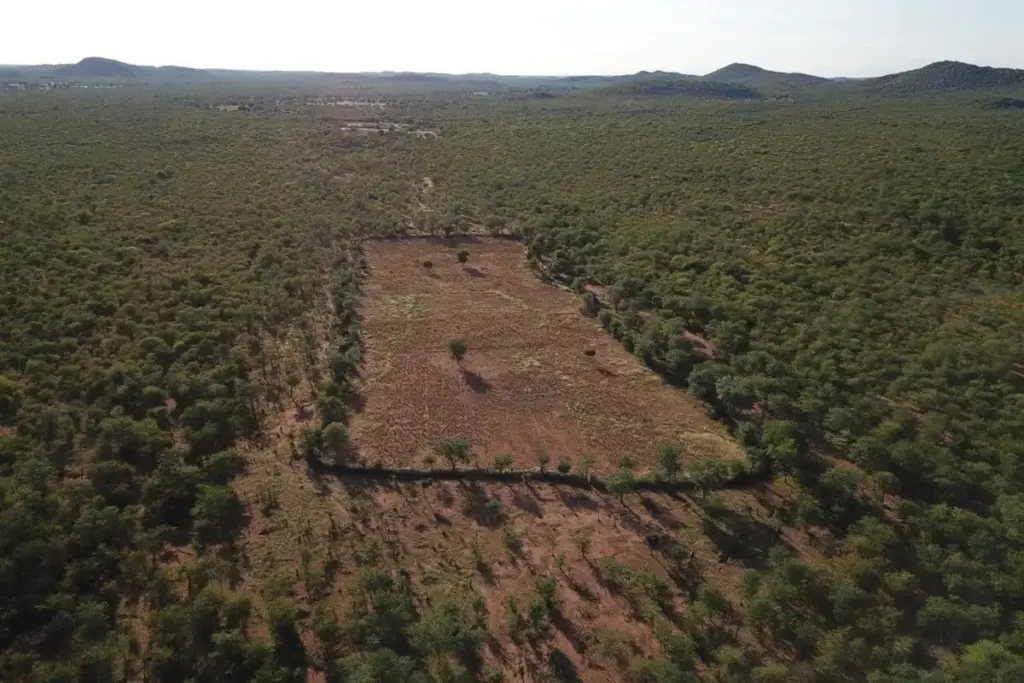
- Deforestation Pressures: Forest cover is under siege from two distinct fronts: commercial extraction (including illegal logging of high-grade timber by foreign actors destined for international markets) and subsistence pressures. Due to widespread energy poverty and a lack of electrical grid access in rural and peri-urban zones, a vast majority of communities continue to harvest native trees for charcoal and firewood.
- The Plastic Crisis: Urban centers across Angola struggle with waste management infrastructure. Unregulated plastic consumption and disposal have created pervasive microplastic contamination in local ecosystems, infiltrating waterways and entering the human food chain.
Official Statements: Interview With Érica Tavares
Mongabay: How would you describe the state of the environment in Angola in 2026? Is it better or worse than five years ago?
Érica Tavares: It’s always difficult to answer that question because one of our major challenges is the analysis of nonexistent data and information. To conduct a comparative analysis between now and five years ago, we would need to look at several data points regarding pollution, water reserves, biodiversity, and even social needs, which are also highly relevant when discussing the environment.
If we look beyond the lack of data from the perspective of civil society, there has been an increase in activities, organizations, and funding, which is a positive aspect. However, the problems continue to escalate because we still have little to no oversight and little accountability for those who cause environmental damage or commit environmental crimes.
Five years ago, you used to hear much less about this; there was less awareness and less interest. Today, there is more interest and more mobilization, but we need nationwide action—not just isolated initiatives—to bring about change.
Mongabay: At what point did you realize you wanted to work on environmental advocacy?
Érica Tavares: Some moments during my adolescence left a mark on me, such as when my own home was flooded, and I grew up with many questions I couldn’t answer by researching, talking to people, or asking my parents. Then, during college studying Environmental Biology at the University of Nottingham, I started finding answers. Why is one neighborhood poorer while another is wealthier? Why does it flood here when it rains? Why do some places suffer from drought and famine while others do not? It was through seeking answers that I found solutions and felt a desire to communicate and speak out. Life guided me here.
Mongabay: Representing Angola at the UN Climate Youth Conference in 2021 and leading the Green Week Environmental Hackathon in 2026, what did these experiences reveal about how Angolan youth view environmental challenges?
Érica Tavares: At the Youth Conference in Italy, I connected with environmentalists from Nordic countries. Their messages, communication styles, and priorities are very different from ours. In a developed country, young people have access to the internet, computers, and safe channels to challenge public policies or hold actors accountable.

A young person in Angola often does not have access to a phone or internet connection. When they speak out, they are often the only ones doing it, risking their lives while facing widespread skepticism. Furthermore, our youth grapple with immediate survival crises like hunger, poverty, and educational gaps. The conditions of access and the stakes are entirely different here.
Mongabay: What is the environmental issue that concerns you most?
Érica Tavares: I think the main problem is pollution, especially that caused by waste, and particularly plastic waste. We are consuming more and more, and we are not managing to treat plastic waste adequately. Plastic takes a long time to break down; it enters the water, we breathe it, we eat it, and we all end up putting our health at risk—from endocrine disruption to fertility issues, with babies being born containing microplastics. Humanity will take some years to realize the full seriousness of this, compounded by a complete lack of oversight for producers and consumers.
Mongabay: EcoAngola has denounced cases of illegal deforestation in Huambo and Benguela carried out by foreign citizens, with little response from local authorities. Were these cases investigated?
Érica Tavares: It’s hard for us to follow up because we don’t always get answers from the authorities, or when we do, it’s intended to keep things quiet. As a non-governmental association, we receive little public support, and civil society remains largely disconnected from the policy sphere. Following up on cases involves high costs—we have to verify information and investigate, often putting ourselves at risk. Despite these hurdles, we are working to build public trust so citizens realize this is a collective agenda.
Mongabay: What are the specific challenges involved in combating illegal deforestation in Angola?
Érica Tavares: We still don’t have a national forest monitoring system utilizing satellites and real-time digital tools. There is also a disconnection between the Forestry Development Institute and the National Police. We should have a dedicated environmental police force to guarantee continuity and accountability. Beyond commercial logging, we must address the social dimension: millions of citizens still rely on firewood and charcoal for daily cooking because they lack access to reliable electricity.
Mongabay: In practice, is the government managing to ensure its international climate commitments at COP forums actually reach the most vulnerable communities?

Érica Tavares: I used to be much more critical, but today I try to look at different perspectives. We still see very high levels of poverty and hunger. One area where I have seen greater emphasis is family farming, which represents about 70% of our agriculture. However, looking specifically at climate adaptation, it is only now that we are beginning to see some integration into new plans. There is still a massive need for awareness-raising, and once again, the lack of consistent reporting makes it difficult to measure real-world impact.
Mongabay: Is environmental education still a priority?
Érica Tavares: It is an urgent need. While the national curriculum includes some formal environmental content, it remains far removed from our actual context. The Ministry of Education and Ministry of Higher Education must update curricula to foster genuine responsibility. Right now, we talk about recycling when there are no waste collection points, or we teach people not to litter while schools lack basic sanitation. We are still far from where we need to be.
Mongabay: As a co-founder of the Young Scientific Community of Angola, what message would you share with young people?
Érica Tavares: Growing up in Angola is hard. But it will be even harder if we do nothing. As young people, we must view our country with a sense of responsibility. We face daily obstacles—traffic, unemployment, educational hurdles. That is precisely why we bear an even greater responsibility: to ensure future generations have better priorities. Young people must invest in their education and study so that when it is our turn to lead, we are equipped to do things differently.
Future Outlook
As Angola navigates the remainder of the decade, the trajectory of its environment will depend heavily on bridging the chasm between high-level international diplomacy and grassroots implementation. While treaties like the Kigali Amendment provide a legal framework for industrial transformation, domestic success hinges on three foundational pillars:
- Institutional Transparency & Data Sovereignty: Establishing independent, transparent environmental monitoring systems—supported by academic institutions and civil society—is non-negotiable if the government intends to prosecute illegal logging, curb illicit waste dumping, and accurately measure climate vulnerability.
- Decentralized Green Infrastructure: National climate adaptation funds must bypass bureaucratic bottlenecks to directly support rural and peri-urban communities, expanding renewable energy access to reduce reliance on charcoal-driven deforestation while simultaneously overhauling urban waste management networks.
- Empowering the Next Generation: As articulated by leaders like Érica Tavares, reforming the national educational curriculum to mandate practical, context-aware environmental science will cultivate a generation equipped to transform ecological awareness into enforceable public policy.
Without these structural shifts, Angola risks remaining locked in a cycle of acute climate vulnerability and unpunished resource exploitation. With them, a new generation of scientists, activists, and citizens may yet chart a sustainable path forward.



