Executive Overview
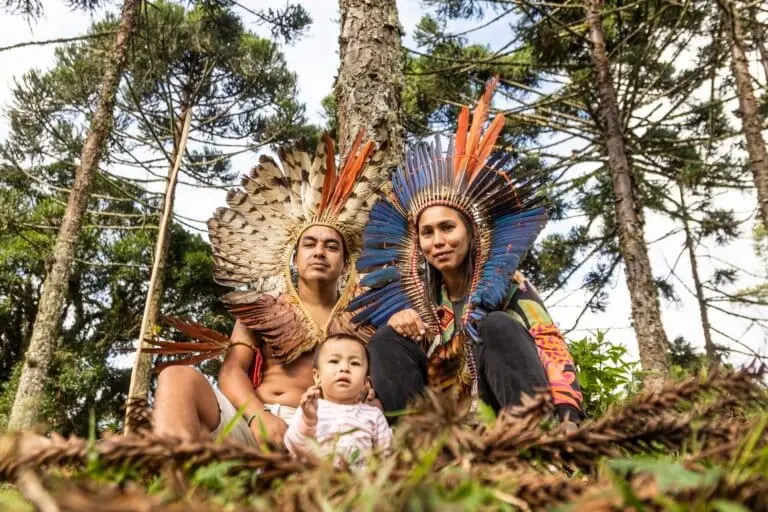
In the rugged, rolling landscapes of Santa Catarina state in southern Brazil, an inspiring ecological and cultural restoration movement is quietly taking root. The Xokleng Indigenous people, alongside neighboring Guarani and Kaingang communities, have achieved a monumental conservation milestone by planting nearly 100,000 seedlings of the critically endangered Brazilian pine (Araucaria angustifolia). Locally known as the araucária, this majestic canopy-dweller is far more than a timber or nut-producing resource; it is the physical and spiritual bedrock of the Xokleng universe.
Once dominating millions of hectares across southern South America, the Araucaria pine forests have suffered a staggering 97% decline over the past century due to aggressive commercial logging, industrial agriculture, and unchecked land conversion. For the Xokleng, this ecological catastrophe is an existential mirror. As Carl Gakran, executive director of the Zág Institute, poignantly notes, the near-extinction of the pine mirrors the historical persecution, marginalization, and cultural erasure faced by his own people.
What began in 2016 as a modest backyard initiative by Gakran to grow just 10 trees has since blossomed into a community-wide crusade. Operating within the 37,000-hectare (91,400-acre) Ibirama-La Klãnõ Indigenous Territory, the Zág Institute has produced more than 140,000 seedlings and successfully reforested over 1,000 hectares (nearly 2,500 acres). By marrying ancestral ecological knowledge with modern conservation strategies—such as removing invasive species and balancing human harvests with wildlife needs—the Xokleng are not only bringing a botanical giant back from the brink of oblivion, but they are also actively reinforcing their legal claims to ancestral lands in a protracted, high-stakes demarcation battle.
Detailed Chronology: From a Backyard Experiment to a Reforestation Movement
The Spark (2016)
The modern phase of the Zág Institute’s reforestation crusade began in 2016, when Carl Gakran learned that the International Union for Conservation of Nature (IUCN) Red List officially classified the Brazilian pine as critically endangered. Confronted with the stark reality that one of the planet’s most unique tree species was hurtling toward extinction, Gakran resolved to take action. Initially, his ambitions were modest: he planned to cultivate a mere 10 araucária saplings on his private property to safeguard local genetic stock.
Community Mobilization and the Founding of Zág (2017)
Gakran’s small-scale experiment struck a profound chord within the Ibirama-La Klãnõ Indigenous Territory. Neighbors, family members, and community elders recognized the urgency of the mission. By 2017, the initiative had quickly expanded beyond a personal project into a collective community undertaking. To formalize, organize, and scale these burgeoning efforts, Carl, alongside his wife Isabel Gakran, established the Zág Institute (named after the ancestral term for the tree). The organization quickly became the beating heart of local conservation, uniting residents around a shared ecological and cultural duty.
Scaling Up and Strategic Eradication (2018–2023)
Over the next several years, the Zág Institute transitioned from ad-hoc plantings to systematic ecological restoration. Relying on a dedicated corps of 30 to 40 regular volunteers—a number that swells to roughly 60 during peak seed-harvesting and distribution seasons—the institute developed a sophisticated operational workflow.
Beyond simply planting native trees, the collective identified a major threat to ecosystem recovery: the proliferation of invasive, non-native timber species. Volunteers systematically began removing commercial monocultures, such as slash pines (Pinus elliottii) and various species of eucalyptus, which had been planted by colonizers and industrial forestry operations. In place of these thirsty, soil-degrading aliens, the institute reintroduced native biodiversity, laying the foundation for a resilient, multi-tiered forest ecosystem.
Reaching the Milestone (2024–Present)
A decade after Gakran first conceived of planting 10 trees, the Zág Institute crossed a monumental threshold: producing more than 140,000 total seedlings and successfully planting nearly 100,000 of them across the rugged terrain of the Ibirama-La Klãnõ Territory. Today, their active restoration footprint spans over 1,000 hectares, serving as a beacon of hope for Indigenous-led conservation models globally.
Supporting Context & Metrics: The Ecological and Cultural Stakes
The Botanical and Ecological Profile of Araucaria angustifolia
The Brazilian pine is a botanical marvel. Able to soar to heights exceeding 50 meters (164 feet), it features a remarkably straight, cylindrical trunk crowned by a distinct, umbrella-shaped canopy of candelabra-like branches. Historically, these evergreen forests formed vast, continuous belts across southern Brazil, extending into parts of Argentina and Paraguay.
The tree plays a foundational role in local biodiversity. Most notably, it produces large, nutrient-dense cones containing edible seeds known as pinhão. These nuts serve as a vital nutritional staple not only for human populations in southern Brazil but also for at least 22 distinct animal species, ranging from parrots and agoutis to small mammals and insects.
Recognizing this interconnectedness, the Zág Institute practices a strict conservation ethic during harvest season. Project organizers and volunteers intentionally leave at least 40% of the harvested seeds in the forest to ensure that local wildlife populations have ample sustenance to survive and thrive.
Land Tenure and the Demarcation Struggle
The reforestation efforts taking place within the Ibirama-La Klãnõ Indigenous Territory—home to approximately 2,000 individuals from the Xokleng, Guarani, and Kaingang ethnic groups—occur against a backdrop of intense geopolitical conflict. Despite being officially designated as Indigenous land, the territory is currently only about one-third of the way through the complex, politically fraught legal demarcation process.

In Brazil, the formal demarcation of Indigenous territories can languish for decades, leaving communities vulnerable to land grabs, illegal logging, and incursions by agricultural developers. By actively transforming degraded pastures and invasive pine monocultures back into thriving araucária forests, the Xokleng are exercising physical and cultural stewardship over their boundaries. This ecological restoration functions as a living assertion of sovereignty, reinforcing their legal and moral claims to the land through undeniable stewardship.
Official Statements and Perspectives
The philosophical and cultural driving force behind the Zág Institute is deeply rooted in Indigenous cosmology and an acute awareness of shared vulnerability.
"Just as our pine is endangered, my people are also endangered, and consequently our language and culture are endangered," Carl Gakran explained during interviews detailing the genesis of the institute. For Gakran, saving the tree is inseparable from saving the identity of the Xokleng nation.
This sentiment is echoed in the daily rituals practiced by the community during seed collection. Rather than treating reforestation as a sterile, mechanical exercise in silviculture, the Xokleng approach it as an intimate, communicative dialogue with the natural world.
"Following our elders’ knowledge, we speak to the seeds, explain what’s happening, and perform harvest rituals," Gakran noted. "We harvest 60%, no more than that, respecting the tree and the animals that feed on it."
This deep reverence stems from the foundational creation myths of the Xokleng people. The araucária is not merely a source of food or shade; it is a sacred relative.
"Brazilian pines are sacred to us," Gakran emphasized. "You can’t tell the story of our people without speaking of them. Our creation myth says the protective animal was made from that tree, so it appears in the very first story."
Future Outlook: Challenges and Horizons Ahead
As the Zág Institute looks toward the future, its leaders face a complex web of environmental, administrative, and financial hurdles, balanced by immense opportunities for scaling their impact.
Scaling Up Nursery Operations and Seed Banks
Maintaining a production pipeline that has yielded over 140,000 seedlings requires consistent labor, technical resources, and community engagement. The institute plans to expand its permanent nursery infrastructure, allowing volunteers to process a higher volume of seeds with greater genetic diversity. Ensuring genetic resilience is critical as climate change alters temperature and precipitation patterns across southern Brazil.
Deepening Inter-Ethnic and Regional Partnerships
The success of the Ibirama-La Klãnõ project highlights the power of cross-community collaboration. By continuing to bridge the efforts of the Xokleng, Guarani, and Kaingang peoples, the region is building a united front for environmental defense. Observers note that the Zág Institute’s model could easily serve as a blueprint for other Indigenous territories throughout South America seeking to couple ecological restoration with legal land defense.
The Long Road to Full Legal Demarcation
While the physical landscape of the Ibirama-La Klãnõ Territory is steadily healing, the political battle for permanent land security remains a pressing concern. The Xokleng anticipate that continued, visible environmental stewardship will exert sustained pressure on federal authorities to finalize the demarcation process. By transforming degraded land into a pristine, flourishing native forest, the Xokleng leave no doubt as to who the true guardians of the territory are.
In an era defined by staggering biodiversity loss and climate anxiety, the work of the Xokleng people offers a profound lesson: ecological healing and cultural survival are two sides of the same coin. Through patience, ritual, and relentless community action, the guardians of the araucária are proving that even when a species—and a culture—is pushed to the brink, it is possible to plant the seeds of a resilient tomorrow.