South Korean football is facing an existential calendar crisis. Long celebrated as the "Land of the Morning Calm," the nation’s climate is undergoing a rapid, disruptive transformation. For decades, the K-League—Asia’s oldest professional football competition—has operated on a traditional March-to-November schedule. However, intensifying climate volatility has rendered this window increasingly untenable. Winters present biting, sub-zero conditions across many regional hubs, while summers have morphed into punishing, suffocating gauntlets of extreme heat and humidity.
Recent survey data highlights a sweeping consensus within the sport: more than 70% of respondent coaches in the K-League now support transitioning to a European-style autumn-to-spring format, complete with a strategic winter break. This institutional shift is no longer merely a tactical preference for style or alignment; it has become an urgent health, safety, and commercial necessity. With players fainting on the pitch, fans collapsing in the stands, and match quality visibly degrading under a relentless sun, South Korea’s football hierarchy is being forced to reconsider how—and when—the game is played.
This structural dilemma mirrors a broader, global reckoning across elite sports. From Japanese football and Chinese leagues to the Indian Premier League (IPL) and the Tour de France, traditional sporting calendars are buckling under the weight of climate change. As stakeholders grapple with record-shattering global temperatures, the international sports ecosystem stands at a historic crossroads. For the K-League, the path forward involves balancing player welfare, regional competitiveness, broadcast revenue, and the logistical hurdles of a severe Korean winter.
Detailed Chronology: How the Climate Crisis Caught Up with the K-League
To understand the pressure facing South Korean football, one must trace the convergence of meteorological shifts and sporting administration over recent years.
The Warming Baseline
For generations, the K-League’s March-to-November blueprint worked in harmony with the temperate seasons of the Korean Peninsula. Spring offered an idyllic kickoff, summer brought manageable warmth punctuated by monsoon rains, and the season wrapped up just as the first serious winter frosts set in.
However, the margin for error in this schedule has evaporated. According to data compiled by the Korea Meteorological Administration (KMA), climate patterns have shifted dramatically over the past century. Historical data indicates that summers across the peninsula have lengthened by an average of 25 days, while winters have contracted by 22 days. Crucially, the rate of warming has accelerated exponentially in recent years. A KMA report published in December 2025 revealed that national temperatures surged by 0.9°C between 2020 and 2024 alone—a deeply alarming acceleration when compared against the 1.9°C total increase recorded over the preceding entire century.
The Boiling Point: Summer 2026
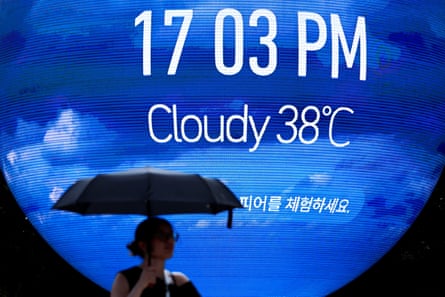
The structural strains of this warming trend culminated in a disastrous summer campaign in 2026. On August 2, 2026, the southern city of Yangsan recorded a scorching 42.5°C, the highest temperature documented since modern meteorological records began in the country. Meanwhile, the capital city of Seoul endured an unprecedented streak of 17 consecutive "tropical nights"—defined as periods where the ambient temperature refuses to drop below 25°C overnight, depriving athletes, staff, and fans of essential recovery time.
Inside the stadiums, the conditions crossed from uncomfortable to hazardous. Spectators suffered heat exhaustion and fainting spells in the stands, while managers openly lamented the plummeting tempo and technical quality of matches played in stifling humidity. The physical toll on athletes forced governing bodies to acknowledge that the status quo was unsustainable.
Regional Alignment and the Domino Effect
As domestic pressure mounted, South Korea’s neighbours began taking decisive action. The J.League, which historically operated on a synchronized spring-to-autumn schedule alongside the K-League, officially abandoned the traditional model, kicking off its inaugural autumn-to-spring campaign in early 2026.
This regional shift followed the Asian Football Confederation’s (AFC) landmark decision to transition the Asian Champions League to an autumn-to-spring calendar in 2023. Consequently, K-League clubs participating in elite continental competition have found themselves uniquely disadvantaged, forced to juggle conflicting domestic and international schedules while navigating vastly different preparation phases.
Supporting Context & Metrics: Economics, Transfers, and Global Precedents
The debate over the K-League calendar extends far beyond thermometers and pitch-side shade. It is fundamentally intertwined with the global player transfer market, financial optimization, and institutional competitiveness.
The Transfer Window Disconnect
For years, Asian leagues operating on a calendar-year cycle have found themselves at a distinct disadvantage in the international transfer market. When European clubs hunt for reinforcement talent during the summer and winter transfer windows, K-League teams are either in the middle of their grueling domestic campaign or locked down in their offseason.
This temporal mismatch has historically depressed transfer valuations for young Asian talents. Clubs in Japan and South Korea have long lamented receiving modest fees for breakout stars because European suitors hold all the leverage, knowing that Asian clubs cannot easily replace departing assets mid-season without disrupting their championship pushes. Aligning the K-League with the three-month European summer transfer window promises to unlock market efficiencies, streamline negotiations, and yield higher financial returns for developing clubs.
The Winter Riddle: Can South Korea Handle the Cold?
While the summer heat provides the primary catalyst for change, the winter half of an autumn-to-spring calendar introduces its own severe complications. Unlike Japan—where milder coastal winters allow for relatively uninterrupted play across the majority of club venues—South Korea experiences harsh, biting sub-zero temperatures from December through February.
For a grueling 38-game season, a winter break is non-negotiable. The Korea Meteorological Administration’s data suggests that if current warming trends persist, the required winter shutdown may eventually shorten, but a substantial mid-winter hiatus will remain mandatory.
To mitigate this, league organizers look closely at how other nations manage regional extremes. China’s Super League, operating under a similar continental climate with freezing winters and oppressive summers, navigates its 30-game schedule by leveraging geographic diversity. Fixtures during peak winter freezes are strategically hosted in warmer southern venues. However, given South Korea’s smaller geographic footprint compared to China, fixture shifting offers less flexibility, placing greater reliance on modern stadium infrastructure, undersoil heating, and extended winter breaks.
The Financial Gamble
The ultimate litmus test for the autumn-to-spring transition lies in its economic viability. Critics of the switch point to the risk of diminished matchday attendance during sub-zero December afternoons or early March evening games, alongside potential disruptions to broadcast schedules.
However, all eyes are currently fixed on Tokyo. Prior to the J.League’s historic calendar shift, Japanese football executives projected record financial revenues despite anticipated scheduling hurdles. If the J.League successfully proves that an autumn-to-spring format can enhance both commercial performance and fan engagement, it will provide the definitive blueprint for South Korean administrators to follow.
Official Statements and Stakeholder Perspectives
The momentum behind the K-League scheduling debate is driven by a unified front of players, coaches, and administrators demanding systemic adaptation.
The Pro Footballers Association Speaks
In August 2026, the South Korean Pro Footballers Association (KPFA) released an uncompromising statement demanding immediate structural reform.
"The K-League must transition to protect players from the worsening climate crisis and punishing summer heat," the KPFA declared. "And to maintain the league’s leadership within Asia and its global competitiveness, we cannot afford to stand still while the rest of the modern footballing world adapts."
This sentiment is overwhelmingly echoed on the ground. Recent surveys confirm that over 70% of head coaches across the K-League’s top-flight clubs support moving away from the traditional model, citing unacceptable risks to athlete safety and tactical degradation caused by heat-induced fatigue.
Global Sports Executives Address the Heat Wave
The crisis in South Korean football is merely a micro-cosm of a macro-disruption affecting elite sports worldwide. Arun Dhumal, chair of the Indian Premier League (IPL)—the most lucrative T20 cricket tournament on earth—addressed similar vulnerabilities regarding the competition’s traditional March-to-May window.
"Weather is another challenge that we are facing now, with May getting very hot," Dhumal acknowledged in mid-2026. "We are also looking if we can find a window from February to April and then later in the year."
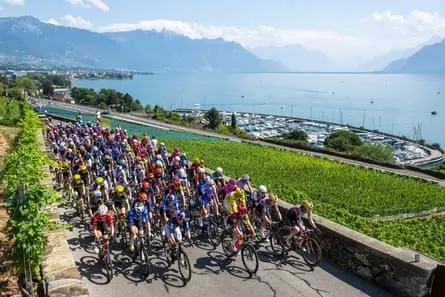
Meanwhile, professional cycling has confronted its own existential climate reckoning. During the 2026 Tour de France and Tour de France Femmes, extreme heatwaves and adjacent wildfires pushed riders and support staff into hazardous territory. Yvon Ledanois, sports director at XDS Astana, captured the unprecedented nature of the crisis in comments to RMC Sport:
"We’ve never experienced anything like this. It’s not just that one day it’s very hot and the next day we have normal conditions. No, it’s extremely, extremely, extremely hot every single day."
Though cycling’s Grand Tours are bound by a century-old July tradition, race organizers are actively exploring operational adjustments—such as shifting daily start and finish times to bypass peak afternoon temperatures—proving that flexibility is becoming the ultimate currency in professional sports.
Future Outlook: The Road to 2030 and Beyond
As the K-League weighs its options, the path forward appears less a question of if and more a question of when.
Transitioning a national football league is an intricate logistical puzzle. However, the J.League demonstrated that the shift can be executed cleanly by introducing a self-contained mini-transition tournament—bridging the gap in a few months before launching into the new structural rhythm. For South Korea, the 2030 FIFA World Cup cycle presents a natural staging post to synchronize calendars, minimize disruption, and overhaul domestic television and sponsorship contracts.
Ultimately, the climate crisis has removed the luxury of inaction. Whether through the implementation of an autumn-to-spring season, extended mid-summer cooling breaks, or flexible scheduling that accounts for localized weather extremes, South Korean football must evolve. The "Land of the Morning Calm" can no longer rely on meteorological stability; to safeguard its players, captivate its fans, and secure its financial future, the K-League must learn to bend with the wind before the heat breaks it entirely.