

Executive Overview
Flowing past the bustling southern fringe of Bangladesh’s capital, Dhaka, the Buriganga River is a waterway of harrowing extremes. Globally recognized as one of the most contaminated urban rivers on Earth, its 29-kilometer (18-mile) stretch is a daily recipient of an asphyxiating cocktail: toxic industrial effluents from hundreds of textile and dyeing factories, persistent tannery discharges, untreated municipal sewage, and mountains of solid waste. For decades, environmental scientists have viewed the Buriganga as an ecological dead zone where native fish species have been driven to local extinction, replaced entirely by an environment seemingly hostile to complex vertebrate life.
Yet, nature continues to defy expectations in profound and unexpected ways.
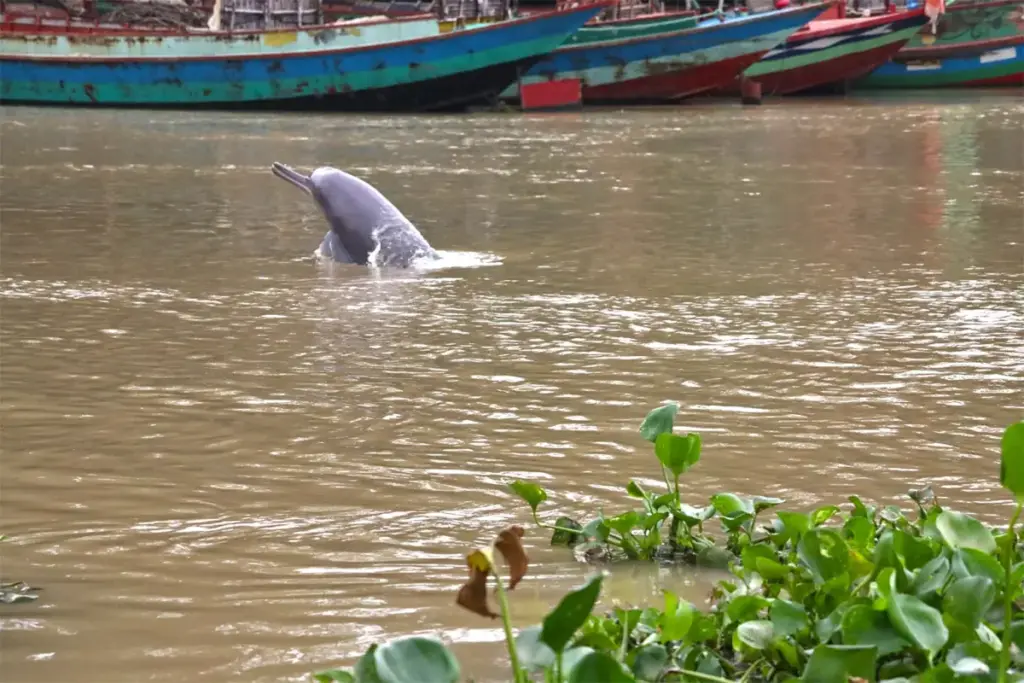
According to a landmark study published in the Journal of Asia-Pacific Biodiversity, a resilient population of approximately 20 endangered Ganges river dolphins (Platanista gangetica) persists within this heavily toxic waterway. Conducted over a rigorous 12-month period from September 2023 to August 2024, the study sheds unprecedented light on how these magnificent, highly vulnerable freshwater cetaceans navigate, hunt, and even reproduce in a river system plagued by heavy metals, negligible dissolved oxygen levels, and intense vessel traffic.
While the discovery offers a glimmer of hope for conservationists, it also serves as a stark reminder of the urgent need for systemic environmental reform. The dolphins’ presence is not an indicator of a healthy ecosystem, but rather a testament to their desperate adaptability—and a flashing red warning light regarding the cascading ecological and human health crises unfolding along Dhaka’s liquid lifeline.
Detailed Chronology of the 12-Month Survey
The revelation of the Buriganga’s surviving cetaceans is the result of a systematic, year-long monitoring initiative carried out by a dedicated team of researchers. Spanning from September 2023 through August 2024, the scientific team meticulously surveyed a 27-kilometer (16.7-mile) sector of the Buriganga River skirting Dhaka’s southern border.

- September 2023 – November 2023 (The Post-Monsoon Transition): As monsoon waters began to recede, researchers initiated baseline tracking. While October 2023 recorded a temporary absence of sightings—likely due to shifting hydrological dynamics or intense pulse pollutant loads—regular telemetry and visual monitoring quickly re-established the dolphins’ presence.
- December 2023 – February 2024 (The Winter Peak): The winter season marked a dramatic escalation in dolphin sightings, with December recording the highest frequency of individuals. Researchers noted that group sizes averaged 4.18 individuals—a notably higher density than previously documented in historical estimates for the region. Furthermore, the winter months yielded critical observations of social cohesion and foraging behavior.
- March 2024 – June 2024 (The Dry Season Crucible): As dry-season temperatures soared and industrial effluent concentration peaked due to diminished river discharge, the dolphins remained surprisingly steadfast. Tracking data revealed that dolphins were successfully located and logged in 10 out of the 12 surveyed months, defying expectations that the intense dry-season toxicity would force them to flee entirely.
- July 2024 – August 2024 (Monsoon Resurgence and Final Assessments): The final months of the survey captured the onset of the heavy monsoon rains. A temporary cessation of sightings occurred between July and August 2024, mirroring the previous year’s autumn lull. Despite these brief disappearances, the 12-month aggregate data painted a clear picture: a permanent, year-round core group utilizes the Buriganga, particularly concentrating their activities around the Bosila area.
Crucially, the survey recorded that calves accounted for nearly 16% of total sightings. This vital demographic metric confirms that the Buriganga population is not merely surviving as a static group of aging adults, but is actively reproducing despite extreme environmental stressors.
Supporting Context & Metrics: Anatomy of a Toxic Waterway
To truly comprehend the gravity of the dolphins’ survival, one must understand the nightmarish ecological conditions that define the Buriganga River. Ranked by the Canada-based awareness nonprofit Sea Smart as the fifth most polluted river in the world, the waterway is choked by relentless anthropogenic pressures.
Chemical Contamination and Heavy Metal Loads
A comprehensive 2025 water quality and pollution analysis published in the Jahangirnagar University Environmental Bulletin outlines the severe degradation of the Buriganga. The river absorbs untreated effluent from a dense web of industrial sectors:
- Tannery operations and textile/dyeing facilities
- Battery plants and metal-processing units
- Re-rolling mills, commercial dockyards, and pharmaceutical manufacturing hubs
- Unchecked municipal sewage, urban runoff, and solid waste disposal
Laboratory assessments of water and sediment samples reveal that heavy metals—including chromium, lead, cadmium, arsenic, mercury, nickel, copper, and zinc—consistently and drastically exceed both national safety thresholds and World Health Organization (WHO) guidelines.
The Asphyxiation of the River
During the critical dry season, the physical chemistry of the Buriganga deteriorates to catastrophic levels:

- Dissolved Oxygen (DO): Frequently plummets to near zero, falling drastically short of the minimum environmental standard of 5 milligrams per liter required to sustain aquatic life.
- Oxygen Demand: Biochemical oxygen demand (BOD) and chemical oxygen demand (COD) skyrocket, signaling rampant organic decay and chemical toxicity.
- Pollution Load Index (PLI): PLI values exceed 1 across the vast majority of sampling stations, indicating severe, chronic heavy metal contamination.
- Potential Ecological Risk Index (PERI): PERI scores place the vast majority of the river’s sectors into high-to-very-high ecological risk categories.
The Invasive Sucker Fish Phenomenon
With native fish species virtually wiped out by toxic anoxia, the ecological niche of the Buriganga has undergone a radical, unnatural shift. According to Dr. Mohammad Abdul Aziz, a renowned zoology professor at Jahangirnagar University in Dhaka, the river has become dominated by invasive suckermouth catfish (Hypostomus Plecostomus, locally known as sakar fish).
Unlike native species that require pristine oxygen gradients, suckermouth catfish possess specialized physiological adaptations allowing them to breathe atmospheric air from the water’s surface and tolerate extreme chemical loads. Paradoxically, these hardy, pollution-tolerant invaders have become the primary staple of the Ganges river dolphin’s diet in the Buriganga.
"The Buriganga’s condition is not suitable for most fish, yet some types of catfish are still present," explains Dr. Aziz. "Some catfish can breathe both in water and by taking air from the surface, and suckermouth catfish are among the most pollution-tolerant species. Right now, the Buriganga is full of suckermouth catfish. We believe the dolphins are hunting these fish."
Official Statements and Expert Perspectives
The discovery of breeding dolphins in a metropolitan sewer-river has sent ripples through the international conservation community, prompting urgent commentary from leading researchers and institutional authorities.
Co-author Md. Aminur Rahman expressed utter astonishment when the research team first confirmed the population’s existence:

"The Buriganga is not a usual place for dolphins, where native fishes have largely vanished, leaving the river full of invasive suckermouth catfish. When we found them, we were amazed at how it was possible, because the river is not livable for fish. Around the year, we didn’t track any dolphins only during two of the months, but all the other 10 months we tracked them."
While the discovery highlights the incredible resilience of Platanista gangetica, experts warn against romanticizing their survival. The threats facing these cetaceans extend far beyond water chemistry. Dr. Aziz emphasizes that physical disruptions pose an equal, if not greater, immediate danger:
"If we want to conserve the dolphins in the Buriganga, the priority must be to stop the pollution. The number of vessels on the river is also excessive now. These vessels severely disrupt the dolphins’ natural movement."
Furthermore, the broader national landscape for river dolphins remains precarious. A recent exhaustive survey jointly executed by Bangladesh’s Forest Department and WCS Bangladesh—covering approximately 4,900 kilometers (3,045 miles) across 45 rivers between 2024 and 2025—recorded a total of 2,307 Ganges river dolphins nationwide, identifying 25 distinct hotspots. Notably, a combined survey of the heavily polluted Turag, Buriganga, Bongshi, Surma, and Kalni rivers revealed a fragile cohort of 27 dolphins across a 305-kilometer (190-mile) stretch.
Dr. Aziz points out that illegal, unselective fishing gear represents an existential threat to these animals:

"Ganges river dolphins in Bangladesh are declining for several reasons. Illegal fishing in the rivers has increased, and the widespread use of illegal types of fishing nets trap and kill these dolphins. Back in 2013, we found dolphins in the Turag River during our study, but they are no longer seen there. The Buriganga dolphins sometimes move downstream through the Dhaleshwari River into the Meghna River and then return. Most of them stay around the Buriganga’s Bosila area. To protect the country’s Ganges river dolphins, we must reduce river pollution and at the same time stop harmful fishing practices and other activities."
Future Outlook: A Critical Juncture for Conservation
The survival of the Buriganga dolphins is a biological miracle that hangs by a thread. While the presence of calves confirms that reproduction is occurring, the bioaccumulation of heavy metals—which have already entered the local food chain through fish and vegetables, posing severe risks of kidney damage, neurological disorders, and cancer to millions of human dependents—undoubtedly impacts aquatic wildlife as well.
Recognizing the broader regional crisis, Bangladesh has previously taken steps toward cetacean protection, notably declaring three wildlife sanctuaries in the Sundarbans mangroves in 2012 to safeguard both Ganges river dolphins and Irrawaddy dolphins (Orcaella brevirostris). Nationally and internationally, momentum is building; nine countries recently signed a global pact to protect endangered river dolphins.
However, localized sanctuaries in remote mangrove ecosystems will do little to save the urban pioneers of the Buriganga. Securing a future for Dhaka’s surviving river dolphins requires a multi-pronged, uncompromising policy framework:
- Strict Industrial Regulation: Zero-tolerance enforcement against factories discharging untreated effluent, mandatory installation of functional Effluent Treatment Plants (ETPs), and heavy punitive fines for environmental violators.
- Vessel Traffic Management: Implementation of speed limits, designated shipping lanes, and acoustic monitoring around core dolphin activity zones (particularly the Bosila sector) to reduce vessel-strike mortality and chronic noise pollution.
- Net and Fishery Restrictions: Total crackdowns on illegal, indiscriminate gillnets that routinely trap and drown blind river dolphins navigating turbid waters via echolocation.
- Comprehensive Watershed Restoration: Long-term dredging, municipal wastewater treatment infrastructure expansion, and solid waste management overhauls to gradually restore baseline water quality.
The Ganges river dolphins of the Buriganga River have demonstrated an extraordinary, against-all-odds will to live, carving out a precarious existence in the shadow of a megacity. Whether humanity will muster the political will to clean up their home—or allow these resilient survivors to slip into extinction—remains the defining question of Dhaka’s environmental future.
Key Research Citations:
- Khatun, S., Hamza, A., Rahman, M. A., Shraboni, Z. S., & Aziz. M. A. (2026). Population status, spatiotemporal distribution, and habitat drivers of endangered Ganges river dolphins in the Buriganga River, Bangladesh. Journal of Asia-Pacific Biodiversity. DOI: 10.1016/j.japb.2026.05.002
- Akter, B. & Rahman, S. H. (2025). Heavy Metal Contamination in the Buriganga River, Bangladesh: A Review of Ecological Risk and Pollution. Jahangirnagar University Environmental Bulletin, Vol. 10, 93-108.
- Bashar, M.K., et al. (2023). Spatiotemporal distribution and pollution assessment of trace metals in the Buriganga River, Bangladesh. Journal of Water and Health, 21(6), 815–825. DOI: 10.2166/wh.2023.019



