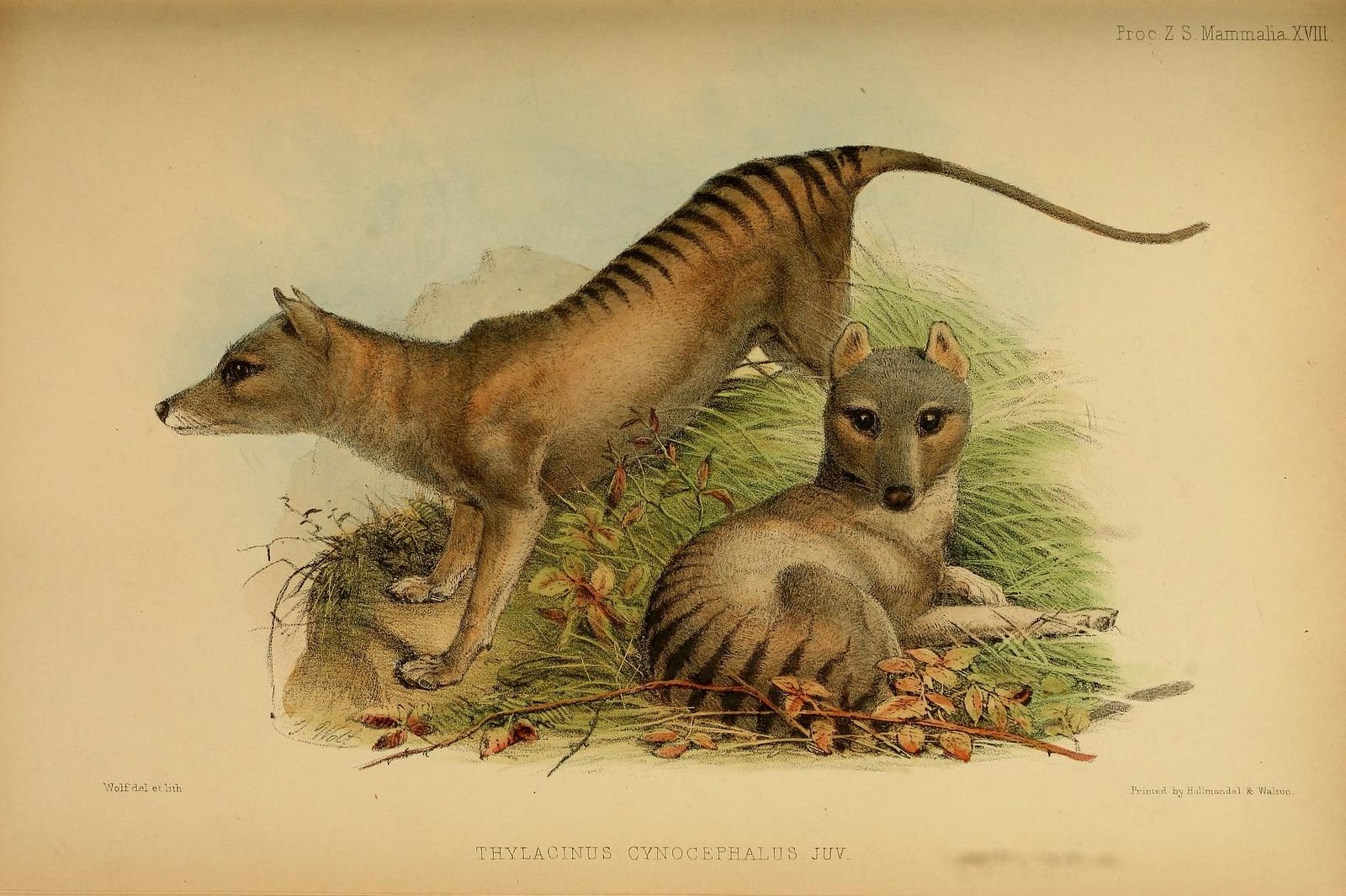
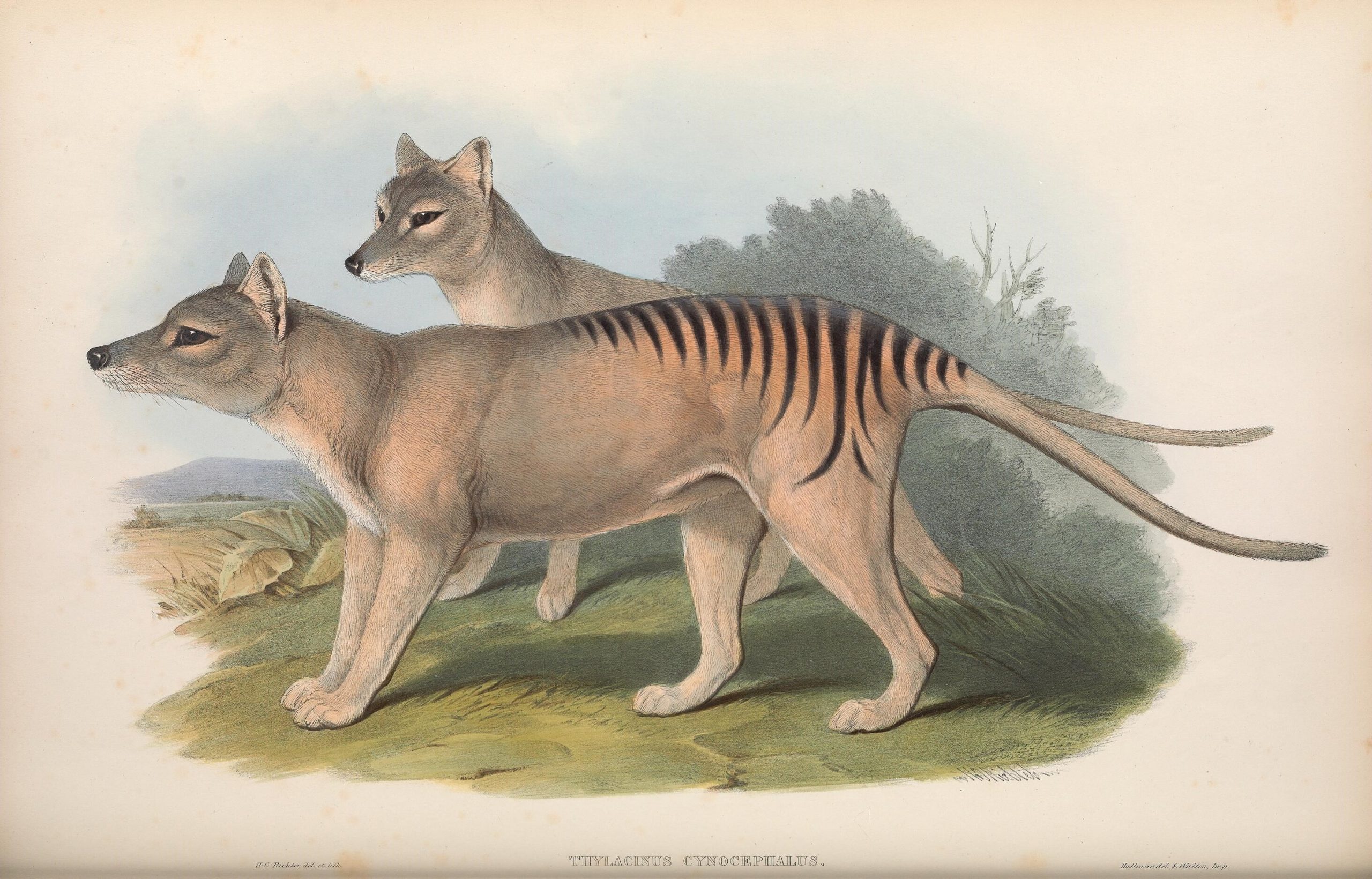
As the Biodiversity Heritage Library (BHL) marks its momentous 20th anniversary, the global scientific community is invited to reflect not merely upon an infrastructure of digital preservation, but upon an irreplaceable repository of planetary memory. Spanning over 64 million digitized pages of historic scientific literature, the BHL has democratized access to humanity’s collective understanding of the natural world. Yet, within its vast digital archives lies a collection of documents more poignant than any other: the initial scientific descriptions, field observations, and exquisite artistic illustrations of Australia’s most unique, perplexing, and ultimately imperiled species.
Marked on Australia’s National Threatened Species Day—coinciding precisely with the 90th anniversary of the death of the last known thylacine (Tasmanian tiger) at the Beaumaris Zoo in Hobart—this milestone offers a sobering investigation into the ecological history of an isolated island continent. Australia’s long geographical separation rendered its endemic marsupials and monotremes exceptionally vulnerable to the catastrophic pressures of European colonization, introduced placental predators, and systemic habitat fragmentation.
Through the lens of BHL Australia, this article explores how historical literature captures the precise window when unique creatures made their grand international debut in scientific discourse, only to be systematically misunderstood, persecuted, and driven to the brink of extinction—or beyond. Yet, amidst the tragic chronicles of the Pig-footed Bandicoot, the Lesser Bilby, and the thylacine, tales of improbable redemption, such as the rediscovery of the Leadbeater’s possum, stand as urgent reminders of the vital role historical data plays in modern conservation policy.
Detailed Chronology: The Encounter, Documentation, and Decline of Australian Endemic Fauna
The documentation of Australian wildlife by European naturalists represents one of the most intellectually dizzying chapters in the history of science. Emerging from centuries of geographical isolation, Australia’s fauna forced Western taxonomists to completely recalibrate their existing paradigms of the natural world.
The Late 18th Century: The Arrival of European Naturalists
Following British colonization in 1788, naturalists were inundated with descriptions of bizarre, anomalous species. Mammals that defied standard mammalian classification—such as egg-laying monotremes and pouched marsupials—appeared thick and fast in European literary circuits.
A quintessential example of this intellectual bewilderment is found in George Shaw’s 1799 description of the platypus (Ornithorhynchus anatinus). Confronted by a creature combining a duck-like bill, webbed feet, and mammalian fur, Shaw famously confessed in his publication:
"Of all the Mammalia yet known, it seems the most extraordinary…"
This sense of wonder, however, quickly soured into adversarial utilitarianism as European settlers attempted to reshape the Australian landscape in the image of the Old World, a process heavily accelerated by acclimatization societies.
1808: The First Scientific Formalization of the Thylacine
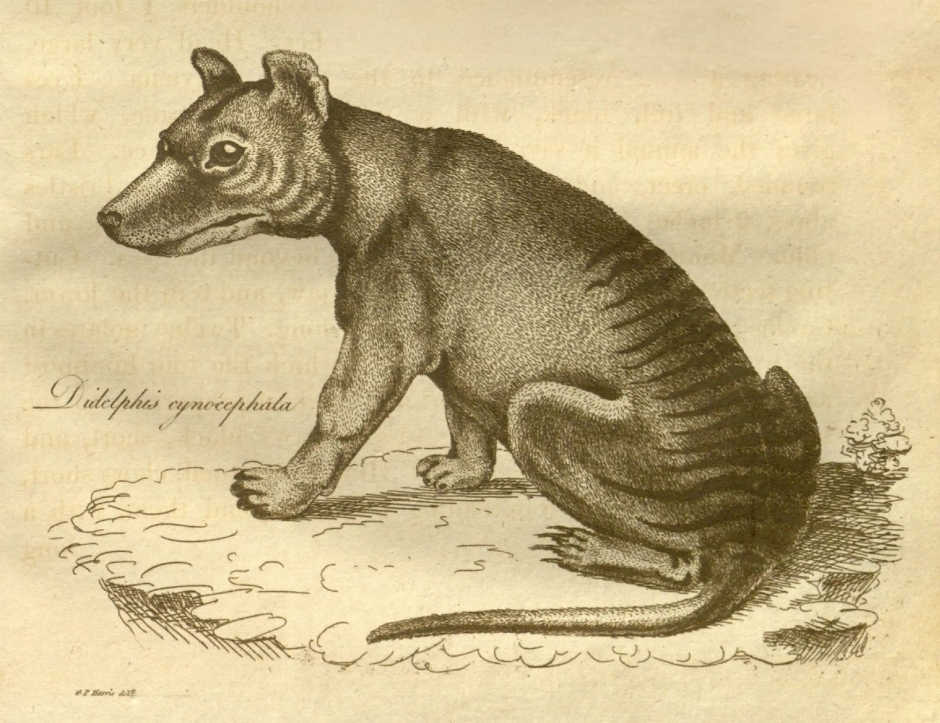
The scientific trajectory of Australia’s most infamous apex marsupial predator began on a sobering note. In 1808, naturalist George Prideaux Robert Harris published the first formal scientific description and illustration of the thylacine in the Transactions of the Linnean Society of London.
Naming the species Didelphis cynocephala (the "dog-headed opossum"), Harris described its large black eyes as conveying "a savage and malicious appearance," drawing direct comparisons to European wolves and hyenas. This unfortunate characterization cemented a hostile baseline narrative.
Subsequent accounts reinforced this demonization:
1838: Tasmanian naturalist Ronald Campbell Gunn reported that thylacines hunted sheep at night, describing them as "so very large and powerful, that a number of dogs will not face one."
1871: Johan Ludwig Gerhard Krefft characterized the thylacine as "a dangerous creature" and "the largest and most ferocious of the whole Mammalian Fauna in Australia."
Modern biological research has since revealed that the thylacine possessed a jaw structure and biomechanical profile poorly equipped for taking down adult sheep, making its reputation as an unmitigated menace to livestock a tragic miscalculation.
Mid-19th Century: Early Warnings and Captive Studies
Even as bounties were placed on the thylacine’s head by both private landowners and the colonial government, visionary naturalists and zoological artists began sounding alarm bells.
In 1850, celebrated zoological artist Joseph Wolf illustrated the first living thylacines ever exhibited in a zoological garden, housed at the London Zoo. In the accompanying text, zoologist Philip Lutley Sclater warned that the species’ shift toward predating introduced sheep would invite "perpetual war" from Tasmanian shepherds, culminating inexorably in total extinction.
These warnings were echoed in 1863 by John Gould in his masterwork The Mammals of Australia, featuring illustrations by Henry Constantine Richter. Gould offered a chilling, prophetic forecast:
"When the comparatively small island of Tasmania becomes more densely populated… the numbers of this singular animal will speedily diminish, extermination will have its full sway, and it will then, like the Wolf in England and Scotland, be recorded as an animal of the past…"
September 7, 1936: The Extinction of the Thylacine
Gould’s prediction became tragic reality when the last captive thylacine, kept at the Beaumaris Zoo in Hobart, perished on September 7, 1936—just two months after the species had finally been granted official government legal protection. This dark anniversary is commemorated annually as Australia’s National Threatened Species Day.
1867–1961: The Discovery, Loss, and Resurrection of the Leadbeater’s Possum
Not every historical narrative within the BHL concludes in permanent loss. In 1867, Professor Frederick McCoy—founding Director of the National Museum of Victoria—formally described the Leadbeater’s possum (Gymnobelideus leadbeateri) as both a new species and a new genus, naming it in honor of the museum’s first taxidermist, John Leadbeater.
Backed by McCoy’s aggressive acquisition of European scientific texts—collections that now form the bedrock of Museums Victoria’s historic library and are mirrored digitally in BHL Australia—the fairy possum entered the formal scientific record accompanied by exquisite artwork by Arthur Bartholomew and Dr. John J. Wild.
Following decades of sparse sightings, the species vanished entirely from the observational record. For 50 years, the Leadbeater’s possum was officially presumed extinct. However, in a miraculous turn of events in 1961, a small, surviving colony was rediscovered near Marysville, Victoria. Designated as the state’s faunal emblem in 1971, the species continues to fight for survival against contemporary ecological pressures.
Supporting Context & Metrics: The Scale of Extinction and Digital Preservation
To understand the gravity of Australia’s ecological crisis, one must examine the empirical data regarding mammalian loss and the scale of the digital infrastructure documenting it.
The Metrics of Loss
Global Extinction Rates: Australia holds the highest rate of mammalian extinctions in the world.
Driver Impact: The introduction of placental predators—specifically European red foxes (Vulpes vulpes) and feral cats (Felis catus)—combined with widespread land clearance, decimated endemic species that had evolved in millions of years of geographic isolation without placental competition.
The BHL Footprint: The Biodiversity Heritage Library currently aggregates over 64 million pages of biodiversity literature, drawing from global institutional partners including the Smithsonian Libraries and Archives, Missouri Botanical Garden, Harvard University, and Museums Victoria.
The Thylacine Timeline: Exactly 90 years separate the death of the last captive thylacine in 1936 and the modern contemporary reflections on biodiversity loss.
Lost Species Preserved in Literature
While museum specimens offer anatomical and genetic insights, the BHL preserves the behavioral ecology, abundance metrics, and indigenous/colonial perceptions of extinct taxa, including:
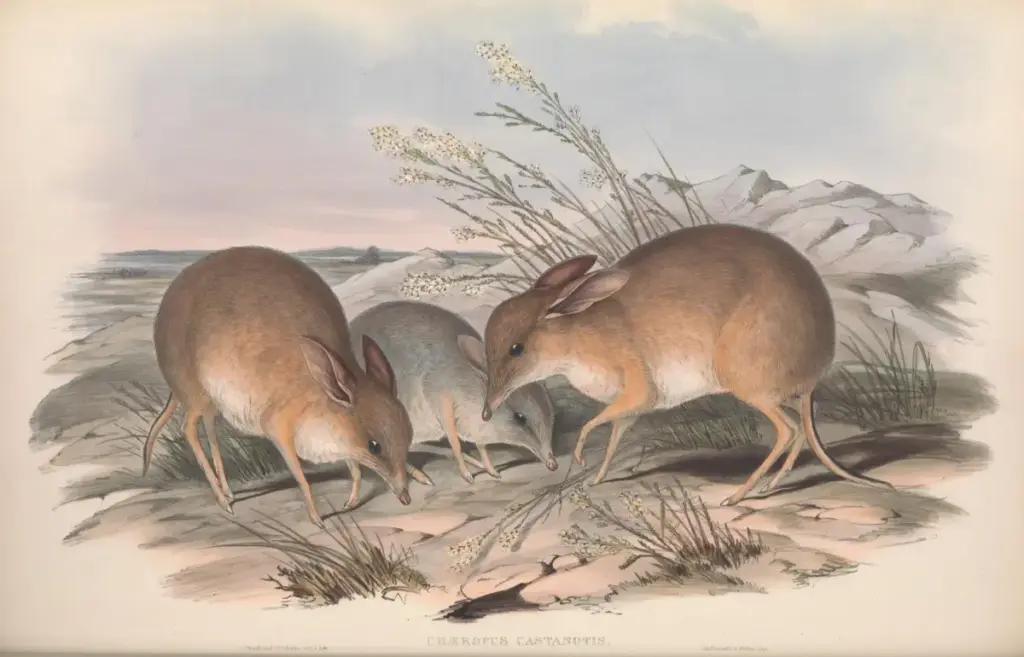
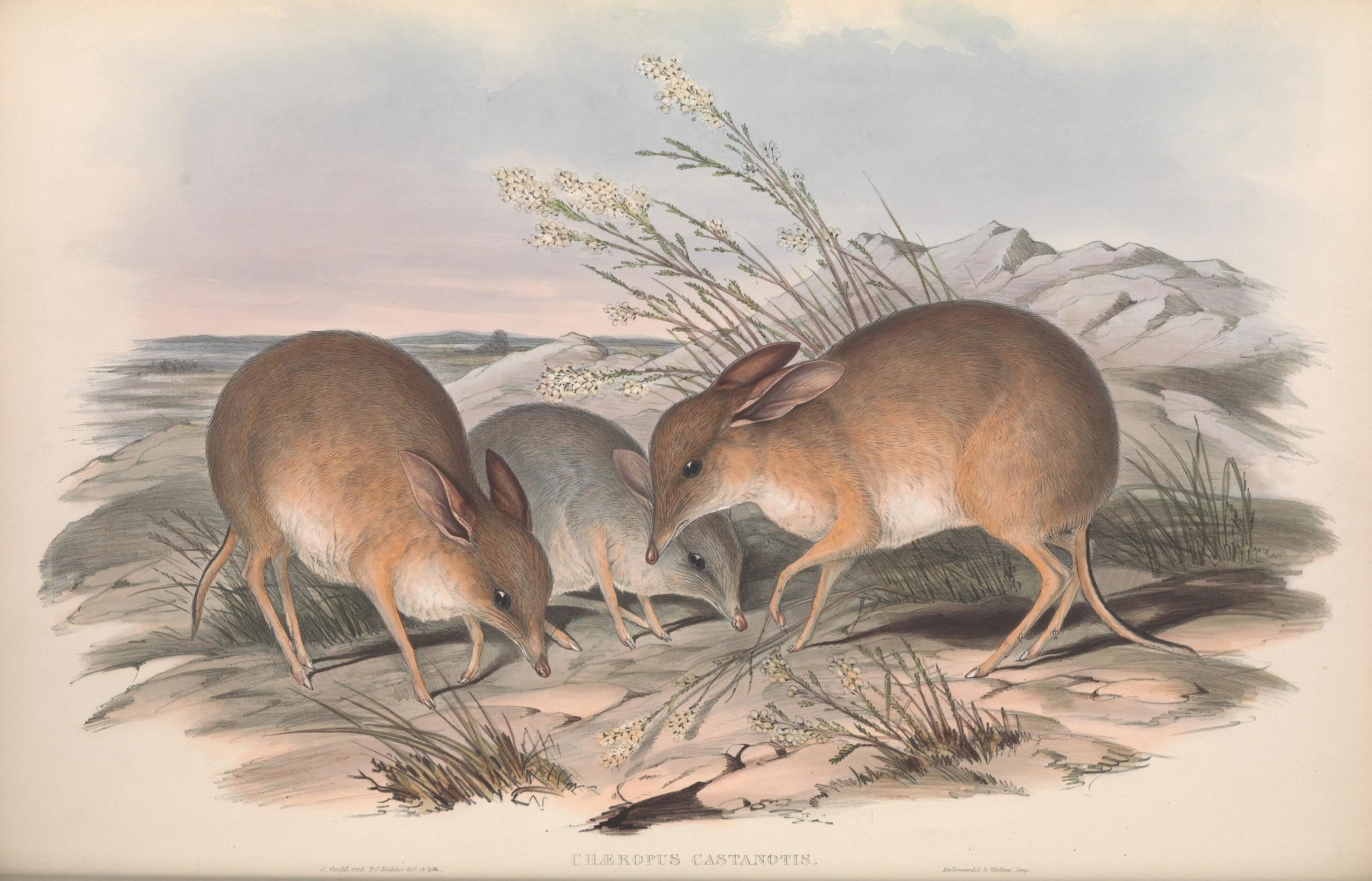
The Pig-footed Bandicoot (Chaeropus ecaudatus): Documented extensively in John Gould’s 1863 compendium with illustrations by Henry Constantine Richter.
The Lesser Bilby (Macrotis leucura): A desert-dwelling marsupial whose behavioral interactions are preserved solely within historical field accounts.
The Crescent Nail-tail Wallaby (Onychogalea lunata): Once common across the Australian interior, now relegated entirely to archival illustrations and museum sub-fossils.
Official Statements & Expert Perspectives
Reflecting on the milestone of the BHL’s 20th anniversary and the somber significance of National Threatened Species Day, leaders within the biodiversity informatics community emphasize the vital bridge between historical literature and modern conservation strategy.
"Coordinating this celebration of treasures chosen by our BHL community has been one of the most rewarding projects in my time as BHL’s Communications Director… My favorite treasures in BHL are the very first scientific descriptions of new species. I like to think of these descriptions as a species’ international debut in the literature."
— BHL Communications Directorate / Manager, BHL Australia
Reflecting on the institutional foresight of 19th-century directors like Frederick McCoy, modern archivists note the enduring value of historic literature:
"McCoy was renowned for spending substantial sums on books, an extravagance I will forever be grateful for. He ordered the latest scientific publications from Europe to be shipped to Australia at great expense, building what would become one of Australia’s largest and most significant natural history library collections."
— Museums Victoria / BHL Australia Representative
Conservation scientists utilizing the BHL emphasize that historical texts do more than catalog past life; they provide crucial baseline data for modern ecological restoration, habitat management, and the prevention of secondary extinctions among contemporary endangered taxa, such as the Critically Endangered Leadbeater’s possum.
Future Outlook: Lessons from the Archive for the Next 20 Years
As the Biodiversity Heritage Library enters its third decade of operation, its mission transcends passive digital archiving. The intersection of historical biodiversity literature and modern computational analysis—such as text-mining, machine learning-assisted taxonomic indexing, and spatial-temporal biodiversity mapping—is unlocking new frontiers in conservation science.
1. Reconstructing Baseline Ecosystems
By mining historical journals, field notebooks, and expedition logs preserved within the BHL, modern conservationists can accurately reconstruct historical ecological baselines. Understanding pre-settlement species distribution, population densities, and predator-prey dynamics provides vital context for contemporary rewilding and habitat restoration initiatives across Australia and globally.
2. Guarding Against Blind Extinction
The tragic trajectory of the thylacine serves as an enduring warning against ignoring the early indicators of ecological collapse. The warnings issued by Sclater and Gould in the 19th century were drowned out by immediate economic pressures and agricultural panic. Today, the BHL ensures that contemporary policymakers, conservationists, and researchers have immediate, barrier-free access to the warnings of the past, ensuring that modern red-list assessments are met with rapid, evidence-based legislative action rather than retrospective mourning.
3. The Second Chance Imperative
The survival of the Leadbeater’s possum stands as proof that historical presumptions of extinction can occasionally be overturned by nature’s resilience. However, as the species continues to face acute threats from climate change-driven mega-fires, logging, and feral predation, the margin for error grows razor-thin.
In its next 20 years, the Biodiversity Heritage Library aims to expand its global repository, integrating more indigenous ecological knowledge, newly digitized field archives, and international monographs. By transforming millions of fragile pages into an accessible, searchable global commons, the BHL ensures that humanity does not merely archive the ghosts of what has been lost, but gathers the knowledge required to defend what remains.