

Executive Overview
Steel is the literal and figurative bedrock of the modern industrialized world. From the towering skyscrapers defining our metropolitan skylines to the intricate networks of bridges, railways, vehicles, and appliances, humanity relies on this durable alloy for nearly every facet of daily existence. Yet, this foundational material carries an astronomical environmental cost. The traditional steelmaking process—largely reliant on coal combustion and chemical reduction—is one of the most stubborn contributors to global climate change. Accounting for roughly 7% of worldwide carbon dioxide emissions, the sector matches the climate footprint of the entire global fashion industry.
For decades, decarbonizing this heavy industrial sector has proven to be an elusive holy grail for environmental scientists and mechanical engineers alike. The obstacles are deeply entrenched in the economics and physics of the trade: profit margins are notoriously razor-thin, capital expenditures are astronomical, and colossal blast furnaces have multi-decade service lives. Pouring billions of dollars into unproven, zero-emission infrastructure has historically been a tough sell for corporate boards and risk-averse investors. Consequently, the industry has languished in a state of high-emission inertia, waiting for a technological savior that makes both environmental and economic sense.
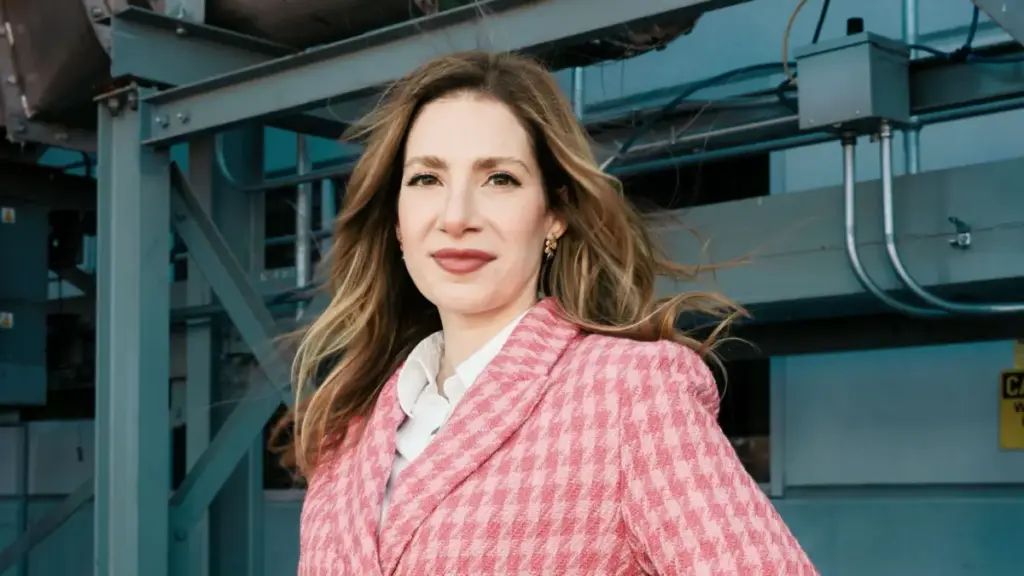
Enter Laureen Meroueh, a 34-year-old MIT-trained mechanical engineer and the founder of Hertha Metals. Meroueh may have engineered the breakthrough the industry has been desperately waiting for: a way to drastically clean up steel production without triggering a surge in the price of the final product. By reimagining the chemistry of the blast furnace, her startup converts iron ore into refined liquid steel in a single, streamlined step while swapping out coal for natural gas. The dual innovation slashes carbon emissions by at least 50% and slashes operational costs by 25% compared to business-as-usual steelmaking.
If Hertha Metals successfully scales its technology, the implications will be globally transformative. By dramatically shrinking the physical footprint and energy requirements of steel production facilities, Meroueh’s innovation offers a pragmatic bridge from our fossil-fueled present to a cleaner, more sustainable industrial future. Rather than waiting for a utopian zero-carbon infrastructure that may take generations to build, Hertha is fixing what is broken right now—proving that environmental stewardship and industrial profitability do not have to be mutually exclusive.
Detailed Chronology: From Prodigy to Industrial Innovator
The trajectory that led Laureen Meroueh to the vanguard of green industrial technology is as unconventional as it is impressive. Her capacity for pushing traditional boundaries manifested early in life. Raised as a first-generation Lebanese-American in an entrepreneurial family where launching one’s own enterprise was viewed as a standard career path, Meroueh exhibited an exceptional aptitude for complex analytical subjects from childhood.
At just 12 years old, Meroueh was accepted into an elite pilot program through Florida Atlantic University, bypassing traditional secondary education entirely in favor of rigorous, college-level coursework. Immersed immediately in advanced engineering disciplines, she wrestled with high-level calculus and explored the intricate mechanics of ocean wave energy.
Despite the intense academic pressure, Meroueh maintained a vital connection to the natural world. She spent hours sitting high in the branches of trees and surfing the Atlantic waves—activities that fostered a deep, enduring appreciation for the earth’s ecosystems and ignited a passionate desire to safeguard them. "I don’t know how you can’t be drawn toward trying to help protect that," she reflects.
This early dichotomy between rigorous mathematical engineering and a visceral love for nature became the guiding compass of her professional life. After earning her bachelor’s degree, she pursued her education further, ultimately completing a PhD in mechanical engineering at the Massachusetts Institute of Technology (MIT). Armed with world-class technical credentials, Meroueh cut her teeth in the clean-tech sector by leading a green hydrogen startup, gaining invaluable insights into the commercial realities of alternative energy markets.
Recognizing that the heavy industrial sector remained largely unaddressed by existing clean-tech solutions, Meroueh took the entrepreneurial leap in 2022. Drawing confidence from her family’s business background—where taking the risk to start a company was treated as entirely normal—she founded Hertha Metals. Moving operations to a pilot plant in Conroe, Texas, just north of Houston, she set out to solve the fundamental chemical inefficiencies plaguing the global steel industry.
Supporting Context & Metrics: The Anatomy of a Breakthrough
To understand the magnitude of Hertha Metals’ innovation, one must examine the staggering scale of traditional steel production. Conventional manufacturing relies on massive blast furnaces operating at extreme temperatures. These systems use coke (a purified form of coal) to strip oxygen from iron ore in a multi-stage, energy-intensive process that releases enormous quantities of carbon dioxide into the atmosphere.
According to Dr. Iryna Zenyuk, director of the National Fuel Cell Research Center at the University of California, Irvine, the sheer scale of these facilities has long made them immune to easy fixes. "There’s huge value in reducing the size of this production system," Zenyuk notes. "They’re massive. They’re inefficient and require a lot of energy input, so even if they just save energy efficiency, that’s already a big step."
Hertha’s technological breakthrough focuses on simplifying this convoluted chemistry. By condensing the multi-stage conversion of iron ore into a single, highly efficient step and substituting coal with natural gas, the company bypasses the most carbon-heavy bottlenecks of legacy manufacturing. Crucially, this is achieved without sacrificing the purity of the end product or inflating production costs. In an industry where a shift of a few dollars per ton can dictate market dominance, Hertha’s ability to cut production costs by 25% while simultaneously halving emissions is a compelling economic proposition.
Financial backers have taken note of these lean metrics. As of July 2026, Hertha Metals has secured approximately $20 million in venture funding—a modest sum by heavy-industry standards, where competing green startups routinely burn through $50 million to $100 million before producing viable output. Operating out of the Conroe facility, Hertha’s current pilot infrastructure is already capable of churning out one metric ton of high-purity steel per day.
Rajesh Swaminathan, a partner at Khosla Ventures and an investor in the firm, emphasizes the exceptional capital efficiency of the team. "One ton per day is a big metric for steel," Swaminathan states, describing the company’s ongoing scale-up as remarkably impressive given its minimal capital expenditure. While competitors have spent vast fortunes on theoretical frameworks, Hertha has focused on tangible, operational execution.
Official Statements and Industry Perspectives
The strategy employed by Hertha Metals represents a calculated philosophical pivot within the clean-tech community. For years, the prevailing dogma among environmentalists and industrial engineers has been that true decarbonization requires an immediate, total transition to green hydrogen. In this alternative model, hydrogen is utilized to strip oxygen from iron ore—a chemical pathway that holds the theoretical promise of eliminating carbon emissions entirely.
However, green hydrogen remains prohibitively expensive and logistically difficult to source at scale. Meroueh argues that waiting around for a utopian, zero-carbon infrastructure is a luxury the planet does not have time for. Hertha’s approach focuses squarely on what can be fixed now.
"How can we be smarter about how we make things… so that it’s also not going to harm us in the long term?" Meroueh asks, articulating the core ethos of her company. She openly acknowledges that Hertha is content to maintain a bridge via fossil fuels—specifically natural gas—primarily to keep costs manageable and ensure immediate commercial viability. Yet, the architecture of Hertha’s furnaces has been designed with future adaptability in mind. If and when green hydrogen becomes economically viable and widely available, the current Hertha plant can transition to a fully decarbonized system without requiring a costly redesign of its core hardware.
Industry experts validate this pragmatic approach. Dr. Zenyuk points out that perfection must not become the enemy of progress in heavy industry. While Hertha’s pilot plant output of one ton per day represents a tiny fraction of the roughly 80 million metric tons of steel produced annually in the United States alone, the architectural proof-of-concept is what matters most. "Making even one metric ton is still an achievement," Zenyuk affirms, noting that validating the fundamental chemistry at a small scale is the critical first step toward broader commercial adoption.
Future Outlook: Scaling for Global Impact
The coming years will test whether Hertha Metals can successfully transition from a promising Texan pilot project to a major industrial player. The roadmap for the company’s expansion is already underway and moves at a pace rarely seen in the traditionally sluggish heavy manufacturing sector.
Plans are currently progressing for a second, larger facility situated directly adjacent to the existing Conroe pilot plant. This upcoming facility is slated to dramatically ramp up operations, projecting an output of 10,000 metric tons of high-purity steel per year. Company projections indicate that this plant will reach full operating capacity by the end of 2027.
Looking further ahead toward the horizon of 2030, Meroueh envisions the construction of a third, full-scale production site. This facility is expected to push Hertha’s aggregate output to an impressive 500,000 metric tons annually. While this volume will still capture only a single-digit percentage of the vast American steel market, it will establish a robust commercial footprint and prove that cleaner, cheaper steelmaking is entirely scalable.
The broader implications for global climate policy are profound. As tightening regulatory frameworks, carbon border taxes, and consumer demands for sustainable supply chains converge on heavy industry, manufacturers will be forced to adapt or face obsolescence. By offering a solution that lowers emissions drastically without inflicting financial pain on manufacturers or consumers, Laureen Meroueh and Hertha Metals have charted a realistic, economically viable course forward.
Humanity is not going to outgrow its need for steel. The skyscrapers, transit systems, and renewable energy infrastructure of tomorrow will all demand vast quantities of this essential alloy. By rewriting the chemical and economic rules of how steel is forged, Hertha Metals is ensuring that the foundation of our future civilization no longer comes at the Earth’s expense.



