

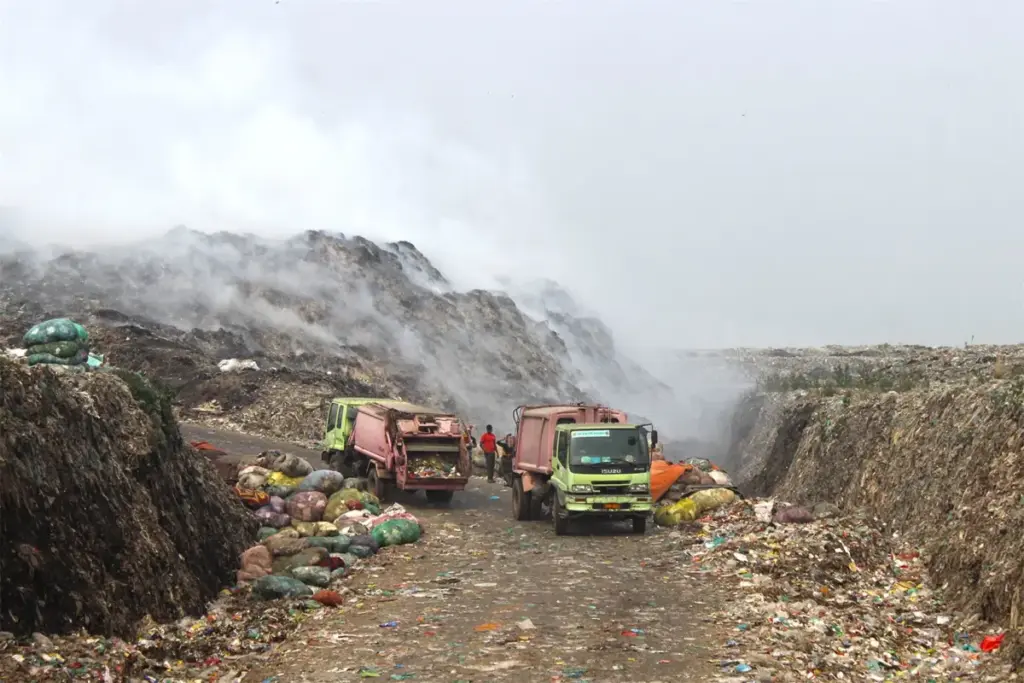
DHAKA, BANGLADESH — For generations, the pungent, choking stench of rotting refuse and spontaneous open-air fires has been an inescapable fact of life for Yeasmin Begum. Residing on the periphery of the sprawling Aminbazar landfill on the outskirts of Dhaka, Begum’s daily existence is punctuated by dense palls of grey smoke and falling ash that routinely coat her home.
"Sometimes it is quite difficult for us to breathe when waste collectors burn the waste under the open sky," Begum says, describing how particulate-laden winds regularly envelop her neighborhood. "Smoke and ashes envelop our home and surroundings."
Yet, this localized environmental degradation—severe as it is—may soon pale in comparison to what lies ahead. Municipal authorities are pressing forward with an ambitious, high-stakes initiative to transform the capital’s mounting solid waste crisis into electricity. Known as the North Dhaka waste-to-energy project, the $467 million undertaking will incinerate up to 3,000 metric tons of municipal trash daily. By burning these staggering volumes of refuse, the facility aims to fire a massive boiler, generate high-pressure steam, drive an industrial turbine, and ultimately pump 42.5 megawatts of electricity into the national grid.
While heralded by government planners as a breakthrough solution to Dhaka’s overflowing disposal sites, the project—slated for completion by December 2028—has ignited fierce resistance. Environmental scientists, public health advocates, and surrounding farming and residential communities are warning that the plant threatens to lock the region into decades of chronic air pollution, soil contamination, and severe health risks.
Executive Overview
The North Dhaka waste-to-energy project represents a watershed moment for Bangladesh’s urban infrastructure management. As the nation’s first-ever commercial-scale municipal waste incineration facility, it addresses a genuine, paralyzing crisis: the capital city is drowning in its own refuse. Mountains of solid waste tower over the Aminbazar landfill in Savar, the primary disposal hub where trucks from across northern Dhaka converge daily.
Backed by international multilateral lenders headquartered in China—including the Asian Infrastructure Investment Bank (AIIB) and the New Development Bank (NDB)—and owned by the state-backed China Machinery Engineering Corporation (CMEC), the venture is designed to relieve the city’s overwhelming spatial and structural waste constraints.

However, the project has exposed a deep rift between the state’s technocratic push for modernization and the grassroots realities of vulnerable communities living in its shadow. Critics argue that incinerating thousands of tons of municipal waste every day in a densely populated peri-urban setting will release hundreds of thousands of tons of toxic ash and hazardous chemical emissions annually. Compounding these fears, the government recently amended national air pollution regulations to lower mandatory incineration temperatures—a cost-saving measure that researchers warn will significantly elevate the risk of incomplete combustion and the subsequent release of carcinogenic dioxins, furans, and heavy metals.
Detailed Chronology and Project Evolution
The path to Bangladesh’s inaugural waste-to-energy plant has been marked by significant delays, regulatory friction, and shifting policy frameworks.
- Pre-2024 (Decades of Open Dumping): For years, the Aminbazar landfill functioned as an unmanaged open-air dumping ground. Surrounding communities like Boliarpur and Konda endured decades of unregulated waste accumulation, surface water contamination, and informal, small-scale waste burning carried out by scavengers and informal collectors.
- Initial Project Timelines: Originally conceptualized to come online much earlier, the project suffered years of stagnation. Development work remained effectively halted as proponents waited for definitive environmental clearances and navigated complex financial arrangements with international institutions.
- Late 2024 (Environmental Impact Assessments): Detailed Environmental Impact Assessment (EIA) documents revealed the immense scale of the prospective facility’s byproduct generation, estimating tens of thousands of tons of annual fly and bottom ash alongside complex chemical compounds. Environmental coalitions immediately demanded the project’s cancellation.
- July 1, 2025–2026 (Government Reaffirmation): During a high-profile site inspection, Mir Shahe Alam, state minister for local government, rural development, and co-operatives, reaffirmed the administration’s unyielding commitment to the venture, declaring urban waste a "chokepoint" that must be managed at any cost.
- April 2026 (Regulatory Rollbacks): In a pivotal regulatory shift, the Department of Environment amended the Air Pollution Control Rules 2022. The revision lowered the legally mandated minimum incineration temperature from 1,000°C (1,832°F) down to 850°C (1,562°F), sparking immediate outrage from environmental watchdogs who argued the change prioritized corporate operating margins over public safety.
- Current Status (Targeting December 2028 Completion): With financing secured—including investments from the AIIB and NDB—and legal hurdles cleared via regulatory amendments, construction timelines point toward a commercial launch by the close of 2028.
Supporting Context, Metrics, and Environmental Impact
To understand the gravity of the North Dhaka project, experts point to the stark numerical realities embedded within the plant’s official Environmental Impact Assessment (EIA) and independent audits.
According to data compiled by environmental groups analyzing the project’s technical blueprints, the 42.5-megawatt facility will produce approximately 74.8 metric tons of fly ash daily. Fly ash—characterized by its extremely fine particulate structure—is notoriously difficult to contain and easily becomes airborne, posing severe inhalation risks. When combined with coarser bottom ash that settles at the base of the furnace, the facility is projected to churn out a staggering 73,576 metric tons of solid waste annually.
Furthermore, technical analyses indicate that the plant will emit 39.56 metric tons of toxic substances per year, including dangerous heavy metals (such as lead, cadmium, and arsenic), dioxins, and furans. Alongside these heavy compounds, the facility is slated to release 1.17 tons of harmful gaseous pollutants daily, encompassing nitrogen oxides ($textNO_x$), sulfur oxides ($textSO_x$), carbon monoxide ($textCO$), and hydrogen chloride ($textHCl$).
These emissions carry profound implications for human health. A landmark 2019 report by the Global Alliance for Incinerator Alternatives (GAIA) aggregated international scientific literature, concluding that operating incinerators present direct, documented health hazards. These range from increased risks of neoplasia (abnormal tissue growths and cancers) to congenital anomalies, elevated infant mortality rates, and higher incidences of miscarriage.

The Shadow of Regional Precedents: Lessons from Delhi
Proponents of the Aminbazar facility frequently frame incineration as a modern, global standard for mega-cities struggling with space-constrained landfills and mounting urban consumption. However, environmental advocates urge policymakers to look just across the border to neighboring India, where municipal waste-to-energy plants have frequently exacerbated, rather than resolved, urban ecological crises.
Investigative reporting by international media outlets like Deutsche Welle (DW), alongside local investigations in Delhi, has exposed severe operational shortcomings at similar facilities. Rather than mitigating pollution, burning mixed municipal waste in Delhi’s incinerators has released hazardous heavy metals into the surrounding urban airshed. Poorly regulated handling, improper storage, and open-air transport of toxic fly ash have systematically contaminated local soils and groundwater tables in adjacent neighborhoods. Residents living within the immediate footprint of Delhi’s plants report persistently degraded air quality and chronic pulmonary ailments, serving as a cautionary tale for Dhaka’s planners.
Official Statements and Divergent Perspectives
The debate over the Aminbazar project highlights a fundamental tension between developmental urgency and environmental justice.
Government ministers maintain that radical, uncompromising measures are non-negotiable if Dhaka is to survive its refuse crisis. Defending the project’s trajectory during his July inspection, State Minister Mir Shahe Alam pulled no punches:
"The municipal waste has now become a chokepoint of Dhaka city. At any cost, we need to ensure waste management, whether it is through waste-to-energy, bio-compost fertilizer or chemical production; we need to use this huge pile of waste."
Addressing criticisms regarding the controversial rollback of the Air Pollution Control Rules—specifically dropping the mandatory furnace temperature from 1,000°C down to 850°C—Shaikh Faridul Islam, state minister for environment, forest and climate change, defended the decision as a pragmatic adaptation to the composition of local refuse.

"Our local experts wanted to burn the waste at 1,000-1,100° Celsius due to the mixture of e-waste [discarded electrical or electronic devices] and medical waste," Islam explained in an interview. "Pero once we found out that our daily kitchen waste is enough to run the plant, we lowered the requirement for the boiler temperature. If e-waste and medical waste are not burned, there will be no harm."
This assertion, however, is met with deep skepticism by independent scientists and civil society coalitions. Hasan Mehedi, secretary of the Bangladesh Working Group on Ecology and Development (BWGED), argues that the lower thermal threshold is inadequate for destroying complex organic compounds and will inevitably result in higher emissions of dangerous particulates and toxins.
"If the power plant is built and run regularly, local residents, especially children and elderly people, will face more respiratory and lung-related problems, eye irritation, fatigue, and long-term health issues due to chronic exposure to air pollution," Mehedi warned.
Local agricultural workers, whose livelihoods depend on the fertile lands surrounding the landfill, share these grim projections. Md Naim, a 35-year-old farmer who cultivates rice and vegetables near the site, describes a daily battle against the existing environmental hazards of the dumping station.
"We can’t breathe when waste is burned in the dumping station," Naim says, wiping ash from his brow. "Our nose closes with ashes, and we feel a headache from the smoke while working on the field."
The communities of Boliarpur and Konda—flanked by the project site to the northwest, with multiple schools situated less than a mile away—find themselves on the frontline of an experiment whose long-term ecological toll remains unquantified.

Future Outlook: A Critical Juncture for Urban Sustainability
As construction pushes forward toward the December 2028 completion target, Bangladesh stands at a crossroads in its environmental governance. The $467 million North Dhaka project is ostensibly designed to light homes and clear streets, but it risks doing so at a devastating cost to the immediate community’s health and ecological integrity.
Civil society organizations, local farming cooperatives, and environmental justice networks continue to press for a wholesale re-evaluation of the initiative, advocating instead for decentralized zero-waste strategies, rigorous source segregation, composting, and robust recycling frameworks that do not rely on atmospheric combustion.
For residents like Yeasmin Begum and Md Naim, however, high-level policy debates offer little comfort against the daily reality of rising smoke and falling ash. As international lenders and municipal authorities cement their partnership with Chinese state contractors to power the capital, the fundamental question remains unanswered: At what point does the cost of urban modernization become too high for the communities forced to bear its burden?



