The transition to zero-emission transportation has long been heralded as a critical milestone in the global fight against climate change. However, as millions of electric vehicles (EVs) and commercial autonomous fleets scale up worldwide, a looming secondary challenge has taken center stage: what happens to their massive lithium-ion batteries when they are no longer fit for the rigorous demands of the road?
Historically, the answer pointed directly to energy-intensive recycling facilities. While recycling is essential for recovering valuable raw materials like lithium, cobalt, and nickel, it often cuts short the functional lifespan of hardware that still holds significant operational capacity.
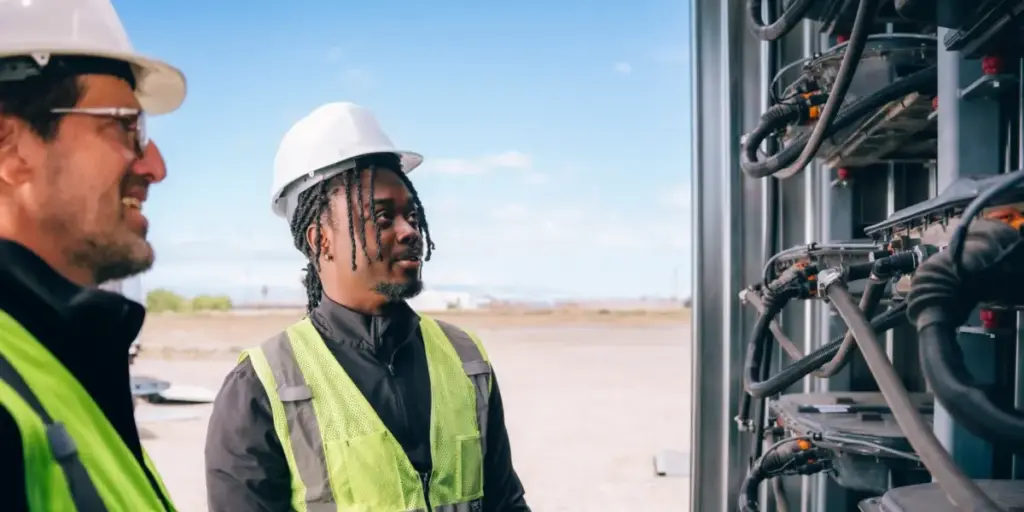
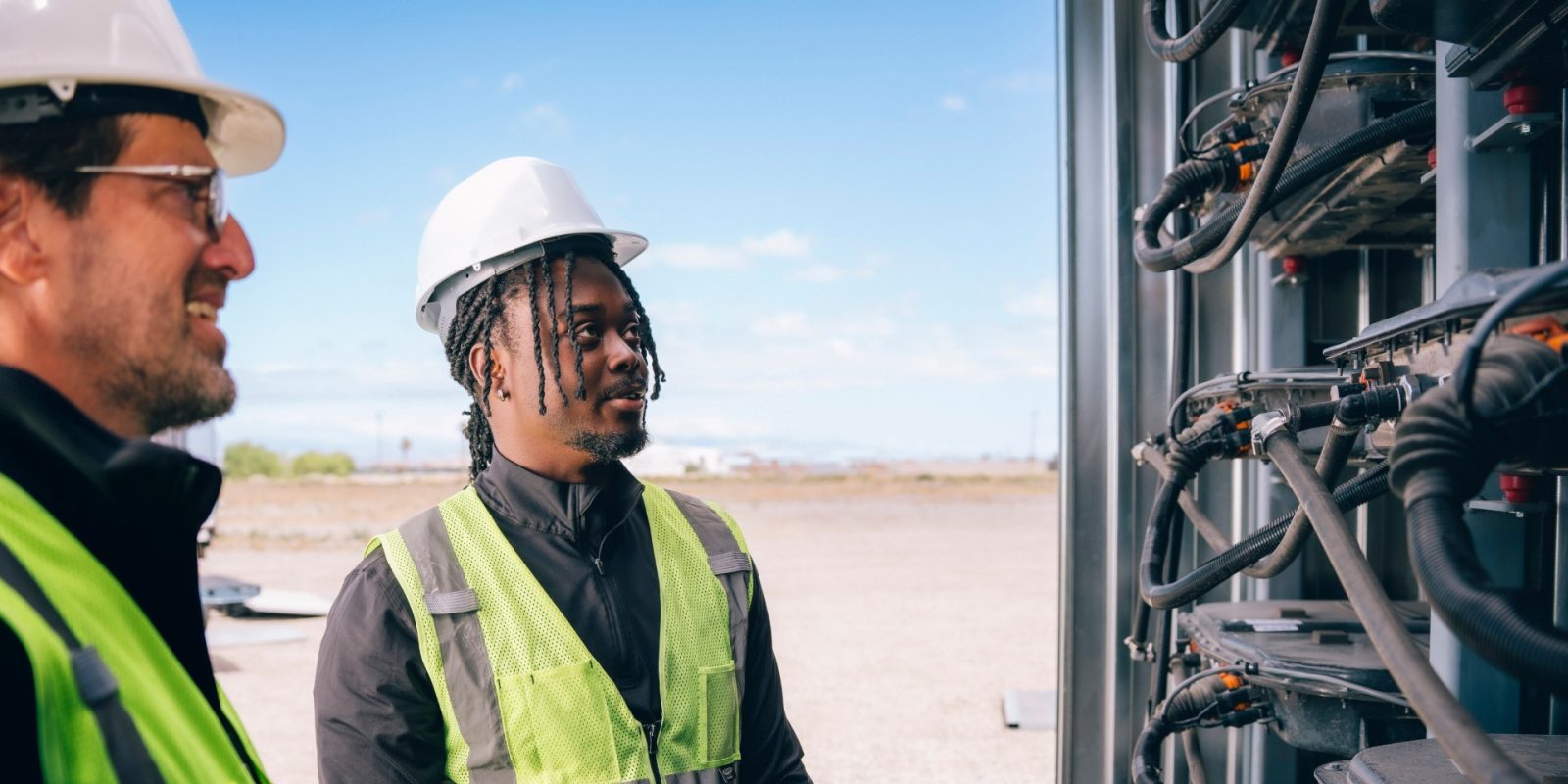
In a major stride toward a truly circular clean-energy economy, autonomous driving pioneer Waymo has announced a strategic partnership with battery repurposing specialist B2U Storage Solutions. Under this collaboration, retired EV battery packs harvested from Waymo’s commercial robotaxi fleet will bypass immediate recycling. Instead, they will be given a lucrative and vital second life as stationary energy storage systems bolstering power grids in California and Texas.
This initiative addresses two critical infrastructure bottlenecks simultaneously: the surging demand for grid stability amid fluctuating renewable energy integration, and the sustainable management of post-consumer EV assets. By leveraging B2U’s innovative repurposing technology, the partnership aims to transition thousands of decommissioned battery packs from transportation to the power sector. The result is a model that squeezes every drop of economic and environmental value out of lithium-ion technology before it ultimately heads to the recycling plant.
Detailed Chronology: The Evolution of Fleet Sustainability
To understand the significance of the Waymo-B2U partnership, it is necessary to examine how the autonomous vehicle (AV) industry has approached hardware lifecycle management over the past decade.
Phase 1: The Early Fleet Era and Recycling Dependency
When autonomous ride-hailing services like Waymo first scaled their operations, the primary focus was perfecting safety, expanding geographical footprints, and refining machine-learning driving models. Little public attention was paid to the hardware aftermath. Like standard consumer EVs, early-generation prototype batteries that degraded below optimal driving thresholds—typically retaining roughly 70% to 80% of their initial capacity—were funneled straight into material recovery and recycling pipelines.
While recycling prevents toxic waste and recaptures vital earth elements, it requires thermal or chemical processing that consumes considerable energy. Furthermore, discarding a battery that still retains up to 80% of its storage capability represents a squandered opportunity for applications with less demanding power-delivery profiles.
Phase 2: The Shift Toward Circular Economy Frameworks
As regulatory pressures mounted and corporate sustainability goals shifted from mere compliance to net-zero strategies, fleet operators began evaluating the entire lifecycle of their assets. Waymo’s engineering and environmental teams recognized that the intensive duty cycles of commercial robotaxis—which operate nearly around the clock—accelerated battery wear compared to privately owned passenger cars. Consequently, a steady, predictable pipeline of retired, high-grade battery packs was set to emerge much faster than in the consumer sector.
Simultaneously, B2U Storage Solutions was pioneering methods to integrate used automotive batteries directly into utility-scale storage facilities without requiring extensive or costly disassembly. B2U’s proprietary architecture allows individual packs to retain their original configurations and safety management systems, slashing integration costs.
Phase 3: The Waymo-B2U Partnership
The formal agreement between Waymo and B2U marks a maturing phase for both autonomous transit and energy storage. By establishing operational pipelines in California and Texas—two states with massive deployments of Waymo robotaxis and uniquely stressed power grids—the partnership moves out of the theoretical realm and into large-scale execution. Retired battery packs are now systematically redirected from Waymo maintenance hubs directly to B2U’s stationary storage installations, creating a seamless bridge between the automotive and energy sectors.
Supporting Context & Metrics: The Mechanics of Second-Life Storage
The viability of second-life EV batteries hinges on a fundamental electro-chemical reality: a battery that is "dead" to a high-performance vehicle is far from exhausted.
Understanding Residual Capacity
An EV battery is typically retired from automotive service not because it has failed completely, but because its degraded state reduces the vehicle’s driving range below acceptable commercial thresholds. For a robotaxi operating on tight schedules, range anxiety and frequent charging stops compromise business efficiency.
However, a battery operating in a stationary grid-storage environment has entirely different operational parameters. It does not need to deliver rapid bursts of high acceleration or endure the physical vibrations and extreme ambient temperature swings of roadside operation. Stationed safely inside a controlled or monitored enclosure, a retired EV battery can gracefully handle low-stress charge and discharge cycles for several additional years.
Grid Stabilization and Renewable Integration
California and Texas present contrasting yet equally compelling landscapes for stationary energy storage:
California boasts high penetration of solar energy, leading to the infamous "Duck Curve"—a sharp oversupply of solar generation during midday followed by a steep spike in electricity demand during evening hours when solar generation drops off. Stationary storage systems absorb excess daytime solar power and discharge it rapidly during these evening peaks.
Texas, operating on its independent ERCOT grid, faces extreme weather volatility ranging from intense summer heatwaves to severe winter freezes. The grid frequently experiences unprecedented demand spikes, making distributed, reliable energy storage a matter of grid survival.
By deploying second-life Waymo batteries into these markets, B2U creates decentralized bulwarks against blackouts and brownouts. According to industry analyses, utilizing repurposed batteries significantly lowers capital expenditures compared to building storage units from scratch using newly mined minerals. This cost efficiency allows energy project developers to scale up storage capacity much faster and at a lower economic cost.
Official Statements: Leadership Perspectives
The collaboration has drawn praise from executive leadership on both sides, highlighting the multi-industry benefits of the alliance.
Freeman Hall, CEO of B2U Storage Solutions, emphasized the economic and operational dimensions of the project:
"By extending the use of these batteries as grid storage, we are monetizing the full potential of EV batteries, now providing crucial stability to the power grid as energy demand continues to grow."
Hall’s comments underline a central tenet of modern cleantech strategy: asset maximization. By extracting extra years of utility from the same chemical components, companies can decouple clean energy deployment from the mining bottlenecks that often plague supply chains.
Echoing this sentiment, Adam Lenz, Waymo’s Head of Sustainability and Environment, pointed to the enduring community impact of the initiative:
"Through this partnership, we can repurpose our batteries for local grid storage and ensure our batteries continue to provide economic and environmental value to the community long after they’ve retired from the road."
Lenz’s statement reinforces Waymo’s broader corporate commitment to environmental responsibility, proving that autonomous mobility companies are increasingly looking beyond tailpipe emissions (or lack thereof) to examine the total cradle-to-grave footprint of their technology stacks.
Future Outlook: Scaling the Second-Life Economy
The partnership between Waymo and B2U Storage Solutions is more than an isolated corporate agreement; it serves as a blueprint for the future of fleet management and energy infrastructure.
As autonomous vehicle fleets expand to dozens of metropolitan areas worldwide, the volume of retiring battery packs will grow exponentially. If replicated across the broader autonomous and commercial EV sector, second-life energy storage could become a multi-billion-dollar sub-industry, mitigating the strain on global mineral supply chains for lithium, nickel, and cobalt.
Nevertheless, challenges remain on the horizon. Standardizing battery pack architectures across different automotive manufacturers, navigating complex regulatory frameworks for stationary storage safety, and establishing long-term warranty structures for second-life hardware will be critical areas of focus for industry stakeholders in the coming years.
Ultimately, the Waymo-B2U initiative demonstrates that the lifecycle of clean technology does not have to be a linear trajectory ending in premature destruction or costly recycling. By intelligently bridging the gap between autonomous transport and grid infrastructure, these companies are proving that yesterday’s robotaxi battery can become tomorrow’s community power savior.