

Executive Overview
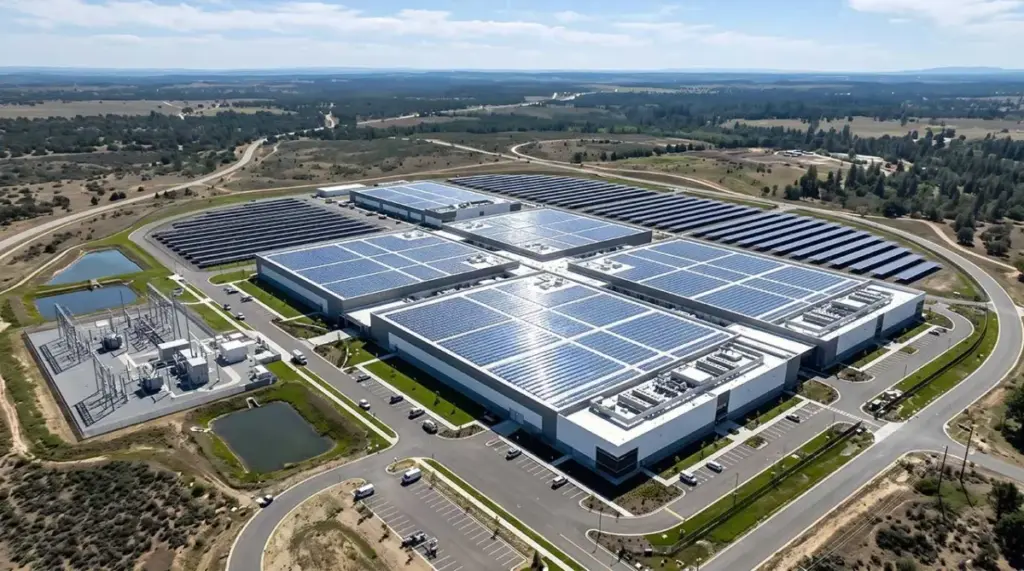
The global narrative surrounding Artificial Intelligence has long been dominated by its promise of unprecedented productivity and cognitive automation. However, beneath the digital interface of every virtual assistant and autonomous agent lies a massive, resource-intensive physical infrastructure. As the technology transitions from simple, single-query chatbots to complex, multi-step "AI agents," the environmental and economic footprint of the industry is expanding exponentially.
Recent empirical research has shattered early, simplistic comparisons that framed AI as an inherently low-carbon alternative to human labor. When accounting for the iterative loops, web-scraping processes, and computational idle times characteristic of modern agentic workflows, the energy consumption of AI tasks can increase by orders of magnitude.
This technological evolution has triggered a multi-front crisis that extends far beyond carbon emissions:
- Grid Strain and Rate Hikes: The sheer volume of power demanded by data centers is driving up capacity prices on regional grids, directly inflating residential utility bills.
- Hydrological Depletion: The cooling of server farms and the generation of the electricity that powers them require billions of gallons of water, threatening local aquifers.
- Civic and Legal Warfare: Communities across the United States are pushing back against rapid data center expansion, leading to fierce zoning battles, non-disclosure agreements, and landmark state-level moratoriums.
This investigative report examines the hidden lifecycles of AI computation, traces the systemic impacts on public infrastructure, and details the escalating grassroots and legislative battles shaping the future of the technology.
Detailed Chronology (2023–2026)
The rapid expansion of generative AI and the subsequent community backlash have unfolded in a series of critical milestones over the past three years:
[2023] ---------------------------------------------
  │ • Amazon signs a confidentiality agreement for "Project Blue" in Pima County, AZ.
  │ • U.S. data centers consume an estimated 17.4 billion gallons of water for cooling.
  │
[Feb 2024] -----------------------------------------
  │ • Academic researchers publish a study in "Scientific Reports" claiming
  │   AI-generated text is 130 to 1,500 times more carbon-efficient than human writing.
  │
[June–Aug 2025] ------------------------------------
  │ • June: Pima County supervisors approve Amazon's land sale without full disclosure.
  │ • August: Public outcry forces Tucson City Council to unanimously reject "Project Blue."
  │
[Sept–Nov 2025] ------------------------------------
  │ • Sept: Saline Township, MI, rejects a $16B OpenAI/Oracle data center rezoning;
  │   the developer sues two days later. Township settles within weeks due to legal costs.
  │ • Nov: Nolan Woo publishes a rebuttal in "Scientific Reports" introducing
  │   accuracy-graded emissions metrics. Construction begins in Saline.
  │
[Q1 2026] ------------------------------------------
  │ • "Data Center Watch" tracks 75 blocked or delayed projects worth $130 billion.
  │ • Active community opposition groups double to 833 across 49 states.
  │ • Over 300 data center bills are filed in state legislatures.
  │
[April–July 2026] ----------------------------------
  │ • April: International Energy Agency (IEA) reports unprecedented task-level efficiency
  │   gains in AI hardware.
  │ • July: New York becomes the first state to enact a temporary pause on new large-scale
  │   data center construction.
Supporting Context & Metrics
To understand the scale of the crisis, we must examine the shifting mechanics of AI workloads, the hidden water footprints of power generation, and the economics of the electrical grid.
The Thermodynamics of AI: Chatbots vs. Agents
The environmental cost of AI is no longer a static equation. The industry is rapidly shifting from retrieval (asking a chatbot a question) to agentic workflows (tasking an AI to solve a complex problem autonomously).
   [Single Query Chatbot]                 [Autonomous AI Agent]

     User: "Write an email"                User: "Research and write a market report"
               │                                       │
      (1-Second Computation)               (Iterative Execution Loop)
               │                                       ├── 1. Plan strategy
               ▼                                       ├── 2. Search the web
     Equivalent Energy Use:                            ├── 3. Fetch & read sources
     Running a microwave for                           ├── 4. Write draft & test code
     exactly 1 second.                                 ├── 5. Debug & self-correct
                                                       │
                                                       ▼
                                             Equivalent Energy Use:
                                             Running a standard laptop
                                             for nearly 6 hours.
A study by the Korea Advanced Institute of Science and Technology (KAIST) quantified this discrepancy. Researchers found that a single-agent task consumed an average of 348 watt-hours of electricity—136 times more energy than a single-turn query using the same model.
This surge is driven by two main factors:
- Extended Operational Time: Agentic workflows can run for minutes or hours as they loop through tasks, compared to the near-instantaneous response of a simple query.
- Hardware Inefficiency: The KAIST team discovered that during agentic tasks, high-performance graphics processing units (GPUs) sat idle for over 50% of the operational runtime while waiting for web-browser responses or external program executions. Despite being idle, these chips continued to draw significant baseline power.
The Carbon Equation & Jevons’ Paradox
The debate over AI’s carbon footprint began in earnest in February 2024, when a study in Scientific Reports concluded that an AI writing a page of text emitted 130 to 1,500 times less $CO_2$ than a human writer. The authors calculated that a single AI query emitted roughly 2 grams of $CO_2$ (including its share of training energy), compared to 1,400 grams emitted by a human working for 48 minutes.
However, critics quickly identified a fundamental methodology flaw: the study divided an average American’s entire annual carbon footprint (15 tons) by the hours in a year, effectively charging the human writer for their breathing, heating, and driving. In reality, a human writer does not cease to exist when replaced by an AI. The actual marginal carbon savings of using AI instead of a human laptop is closer to 2 kilograms of $CO_2$ over a multi-day project.
In November 2025, researcher Nolan Woo published a direct rebuttal in the same journal, introducing a critical variable: accuracy. Woo tested four AI models against national high school computing contest problems, factoring the energy required to achieve a correct, passing answer into the final emission metrics.
       [Carbon Emissions by Model (Woo, Nov 2025)]

  Model Name      Total Emissions (g CO2)      Pass Rate (%)
  ──────────────────────────────────────────────────────────
  GPT-4o                   1.8                     23%
  Claude 3 Opus            4.5                     15%
  Llama 3 70B             11.4                      8%
  Mixtral 8x22B           13.8                     10%
Woo’s findings revealed that emissions were driven not by model size, but by the number of attempts required to reach a correct solution. While modern models have surpassed 95% accuracy on standard benchmarks according to Stanford’s 2026 AI Index Report, the integration of these models into continuous agentic loops threatens to trigger Jevons’ Paradox.
Coined by economist William Stanley Jevons in 1865, this paradox states that increases in resource efficiency do not lead to a decrease in consumption; instead, they lower the cost of the resource, driving up demand.
An unvalidated National Bureau of Economic Research (NBER) working paper supports this trend, finding that employees with high exposure to AI tools worked an average of 3.5 additional hours per week, with only 25% of workers converting AI-driven time savings into leisure.
The Hydrological Footprint: On-Site vs. Off-Site Water
Water usage is one of the most contentious issues in local data center disputes. While industry reports often focus on on-site cooling water, this represents only a fraction of the total hydrological impact.
                  [Total Water Consumption Pathway]

                 ┌─────────────────────────────────┐
                 │    THERMOELECTRIC GENERATION    │
                 │      (Off-Site Power Plants)    │
                 │         211 Billion Gallons     │◄─── 92.4% of total
                 └────────────────┬────────────────┘    water footprint
                                  │
                                  ▼
                 ┌─────────────────────────────────┐
                 │       DATA CENTER COOLING       │
                 │            (On-Site)            │
                 │        17.4 Billion Gallons     │◄─── 7.6% of total
                 └─────────────────────────────────┘    water footprint
According to data from the Lawrence Berkeley National Laboratory and energy analytics firm Orennia:
- On-Site Cooling: U.S. data centers consumed 17.4 billion gallons of water in 2023 for evaporative cooling systems.
- Off-Site Generation: The thermoelectric power plants supplying electricity to those data centers consumed an estimated 211 billion gallons of water—over 12 times the on-site cooling volume.
This distinction allows data center developers to build air-cooled facilities and claim "near-zero water use," while their actual water footprint remains unchanged, shifted entirely to the regional power grid’s generation source.
Furthermore, compliance and reporting remain highly inconsistent. A study by Axis Intelligence revealed that in Texas—home to one of the largest concentrations of digital infrastructure in the world—83% of the state’s 341 operational data centers failed to file mandatory water usage reports.
Grid Capacity and the Consumer "Grid Tax"
The rapid integration of data centers is reshaping the economics of regional electrical grids, most notably within PJM Interconnection, which manages the grid for 65 million people across 13 Eastern states and Washington, D.C.
PJM’s annual capacity auction—which pays power generators to guarantee availability during peak demand periods—saw its clearing price skyrocket from $26.94 per megawatt-day for the 2024/2025 cycle to $269.92 per megawatt-day for the 2025/2026 cycle. An independent market monitor attributed 63% of this price spike directly to the projected demand of new data centers.
       [PJM Capacity Auction Price Explosion]

  Year: 2024/2025  ██ $26.94 / MW-day

  Year: 2025/2026  ██████████████████████████████ $269.92 / MW-day

  ──────────────────────────────────────────────────────────────────
  • Total Cost Passed to Consumers: $9.3 Billion
  • Projected Monthly Household Increase (by 2028): $70.00 (NRDC)
This capacity rate hike translated to a collective $9.3 billion charge passed down to ratepayers. The Natural Resources Defense Council (NRDC) estimates that the average residential family in the PJM territory will see their monthly electricity bill increase by $70 by 2028.
Some regions are already feeling the impact:
- Washington, D.C.: Pepco customers saw an average surcharge increase of $21 per month.
- Ohio & Pennsylvania: Average residential retail electricity rates rose by 9% and 14%, respectively, over a 12-month period.
Official Statements and Industry Perspectives
The debate over data center expansion has created a sharp divide between tech developers, utility providers, state regulators, and community advocates.
The Tech and Utility Coalition
Industry representatives argue that data centers serve as critical economic anchors, particularly in rust-belt states and rural communities. A comprehensive audit conducted by Virginia’s Joint Legislative Audit and Review Commission (JLARC) found that the state’s data center industry supports 74,000 jobs and generates $9.1 billion annually in economic output.
In a joint statement, a coalition of Virginia technology developers and construction unions defended the state’s data center tax incentives:
"Data centers are the foundational infrastructure of the modern economy. By centralizing computational power, we drive statewide tax revenue, fund public school systems, and create high-paying construction and engineering jobs. Restricting this growth risks outsourcing American technological leadership to international competitors."
Utility operators also argue that the influx of large, high-load customers can benefit the broader grid if managed properly. By adding a massive, predictable baseline load, utilities can amortize their fixed infrastructure costs across a larger volume of sales, theoretically lowering the per-kilowatt-hour rate for residential consumers.
State Regulators and Legislators
Faced with rising consumer anger over utility bills, state governments are moving away from blanket incentives toward protective regulatory frameworks.
In Ohio, public utility commissioners approved a new tariff structure requiring data centers to sign 12-year supply contracts containing strict minimum payment guarantees, regardless of actual energy consumed.
In a public hearing, an Ohio utility regulator explained the shift:
"We cannot allow residential ratepayers to act as an uncompensated insurance policy for multi-billion-dollar tech conglomerates. If these companies demand dedicated gigawatts of capacity, they must commit to paying for the infrastructure required to generate it, even if their business models shift or their data centers go dark."
Grassroots and Civil Advocacy
For community organizers, the fight is about local autonomy, environmental preservation, and corporate transparency.
In a briefing document, Data Center Watch highlighted the undemocratic nature of the early development pipeline:
"The industry relies heavily on non-disclosure agreements and ‘grey-market’ land acquisitions to bypass local scrutiny. Municipalities are often presented with projects under code names like ‘Project Blue,’ only to discover the immense water and power requirements after the initial zoning votes have passed. We are seeing a historic, bipartisan rejection of this playbook."
Future Outlook
As the industry faces growing resource constraints and public pushback, the trajectory of AI infrastructure development is shifting toward three major battlegrounds:
1. The Lobbying and Political Financing War
The struggle for land and resources has moved into the political arena, backed by unprecedented capital. A pro-AI political action committee, Leading the Future, launched with a $140 million war chest aimed at supporting federal and state candidates who advocate for streamlined data center permitting and grid expansion. The fund includes $50 million contributions from major venture capital firms and high-profile AI executives.
In response, tech sector employees and environmental advocates formed the Guardrails Alliance, a grassroots political action group funded by small-dollar donations. The group lobbies for mandatory water-use disclosure laws, grid-capacity protections for residential consumers, and municipal veto power over data center placement.
2. Regulatory Segregation of the Grid
To protect residential ratepayers from escalating capacity costs, several states are exploring "grid segregation." Virginia has led this effort by establishing a separate, higher-tariff rate class specifically for customers with demand profiles exceeding 100 megawatts. This structure ensures that the cost of constructing new substations, transmission lines, and peaker plants is borne directly by the developers driving that demand.
Following New York’s July 2026 temporary pause on large-scale data center construction, at least 19 municipalities in Michigan and four counties in Georgia have enacted local moratoriums. These pauses are designed to give local utility boards time to draft ordinances that decouple residential rates from industrial data center pricing.
3. Structural Optimization and Clean Energy Procurement
To survive in a resource-constrained market, AI developers are investing heavily in operational efficiency and alternative energy procurement:
- Hardware and Software Efficiency: The IEA reports that task-level AI compute efficiency is improving at an unprecedented rate. Software developers are prioritizing "small language models" (SLMs) and sparse activation techniques to reduce the raw computational steps required per task.
- Direct Nuclear and Geothermal Contracting: Tech companies are increasingly bypassing traditional utility grids by co-locating data centers directly at zero-carbon generation sites. Deals to link data centers directly to nuclear power stations or deep geothermal wells are becoming the standard model for securing uninterrupted power without drawing from the public grid.
Ultimately, the environmental and economic impact of the AI transition will not be determined by the efficiency of individual algorithms. Instead, it will be decided by where these facilities are built, how their energy contracts are structured, and who pays for the physical infrastructure supporting them. These decisions are being made rapidly in utility commission hearings and municipal planning offices across the country—and they require active, informed public participation.



