

Executive Overview
The landscape of American energy infrastructure is undergoing a violent, contradictory transformation. According to the latest "Clean Economy Works" report released by E2 (Environmental Entrepreneurs) for the first quarter of 2026, clean energy developers announced more than 50 new utility-scale solar, wind, and battery storage projects between January and March. This aggressive push represents an $18 billion influx of planned capital, designed to add over 12 gigawatts (GW) of generation and storage capacity to the U.S. power grid—enough to illuminate roughly 2 million homes.
Yet, this gold rush atmosphere is driven by panic rather than pure market expansion. Industry leaders are scrambling to break ground before a looming federal deadline tied to the controversial Omnibus Budget and Benefits Act (OBBA) passed late last year. With a critical July 4 legislative cliff threatening to strip away or radically restrict federal clean energy tax incentives, developers are racing against the clock to lock in financing under existing, more favorable rules.
Simultaneously, however, the industry is bleeding from the other side. The report highlights a parallel wave of systemic retreat: companies canceled 38 utility-scale solar, wind, and battery storage projects in Q1 2026 alone—nearly half the total cancellations recorded during the entirety of 2025. These scrapped initiatives represent an evaporation of nearly $13 billion in local investments and the forfeiture of approximately 33,000 construction jobs.
As skyrocketing electricity demand—propelled by the exponential growth of energy-hungry AI data centers, industrial reshoring, and fleet electrification—collides head-on with hostile administrative policy and legislative rollbacks, the U.S. clean energy economy finds itself caught in a high-stakes tug-of-war between urgent market need and manufactured regulatory friction.
Detailed Chronology: The Q1 2026 Regulatory Cliff
To understand the current state of American clean energy, one must examine the timeline of policy shocks that defined the opening months of 2026. The roots of the current crisis stretch back to the passage of the OBBA, a sweeping legislative package that altered the federal subsidization framework established by previous climate legislation.
January 2026: The New Year Panic Sets In
As the calendar turned to 2026, project developers and financial institutions immediately recalibrated their risk assessments. The OBBA introduced stricter domestic content requirements, labor provisions, and, most critically, sunset clauses on key tax credits. January saw a flurry of board meetings across major energy firms, where executives weighed the viability of multi-million dollar investments against the looming July 4 fiscal deadline. Despite the headwinds, developers pushed forward with 54 new large-scale renewable projects, nearly doubling the deployment velocity seen across the whole of the previous year.
February 2026: The Manufacturing Bottleneck Deepens
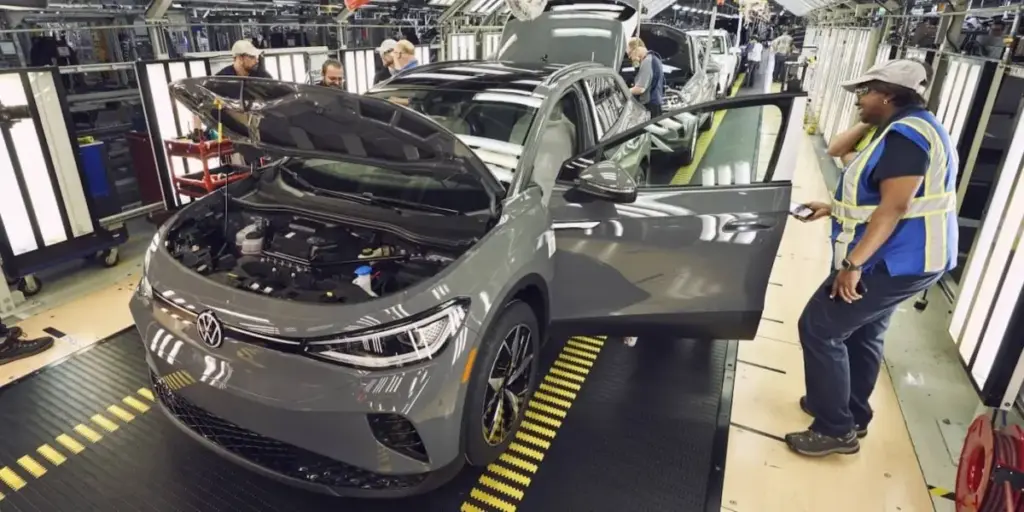
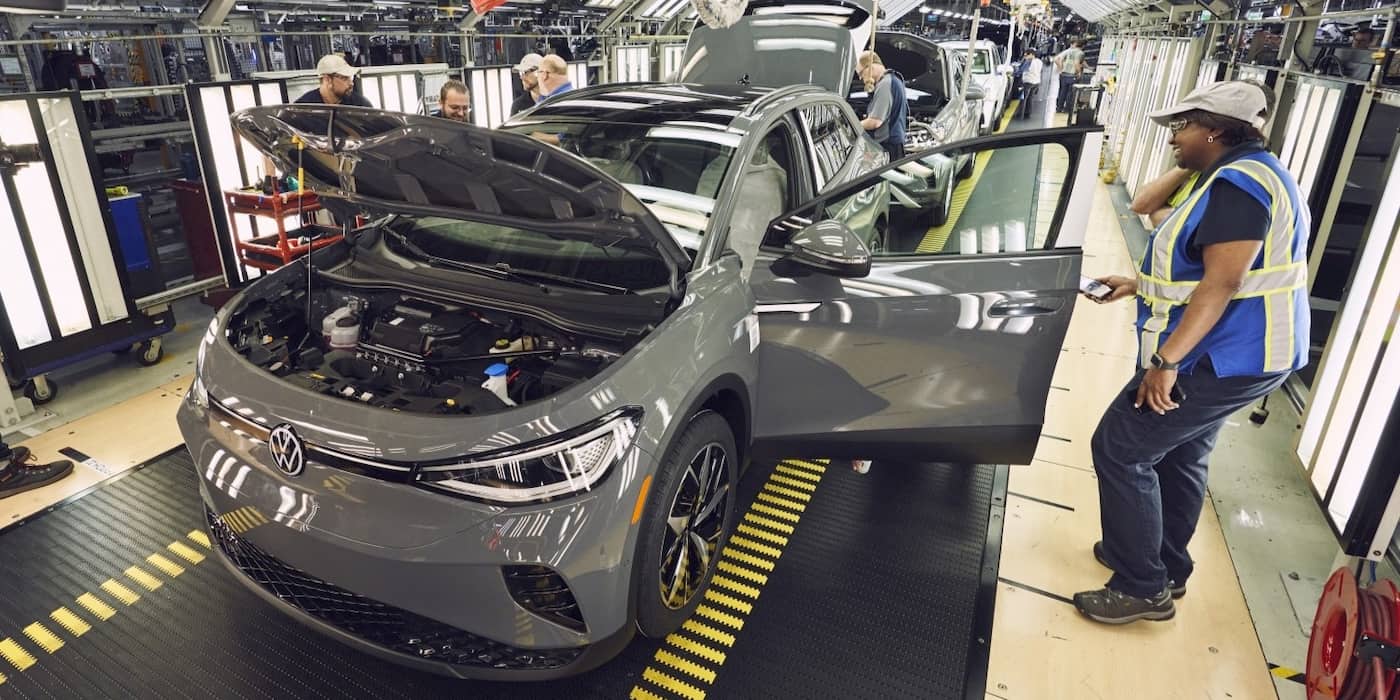
By the second month of the quarter, the chilling effect on domestic manufacturing became glaringly apparent. E2 tracking data revealed a stark divergence: while grid infrastructure and high-voltage transmission equipment manufacturing saw stable, albeit modest, support, consumer-facing and generation-focused factories faced devastating setbacks. Facilities dedicated to electric vehicle (EV) components, advanced wind turbines, and solar panels across states like Ohio, Oklahoma, North Carolina, and Georgia were either downsized or shelved indefinitely.
March 2026: The Wave of Cancellations Peaks
The end of the first quarter brought sobering metrics to light. As developers tried to rush projects across the regulatory finish line, economic realities caught up with those hampered by shifting federal guidance and local political resistance. The cancellation of 38 major utility-scale generation projects in Q1 signaled that regulatory uncertainty was no longer just a theoretical risk—it was actively dismantling billions in capital deployment. The race to beat the July 4 deadline had created a Darwinian environment where only the most well-capitalized, fast-moving projects could survive.
Supporting Context & Metrics: A Bifurcated Economy
The E2 report paints a picture of a deeply bifurcated clean energy economy. On one side, generation projects are seeing desperate acceleration; on the other, manufacturing and storage sectors are experiencing a chilling contraction.
Utility-Scale Generation vs. Project Cancellations
The metrics surrounding utility-scale installations reveal a sector pushing forward despite institutional friction:

- New Q1 2026 Announcements: 54 utility-scale solar, wind, and battery storage projects.
- Total Planned Investment: Over $18 billion.
- Capacity Added: More than 12 GW (powering roughly 2 million homes).
- Cancellations (Q1 2026): 38 utility-scale projects scrapped.
- Lost Capacity from Cancellations: Nearly 8 GW (equivalent to 2 to 3 million homes).
- Economic Loss from Cancellations: Nearly $13 billion in local investment and 33,000 potential construction jobs lost.
For context, these Q1 cancellation figures represent nearly 50% of the total project cancellations recorded during the entire 12 months of 2025, when 85 projects were abandoned, resulting in $27 billion in lost investment and 45,000 jobs.
The Manufacturing Slump
The manufacturing segment of the green transition is suffering an even steeper deceleration. During Q1 2026, companies announced only 12 new major manufacturing facilities, totaling a modest $758 million in investment and roughly 2,000 jobs. This is a staggering drop compared to the golden years of 2023 and 2024, which routinely saw quarterly averages exceeding 60 new clean energy factory announcements.
Concurrently, E2 tracked seven canceled, closed, or downsized manufacturing projects in the first three months of 2026 alone, wiping out $1.35 billion in investment and 8,100 jobs.
Sector-by-Sector Breakdown
- Electric Vehicles (EVs): EV manufacturing remains the hardest-hit sector. While there are still 166 active EV-related manufacturing projects totaling $84.4 billion in announced investment, the sector has bled heavily. Since 2022, 58 EV manufacturing projects have been canceled, closed, or downsized, destroying $25.5 billion in planned investment—roughly 25% of the sector’s total announced capital.
- Battery Storage: Battery manufacturing holds the dubious honor of having the highest cancellation rate relative to total investment. Out of $16.9 billion in active storage manufacturing investments tracked, 18 projects worth over $8.6 billion have been canceled or downsized. This means one-third of all announced battery storage manufacturing capital has vanished.
- Renewables (Solar & Wind): Solar and wind component manufacturing has proven more resilient. Accounting for 116 active projects and roughly $20.4 billion in investment, only about $2 billion in renewable manufacturing projects have been scrapped—representing less than 10% of total announced capital.
- Grid Infrastructure & Transmission: The undisputed safe haven of the clean energy transition is grid technology. Companies have poured over $6.4 billion into 58 active grid-related manufacturing projects since 2022, with only a single project cancellation totaling $150 million recorded to date.
Official Statements and Industry Perspectives
The policy shifts and market reactions have ignited intense debate among industry leaders, economic analysts, and political figures.
Bob Keefe, Executive Director of E2, emphasized the paradox at the heart of the current market during the release of the report:

"What we are seeing is an industry caught between an irresistible force and an immovable object. On one side, market demand for electricity is growing at a historic, unprecedented pace driven by AI, data centers, and manufacturing reshoring. On the other side, we have an administration and congressional leaders actively working to dismantle the very incentives keeping our grid stable and our manufacturing competitive."
Financial analysts have pointed out a striking irony within the geographic distribution of these economic impacts. According to E2’s granular regional data, Republican-held congressional districts continue to capture the largest share of both clean energy investments and project losses.
A spokesperson for a major national renewable energy trade association noted:
"Our members want to build in America, for America. But shifting the goalposts via legislative maneuvers like the OBBA introduces a level of regulatory volatility that makes long-term project financing extraordinarily difficult. Developers aren’t stopping because they want to; they are stopping because financial institutions are unwilling to take on uncalculated regulatory risk past the July deadline."
Future Outlook: Navigating the July 4 Cliff and Beyond
As the industry stares down the July 4, 2026 regulatory deadline tied to the OBBA, the coming months will likely determine the medium-term trajectory of American energy infrastructure.

The underlying macroeconomic fundamentals heavily favor renewable deployment. The U.S. Energy Information Administration (EIA) projects that cumulative installed renewable capacity will surpass natural gas by 2027. This shift is non-negotiable; utilities and tech giants alike are desperate for power. With generative AI data centers consuming megawatts at an exponential rate, renewable energy and battery storage remain the absolute fastest and cheapest generation sources capable of being deployed at scale.
However, the policy landscape remains a severe bottleneck. If federal tax incentives become excessively difficult to qualify for, developers may scale back long-term pipelines, leading to tighter power reserves, higher electricity bills for consumers, and increased risk of grid instability during peak summer and winter months.
Furthermore, the ongoing contraction in domestic EV and battery manufacturing threatens to cede American leadership in next-generation automotive and storage technologies to international competitors, particularly in Asia and Europe, where industrial policy remains aggressively supportive of electrification.
Ultimately, the Q1 2026 data serves as a warning klaxon. The market wants to build, and consumers need the power. Whether American energy policy will adapt to meet this generational demand—or continue to erect roadblocks in the name of political expediency—will define the nation’s economic and technological competitiveness for decades to come.



