

Executive Overview
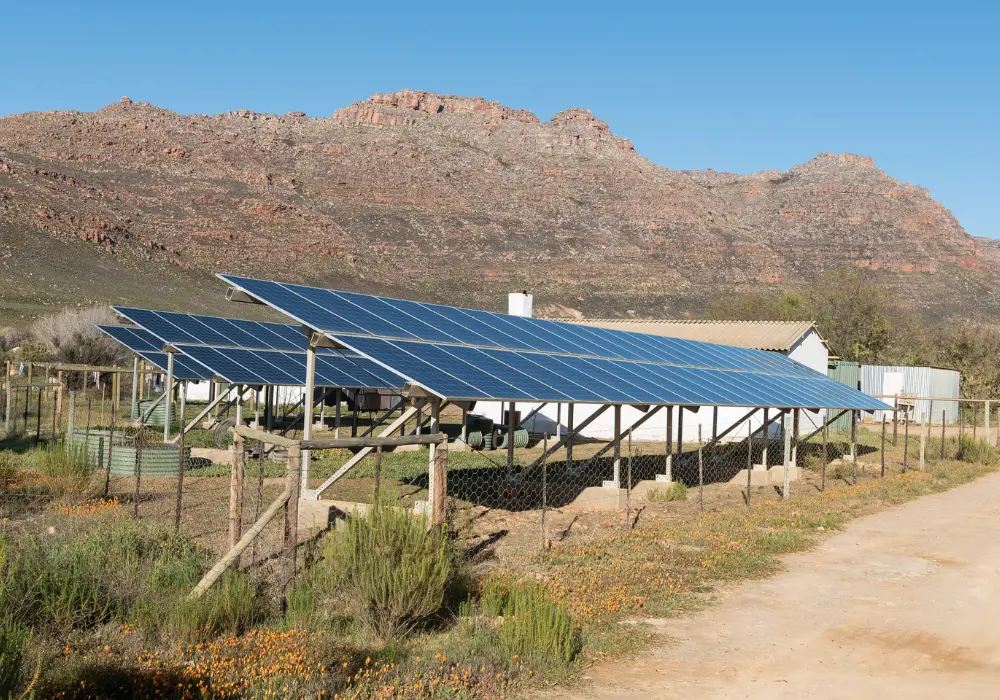
In the remote farming village of Khirais, Syria, a quiet revolution is unfolding. Twenty-four households pay the equivalent of just US$0.20 a month for round-the-clock power. It is an extraordinary feat of grassroots engineering in a country where state-run infrastructure has been battered by over a decade of armed conflict. Yet, the story of Khirais is not an isolated feel-good anomaly. It serves as a microcosm of a much broader, nationwide trend: a massive, self-funded, decentralised solar boom that is radically reshaping how communities survive, work, and rebuild in the absence of a functional national grid.
As state budgets collapse, traditional energy finance falters, and public electricity grids remain shattered, millions of people across fragile and conflict-affected states are taking power generation into their own hands. In Syria alone, nominal off-grid solar capacity has surged from roughly 250 megawatts (MW) in 2022 to upwards of 2 gigawatts (GW) by 2025.
However, this decentralised transition is far from a silver bullet. While it provides an essential lifeline—keeping water pumps running, businesses operational, and food from spoiling—it also introduces profound socio-economic risks. Without careful regulatory oversight and equitable financial frameworks, the uncoordinated solar boom risks hardening into a two-tier energy market: one where affluent households with access to foreign currency and international remittances enjoy reliable power, while vulnerable populations remain trapped in energy poverty, dependent on expensive, polluting diesel generators or left in the dark entirely.
Detailed Chronology: From Total Collapse to Rooftop Recovery
The Post-War Energy Vacuum (2011–2021)
Before the outbreak of armed conflict, Syria possessed a relatively robust national energy infrastructure, boasting approximately 9.5 gigawatts (GW) of installed generation capacity. The conflict devastated this foundation. By the end of 2023, available state-generated capacity plummeted to an estimated 1.6GW.
For the average Syrian household, this catastrophic decline meant public electricity was rationed down to less than two hours a day. The consequences were immediate and systemic:
- Refrigerated food and vital medicines spoiled.
- Children could no longer study after dark.
- Local agricultural producers and small-scale manufacturers were entirely cut off from the reliable power needed to operate basic electrical equipment.
- Critical municipal services, including water pumping stations and sewage treatment facilities, ground to intermittent halts.
The Rise of Grassroots Intervention and Self-Installation (2021–Present)
As public grids failed and formal reconstruction efforts stalled due to complex geopolitical sanctions and severe capital shortages, local communities began taking matters into their own hands.
In 2021, the gradual rebuilding of Khirais began. Facing debilitating blackouts, villagers partnered with a regional nonprofit to install solar panels bolted directly onto their community center. Today, that localized system delivers uninterrupted 24/7 power for lighting, refrigeration, and essential agricultural appliances, injecting new life into the village’s rural economy.
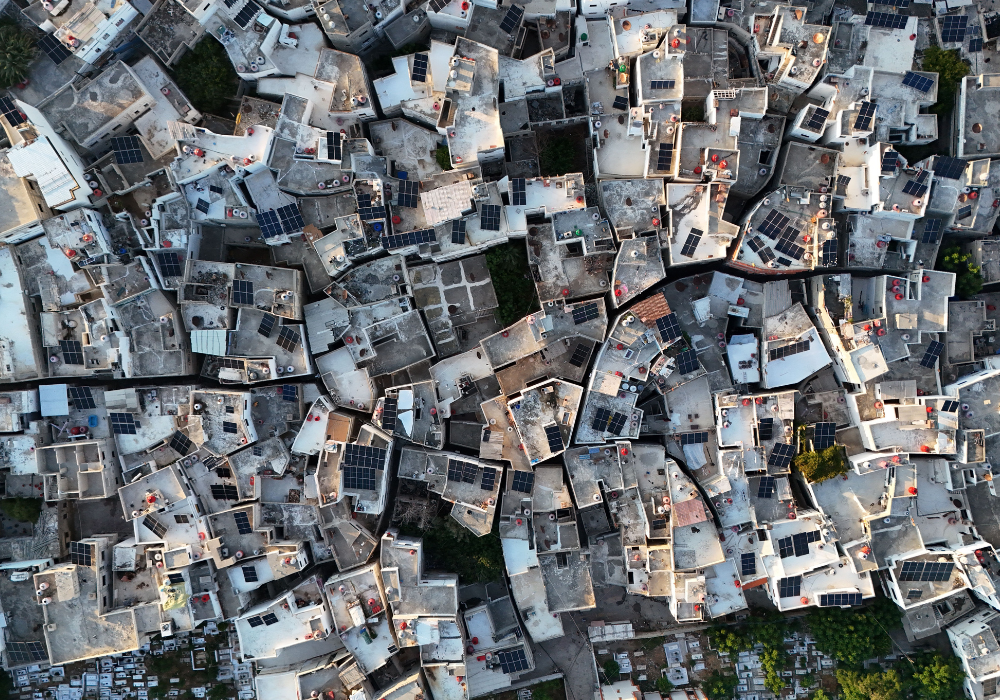
On a national scale, this grassroots impulse translated into a massive wave of private, off-grid installations. Because much of this economy is privately financed and unregistered, exact figures remain difficult to verify. However, industry estimates indicate that nominal capacity climbed from roughly 250MW in 2022 to more than 2GW by 2025. Current data suggests that approximately one-quarter of Syrian households now rely on self-installed solar equipment to manage persistent blackouts.
Supporting Context & Metrics: Fragile States and the Decentralised Imperative
Energy Resilience in Fragile Settings
The dynamics unfolding in Syria mirror a global structural crisis. According to the Council on State Fragility, more than 80% of the estimated 800 million people worldwide who currently live without electricity reside in "fragile" and conflict-affected settings.
These regions are projected to account for a significant share of future global electricity-demand growth. Yet, international climate and energy financing in these areas remains notoriously scarce. For instance, in 2025, the Green Climate Fund approved only around US$500 million for fragile and conflict-affected states out of a record $3.26 billion in total new project approvals—roughly 15% of the global total.
Global Electricity Access & Fragile States (Council on State Fragility):
┌──────────────────────────────────────────────────────────────┐
│ Total Population Without Electricity: ~800 million           │
├──────────────────────────────────────────────────────────────┤
│ Share Residing in Fragile/Conflict Settings: >80%            │
├──────────────────────────────────────────────────────────────┤
│ Green Climate Fund Allocations (2025):                       │
│ - Total Approvals: $3.26 billion                             │
│ - Fragile States Share: ~$500 million (~15%)                 │
└──────────────────────────────────────────────────────────────┘
The Council on State Fragility argues that conflict-affected regions urgently require energy systems that are "resilient in the face of conflict and uncertainty," alongside being affordable and environmentally sustainable. Distributed renewable energy (DRE) systems—such as rooftop solar panels, small wind turbines, and localized mini-grids—generate and distribute power close to the point of consumption. By operating independently or alongside a crippled national grid, DRE systems "disperse risk," cutting reliance on vulnerable central generation plants, fragile fuel supply lines, and easily sabotaged transmission corridors.
The Conflict-Solar Nexus
Empirical research underscores the unique relationship between conflict intensity and the adoption of renewable energy. One notable study discovered that a 1% increase in conflict intensity in Syria was associated with a 9.71% short-term increase in renewable-energy production.
Experts caution that this data should not be misinterpreted as evidence that conflict inherently fosters a green transition. Instead, it demonstrates that severe grid damage and crippling fuel scarcity drive an overwhelming, survival-driven demand for localized power generation.
Syrian Generation Capacity Collapse:
┌──────────────────────────────────────────────────────────────┐
│ Pre-Conflict Installed Capacity: ~9.5 GW                     │
├──────────────────────────────────────────────────────────────┤
│ Available Capacity (End of 2023): ~1.6 GW                    │
├──────────────────────────────────────────────────────────────┤
│ Estimated Off-Grid Solar Capacity (2022): ~250 MW            │
├──────────────────────────────────────────────────────────────┤
│ Estimated Off-Grid Solar Capacity (2025): >2.0 GW            │
└──────────────────────────────────────────────────────────────┘
Official Statements & Expert Analysis
Industry analysts and regional experts emphasize that while distributed solar is indispensable for immediate survival, it must be carefully integrated into broader, long-term national recovery strategies.
The Role of Decentralisation
"If energy becomes unaffordable, people can take it in their own hands," explains Shafiqul Alam, lead analyst for Bangladesh energy at the Institute for Energy Economics and Financial Analysis (IEEFA). Alam notes that distributed systems can be constructed rapidly—far faster than traditional grid infrastructure can ever be restored. "Rebuilding grid connectivity will take time, a lot of time," he adds.
While decentralized solar cannot single-handedly power a national industrial economy at scale, it provides the vital foundational energy required to jumpstart economic recovery: powering water pumps for irrigation, maintaining telecommunications, keeping local shops open, and driving small-scale food processing. In some instances, it has even powered electric vehicles used for medical aid at a fraction of the cost of conventional fuel-driven transport.
The Threat of a Two-Tier Energy Market
Despite its plummeting hardware costs, solar power is not universally accessible in Syria. Hayley Schuler-McCoin, a senior research fellow at the Carboun Institute—an energy think tank focusing on international finance, economic policy, and geopolitics in Southwest Asia and North Africa—warns that the boom has birthed a deeply unequal energy market dictated by access to foreign currency, international remittances, and upfront capital.
"The households best placed to buy panels were often those being paid in wages priced to the dollar, primarily, because this stuff was all imported," Schuler-McCoin explains. Households with robust remittance networks or backing from international NGOs were able to absorb steep initial capital expenditures. Conversely, those without these financial lifelines were "still largely… limited to diesel generators and fuel or going without."
Startup costs running into thousands of dollars remain prohibitively expensive for low-income communities, even when households pool their meager resources. Furthermore, an inadequately regulated market flooded with poor-quality batteries, replacement components, and sub-standard equipment exposes buyers to compounding financial risks.
Without targeted policy interventions, Schuler-McCoin warns that decentralised solutions risk entrenching a dangerous two-tier energy system:
- The Affluent Class: Families with access to foreign currency, reliable remittances, or suitable rooftops purchase energy independence, shielding themselves from diesel price volatility.
- The Vulnerable Class: Households without capital remain dependent on expensive, highly polluting diesel generators, severely rationed public electricity, or complete energy deprivation.
The same peril applies to commercial and agricultural investments. Schuler-McCoin stresses that if factories or large agricultural installations develop solar generation supported by public or concessional finance, those projects must be intentionally "paired with" provisions for "adjacent neighbourhoods." Without mandatory power-sharing arrangements, regional disparities will widen dramatically.
Future Outlook: Financing the Transition and Rebuilding the Grid
Addressing these systemic vulnerabilities requires innovative financial engineering and a balanced approach to infrastructure reconstruction. Experts point to international models, such as Bangladesh’s Infrastructure Development Company Limited (IDLCOL), which successfully combined capital subsidies with delivery mechanisms managed through trusted local partner organisations, bypassing rigid commercial lending structures.
Overcoming Financing Barriers
Traditional central bank green refinancing schemes often fail small household consumers. Commercial lenders typically require borrowers to secure a commercial loan first before applying for refinancing—a process that introduces debilitating delays and systematically excludes low-income applicants who lack formal credit histories, secure incomes, or substantial collateral.
To bridge this gap, experts advocate for:
- Direct Capital Subsidies: Absorbing a portion of the initial equipment cost to bring systems within reach of low-income communities.
- Credit Guarantees and Pre-Financing: Mitigating risk for local lending intermediaries who lack established credit profiles for small-scale borrowers.
- Tailored Delivery Channels: Utilizing trusted local institutions rather than conventional commercial banks to disburse funds and manage community-level microgrids.
The Irreplaceable Value of the National Grid
Crucially, energy experts caution that international reconstruction finance must not fund decentralised solar at the expense of the national grid.
"The very immediate issues are going to be getting investors to prioritise the grid and not just the supply of energy," Schuler-McCoin insists. Grant funding must flow toward unglamorous, capital-intensive grid assets that private capital routinely avoids: transmission and distribution repairs, high-voltage substations, advanced metering infrastructure, technical standards enforcement, and network flexibility.
The International Energy Agency (IEA) affirms that public grids remain "essential for bringing power to industry, citizens and services," serving as the primary source of flexibility as modern power systems integrate intermittent renewables. "Microgrids and storage will complement, but not replace, grid development," the IEA notes.
Initiatives like the World Bank’s $146 million Syria Electricity Emergency Project—which targets repairs to two 400kV interconnectors and high-voltage substations near key demand centers—represent crucial steps forward, though much more remains necessary.
Complementary Integration and Net-Metering
Looking ahead, decentralized solar and centralized grid restoration should be viewed as mutually reinforcing rather than competing strategies. Shafiqul Alam suggests that implementing robust net-metering policies could transform decentralized energy producers into active participants in the broader economic recovery.
If households, farms, and small businesses equipped with surplus solar generation can feed excess power back into the national grid, they can generate predictable revenue streams while minimizing the local waste of clean energy.
"Grid investment, modernisation and flexibility… need heavy investment," Alam concludes. "But distributed systems will help you reduce the cost in the meantime. Many small systems can make a massive revolution. Now you imagine if there is public support, the multiplier effect could be huge."
The Weekly Roundup: Get all our stories in one place, every Wednesday at noon EST. Subscribe to stay informed on the intersection of energy resilience, global finance, and grassroots recovery.



