

Executive Overview
In the complex and often polarized landscape of American energy policy, a striking paradox has emerged: the states that voted most overwhelmingly for Donald Trump are leading the nation in the large-scale adoption of solar energy.
For years, the political rhetoric surrounding renewable energy has cleaved cleanly along partisan lines. National Republican platforms have routinely cast doubt on the economic viability and environmental necessity of green technology, while the Trump administration has historically sought to restrict renewable energy infrastructure on federal lands. Furthermore, legislative maneuvers in Congress have scaled back or eliminated federal tax credits designed to incentivize the industry.
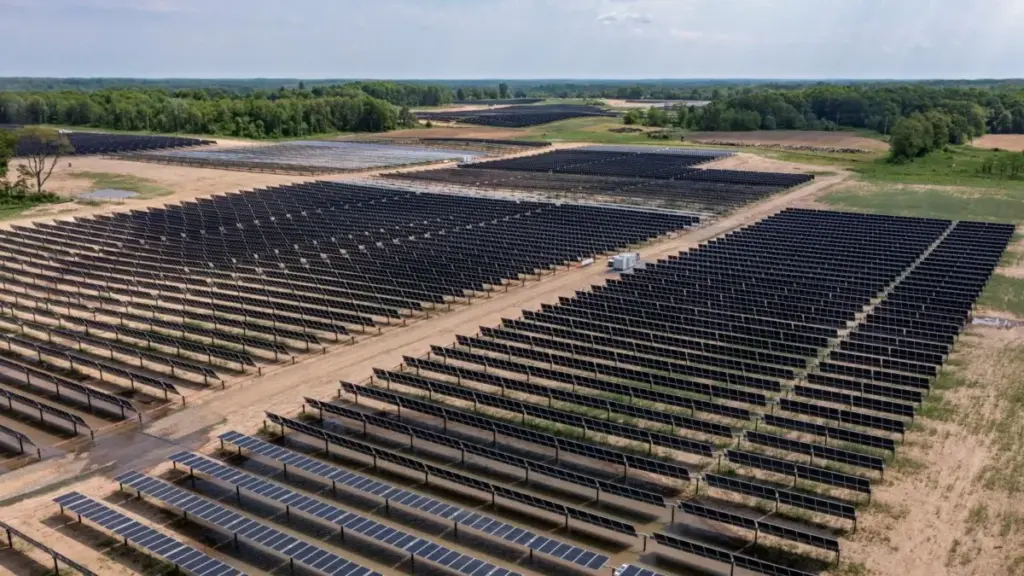
Yet, data tells a radically different story on the ground. According to a landmark market insight report released by the Solar Energy Industries Association (SEIA), states that supported Donald Trump in the presidential election accounted for an astounding eight out of the top ten solar-building states nationwide during the first half of the year. Rather than rejecting the technology, conservative-led and politically mixed, red-leaning states are actively embracing solar development, serving as the primary engines powering an unprecedented national expansion.
This nationwide surge culminated in the second quarter, during which the United States added more than 11 gigawatts of solar power—a staggering 45 percent increase compared to the same period in the previous year. States that backed Trump in the last election cycle drove nearly three-fourths of this growth.
Far from being hindered by partisan rhetoric, solar energy in these regions is thriving due to a confluence of pragmatism, rapid industrial growth, and a profound cultural affinity for infrastructure development. This comprehensive report examines the market forces, policy shifts, and regional strategies fueling the red-state solar boom, while forecasting what lies ahead as the industry navigates a rapidly changing federal subsidy landscape.
Detailed Chronology: Policy Shifts and Market Reactions
To understand how conservative states became the epicenter of American solar development, it is necessary to examine the regulatory timeline that shaped the current landscape, moving from federal incentives to localized industrial acceleration.
The Legislative Landscape and the 2026 Cliff
Following the passage of major federal legislation in 2022, energy companies investing in large-scale solar projects and homeowners installing rooftop panels enjoyed robust tax credits designed to accelerate the nation’s green transition. These subsidies acted as a powerful tailwind, lowering capital expenditure barriers and encouraging rapid market penetration across both blue and red states alike.
However, the political winds shifted dramatically with the subsequent passage of the One Big Beautiful Bill Act, which brought an early and aggressive termination to these federal incentives. Under the new statutory framework, tax credits for most uninitiated solar farms expired abruptly on July 4, 2026.
This legislative deadline triggered a frantic, high-stakes race among solar developers. Fearing the sudden loss of federal financial backing, energy firms rushed to break ground on planned projects before the summer cutoff. The resulting scramble directly catalyzed a historic spike in installations during the second quarter of 2026, creating an artificial yet impressive bump in national deployment metrics.
The Aftermath of Subsidies
With the deadline now in the rearview mirror, the long-term future of solar growth faces a period of heightened uncertainty. The expiration of tax credits is expected to hit certain market segments harder than others. Residential rooftop solar, for instance, has already begun experiencing a noticeable contraction throughout 2026 as homeowners lose financial incentives.
Yet, utility-scale solar projects in red states have demonstrated remarkable resilience. While federal subsidies provided a helpful accelerant, the underlying economic drivers in these conservative strongholds—namely, cheap land, fast permitting, and surging industrial power demand—have proven robust enough to sustain development even in the absence of federal financial support.
Supporting Context & Metrics: The Numbers Behind the Boom
The numbers compiled in the latest industry reports paint a clear picture of red-state dominance in the renewable energy sector.
Sun Belt Dominance and the Top Ten Roster
Texas and Florida—the two most populous states that supported Donald Trump—currently lead the nation as the first and third largest solar-building states, respectively. These Sun Belt powerhouses have maintained a consistent stronghold at the top of the national rankings, leveraging abundant land resources and favorable climatic conditions.
They are not alone. States such as Indiana, Ohio, and Arizona have also maintained permanent fixtures in the top ten solar-building states since 2024. Meanwhile, historically agricultural and manufacturing-centric states like Missouri, Arkansas, Michigan, and Utah have captured spots in the top ten during various reporting periods.
| State | Political Lean (2024 Election) | National Solar Ranking (H1 2026) | Key Growth Drivers |
|---|---|---|---|
| Texas | Republican | 1st | Abundant land, high energy demand, rapid permitting |
| Michigan | Trump-leaning / Swing | 4th | State renewable mandates, data centers |
| Florida | Republican | 3rd | Sun Belt climate, population growth, pro-business posture |
| Indiana / Ohio | Republican | Top 10 | Industrial power demand, manufacturing expansion |
The Power-Hungry Economy of Red States
What accounts for this aggressive adoption of a technology often criticized by conservative national politicians? The answer lies in the intersection of economic philosophy and structural demand.
Republican-leaning states have traditionally cultivated a distinctly pro-business attitude, emphasizing economic expansion, job creation, and industrial development. As major corporations, advanced manufacturers, and energy-intensive data centers expand their footprints across the American heartland and the South, they require massive quantities of electricity delivered quickly and cheaply.
Traditional power sources, such as nuclear plants or large fossil-fuel facilities, often face years of regulatory delays, environmental reviews, and complex construction timelines. In contrast, solar energy systems—particularly when paired with battery storage technology—can be deployed at a fraction of the time. For red states eager to feed their industrial apparatuses, solar offers the fastest path to grid capacity.
Furthermore, conservative states often feature lower population densities in rural areas, offering vast expanses of flat, sun-drenched land well-suited for utility-scale photovoltaic arrays. Combined with streamlined, business-friendly local permitting processes, these states have unintentionally created the ideal regulatory ecosystem for rapid infrastructure deployment.
Official Statements and Industry Insights
Key stakeholders, policymakers, and industry leaders offer vital perspective on why conservative states are leading a technological transition that defies traditional political categorization.
Tim Pawlenty on the "Pro-Build" Mentality
Tim Pawlenty, CEO of the Solar Energy Industries Association and a former two-term Republican governor of Minnesota, emphasizes that the ideological friction often seen in Washington does not reflect the pragmatic reality on the ground in state capitals.
"At least at the macro level, Republican-led and governed states are not only open to but embracing solar energy as a technology," Pawlenty stated.
According to Pawlenty, the conservative embrace of solar is rooted in a fundamental cultural and political philosophy shared by many red-state leaders: a deep-seated desire to construct, expand, and modernize physical infrastructure.
"Red states, as a general proposition, have sort of a pro-build mentality. They want to build things," Pawlenty explained.
This pro-development ethos supersedes partisan debates over climate change. While blue states often promote solar energy primarily as a mechanism for reducing carbon emissions and meeting strict environmental targets, red states are building solar farms because they make sound economic sense, create local construction jobs, and reliably power expanding commercial hubs.
The Micro-Economics of Sunshine and State Mandates
While national trends highlight red-state dominance, individual state trajectories vary widely depending on geography and local policy. Michael Craig, an associate professor in the University of Michigan’s School for Environment and Sustainability, notes that the impact of federal tax credit expirations will not be felt equally across all markets.
Michigan, a politically competitive state that favored Trump in the 2024 election, experienced a dramatic surge in solar development, climbing from 23rd place nationally in 2024 to 4th place in the first half of 2026. However, Michigan lacks the intense, year-round solar irradiance found in states like Texas or Arizona.
"The economics of solar largely depends on your solar resource," Craig observed. "The better the resource, I’d say the less important the tax credits are."
For states with less abundant sunlight, the loss of federal tax credits could pose a significant hurdle. Yet, Michigan has managed to sustain its solar boom through a powerful combination of state-level policy mandates and surging industrial demand. Despite voting for Trump at the presidential level, Michigan features a Democratic governor and a Democrat-led state Senate. This administration enacted a binding legislative requirement that utilities generate 50 percent of their electricity from renewable sources by 2030.
When paired with the massive electricity requirements of incoming data centers and advanced manufacturing plants, these state mandates ensure a steady, captive market for solar developers, insulating the industry from federal policy shifts.
The Superiority of Speed Over Subsidies
As the industry looks beyond the era of federal tax credits, trade association executives argue that financial subsidies were never the most critical component of solar’s growth. Rachel Skaar, communications director for the Solar Energy Industries Association, points out that structural factors—chiefly the urgent need for electricity and the unmatched construction speed of renewable technology—will continue to drive market demand regardless of federal intervention.
"Solar and storage can deploy so much faster than other technologies," Skaar noted. "So when we talk about the need for energy right now, solar and storage can provide it."
Industry strategists increasingly suggest that removing federal regulatory bottlenecks, streamlining inter-agency permitting processes, and addressing transmission grid backlogs will do far more to support the long-term viability of green energy than any tax credit ever could.
Future Outlook: Navigating Uncertainty and Opportunity
As the American energy sector moves deeper into the latter half of the decade, the red-state solar boom stands as one of the most compelling developments in modern infrastructure policy. It challenges the simplistic notion that energy transitions are driven solely by partisan ideology or federal mandates. Instead, it demonstrates that market economics, industrial demand, and local pro-business governance can powerfully reshape the national energy grid from the bottom up.
Key Trends to Watch
- The Post-Subsidy Reality: With federal tax credits for uninitiated solar farms expired as of July 2026, the market will undergo a natural stress test. Projects in high-insolation Sun Belt states (such as Texas, Arizona, and Florida) are projected to weather the loss of subsidies smoothly, while northern or eastern red states may rely more heavily on state-level renewable portfolio standards and corporate power purchase agreements.
- Industrial Electrification and Data Centers: The relentless expansion of artificial intelligence, cloud computing, and advanced manufacturing will continue to strain regional grids. Because solar farms and battery storage systems can be built within months rather than decades, they remain the premier solution for heavy industries demanding immediate power capacity.
- Federal Permitting Reform: With tax credits largely phased out, the primary battleground for renewable energy advocacy has shifted to Washington D.C., where policymakers across the aisle are increasingly debating comprehensive permitting reform. A bipartisan consensus could emerge around the need to simplify infrastructure approvals on both public and private lands, further accelerating construction timelines.
- The Persistence of Pragmatism: Ultimately, the future of American solar does not depend on partisan consensus in Washington. As long as conservative state governors, local planning boards, and business leaders view solar energy as a practical, rapid, and profitable tool for economic development, the red-state solar engine will continue to drive the nation’s energy future forward.



