

Executive Overview
In a testament to the resilience of state-level climate policy and shifting consumer preferences, California has officially surpassed a monumental clean-transportation milestone. According to data released this week by the California Energy Commission (CEC), the Golden State has registered a cumulative total of more than 2.5 million new zero-emission vehicles (ZEVs) through the end of 2025.
While the state’s broad definition of "ZEV" encompasses battery-electric vehicles (BEVs), fuel-cell electric vehicles (FCEVs), and plug-in hybrid electric vehicles (PHEVs)—the latter of which retain internal combustion engines—the milestone nevertheless signals a profound transformation in America’s most populous automotive market. Since the close of 2019, cumulative ZEV sales in California have skyrocketed by more than 300%. This exponential growth has been anchored by a robust cocktail of aggressive regulatory mandates, financial incentives, expanding charging infrastructure, and a receptive consumer base eager to distance itself from traditional petroleum-powered vehicles.
Yet, this achievement arrives at a critical juncture for the broader American automotive industry. The milestone was achieved despite a volatile backdrop characterized by shifting federal policies and the sudden expiration of nationwide ZEV tax incentives late last year. While national markets experienced a sharp contraction in plug-in adoption following the federal pullback, California’s domestic market demonstrated remarkable stamina. State officials, refusing to slow the pace of transition, are already deploying counter-cyclical measures—including a proposed $200 million state-level rebate program—to insulate the local market from macroeconomic and political headwinds, ensuring that the state remains the uncontested epicenter of America’s electric vehicle revolution.
Detailed Chronology: From Niche Market to Mainstream Dominance
To fully comprehend the magnitude of California’s 2.5-million-unit milestone, it is necessary to examine the trajectory of the state’s clean-transportation ecosystem over the past half-decade. The journey from a fledgling niche market to a formidable commercial force has been marked by strategic policy interventions and steady infrastructural expansion.
The Foundation: 2019 to 2021
At the close of 2019, California’s cumulative ZEV sales were a fraction of today’s figures. While the state was already recognized globally as a pioneer in vehicle emissions standards—holding a unique waiver under the Clean Air Act that permitted it to set stricter environmental rules than the federal government—electric vehicles still represented a single-digit percentage of overall quarterly new car sales.
The onset of the COVID-19 pandemic in 2020 threatened to stall nascent green tech markets worldwide. However, supply chain disruptions were counterbalanced by an accelerated consumer interest in home-centric lifestyles, accelerated model rollouts from legacy automakers, and Tesla’s continued manufacturing expansion within the state. By the end of 2021, cumulative sales had gained significant momentum, laying the groundwork for exponential annual compounding.
The Acceleration: 2022 to 2024
The intervening years saw unprecedented legislative and executive pushes. Governor Gavin Newsom’s administration codified the Advanced Clean Cars II rule, setting a legally binding trajectory requiring 100% of new passenger car and light truck sales in California to be zero-emission by 2035.
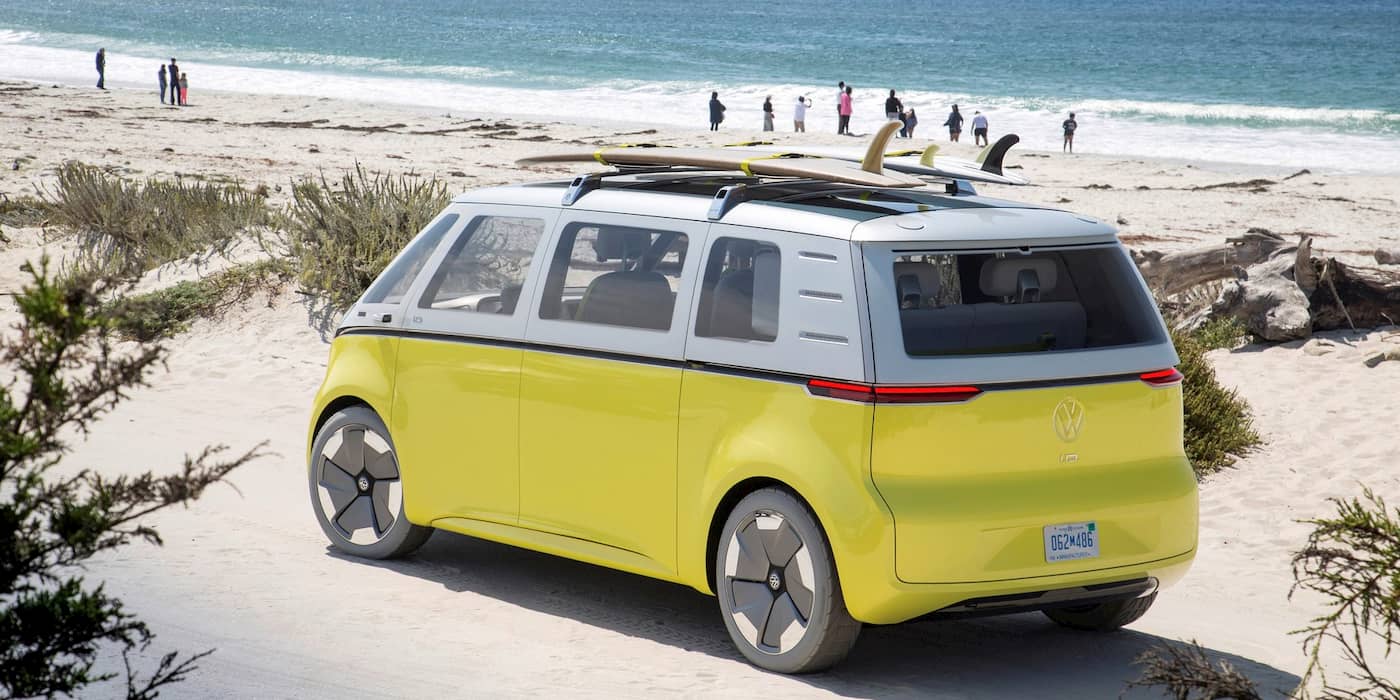
Simultaneously, major global automakers began flooding the market with diverse EV form factors. No longer confined to luxury sedans, California consumers were suddenly presented with electric pickup trucks, three-row family SUVs, and even electric commercial delivery vans. As public awareness grew and fuel prices fluctuated wildly due to international geopolitical tensions, ZEV market share in the state surged past 20%, then 25%, shattering previous sales ceilings quarter after quarter.
The Crucible: Q4 2025 and the Federal Cliff
The capstone of this five-year run occurred in the final quarter of 2025—a period that many market analysts feared would test the durability of the electric vehicle market. On September 30, 2025, federal ZEV purchasing incentives officially sunsetted, removing thousands of dollars in direct point-of-sale subsidies for American car buyers nationwide.
The impact on the rest of the United States was immediate and severe. According to industry analytics firm Cox Automotive, national ZEV sales plummeted from 10.5% of all new vehicle sales in the third quarter of 2025 down to a paltry 5.8% in the fourth quarter.
In stark contrast, California defied gravity. During Q4 2025, Californians purchased 79,066 new ZEVs, capturing a robust 18.9% of all new car sales in the state. While this represented a sequential cooling from the record-shattering 29.1% market share achieved in Q3 (bolstered by pre-expiration rushes), it proved that California’s EV market had achieved a structural self-sufficiency that insulated it from total federal dependency. By the close of 2025, the state officially crossed the 2.5-million cumulative sales threshold.
Supporting Context & Metrics: Unpacking the Data
A granular analysis of the CEC data and related automotive reports reveals a complex ecosystem defined by consumer choice, geographic divergence, and heavy infrastructural investments.
The Model Availability Factor
One of the primary catalysts for California’s sustained sales resilience is the sheer breadth of inventory available to consumers. In the fourth quarter of 2025 alone, prospective car buyers in California had access to 149 distinct ZEV models. This staggering variety stands in sharp contrast to the landscape of just five years prior, where consumers were largely limited to a handful of choices.
From affordable commuter hatchbacks to high-performance crossovers and commercial utility vehicles, automakers have treated California as a "must-win" proving ground. Because the state’s Air Resources Board enforces stringent mandates that penalize automakers for failing to meet specific ZEV sales ratios, manufacturers continuously prioritize California when allocating scarce inventory, creating a virtuous cycle of availability and adoption.

The Infrastructure Backbone: Charging Ahead
Purchasing an electric vehicle requires confidence in the underlying energy infrastructure. Recognizing this, California has aggressively pursued both public and private charger installations.
Recent updates from state energy agencies confirm that California is now home to:
- Over 200,000 public and shared private EV charging stations distributed across urban centers, highway corridors, and rural byways.
- Approximately 800,000 home chargers already installed in single-family residences and multi-family dwelling units.
Despite these impressive figures, state planners are acutely aware that the distribution of chargers remains uneven, particularly for renters and residents of multi-family housing complexes who lack dedicated garage space. To address this equity gap, the CEC’s Clean Transportation Program Investment Plan has earmarked $98.5 million specifically for light-duty ZEV infrastructure during the 2025–2026 fiscal year. A significant portion of these funds is earmarked for Level 1 and Level 2 charging deployments in locations where vehicles remain parked for extended periods—chiefly multi-family residential complexes and workplaces.
Official Statements and Political Rhetorhic
The milestone has predictably sparked widespread commentary from state leaders, who used the occasion to contrast California’s aggressive decarbonization trajectory with federal policy shifts.
"No state in the union can match California’s five-year growth in ZEV sales," declared California Energy Commissioner Nancy Skinner during the policy briefing. "Each quarter, even in the face of increasing federal headwinds, tens of thousands of consumers are purchasing a ZEV in the Golden State, enjoying a great driving experience, and knowing they never have to go to a gas station again."
Skinner’s sentiment was echoed by Lauren Sanchez, Chair of the California Air Resources Board (CARB). Sanchez emphasized that California’s commitment to clean transportation transcends environmental altruism, framing it as an indispensable economic strategy designed to future-proof the state’s industrial base.
"Governor Newsom’s new rebate proposal sends a clear message: California isn’t slowing down, we’re still leading the pack," Sanchez stated. "It’s not just about clean air; it’s smart economic policy. By supporting American auto innovation and consumer demand when other regions are pumping the brakes, we are ensuring that the jobs and technologies of the 21st century are built right here."

Future Outlook: Navigating Uncertainty and Looking Toward 2030
As California looks past its 2.5-million-unit milestone, the road ahead is not without challenges. The expiration of federal tax credits has introduced price pressures into an automotive market still grappling with broader inflationary trends. Furthermore, automakers are actively recalibrating their global capital expenditure plans, balancing slowing near-term adoption rates in conservative political jurisdictions against long-term global regulatory requirements.
To counteract these uncertainties, Governor Gavin Newsom’s preliminary state budget, released on January 9, proposes a bold counter-cyclical intervention: a new $200 million incentive program aimed at sustaining consumer EV demand. If approved by the state legislature, this targeted funding will provide direct point-of-sale rebates to bridge the gap left by the defunct federal program, keeping EVs competitively priced against traditional internal combustion engine vehicles.
Additionally, the CEC has announced a comprehensive slate of upcoming infrastructure assessments scheduled for release later this year. These studies will map out the grid capacity upgrades required to support millions of anticipated new EVs, evaluate the rapid deployment of heavy-duty electric truck charging corridors along major freight arteries like Interstate 5 and Highway 99, and establish new benchmarks for equitable access to charging in underserved communities.
Ultimately, California’s 2.5-million ZEV milestone is more than just a historical statistic; it is a stress test for the viability of sub-national climate leadership. While the federal landscape remains volatile and consumer skepticism persists in various corners of the country, the Golden State’s policy architects have made their intentions clear. Through a combination of unwavering regulatory pressure, targeted financial support, and relentless infrastructural expansion, California is signaling to the global automotive market that the electric transition is no longer an experiment—it is an irreversible economic reality.



