

Executive Overview
The intersection of electric vehicle (EV) adoption and grid management has reached a critical juncture in the Commonwealth of Massachusetts. Major regional utilities Eversource and National Grid have officially announced the integration of residential vehicle-to-grid (V2G) capabilities into their established virtual power plant (VPP) framework, known as ConnectedSolutions.
This transformative initiative allows everyday EV owners to monetize their vehicle’s onboard energy storage. By leveraging smart-charging and grid-integration technologies provided by industry leaders such as EnergyHub, Sunrun, and The Mobility House, qualifying residential customers can feed electricity stored in their car batteries back into the local grid during periods of peak energy demand.
With more than 150,000 electric vehicles currently navigating Massachusetts roads—and that number scaling rapidly—the state sits atop a massive, decentralized reservoir of mobile energy storage. By unlocking this capacity, utilities aim to mitigate grid strain, displace expensive and carbon-intensive peak power generation, and ultimately stabilize energy costs for all ratepayers. While initial hardware and vehicle compatibility lists have narrowed the immediate pool of participants, the financial incentives—reaching up to $2,750 per residential participant over the summer season—signal a lucrative economic model for early adopters.
Detailed Chronology of the V2G Rollout
The integration of residential V2G technology into New England’s energy infrastructure is the culmination of years of pilot projects, technological maturation, and regulatory evolution.
Phase 1: The Foundation of ConnectedSolutions
Long before bidirectional chargers entered mainstream residential conversations, Massachusetts utilities utilized the ConnectedSolutions program to curb peak electricity demand. Originally designed to aggregate commercial and industrial equipment, municipal assets, residential smart thermostats (such as Nest and Ecobee), and stationary home battery systems (like the Tesla Powerwall), the program rewarded consumers for reducing load during scorching summer afternoons or freezing winter evenings when grid stress peaks.
Phase 2: Fleet Pilots and Commercial Validation
Before deploying V2G at the residential scale, utilities tested the operational reliability of bidirectional charging through commercial and municipal fleets. National Grid pioneered light- and medium-duty fleet electrification initiatives, successfully integrating electric school buses into the ConnectedSolutions framework. Concurrently, Eversource began dialogue with various school districts to implement V2G infrastructure via its specialized ConnectedSolutions+ program. These fleets proved that vehicle batteries could reliably inject power back into the grid without compromising operational readiness or accelerating battery degradation beyond acceptable thresholds.
Phase 3: Residential Integration and Tech Partnerships
Recognizing the potential of consumer-owned vehicles, Eversource and National Grid initiated their residential V2G expansion. To bridge the gap between automotive hardware and utility grid operators, the utilities partnered with prominent energy tech platforms:
- EnergyHub: Providing software infrastructure to orchestrate distributed energy resources (DERs).
- Sunrun: Deploying dispatching expertise and managing customer-facing solar-plus-storage ecosystems.
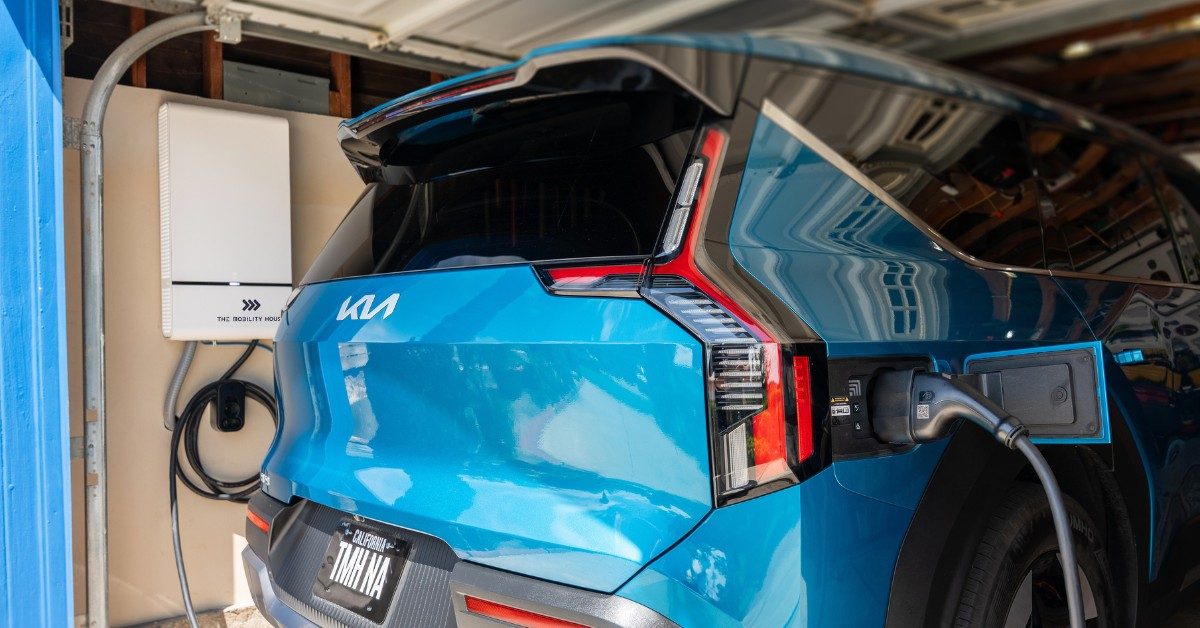
- The Mobility House: Delivering advanced charging and energy management systems to ensure seamless grid synchronization.
Phase 4: Initial Vehicle Qualifications and Incentive Structures
Following initial ambiguity regarding eligible hardware, utility spokespersons released a foundational whitelist of compatible vehicles. The launch cohort of V2G-capable models includes the Ford F-150 Lightning, the Nissan LEAF, the Kia EV9, the Polestar 3, and the Volvo EX90. Under National Grid’s ConnectedSolutions parameters, performance-based incentives were established at up to $275 per average kilowatt (kW) of performance over the summer season. For a standard residential setup, this translates to estimated payouts ranging between $1,375 and $2,750, contingent upon charger capacity and active grid-support performance.
Supporting Context & Metrics: The Math Behind Mobile Power Plants
To understand the macro-economic and engineering significance of Massachusetts’ new V2G initiative, one must evaluate the raw metrics governing modern EV batteries and regional energy consumption patterns.
The Scale of Mobile Energy Storage
The average modern long-range electric vehicle is equipped with a battery pack ranging from 60 kWh to over 130 kWh of energy storage capacity. To put this in perspective, the average American household consumes roughly 29 kWh of electricity per day.
- The Fleet Potential: With over 150,000 EVs currently registered in Massachusetts, even a fraction of these vehicles participating in V2G programs represents hundreds of megawatt-hours (MWh) of flexible storage.
- Peak Shaving Dynamics: During peak load events—typically lasting two to four hours on hot summer afternoons when air conditioning units run continuously—utilities must ramp up expensive, fossil fuel-peaker plants. Discharging a mere 10% to 20% of a residential EV fleet’s battery capacity can offset the need to fire up these carbon-heavy, high-cost generation facilities.
Financial Breakdown for Participants
The financial architecture of the ConnectedSolutions V2G program is structured around performance incentives rather than flat participation fees.
| Metric | Details |
|---|---|
| Max Incentive Rate | Up to $275 per average kW of performance (National Grid) |
| Estimated Seasonal Payout | $1,375 – $2,750 per residential participant (summer season) |
| Required Hardware | Bidirectional-capable EV + Compatible Bi-directional EV Charger |
| Enabling Tech Partners | EnergyHub, Sunrun, The Mobility House |
These economic incentives serve a dual purpose: they offset the upfront capital expenditure of installing bidirectional chargers (which traditionally cost significantly more than standard Level 2 chargers) and compensate drivers for the nominal cyclical wear on their vehicle batteries.

Official Statements and Industry Perspectives
The announcement has drawn strong reactions from key stakeholders across the clean energy and utility sectors, highlighting the shift toward decentralized grid management.
"We are excited to bring our dispatching expertise to Massachusetts and help expand our vehicle-to-grid technology to more customers," stated Chip Silverman, Sunrun’s director of grid services. "Vehicle batteries play a critical role in stabilizing the grid, providing backup power to homes, and lowering energy costs for everyone."
Industry analysts point out that while the technology has evolved past its experimental phase, consumer adoption will hinge heavily on user experience. Transitioning V2G from a niche enthusiast activity to a mass-market utility requires automated, "set-it-and-forget-it" software interfaces. Drivers must feel secure knowing their vehicle will maintain a guaranteed state-of-charge (SOC) for their morning commute, even after dispatching power to the grid overnight or during peak hours.
Furthermore, utility representatives emphasize that V2G is fundamentally a collaborative defense mechanism against rising capacity costs. When regional transmission organizations (RTOs) like ISO New England calculate capacity charges, the cost is heavily driven by peak demand hours. By flattening these peaks using residential EV batteries, utilities can secure long-term wholesale electricity savings that benefit every ratepayer in the commonwealth, regardless of whether they own an electric vehicle.
Future Outlook: Challenges and Horizons
As Massachusetts blazes the trail for East Coast residential V2G integration, several hurdles and opportunities lie ahead for policymakers, automakers, and consumers alike.
Overcoming Hardware and Standardization Barriers
The primary friction point in the early rollout is hardware fragmentation. Unlike traditional smart thermostats that communicate via standardized Wi-Fi protocols, bidirectional charging requires deep integration between the vehicle’s On-Board Charger (OBC), the charging station management system (CSMS), and the utility’s aggregation software.

While manufacturers like Ford, Nissan, Kia, Polestar, and Volvo are leading the charge, universal adoption of open standards (such as ISO 15118-20) will be critical. As more automakers embrace bidirectional capabilities—particularly as the North American Charging Standard (NACS) becomes ubiquitous—the roster of eligible vehicles is projected to expand exponentially.
Home Energy Resilience and Emergency Backup
Beyond grid stabilization, residential V2G serves a powerful secondary purpose: home emergency backup power. In the event of extreme weather events or grid outages—which are increasingly common in New England due to nor’easters and heavy winter storms—a bidirectional EV acts as a rolling generator capable of powering an entire household for days. Combining V2G programs with residential solar installations creates an entirely self-sustaining ecosystem, insulating homeowners from utility price volatility and blackouts.
The Road Ahead
Massachusetts has positioned itself at the vanguard of the energy transition. By incorporating passenger vehicles into the ConnectedSolutions virtual power plant, Eversource and National Grid are proving that the future of the power grid does not rely solely on massive utility-scale batteries, but on the millions of smart, connected assets sitting right in our driveways.
If utilities can streamline enrollment processes, expand vehicle compatibility, and maintain attractive payout structures, residential V2G will quickly transition from an innovative pilot program into the foundational backbone of modern American energy infrastructure.



