

Executive Overview
In the rapidly evolving landscape of energy storage technology, breakthrough claims often attract intense scrutiny, viral debates, and premature conclusions. Recently, Donut Lab’s advanced battery technology—specifically its DL1, DL2, and DL3 cells—became the center of a heated online controversy. Critics, heavily influenced by online commentators and preliminary reverse-engineering theories, asserted that Donut Lab’s cells were merely traditional Nickel Manganese Cobalt (NMC) lithium-ion batteries repackaged under proprietary claims.
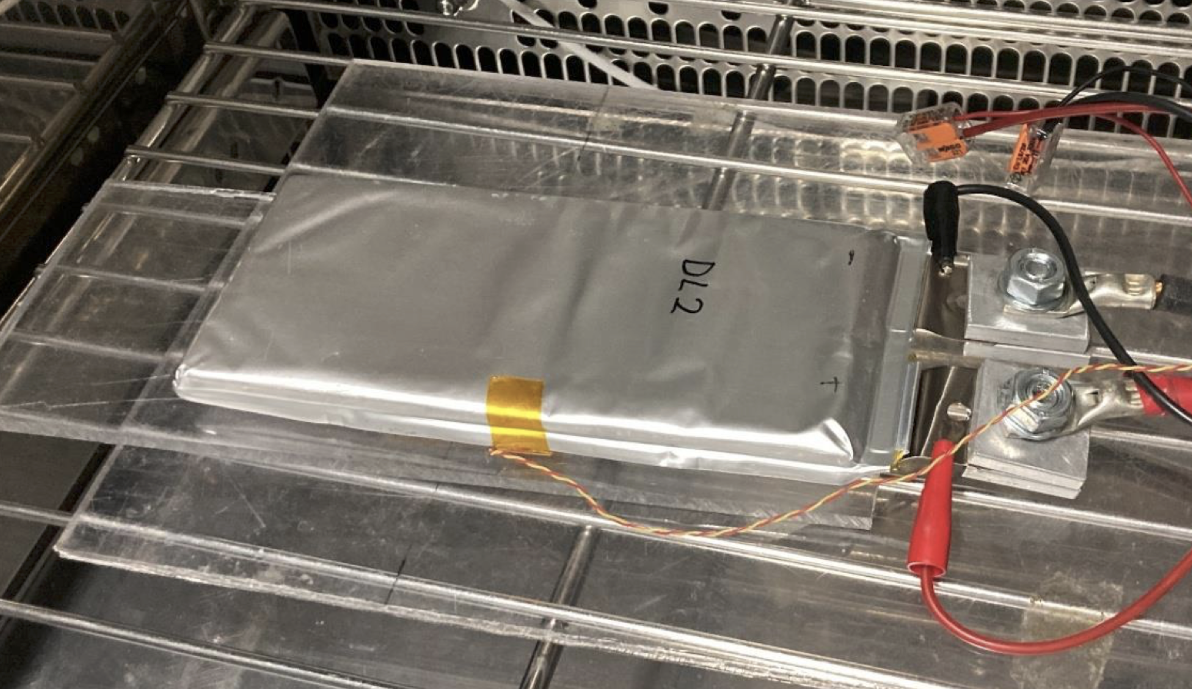
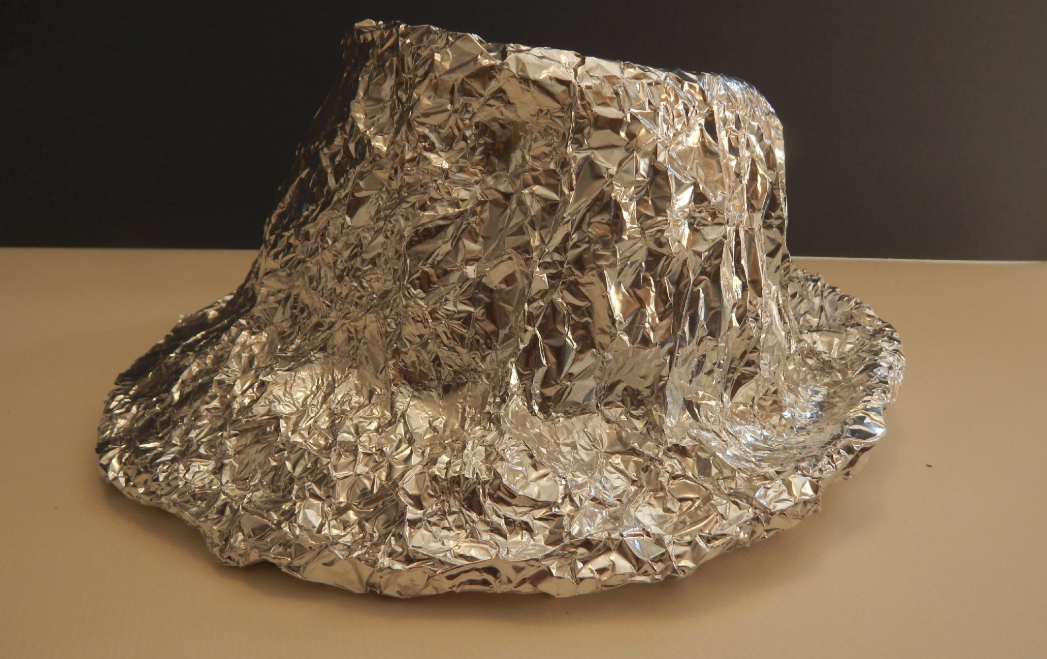
However, rigorous physical testing, independent evaluations by recognized testing institutions like VTT, and common-sense thermal stress experiments have definitively debunked these assertions. When subjected to extreme thermal loads—specifically continuous exposure to 100 degrees Celsius (212 degrees Fahrenheit) for hours—traditional NMC pouch cells rapidly decompose, generate immense internal gas pressure, undergo violent exothermic reactions, and inflate like balloons. By contrast, Donut Lab’s DL2 cell retained its structural integrity, resembling a flat pastry rather than an inflated puffer fish.
This article explores the anatomy of the controversy, dissects the failure of the informal "unique fingerprint" and "bump" curve theories, analyzes independent laboratory data, and highlights a critical lesson for the tech community: YouTube speculation is no substitute for peer-reviewed, rigorous scientific methodology.
Detailed Chronology: From Viral Claims to Empirical Testing
The controversy surrounding Donut Lab’s battery chemistry did not begin in a sterile laboratory; it started in the echo chamber of social media and online creator platforms.
The Genesis of the NMC Rumor
Months ago, independent commentators and online analysts—most notably a content creator named Ziroth—published videos analyzing the voltage curves of Donut Lab’s early test cells (specifically DL1 and DL2). Pointing to minor similarities in voltage endpoint behaviors and discharge curves, these analysts advanced the hypothesis that Donut Lab’s cells were conventional NMC chemistry.
As these claims gained traction, various technology channels, blogs, and news aggregators picked up the narrative. They broadcasted the assertions under sensationalized headlines, often leaning heavily on the casual phrase "scientists say" to lend unearned authority to what were essentially speculative, unvetted reverse-engineering guesses. Competitor commentary and biased observer interpretations further muddied the waters, creating a dominant public narrative that Donut Lab was simply rebranding off-the-shelf lithium-ion chemistry.
The Turning Point: Backyard Physics and Controlled Lab Tests
The narrative began to unravel when observers and independent experimenters began pushing the cells to their physical limits.
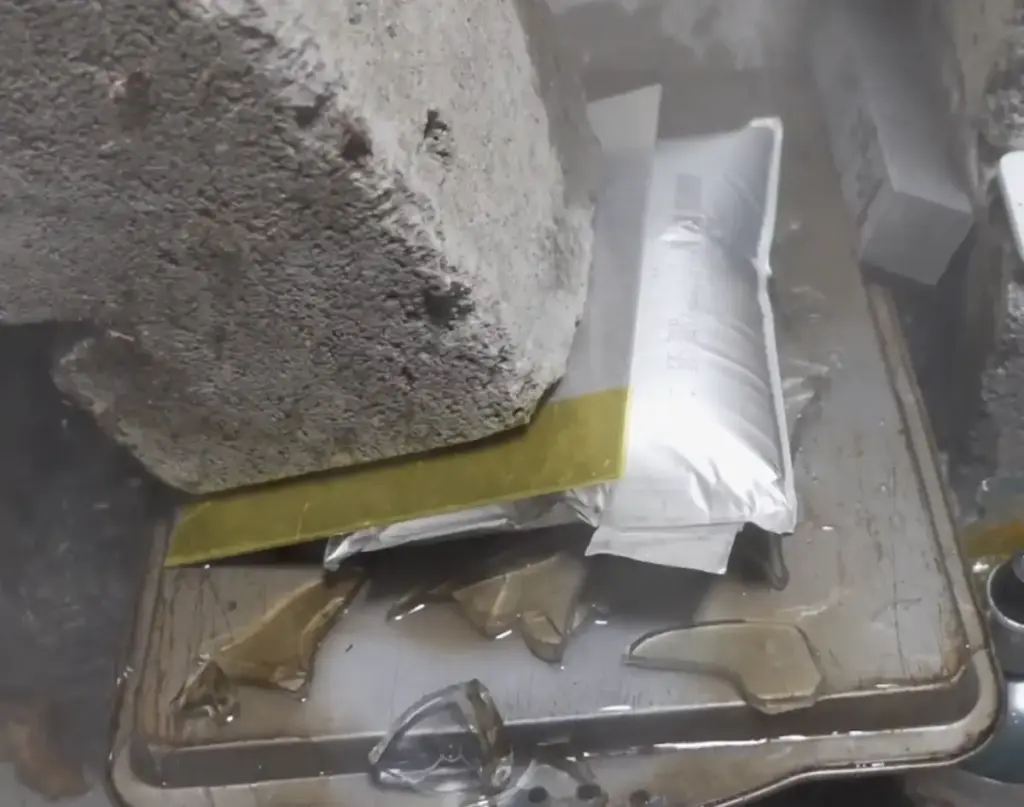
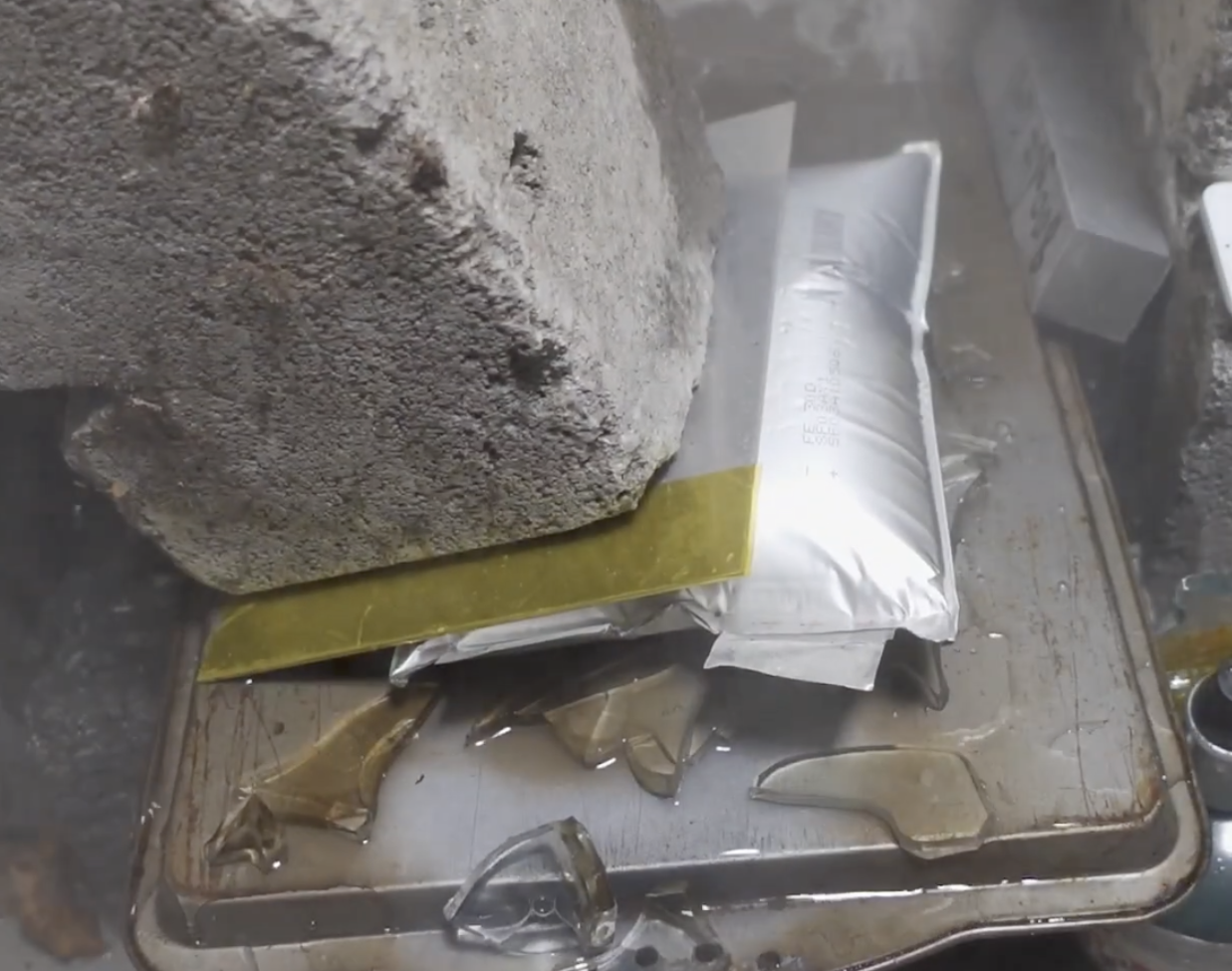
In a telling backyard experiment, an authentic NMC pouch cell was submerged in a boiling water bath at 100°C, weighed down by a heavy cinder block to prevent it from floating. Within a relatively short timeframe, the liquid electrolyte inside the NMC cell began to thermally decompose, producing high-pressure gases that ballooned the pouch package outward, eventually dislodging the heavy brick and terminating the test due to extreme structural bulging.
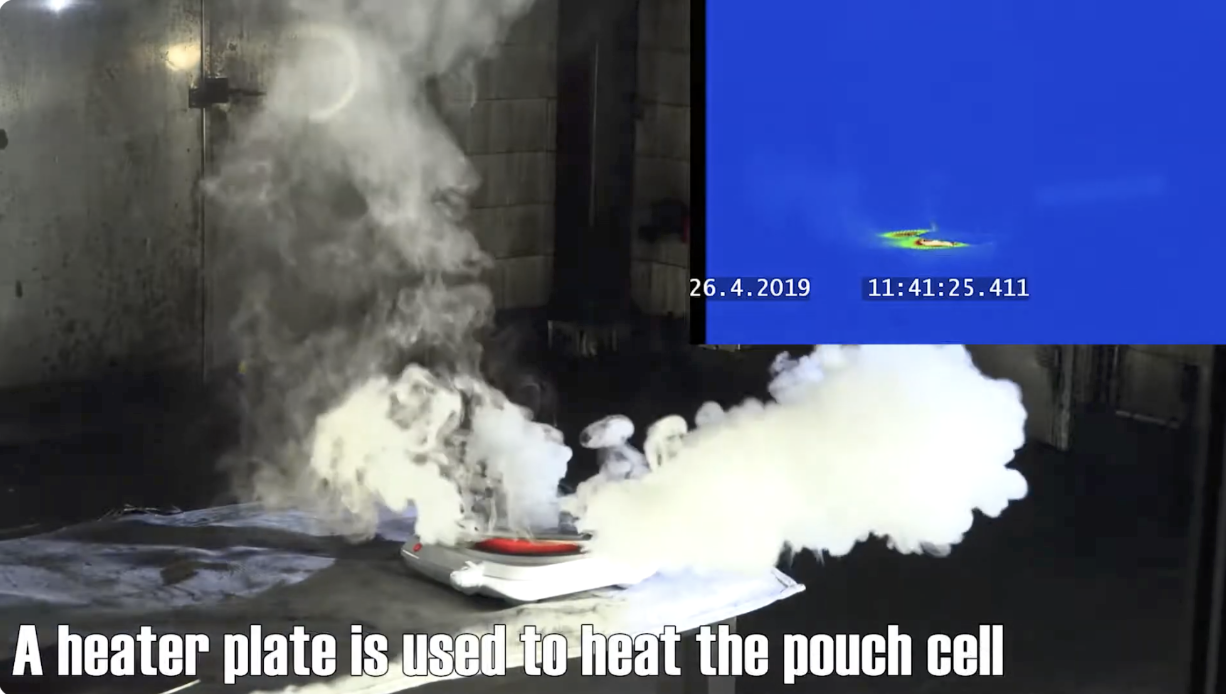
In stark contrast, Donut Lab’s DL2 battery had previously undergone rigorous, multi-hour testing at the exact same 100°C temperature threshold in professional facilities, including independent evaluations by VTT (Technical Research Centre of Finland). Over extended hours of exposure, DL2 did not balloon, smoke, or explode. While it was later observed that the DL2 pouch had lost its initial vacuum seal during the grueling thermal ordeal, subsequent room-temperature cycling tests demonstrated that the battery remained fully functional, stable, and entirely devoid of the catastrophic thermal runaway characteristics defining heated NMC cells.
Nail Tests and Bipolar Architecture Verification
Following the thermal stress evaluations, Donut Lab subjected additional cells to aggressive nail-penetration tests. In standard lithium-ion NMC cells, a nail test universally triggers a violent thermal runaway event characterized by roaring fires, heavy smoke, and rapid, extreme temperature spikes.
Donut Lab’s cells, however, exhibited no fire, no explosion, no smoke, and virtually no increase in temperature during the nail tests. Furthermore, subsequent diagnostic dismantling proved that the cells utilized a bipolar architecture, confirming their classification as true solid-state systems rather than conventional liquid-electrolyte lithium-ion configurations.
Supporting Context & Metrics: Dismantling the "Fingerprint" and "Bump" Theories
To understand why the early criticisms gained such widespread belief, one must examine the core arguments used by skeptics: the "unique fingerprint" and "bump" theories.
The Fallacy of Voltage Curve Fingerprinting
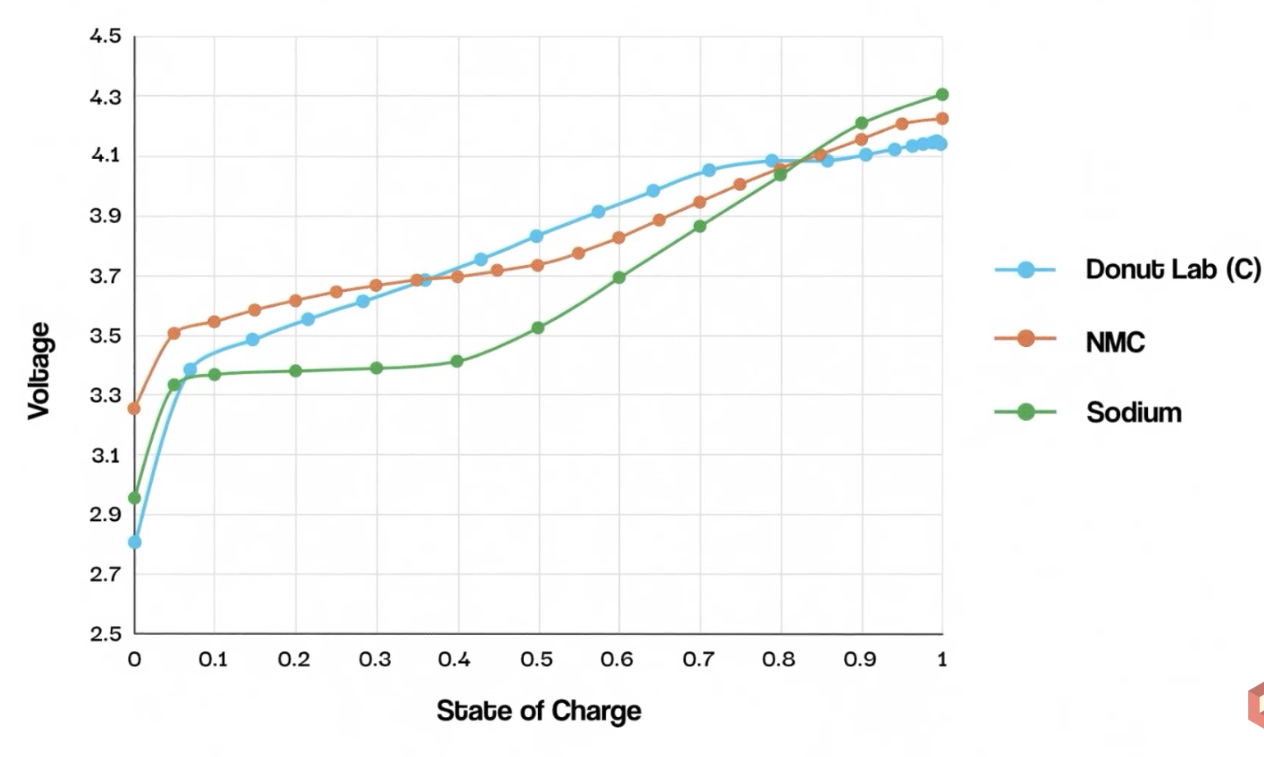
Skeptics originally argued that the voltage discharge curves of DL1, DL2, and DL3 contained a distinctive "bump" or specific endpoint behavior that served as a cryptographic fingerprint uniquely identifying NMC chemistry.
However, advanced electrochemistry proves that voltage curve endpoints can be easily manipulated, mimicked, or altered through advanced doping techniques, surface coatings, and cathode modifications. A scientific theory of uniqueness fails the moment a single valid exception is found. Independent analysts demonstrated that synthetic curves could easily be engineered to mimic the endpoint characteristics of NMC without sharing the underlying material composition.
More importantly, a forensic comparison of the actual voltage curves reveals that Donut Lab’s battery curves do not precisely match standard NMC curves anyway. Shoehorning disparate datasets into a preconceived narrative to force a "match" represents a fundamental failure of analytical rigor.
Comparative Thermal and Physical Metrics
| Battery Metric / Test | Conventional NMC Pouch Cell | Donut Lab DL2 Cell |
|---|---|---|
| Response to 100°C (4 Hours) | Severe gas generation, rapid ballooning ("pillow" effect), high risk of breach or fire. | Maintained structural flatness ("Pop-Tart" profile), no catastrophic swelling, no exothermic runaway. |
| Nail Penetration Behavior | Violent thermal runaway, intense fire, heavy smoke, extreme temperature spike (>500°C). | No fire, no smoke, no explosion, minimal-to-no temperature increase. |
| Electrolyte Composition | Volatile liquid organic solvents prone to decomposition at elevated temperatures. | Solid-state or advanced non-volatile architecture confirmed via VTT parallel testing. |
| Post-Stress Functionality | Destroyed / Unusable. | Remained operational through dozens of subsequent room-temperature charge/discharge cycles. |
As outlined in the VTT evaluation reports (including documents referenced under test IDs such as VTT_CR_00124_26 and VTT_CR_00092_26), three Donut Lab cells (DL1, DL2, and DL3) underwent parallel high-temperature and fast-charge testing regimes. None of these professional trials exhibited the thermodynamic properties inherent to NMC chemistry.
Official Statements and Industry Repercussions
The fallout from the Donut Lab testing controversy has triggered broader soul-searching within the clean tech journalism and digital creator space.
The Dangers of Unvetted Digital Commentary
Industry veterans have increasingly spoken out against the speed with which unverified technical claims travel across digital platforms. When creator-led channels present preliminary reverse-engineering guesses as established scientific consensus, it creates a toxic environment for engineering innovation.
Professional scientists and research institutions operate under strict protocols designed to eliminate cognitive and commercial bias. Peer review, blind testing, repeatable trials, and transparent data disclosure form the bedrock of legitimate scientific inquiry. By contrast, the viral cascade surrounding Donut Lab relied on single-source information, confirmation bias, and a rush to generate clickbait engagement.
A Teachable Moment for Energy Storage Reporting
The incident serves as a powerful reminder that hardware cannot be judged solely by superficial data curves or third-party speculation. Real-world physics—such as thermal decomposition thresholds, pressure generation under duress, and mechanical abuse testing—remains the ultimate arbiter of battery truth.
As safety warnings across the energy storage sector emphasize: Lithium and advanced energy storage batteries exposed to extreme temperatures or physical trauma can present severe hazards, including fire, explosion, and the release of toxic gases. Such testing must always be conducted by qualified professionals utilizing industrial-grade thermal chambers rather than informal backyard setups.
Future Outlook: The Road Ahead for Solid-State Innovation
The resolution of the Donut Lab controversy highlights both the challenges and the maturation of the next-generation battery sector. As the industry transitions away from legacy liquid-electrolyte chemistries toward advanced solid-state and bipolar architectures, verification standards must evolve in tandem.
- Stricter Verification Protocols: Independent testing bodies like VTT will play an increasingly vital role in validating startup claims before public debates spiral out of control. Establishing standardized stress-testing benchmarks for solid-state cells will prevent future misinterpretations.
- Transparency in Material Science: As companies innovate with proprietary dopants and novel cathode-anode interfaces, open-source data sharing regarding thermal limits will help bridge the gap between commercial secrecy and scientific accountability.
- Elevating Tech Journalism: Outlets covering the clean technology space must exercise greater editorial skepticism, moving away from reactive reporting on viral YouTube claims and prioritizing deep, peer-reviewed technical analysis.
Ultimately, the Donut Lab cells survived the crucible of both professional laboratory environments and rigorous thermal stress. While skeptics rushed to judgment based on superficial curve similarities, empirical physics told the real story: true innovation cannot be easily masked by outdated assumptions, and the future of energy storage belongs to those who successfully push past the boundaries of conventional chemistry.



