

Executive Overview
In the high-stakes engineering race to maximize electric vehicle (EV) efficiency, automakers and component suppliers are constantly hunting for optimization vectors. Every fraction of a percent matters. While much of the industry’s public focus remains fixed on chemistry breakthroughs in solid-state batteries or aerodynamic body shapes, a quiet revolution is happening deep inside the powertrain.
Enter Texas Instruments (TI) and its newly unveiled TMCS2100-Q1 multiaxial coreless Hall-effect current sensor.
Designed specifically for the nerve center of the EV powertrain—the traction inverter—this tiny, unassuming semiconductor component promises to help future electric vehicles squeeze additional range out of their existing battery packs. Beyond simply stretching mileage, the sensor is engineered to deliver smoother acceleration, virtually eliminate unwanted motor whine, and pave the way for smaller, lighter hardware footprints.
By solving a decades-long engineering compromise between measurement accuracy and physical heft, TI’s innovation highlights a foundational truth of modern automotive engineering: the path to next-generation mobility is paved with microscopic precision.
The Engineering Dilemma: The Core vs. Coreless Conundrum
To understand why the TMCS2100-Q1 is generating interest across the automotive sector, one must first understand the anatomy and function of a traction inverter.
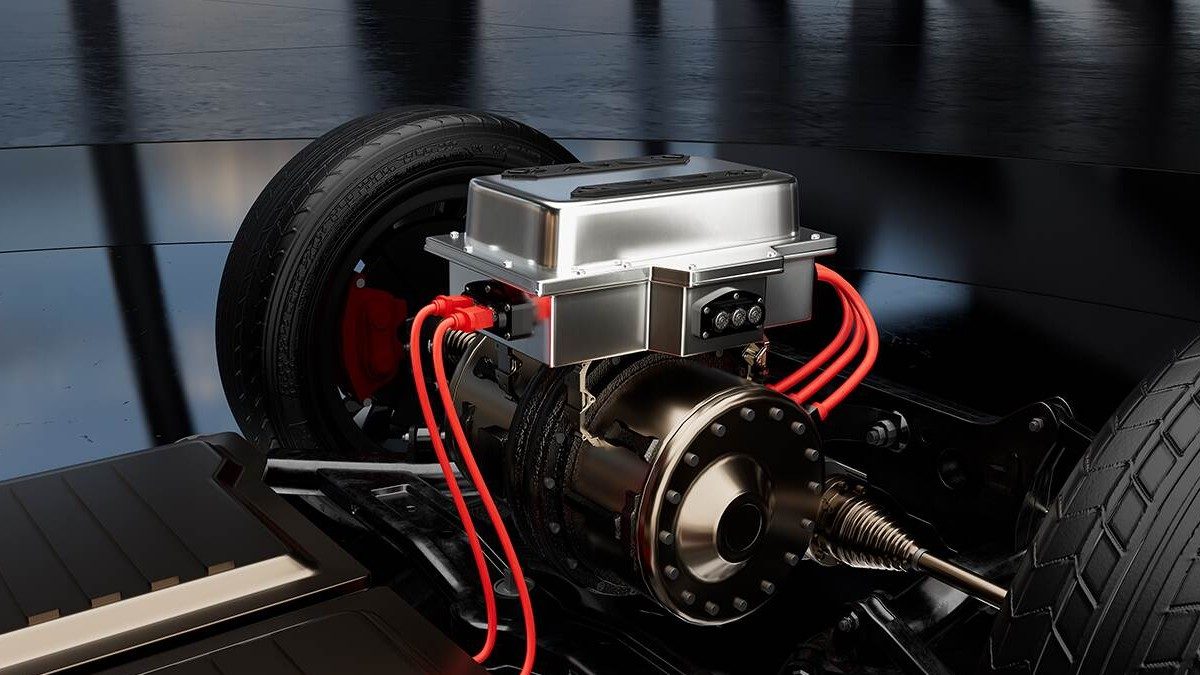
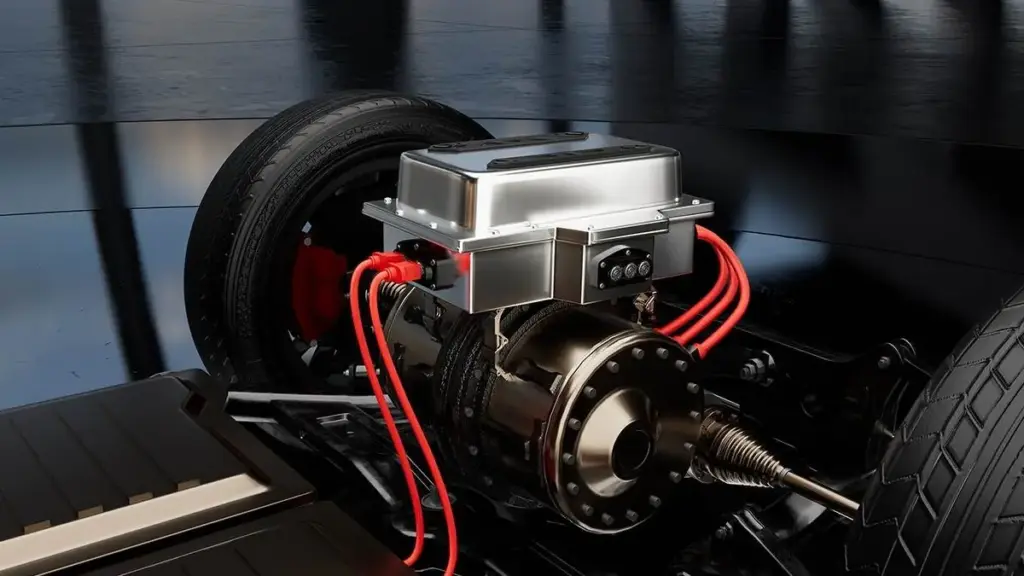
The traction inverter acts as the heavy-duty power manager of an electric vehicle. Sitting squarely between the high-voltage battery pack and the electric motor, the inverter performs a critical translation task: it takes direct current (DC) from the battery and converts it into alternating current (AC) to drive the motor. Furthermore, it dynamically modulates the frequency and amplitude of that electricity to control vehicle speed, torque, and regenerative braking.
To execute this intricate choreography efficiently, the inverter needs real-time, hyper-accurate telemetry on electrical currents. It must know—down to the microsecond and the milliamp—exactly how much electricity is flowing. If the inverter’s measurements are even slightly skewed, the motor receives sub-optimal power commands.
This imperfection manifests in the physical world as torque ripple: tiny, rapid fluctuations in rotational force. For the driver, torque ripple degrades the seamless, buttery-smooth acceleration characteristic of electric propulsion. For the vehicle, it translates into wasted energy, which is dissipated as excess heat and audible motor noise.
Historically, capturing these critical current measurements forced automotive engineers into a frustrating design compromise:
- Magnetic-Core Sensors: These traditional units use a magnetic core to concentrate the magnetic field generated by the electrical current, yielding high measurement accuracy. However, they are bulky, heavy, and introduce unwanted mass and volume into the powertrain.
- Standard Coreless Sensors: To shed weight and save precious space, engineers turned to coreless sensors. While compact, these units suffer from a major vulnerability: physical vibration. As an EV travels over rough road surfaces, mechanical vibrations cause the sensor to shift microscopically relative to the conductor. Even a fraction-of-a-millimeter displacement alters the sensor’s relationship to the magnetic field, throwing off its readings and degrading powertrain efficiency.
For years, this trade-off between absolute accuracy and physical compactness remained an accepted ceiling in EV design. TI’s latest development shatters that ceiling.

Anatomy of an Innovation: How the TMCS2100-Q1 Works
The breakthrough behind the TMCS2100-Q1 lies in its departure from single-axis measurement paradigms. Rather than measuring the magnetic field around the electrical current in a single linear direction, TI’s multiaxial coreless sensor measures the field horizontally and vertically at the exact same time.
This dual-axis monitoring acts as a built-in compensation mechanism. When road vibrations or thermal expansion shifts the sensor slightly out of alignment, the multiaxial architecture detects the directional vector shift. It instantly compensates for the spatial displacement, ensuring the underlying current calculation remains pristine.
According to technical data released by Texas Instruments, the TMCS2100-Q1 achieves staggering stability:
- 20x Greater Accuracy: It is reportedly up to 20 times more accurate than conventional single-direction coreless sensors on the market.
- Vibration Resilience: The sensor maintains measurement error margins below 1%, even when mechanical shifts displace its position by 0.4 millimeters.
To put 0.4 millimeters into perspective, it is roughly the width of a standard mechanical pencil lead. While that might sound like an absurdly negligible amount of movement, modern EV powertrains operate under hyper-sensitive conditions. This is especially true for the industry’s rapid migration toward 800-volt electrical architectures, which pump massive amounts of power through components at unprecedented speeds. In an 800V ecosystem, even minor telemetry errors cascade into noticeable inefficiencies and thermal stress.
Real-World Impact: What This Means for Drivers and Automakers
While a semiconductor component like the TMCS2100-Q1 will never feature prominently in a vehicle’s marketing brochure, its downstream benefits touch nearly every facet of the driving experience.

1. Efficiency and Range Extensions
By providing the traction inverter with pristine, uncorrupted current data, the motor can operate at peak efficiency profiles across a broader range of speeds and loads. While Texas Instruments is careful not to promise a fixed, universal mileage increase—as overall range depends heavily on vehicle weight, battery chemistry, aerodynamics, and software calibration—the efficiency gains are mathematically undeniable. Less wasted electrical energy means more watt-hours dedicated purely to forward motion.
2. Refined Driving Dynamics and NVH (Noise, Vibration, and Harshness)
Eliminating torque ripple directly addresses the smoothness of power delivery. Drivers will experience linear, uninterrupted acceleration without the micro-hesitations or surges caused by calculation errors in the inverter. Furthermore, cleaner electrical sine waves sent to the motor dramatically reduce electromagnetic and acoustic motor whine, resulting in a quieter, more luxurious cabin experience.
3. Packaging and Weight Reductions
Because the TMCS2100-Q1 eliminates the need for heavy magnetic cores while maintaining elite accuracy, tier-one suppliers and original equipment manufacturers (OEMs) can redesign their traction inverters to be significantly smaller and lighter. In the world of EV design, shedding ounces compounds into pounds, freeing up spatial packaging for interior cabin comfort or auxiliary systems.
Supporting Context & Market Metrics: The Micro-Architecture of EV Evolution
The introduction of the TMCS2100-Q1 arrives at a critical juncture for the global electric vehicle market. As price parity competition intensifies and consumer demand shifts toward mainstream affordability, automakers are under immense pressure to extract maximum performance from cheaper, smaller battery packs.
- The 800V Transition: Industry analysts note that more than 40% of newly announced medium-to-high-end EV platforms are transitioning from traditional 400V architectures to 800V systems. These higher voltages reduce charging times drastically and decrease wiring harness weight, but they demand exceptionally precise switching and sensing technologies inside the power electronics stack.
- Component-Level Engineering: Modern EV range optimization is rarely achieved through a single "silver bullet." Instead, it is an aggregation of hundreds of microscopic refinements—ranging from silicon-carbide (SiC) power semiconductors and advanced thermal management loops to precision sensors like the TMCS2100-Q1.
- The Semiconductor Footprint: The average modern EV contains upwards of 2,000 to 3,000 semiconductor chips and sensors, making component-level innovation from firms like Texas Instruments the invisible backbone of the clean transportation transition.
Future Outlook
As Texas Instruments begins shipping the TMCS2100-Q1 to automotive tier-one suppliers and inverter manufacturers, the components will slowly find their way onto factory assembly lines over the next product generation cycle.

The true test of the sensor will not be found in laboratory benchmarks, but in how seamlessly automakers integrate its multiaxial telemetry capabilities into their next-generation inverter software loops. If early technical specifications translate effectively to mass-production scale, coreless multiaxial sensing could quickly become the new industry baseline for high-performance electric powertrains.
Ultimately, the TMCS2100-Q1 serves as a reminder that the electric vehicle revolution is as much an exercise in microscopic physics as it is in macro-scale industrial manufacturing. By mastering the invisible forces acting on a fraction-of-a-millimeter scale, engineers are unlocking the future of efficient, seamless electric mobility—one microvolt at a time.



